

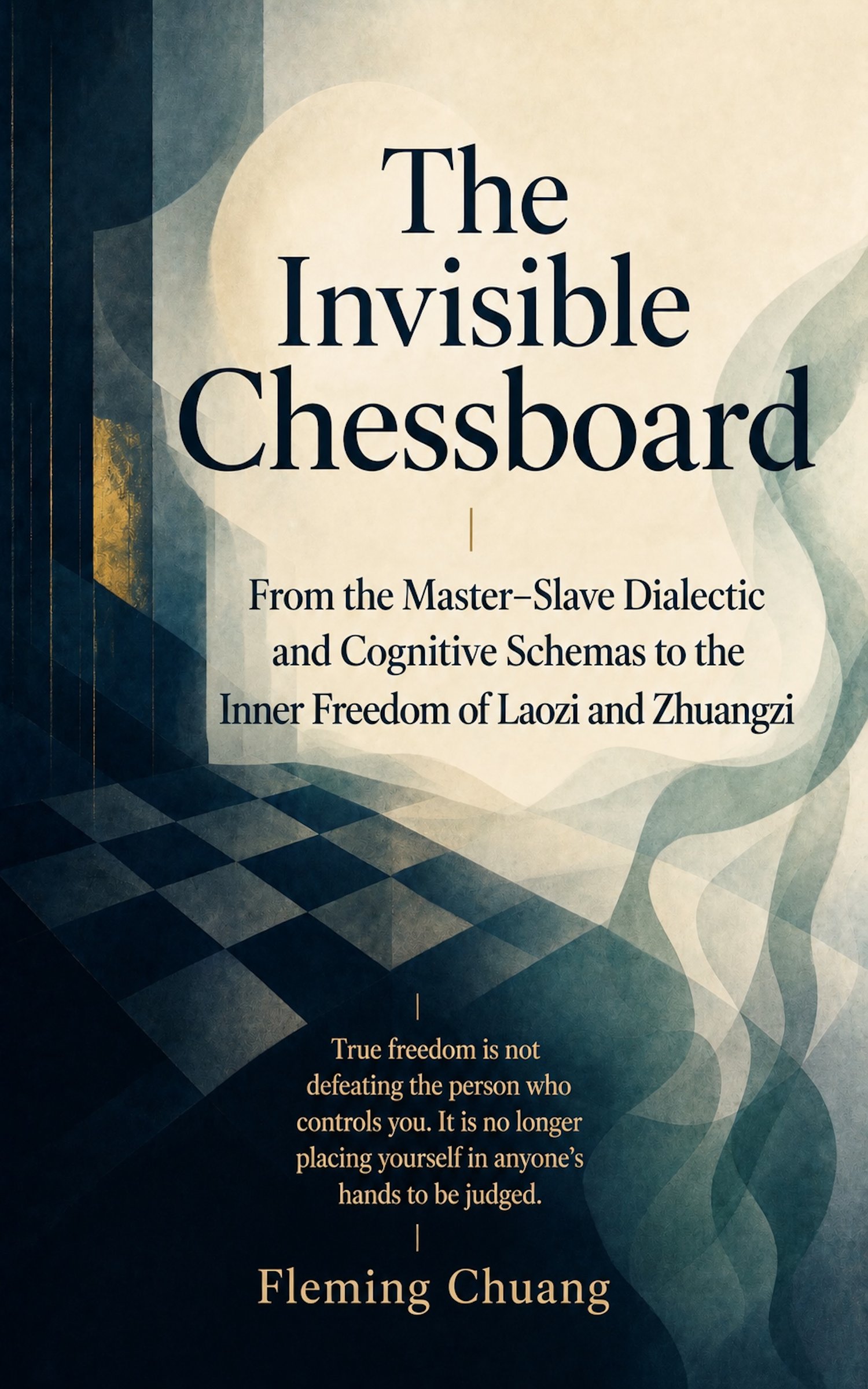
The Invisible Chessboard
Some relationships do not feel like cages at first. Control can arrive disguised as care, efficiency, loyalty, or love: a reminder becomes surveillance, advice becomes command, and disappointment becomes punishment. Before long, you may find yourself explaining every choice, anticipating another person’s anger, and asking whether you still have the right to say no.
The Invisible Chessboard explores how controlling relationships are built—and how the rules can be changed. Fleming Chuang brings three powerful perspectives into conversation. Hegel’s master–slave dialectic reveals how domination can conceal dependence: the person who demands obedience may be relying on another’s fear to confirm his own importance. Schema psychology shows how shame, deprivation, abandonment, and insecurity can become adult patterns of micromanagement, emotional blackmail, submission, or counter-control. Laozi and Zhuangzi offer another direction: not passive endurance, but a loosening of the judgments, personas, and reflexes that keep us trapped in a binary game of winners and losers.
Through the images of the court, the empty boat, and the bright mirror, this book asks readers to distinguish facts from imposed judgments, feelings from responsibilities, requests from commands, and compassion from self-sacrifice. It shows why leaving a controlling relationship does not always end the internal alarm system—and why freedom is not achieved by taking the throne for yourself.
This is a compassionate, philosophically grounded guide for people who are still inside a controlling relationship, rebuilding life after one, or recognizing controlling patterns in themselves. It does not romanticize trauma, blame victims, or confuse understanding with permission. When danger is present, safety, support, professional help, and practical action come first. The deeper invitation is simple but demanding: to stop placing your worth in another person’s hands, reclaim your capacity to choose, and become your own shore again.