
icaro no. 1 - Parts Only
includes only parts, no score
-
An icaro is a type of magic song derived from a Quechua word “icarai”, which means “to blow”. Icaro no. 1 has almost zero relation to actual icaros, as this style of music-making is deeply engrained in a culture far divorced from my own, with a particular focus on vegetal ceremonies and visionary states, both of which have little intersection with my own life.
This piece does not function like an icaro, nor does it contain musical features found in those ceremonial procedures. Nonetheless, learning about this musical world has had a tremendous impact on my compositional output, and I would be remiss to vaguely allude to the incredible recon!iguration that has taken place in my musical voice as a result of my awareness of the subject.
When I say “magic song”, I really mean it. The intention behind these songs is seemingly to guide participants of these ceremonies through challenging and ecstatic visions—anecdotes pointing to the idea that many, sometimes all, share these visions and their physiological or spiritual impact together. As such, an icaro is understandably a secret of the trade and hot commodity, developing into a sort of musical economy wherein melodies and lyrics are passed from teacher to student and master to master, the latter often for a price, or as an exchange of tunes and special “carrier” items. If such material falls in the wrong hands, bad things are surely to happen...
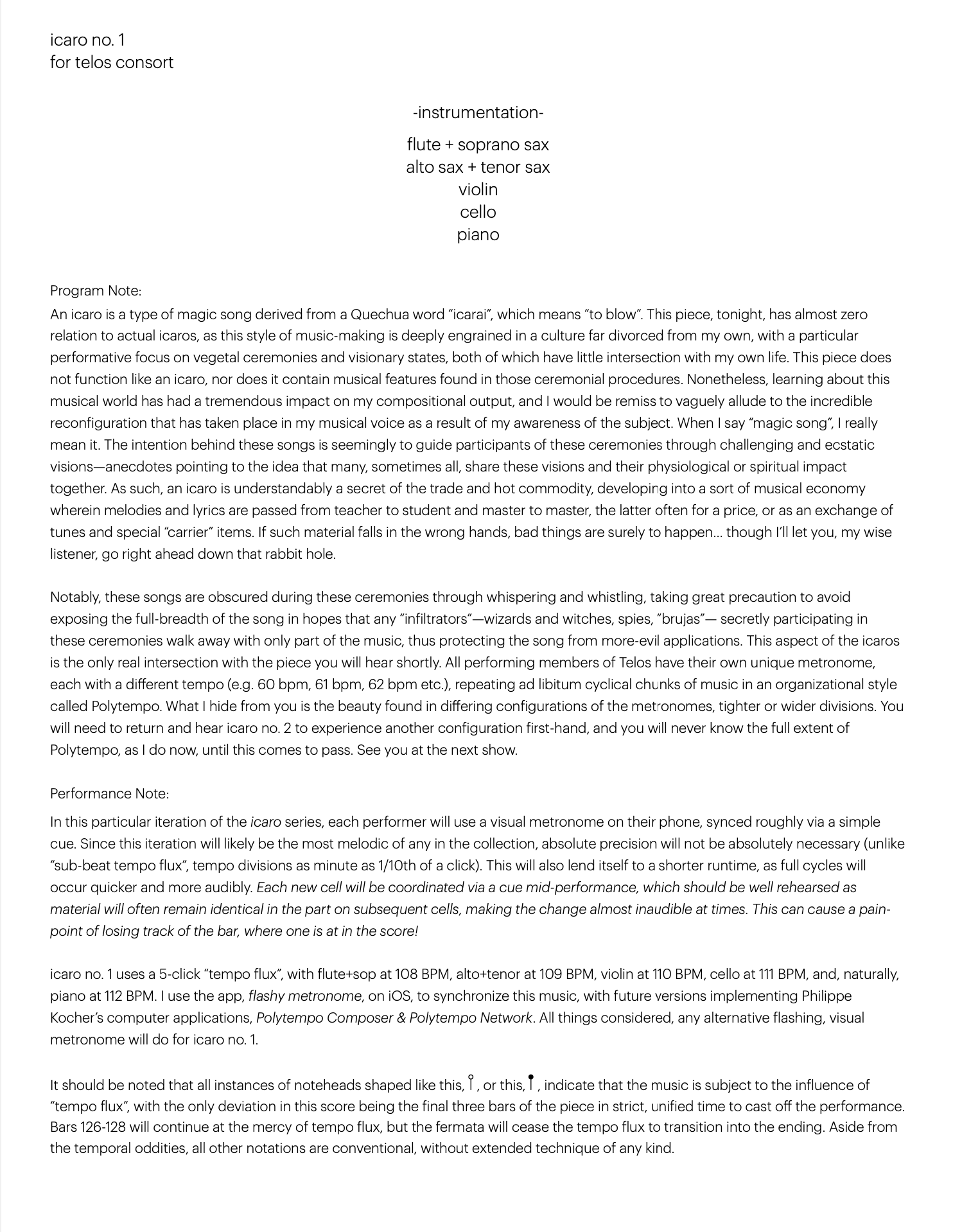
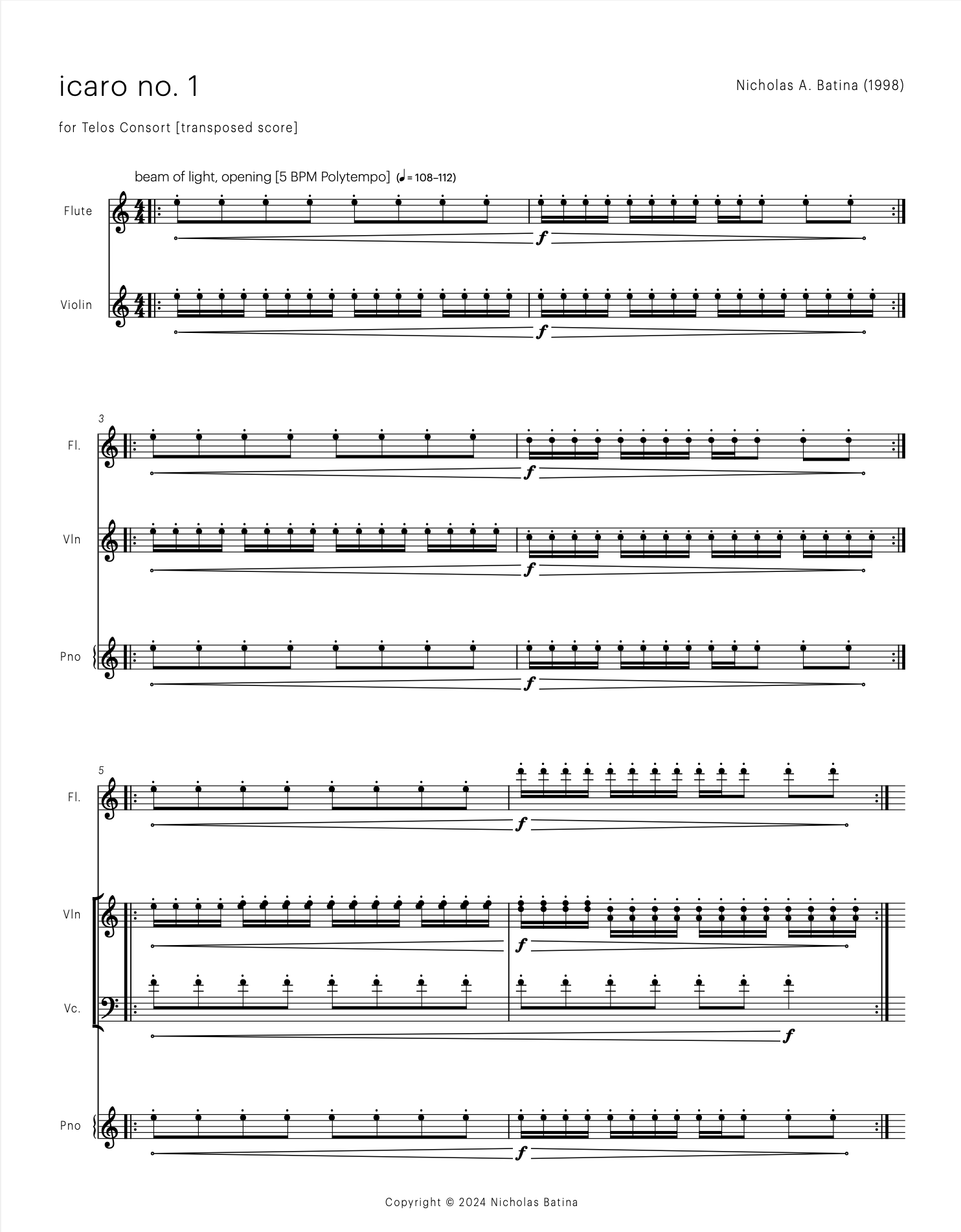
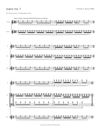
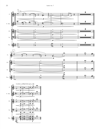
Notably, these songs are obscured during ceremonies through whispering and whistling, taking great precaution to avoid exposing the full-breadth of the song in hopes that any “infiltrators”—wizards and witches, spies, “brujas”— secretly participating in these ceremonies walk away with only part of the music, thus protecting the song from more-evil applications. All performers will have their own unique metronome, each with a different tempo (e.g. 60 bpm, 61 bpm, 62 bpm etc.), repeating ad libitum cyclical chunks of music in an organizational style called Polytempo. What I hide from you is the beauty found in differing configurations of the metronomes, tighter or wider divisions.