
Guide to Levels of Ethical Complexity in ABA
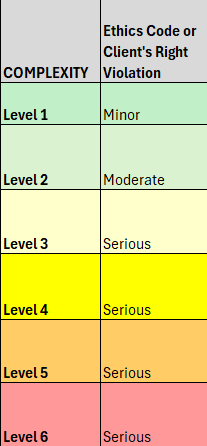
This guide identifies 6 levels of ethical complexity in ABA and how each level is categorized by:
a) the severity of the ethical violation
b) probability of harm
c) whether solutions are within the authority of an individual practitioner
d) organizational risk
e) legal risk
f) risk to license holders
Additionally, the response, documentation, and escalation actions to be taken based on the level of complexity.
Content includes description of each level, guide to respond at each level, and 12 different scenarios to practice determining what level of ethical complexity best fits an ethical challenge and how to respond.
Levels
Level 1 – Minor Ethical Issue
Key features: No harm, easily correctable, within authority
Level 2 – Moderate Ethical Issue
Key features: Some probability of harm, still manageable internally
Level 3 – Serious Ethical Issue (Internal Support Needed)
Key features: Increased probability of harm, leadership support required
Level 4 – Serious Ethical Issue (Authority Exceeded)
Key features: Harm is likely, leadership authority alone is insufficient
Level 5 – Serious Ethical Issue with Organizational Risk
Key features: Harm very likely, internal conflict, possible legal or licensure risk
Level 6 – Ethical Emergency
Key features: Harm imminent, legal and licensure risk, immediate action required
You can use the practice scenarios for:
- Team discussions
- Supervision training
- Ethics rounds
- Table‑top exercises
- New leader onboarding