

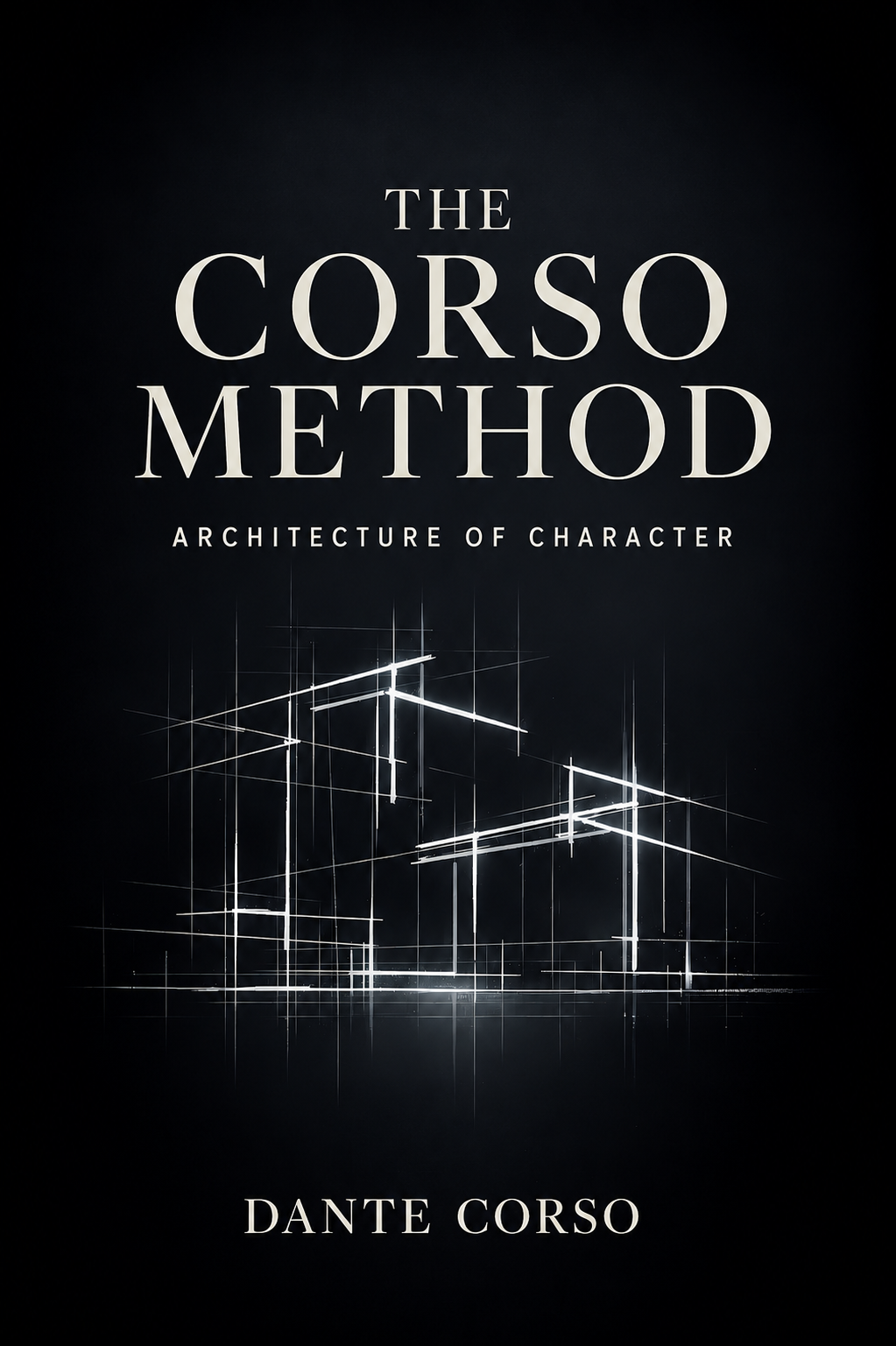
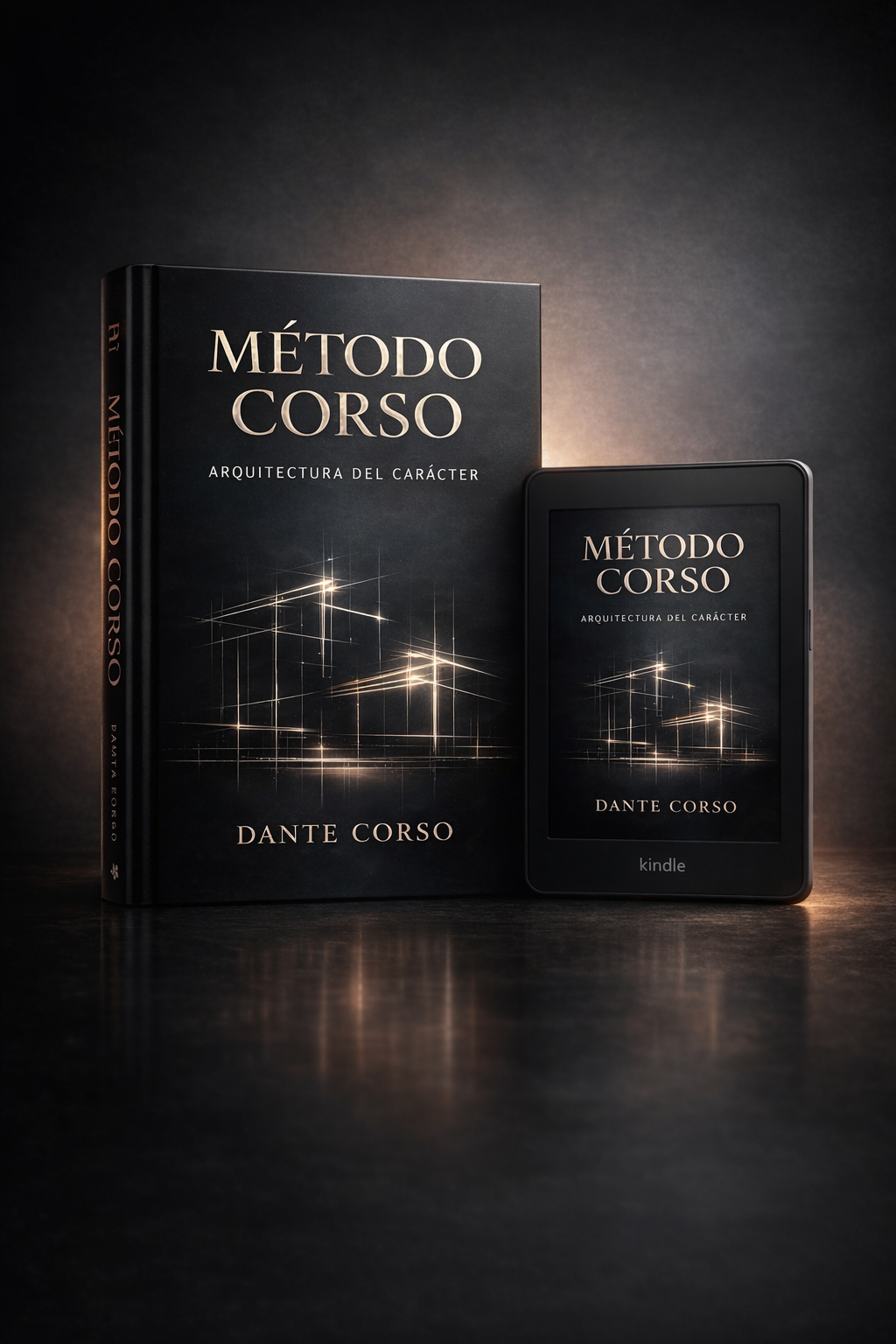
The Corso Method - Architecture of Character- English Edition
There is a moment most people spend their entire lives avoiding.
It isn't dramatic. It doesn't arrive announced. It happens in the silence left by everything that breaks at once — when there is no longer enough noise to cover what lies beneath. It is the moment of sitting down in front of what one actually is. Not in front of what one claims to be. Not in front of what one plans to become. In front of what remains when the excuses are removed, when the softer versions of oneself are stripped away, when the justifications built over years to avoid looking too closely finally run out.
Método Corso was born from that moment.
What this book is not:
It is not a habits book. It does not promise results in ninety days. It does not propose an optimized version of who you already were, nor a productivity system with manageable steps and visible rewards.
Conventional personal development has been offering exactly that for decades. And it works — temporarily. Because the problem was never a lack of techniques. The problem is what no technique touches: the invisible architecture that has been producing the same life for years.
What this book is:
Método Corso is a system of personal reconstruction built on a premise that does not negotiate: every life rests on an architecture formed by three elements — identity, standards and environment — that no one consciously designed but that operates with relentless precision. As long as that architecture remains intact, results tend to repeat. Not for lack of willpower. Not for lack of discipline. But because the structure that produces them has never been examined.
This book examines that structure.
The five confrontations:
The method proposes five confrontations. Not steps. Not phases of a program. Confrontations — because that is exactly what they are.
The first is with identity: the internal narrative that silently determines what kind of life a person considers possible. The second is with real standards — not the ones declared, but the ones demonstrated in what is tolerated, accepted, allowed to repeat. The third is with environment, that silent architect that produces behavior before willpower ever intervenes. The fourth is with comfort: character is not formed in ideal conditions, but in the exact moment when effort is chosen when it could have been avoided. The fifth is with one's own excuses — radical responsibility as an act of reclamation, not moral condemnation.
What these five confrontations produce has an ancient name and a contemporary meaning: character.
Who this book is for:
For those in the middle of a transition who don't know how to name what they feel. For those who have spent years reinventing themselves and are beginning to wonder whether it still makes sense to keep trying. For those who sense that the problem is not lack of discipline but something deeper and harder to see. For those who can no longer afford not to look.
It was not written from the authority of someone who arrived. It was written from the honesty of someone still walking — from a van facing the Atlantic, in the Canary Islands, building a system while needing it. Philosophy that emerges from comfort explains. Philosophy that emerges from fracture transforms.
What this book offers:
Not ease. Not promises that cannot be kept. Not the comfort of a process that will be pleasant or quick.
Only one thing.
Clarity. The clarity of someone who can no longer deceive themselves. The kind that forces you to see the path honestly, even when the path is demanding. The kind that, once held, cannot be entirely lost.
Dante Corso is the author name of the creator of Método Corso, a system of applied philosophy developed in the Canary Islands. This book is his first systematic work.
PDF & DOCX
metodocorso.com