
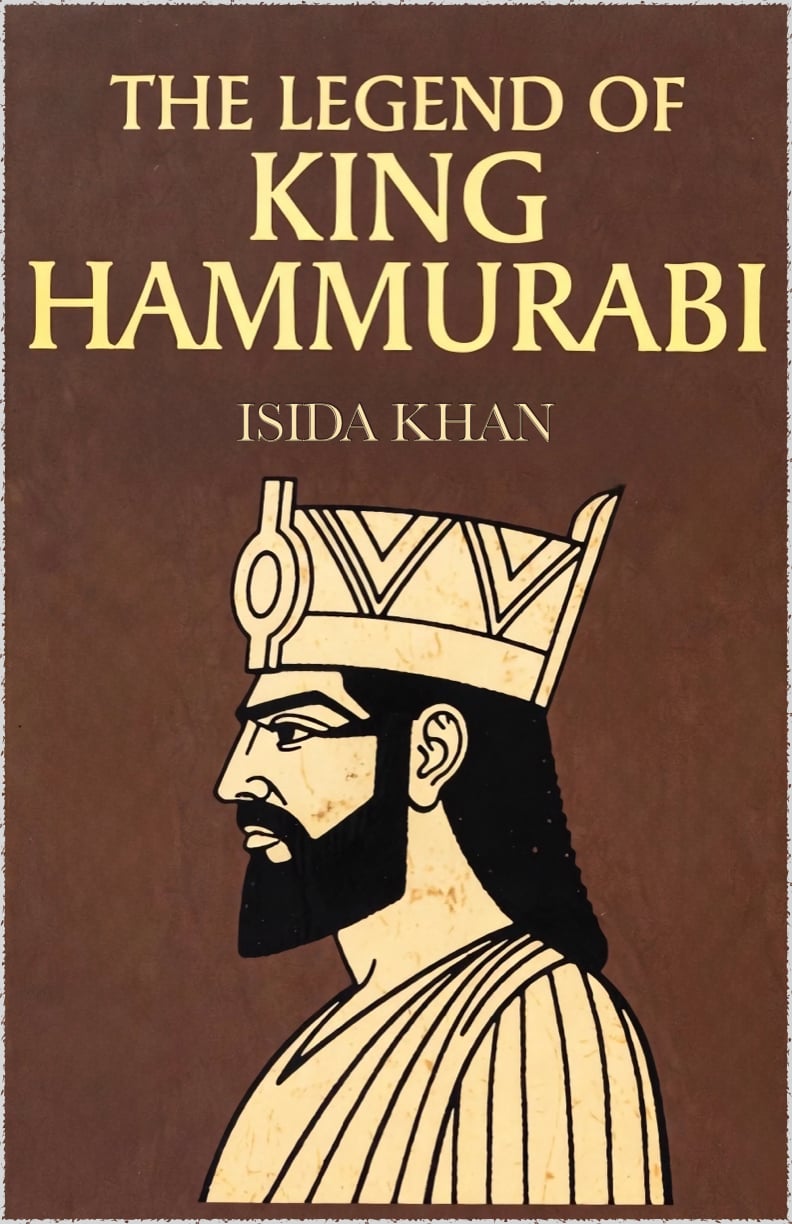
The Legend of King Hammurabi
A World That Once Was
In this culminating essay of The Nine-Edged Mirror, the narrative withdraws from the immediacy of the present hour and enters a timeless domain of retrospection. The world is no longer merely observed—it is apace recalled, reimagined, and rekindled. Thus The Legend of King Hammurabi emerges as both genesis and fracture—an ancient account, likely dreamt, that recast the very cadence of history.
What forh unfolds is other than a mere chronicle; rather, the legend resolves into meditation upon antiquity glimpsed at the threshold of its vanishing: a heedless world poised between coherence and dissolution, between the divine calling and imminent undoing.
This whimsical tale of the ancient East serves as a governing axis within the greater cosmology of The Molecule of Eternity. The figures who traverse this magical landscape—kings, visionaries, wanderers—reverberate across epochs, binding past, present, and future into a single, unresolved continuum. Herein, within the persistent presence of cyclical law, the past, however distant, endures as a pattern, an echo, and a warning.
A World That Once Was stands, therefore, as the terminal aperture of the twisted cycles of the novel. As myth, science, and philosophy converge, the legend resolves into profound contemplation on the preludes to metamorphosis, on transitions inevitable yet premature, and the cost of awakening before the appointed hour. The legend gathers the dispersed threads from all essays to become a resonant alignment, carrying The Molecule of Eternity into the fatal flight of fancy.