



Range Trading Explained — Measured (PDF Guide)
Buy the bottom of the range and sell the top is the first strategy most people are given, and it comes with no definition of a range at all. Without one you will find a range in any chart you look at, which is exactly why it feels like it always works.
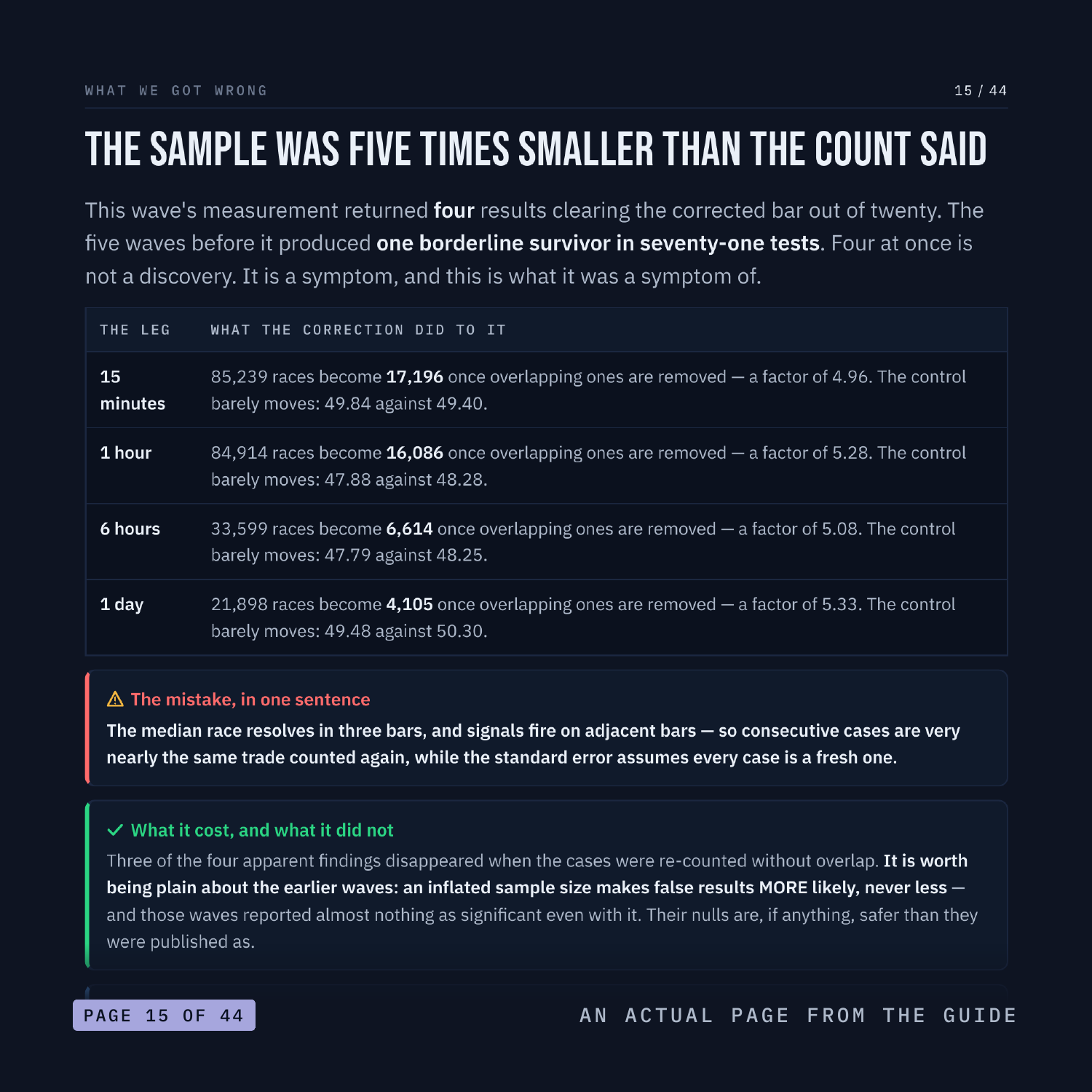
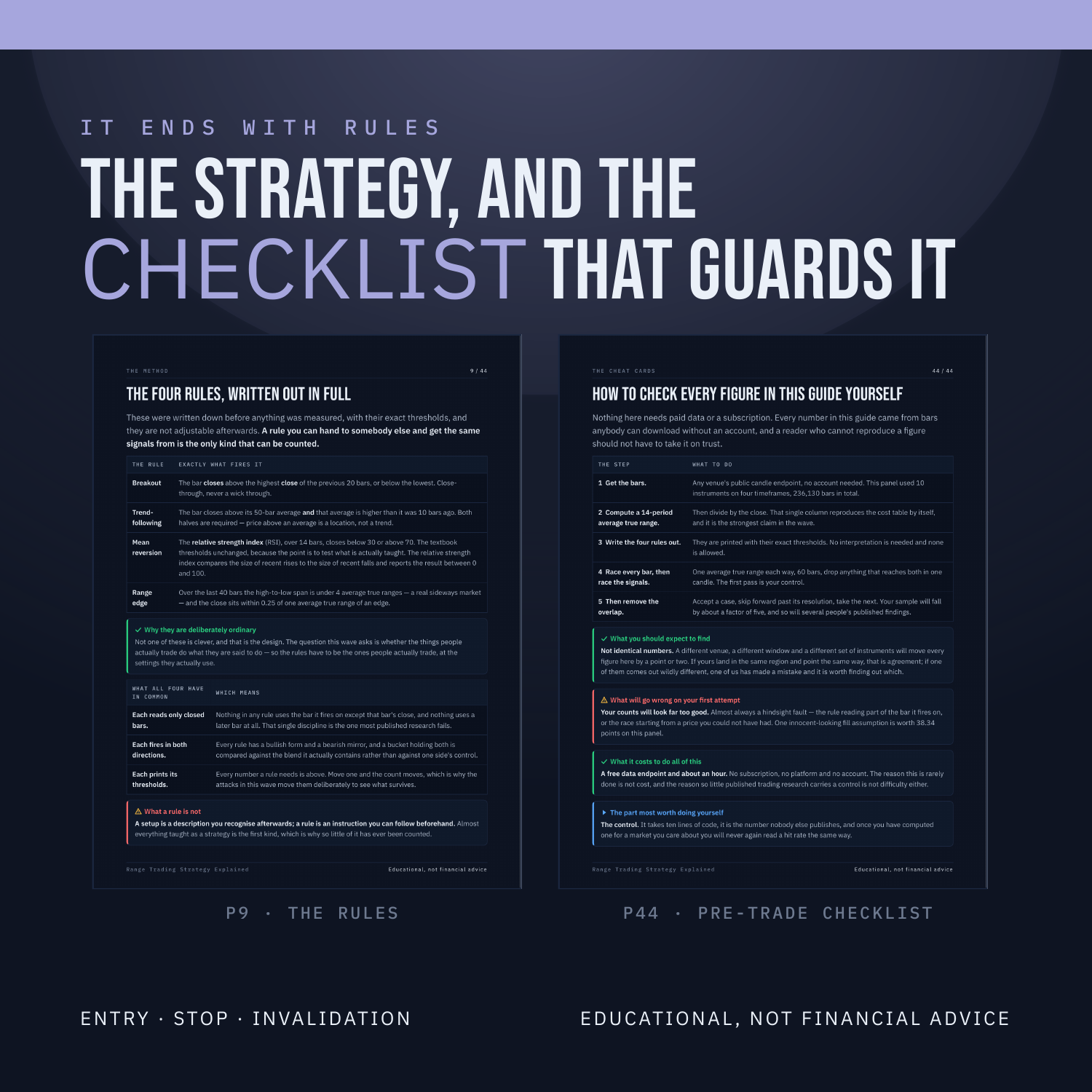
This guide writes the range down strictly enough to count, runs it on four bar sizes, and then does the arithmetic almost nobody does: works out how large an effect each sample could have detected. On three of the four legs the answer is larger than anything measured anywhere in this wave. This is a 44-page PDF that teaches Range Trading from the first thing you see on the screen through to a written strategy with an entry, a stop and an explicit rule for when the trade is wrong.
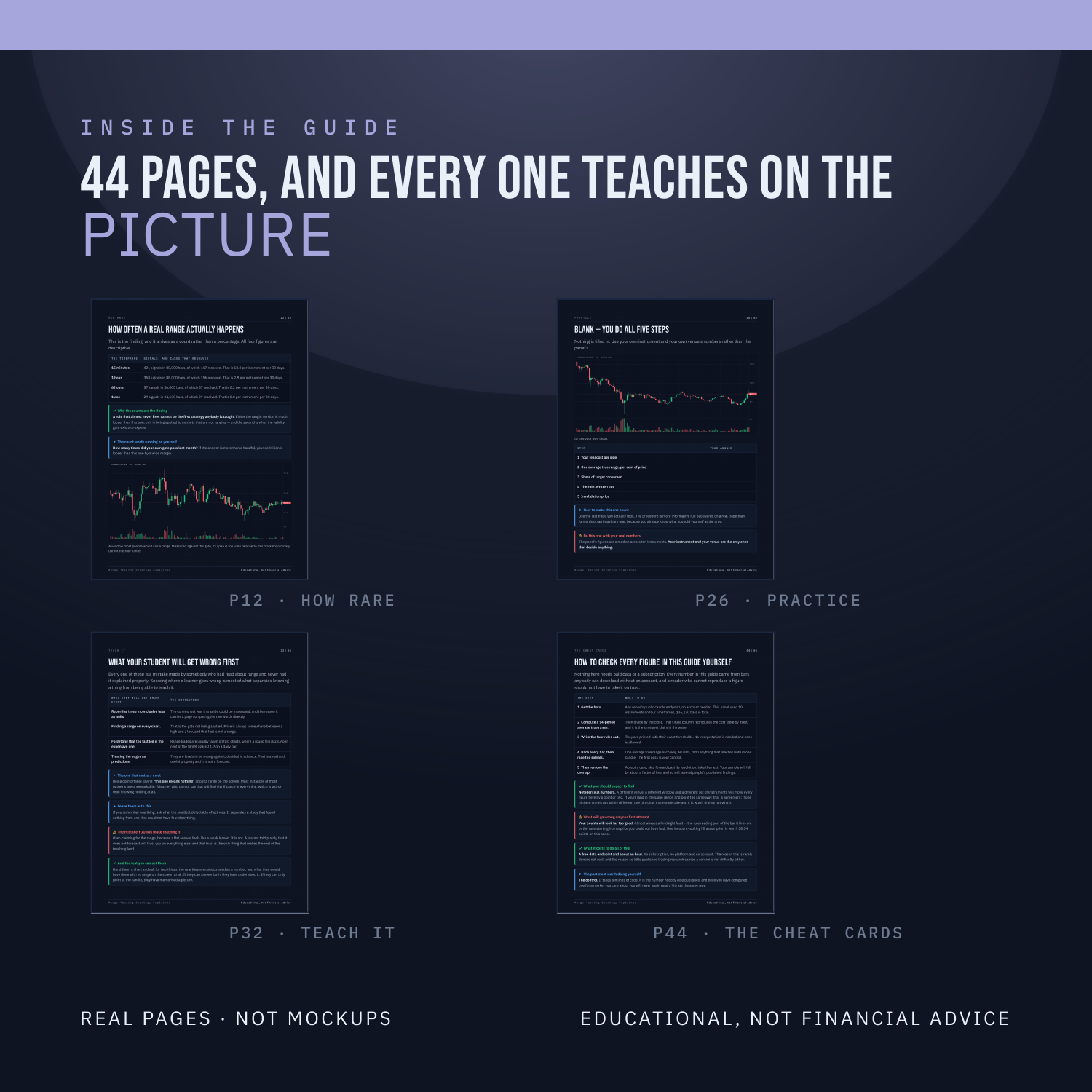
Nothing is taught underneath a chart. Every label sits on the candle, the line or the level it is describing, on real BTC, ETH, SOL and LINK charts. There are three quizzes on real charts, each followed by the same chart re-shown annotated with the reasoning, plus faded practice pages where the first steps are filled in and you finish the rest.
WHAT'S INSIDE
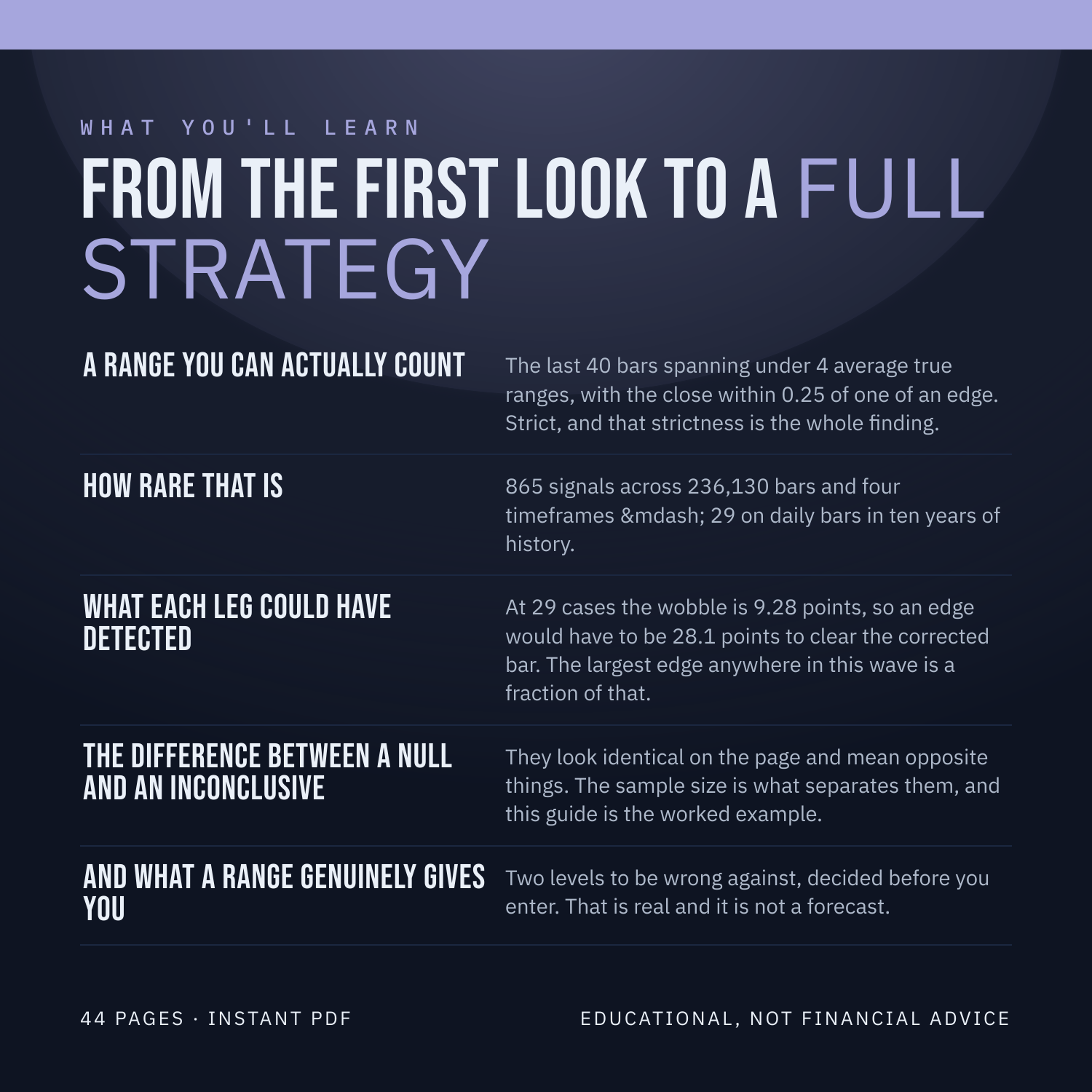
A range you can actually count -- The last 40 bars spanning under 4 average true ranges, with the close within 0.25 of one of an edge. Strict, and that strictness is the whole finding.
How rare that is -- 865 signals across 236,130 bars and four timeframes -- 29 on daily bars in ten years of history.
What each leg could have detected -- At 29 cases the wobble is 9.28 points, so an edge would have to be 28.1 points to clear the corrected bar. The largest edge anywhere in this wave is a fraction of that.
The difference between a null and an inconclusive -- They look identical on the page and mean opposite things. The sample size is what separates them, and this guide is the worked example.
And what a range genuinely gives you -- Two levels to be wrong against, decided before you enter. That is real and it is not a forecast.
WHAT YOU'LL BE ABLE TO DO
State a range as three numbers rather than as a shape.
Apply a validity gate before applying range logic.
Work out the smallest effect a sample could have detected.
Tell a null from an inconclusive, and say which you are reading.
Count how often your own definition actually fires.
AN HONEST NOTE
Range Trading is a clue, not a crystal ball. It describes what price has already done. This guide contains no win-rates, no backtest results and no promises about what you will make, because nobody can verify those and you should not trust anyone who prints them. What it hands you instead is a set of rules you can test yourself on TradingView in an afternoon. Educational, not financial advice.
Instant download. 44 pages, PDF.