
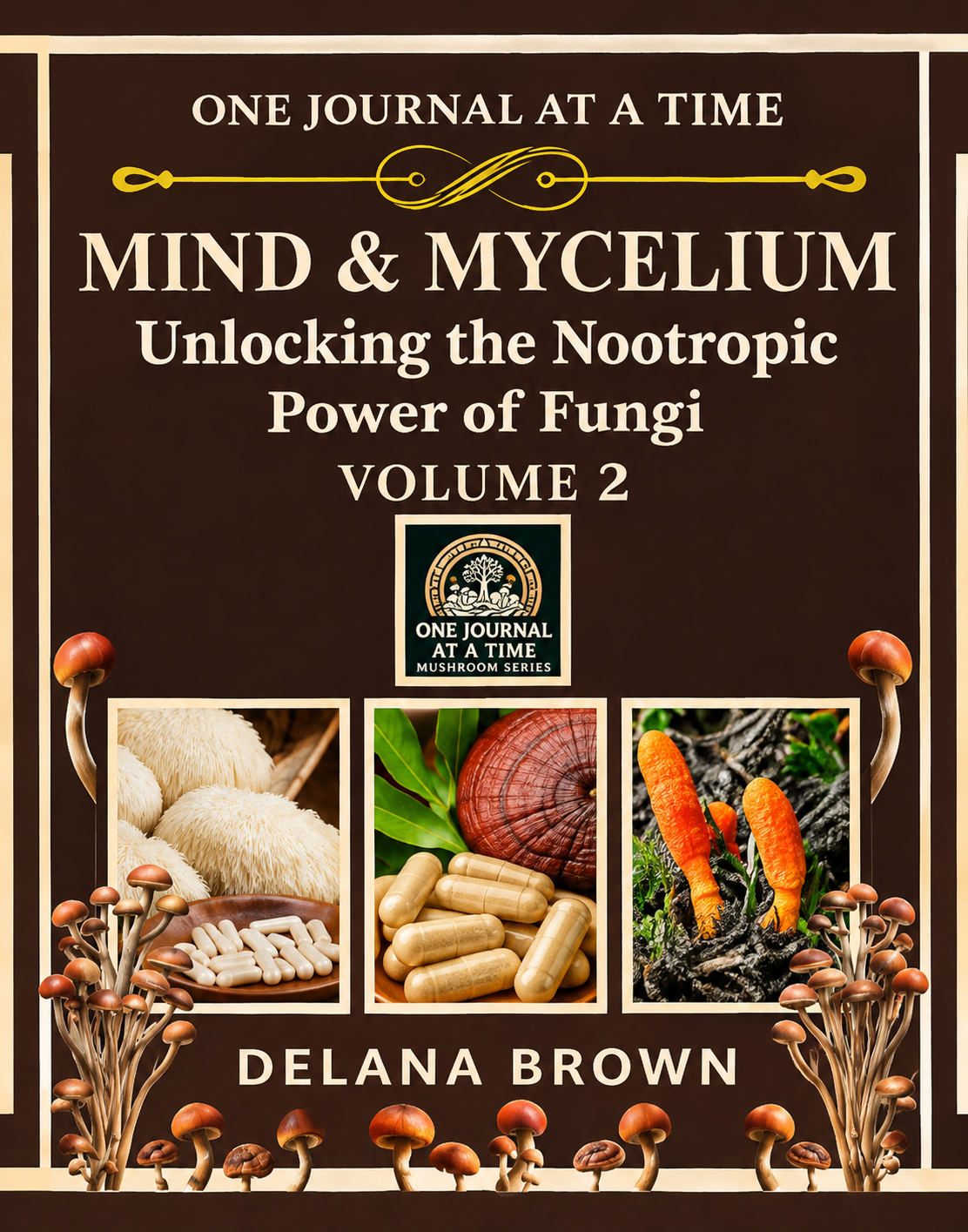


Mind & Mycelium: Unlocking the Nootropic Power of Fungi-Featuring Lion’s Mane, Reishi & Cordyceps Mushrooms
MIND & MYCELIUM — VOLUME 2
Unlocking the Nootropic Power of Fungi
Featuring Lion’s Mane, Reishi & Cordyceps Mushrooms
One Journal at a Time — Mushroom Cultivation, Neuroscience & Human Biology Series
Grow. Focus. Heal. Transform. One Journal at a Time.
Beyond Mushroom Cultivation: Discover the Science of Fungi and the Human Brain
What if you could learn not only how to cultivate extraordinary mushrooms, but also understand the fascinating biological processes that make their compounds so important to modern scientific research?
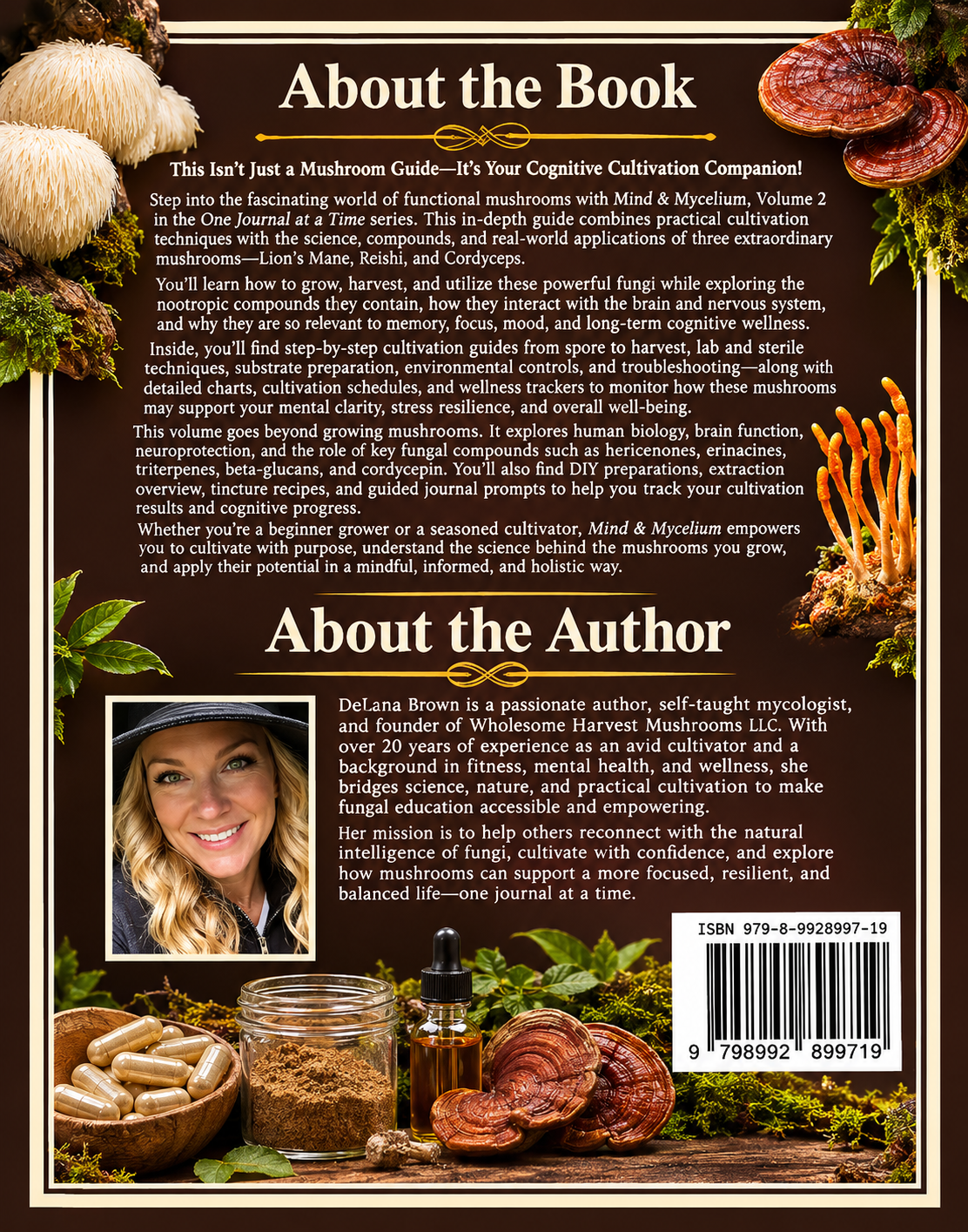
Mind & Mycelium: Unlocking the Nootropic Power of Fungi is Volume 2 of the One Journal at a Time series—a comprehensive, 250-page educational journey connecting mushroom cultivation, neuroscience, fungal biochemistry, human physiology, and the emerging science of cognitive wellness.
This is not an ordinary mushroom-growing manual.
While traditional cultivation books teach you how to grow mushrooms, Mind & Mycelium takes the experience further by exploring what these mushrooms contain, how their compounds interact with biological systems, and why researchers are investigating their potential relevance to memory, cognition, stress physiology, immune function, and neurological health.
The book centers on three of the most scientifically fascinating functional mushrooms:
- Lion’s Mane (Hericium erinaceus) — Investigated for its distinctive compounds, including hericenones and erinacines, and their possible relationships with nerve growth factor signaling, neuroplasticity, and cognitive function.
- Reishi (Ganoderma species) — Known for its complex polysaccharides, beta-glucans, and triterpenoids, which are studied for immunological activity, inflammatory signaling, and other biological effects.
- Cordyceps (Cordyceps militaris and related fungi) — Studied for compounds including cordycepin and other metabolites, with research exploring cellular metabolism, inflammatory pathways, and physiological responses to stress.
Each mushroom becomes a gateway to understanding the remarkable relationship between the fungal kingdom and human biology.
Understanding Nootropics: The Science of Cognitive Function
Nootropics are substances investigated or used for their potential effects on cognitive processes such as memory, attention, learning, and mental performance.
But understanding nootropics requires more than reading claims about improved focus or brain health.
It requires understanding the brain itself.
Mind & Mycelium introduces readers to the biological foundations of cognitive function, exploring concepts such as:
- Neurons and neurotransmission: How nerve cells communicate and transmit information.
- Neuroplasticity: The brain's ability to adapt, reorganize, and respond to experiences.
- Nerve growth factor (NGF): A signaling protein involved in the survival and maintenance of certain neurons.
- Neuroinflammation: How immune activity within the nervous system may influence neurological function.
- Oxidative stress: The relationship between reactive molecules, cellular defenses, and neurological health.
- The gut-brain axis: The complex communication pathways connecting the digestive system, microbiota, immune system, and brain.
- Stress physiology: How the body's responses to stress can influence attention, mood, memory, and overall well-being.
The goal is to help readers understand the human biological systems that researchers examine when investigating mushroom-derived compounds.
Because understanding what a mushroom contains is only the beginning. Understanding how the human body responds to those compounds is where the science becomes truly fascinating.
The Compounds Behind the Mushrooms
One of the most important elements of Mind & Mycelium is its exploration of fungal chemistry and the biological significance of mushroom-derived compounds.
Lion’s Mane: Hericenones, Erinacines & Neural Signaling
Lion’s Mane has attracted scientific interest because of compounds investigated for their effects on nerve growth factor-related pathways and neuronal biology.
The book introduces the distinction between compounds associated with different fungal structures, including the fruiting body and mycelium, while exploring the scientific questions surrounding their biological activity.
Readers examine why laboratory findings involving neuronal signaling and neurotrophic factors are relevant to neuroscience—and why promising preclinical findings do not automatically establish clinical benefits in humans.
Reishi: Beta-Glucans, Triterpenoids & Immune Biology
Reishi contains a complex mixture of polysaccharides and triterpenoids that have been investigated for their effects on immune signaling and other cellular pathways.
Readers explore the relationship between fungal beta-glucans and immune recognition, along with the biological importance of inflammatory signaling and cellular regulation.
Cordyceps: Cordycepin, Cellular Metabolism & Biological Activity
Cordyceps is particularly fascinating because of cordycepin, also known as 3′-deoxyadenosine.
Research has investigated this compound's effects on cellular signaling, RNA-related processes, and metabolic and inflammatory pathways.
Mind & Mycelium connects these scientific concepts with the broader study of human physiology, helping readers understand why fungal metabolites are of interest to researchers.
Human Biology: How Mushroom Compounds Interact With the Body
This is one of the defining features of the book and the entire One Journal at a Time series.
Rather than simply listing mushroom compounds and their proposed benefits, the educational approach connects fungal chemistry with the biological systems those compounds may influence.
Readers are encouraged to explore questions such as:
What happens after a mushroom compound enters the digestive system?
How do digestion, absorption, metabolism, and elimination influence whether a compound reaches its proposed biological target?
How do compounds interact with cells?
What roles do receptors, enzymes, immune cells, signaling proteins, and metabolic pathways play in biological responses?
Can compounds influence the nervous system?
What is the difference between activity observed in isolated cells, animal studies, and controlled human clinical trials?
Why do preparation methods matter?
How might the chemical characteristics of polysaccharides, triterpenoids, and other metabolites influence their extraction, stability, and potential bioavailability?
Why are individual responses different?
How might medications, medical conditions, genetics, metabolism, and other factors influence safety and biological responses?
These questions form an essential bridge between cultivation, fungal chemistry, and evidence-based wellness education.
The Latest Scientific Research: Separating Discovery From Evidence
Functional mushrooms are an active area of scientific investigation, and new research continues to expand our understanding of their chemistry and biological activity.
Mind & Mycelium encourages readers to approach this evolving field with curiosity and scientific discipline.
Explore the significance of:
- Laboratory studies investigating mushroom compounds and cellular mechanisms.
- Preclinical research examining neuronal, immune, and metabolic pathways.
- Human clinical trials exploring cognition, mood, fatigue, and other outcomes.
- Differences between whole mushrooms, mycelium, extracts, and isolated compounds.
- Bioavailability, dosage, study design, and the limitations of current evidence.
- The importance of distinguishing promising research from proven therapeutic effects.
The book provides a foundation for understanding the science while encouraging readers to continue following new peer-reviewed research as it becomes available.
From Laboratory to Harvest: Learn to Cultivate Lion’s Mane, Reishi & Cordyceps
Scientific knowledge becomes even more meaningful when you understand the living organisms producing these compounds.
Mind & Mycelium combines its biological discussions with practical mushroom cultivation education, guiding readers through the fascinating process of growing these three species.
Cultivation topics include:
- Fungal anatomy, mycelial development, and species-specific growth characteristics.
- Laboratory preparation and sterile technique.
- Culture work, agar, and liquid culture fundamentals.
- Grain spawn and substrate preparation.
- Cultivation bags, containers, and growing environments.
- Environmental conditions, temperature, humidity, and fresh-air exchange.
- Fruiting development, harvesting, and handling.
- Contamination identification, prevention, and troubleshooting.
- Detailed charts, cultivation schedules, and environmental tracking.
By learning the fundamentals of these three species, readers develop cultivation knowledge that can be applied to many other gourmet and functional mushrooms.
Mushroom Compounding, Extractions & Preparations
Cultivating mushrooms is only one part of understanding their potential applications.
Mind & Mycelium also introduces readers to the preparation of mushroom-based products and the importance of understanding fungal chemistry.
Topics include:
- Mushroom drying and preparation.
- The principles behind water and alcohol extraction.
- Tinctures and mushroom-based preparations.
- Wellness teas and culinary applications.
- The relationship between extraction methods and different chemical constituents.
- The importance of proper identification, preparation, storage, and product consistency.
Readers gain an appreciation for why not all mushroom preparations are chemically equivalent and why understanding the underlying science matters.
Dear Doctor: Bringing Mushroom Science Into the Healthcare Conversation
An important part of the One Journal at a Time educational philosophy is Dear Doctor, a feature designed to help readers approach healthcare conversations with greater preparation, confidence, and scientific understanding.
Rather than relying on marketing claims or unverified health information, readers are encouraged to bring thoughtful questions and research-based discussions to their healthcare professionals.
The Dear Doctor approach emphasizes:
- Understanding the biological mechanisms being investigated.
- Asking questions about mushroom-derived compounds and cognitive wellness.
- Discussing potential medication interactions and contraindications.
- Recognizing the differences between nutritional products, supplements, and approved medical treatments.
- Considering individual medical histories and safety concerns.
- Organizing research questions and personal wellness observations.
Dear Doctor encourages informed collaboration—not self-diagnosis or the replacement of professional medical care.
Your Interactive Cultivation & Cognitive Wellness Journal
Mind & Mycelium is designed to be more than a reference book. It is also a companion for observation, experimentation, and reflection.
Throughout the experience, readers are encouraged to document both their mushroom-growing progress and their personal wellness observations.
Features include:
- Detailed cultivation charts and environmental trackers.
- Mushroom growth schedules and experimental records.
- Wellness calendars connecting cultivation with memory, mood, and focus assessments.
- Guided cognitive reflection exercises.
- Mindful cultivation prompts exploring music, affirmations, and intention.
- Space to document personal observations, challenges, and discoveries.
These tools encourage readers to develop a thoughtful, organized approach to cultivation and personal learning. Wellness journaling is intended for self-reflection rather than proof that a particular mushroom preparation produces a clinical effect.
Who Is This Book For?
Mind & Mycelium is written for mushroom cultivators, aspiring mycologists, functional mushroom enthusiasts, wellness educators, students of human biology, and curious readers interested in neuroscience and the emerging science of fungal compounds.
Whether you are beginning your first Lion’s Mane cultivation project, exploring Reishi chemistry, studying Cordyceps metabolites, or developing a deeper understanding of cognitive biology, this book provides a multidisciplinary foundation for continued discovery.
More Than a Book — A Different Way to Understand Mushrooms
Three extraordinary fungi. Hundreds of scientific questions. One interconnected journey through cultivation, chemistry, neuroscience, and human biology.
Mind & Mycelium invites readers to look beyond the mushroom itself and examine the intricate biological relationships that make fungi such remarkable subjects of scientific study.
Discover how to cultivate them, understand their chemistry, investigate the research, and connect what you learn with the extraordinary complexity of the human body.
MIND & MYCELIUM — VOLUME 2
Unlocking the Nootropic Power of Fungi
Grow. Focus. Heal. Transform. One Journal at a Time.
Educational disclaimer: This publication is intended for mycological, scientific, and wellness education. Findings from laboratory or animal research do not necessarily demonstrate benefits in humans. Mushroom-derived products are not established treatments for neurological or psychiatric conditions, and readers should consult qualified healthcare professionals before using supplements, particularly when taking medications or managing medical conditions.