



Competitor Analysis for Small Business: Monthly Guide
The Competitor File: competitor analysis for small business, as a monthly routine.
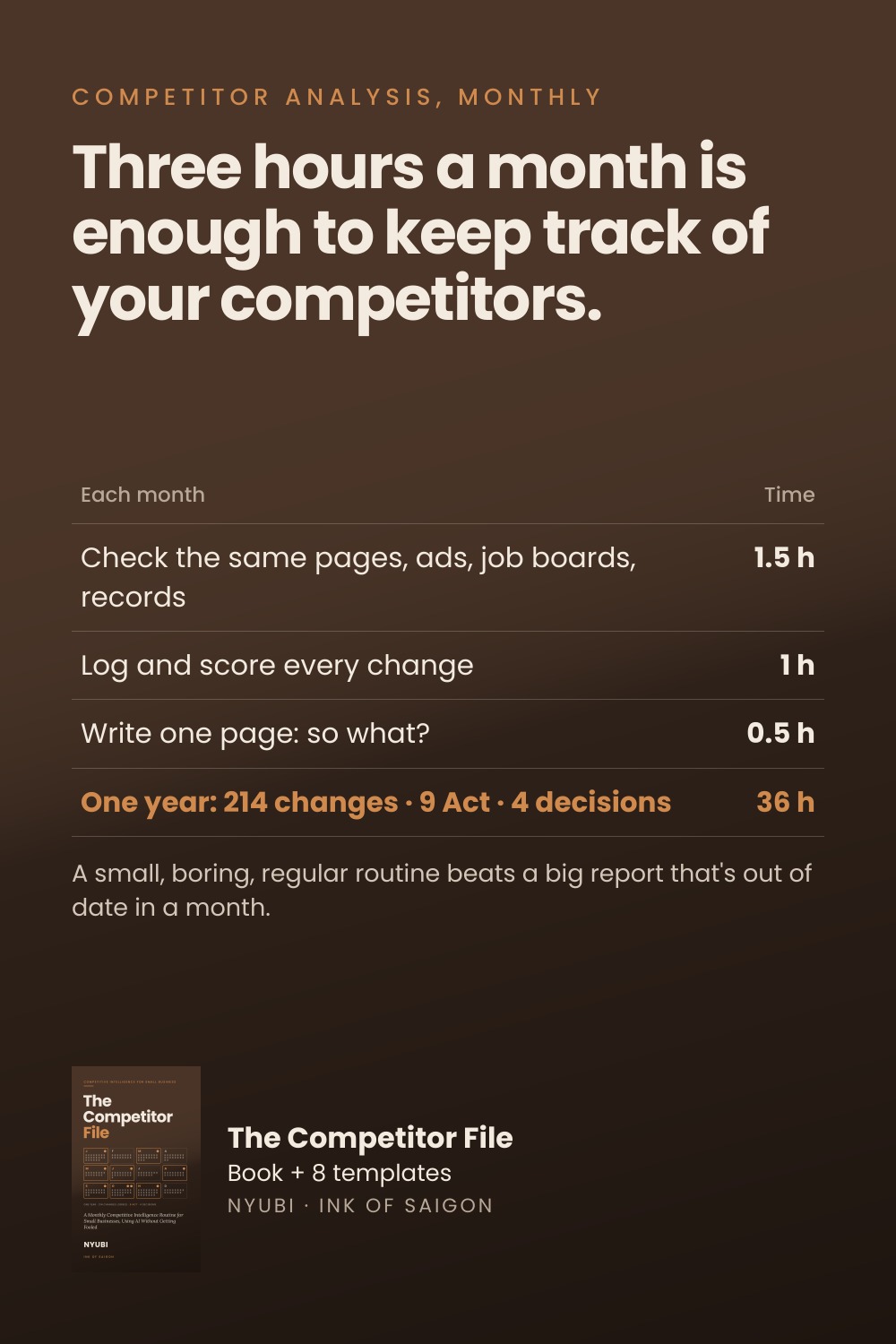
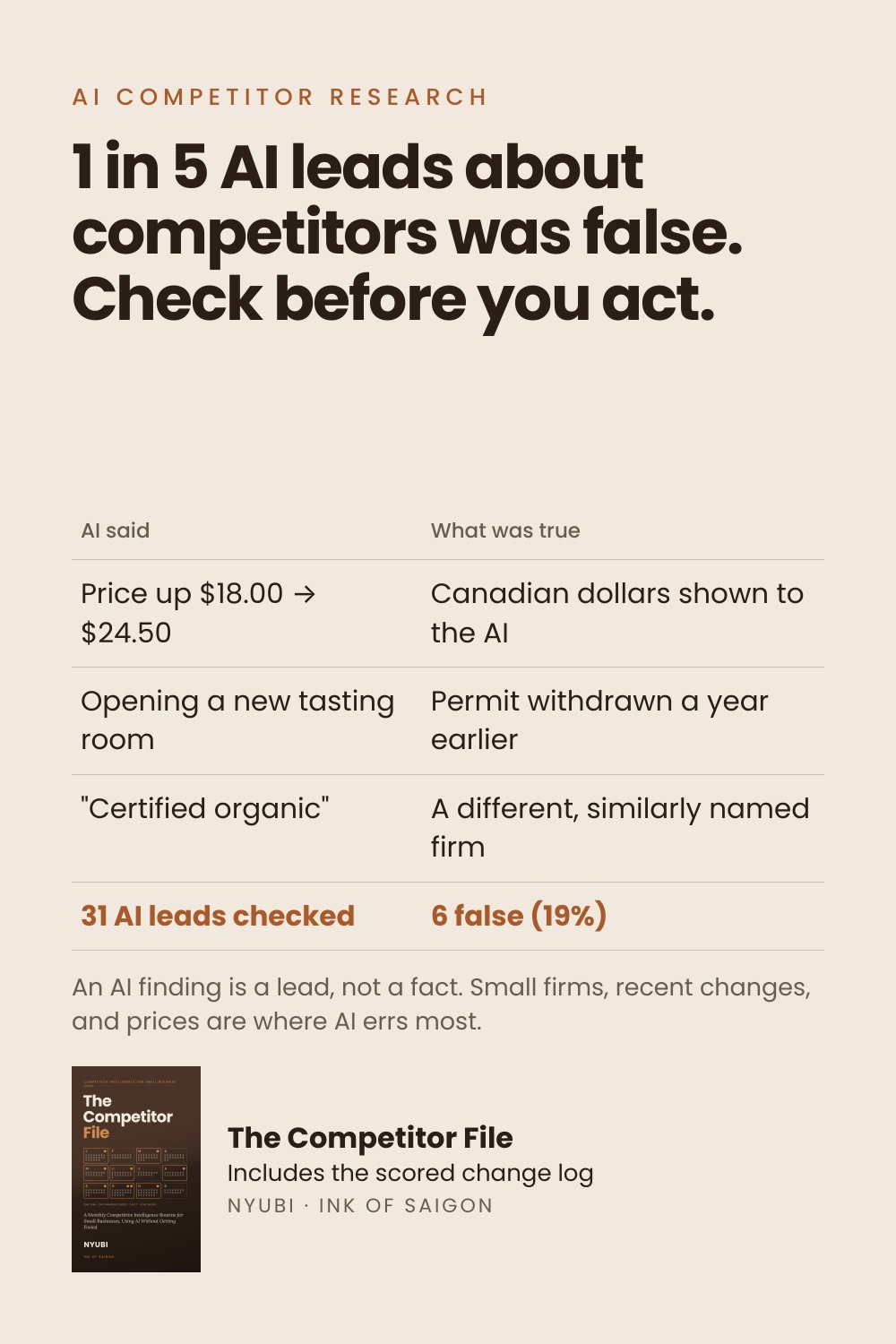
One small business logged 214 competitor changes in a year. Nine needed a decision. Four changed something. And 1 in 5 of the AI leads it checked turned out to be false.
Most small businesses check on competitors only when something goes wrong: a lost account, a bad month, a customer who says "the other place offers that." Others write one big competitor report that's out of date within weeks. Neither tells you what a competitor has started doing, which is usually the thing you most need to know.
This book shows a different way: a small, regular, deliberately boring routine that takes about three hours a month. You keep a short list of competitors, check the same things every month, log every change with where you saw it, score it on two questions (how sure are we? and does it matter?), and write one page that answers so what?
AI tools make the checking much faster. They're also least reliable on exactly what competitor research asks about: small firms, recent changes, and prices. So every AI finding goes in the file as a lead to check, never as a fact to act on.
The book follows one composite business, a small specialty coffee roaster, through a full year of its competitor file, month by month, with the actual one-page report from every month.
What's inside
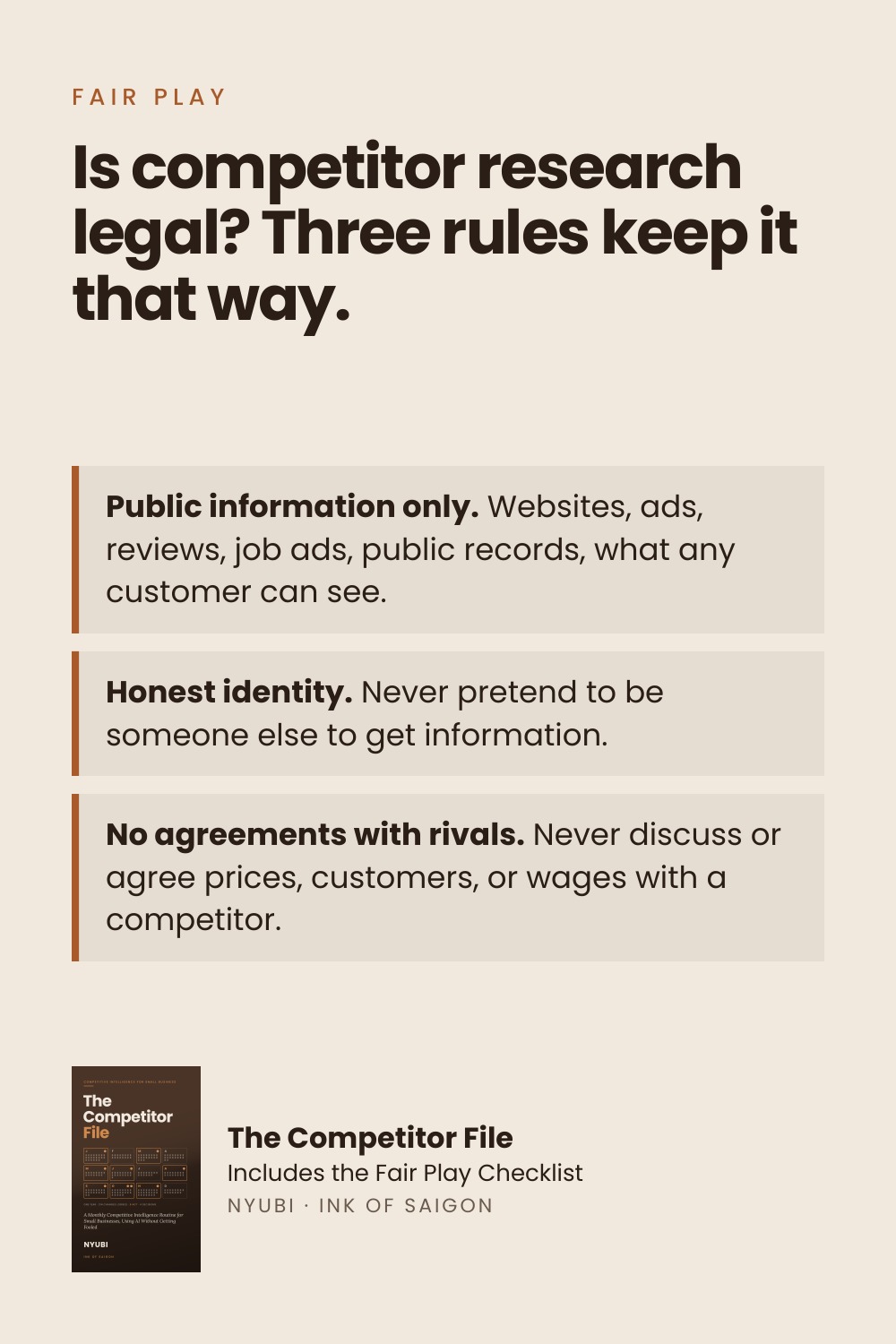
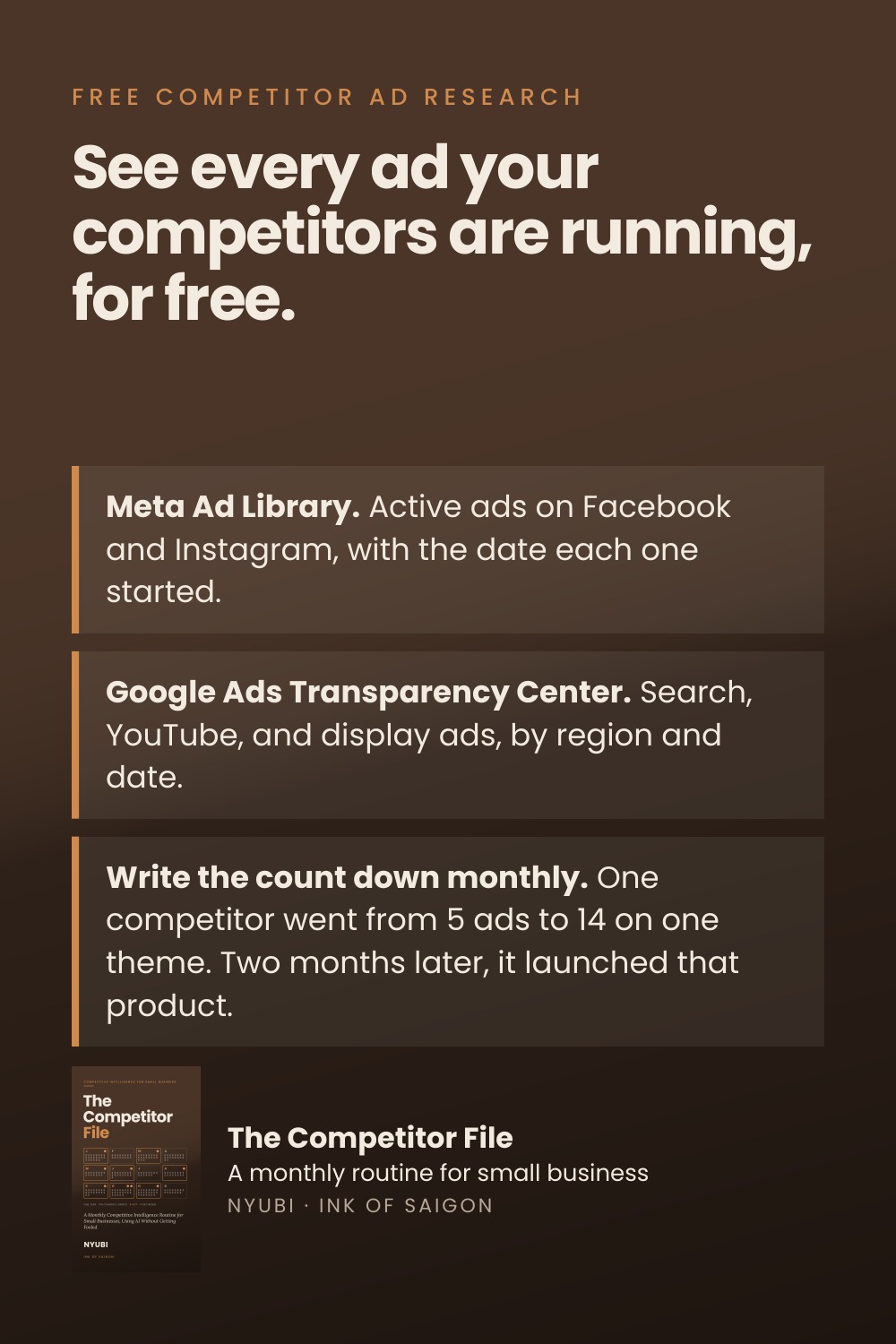
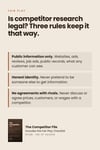
- Part One: Setting Up the File. Why three hours a month beats a big report. The fair play rules: public information only, honest identity, no agreements with rivals (trade secrets, scraping, and antitrust in plain words). Choosing five or six competitors, including the one you haven't noticed. The ten areas to watch. Where the evidence lives: websites, the Wayback Machine, ad libraries, job boards, public records, reviews. Using AI without being fooled. Building the workbook and the monthly page.
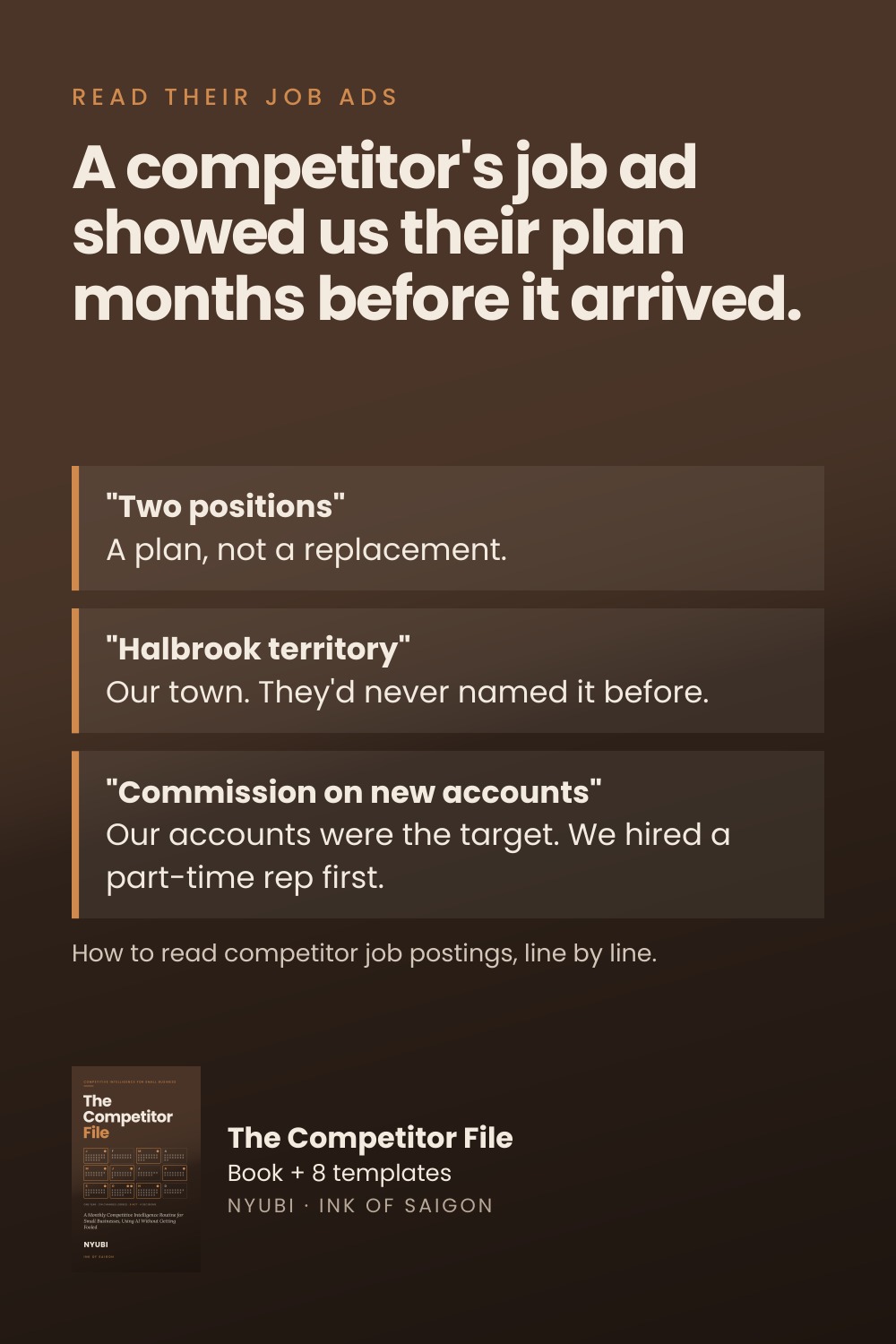
- Part Two: Twelve Months. January: redrawing the map. February: their words. March: their customers' reviews. April: offers and prices (records only). May: where they sell. June: who they hire. July: the new kid. August: visits done honestly. September: their ads. October: the account at risk. November: holiday moves. December: the year in one page.
- Part Three: Using the File. From signal to decision, including when the right answer is "no change." Sharing findings with staff without spreading rumors. Seeing what competitors can see about you. A one-hour version and a growing-team version.
Appendices include a template guide, Fern Hill's year at a glance, a source directory of free and low-cost tools and public records, and a glossary.
No prompt lists. No dashboards. A method that works with any AI tool, or none.
The Template Pack (Book + Template Pack version)
Spreadsheets (Excel, Google Sheets, Apple Numbers; no macros):
- The Competitor File workbook: roster, profiles, the scored change log (214 example entries), price and offer ledger, competitor review tally, and a year summary that counts itself
- Monthly Calendar and Time Budget: the twelve-month plan and hours against budget
- Wholesale Account Risk Sheet: which key accounts are exposed to a competitor's move, and how much is at stake each month
Word templates:
- Monthly Competitor Report (one page, with a filled-in example)
- Competitor Profile
- Team Briefing Note
Fillable PDFs:
- Mystery Shop and Visit Worksheet
- Fair Play Checklist
Who it's for: owners and managers of small businesses (local services, shops, online brands, and B2B suppliers) who know competitors matter, have about three hours a month to give, and don't want a $50 to $500 monthly software subscription to find out what changed.
Details
- 301 pages (PDF, 6 × 9 in) and EPUB
- Sources given in footnotes; checked October 2026
- The example businesses, people, and figures are composites
- Legal summaries are general information about U.S. law, not legal advice
- Records competitors' prices; doesn't teach pricing strategy
By Nyubi. Published by Ink of Saigon.