

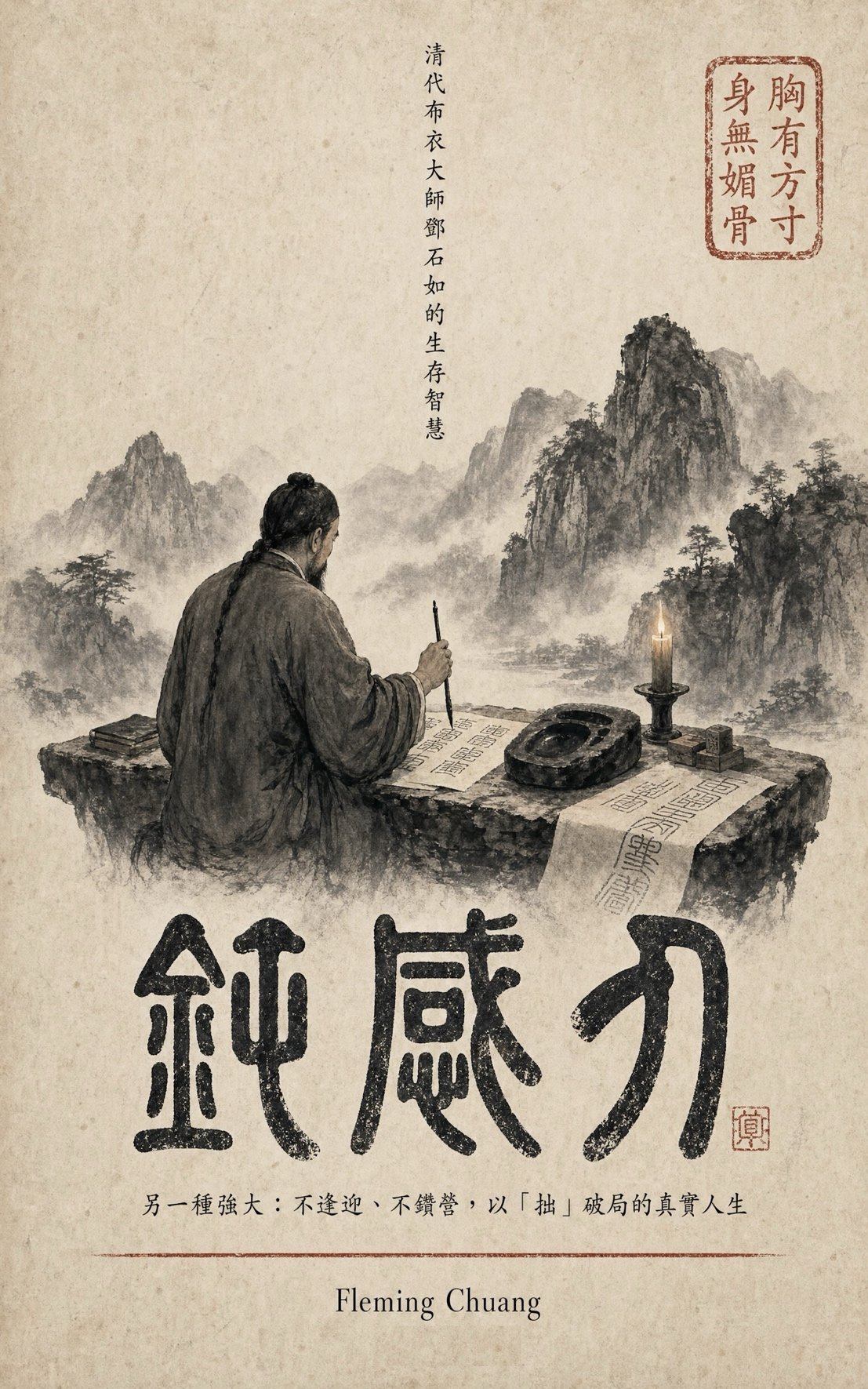
The Power of Thick Skin
In an age of networking, self-promotion, and instant success, what if the strongest way forward were to stop performing cleverness?
The Power of Thick Skin tells the remarkable story of Deng Shiru, a poor, self-taught commoner of Qing-dynasty China who rose from chopping wood and selling cakes to becoming one of his era’s greatest calligraphers and seal carvers. He had no official rank, wealthy family, or political ambition. Instead, he possessed a carving knife, a brush, an iron inkstone, and the discipline to practice until his skill could no longer be ignored.
Deng’s life offers more than an inspiring rise from poverty. It reveals a mature way to move through a world of power, temptation, conflict, and social pressure. Drawing on his short classic On Conduct in the World, this book develops five iron rules: read people clearly, guard your unpolished self, yield strategically, cultivate magnanimity, and know when to stop. It then distills them into three everyday principles: do not invite trouble or fear trouble; owe no one and keep your conscience clear; do not cling and do not isolate.
Here, “thick skin” means being slow to react to praise, money, status, and insult—but deeply responsive to dignity, responsibility, and inner truth. Deng Shiru’s example offers a quiet alternative to flattery and scheming: master the work in your hands, remain upright before the powerful, and let character become your strongest background.