
The Composure Codex
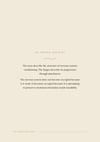
Some people do not realize they are emotionally disappearing until they notice how much of their life has become interpretation.
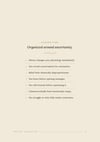
Monitoring tone.
Analyzing pauses.
Rehearsing honesty before sending it.
Trying not to say too much.
Waiting for relief.
Feeling their body soften when a name appears on their phone.
Over time, composure stops feeling like self-respect and starts feeling like survival.
The Composure Codex is a study of what happens internally when connection and instability begin occupying the same emotional space. It explores attachment, ambiguity, emotional inconsistency, hypervigilance, self-erosion, discernment, and emotional congruence through a restrained editorial lens.
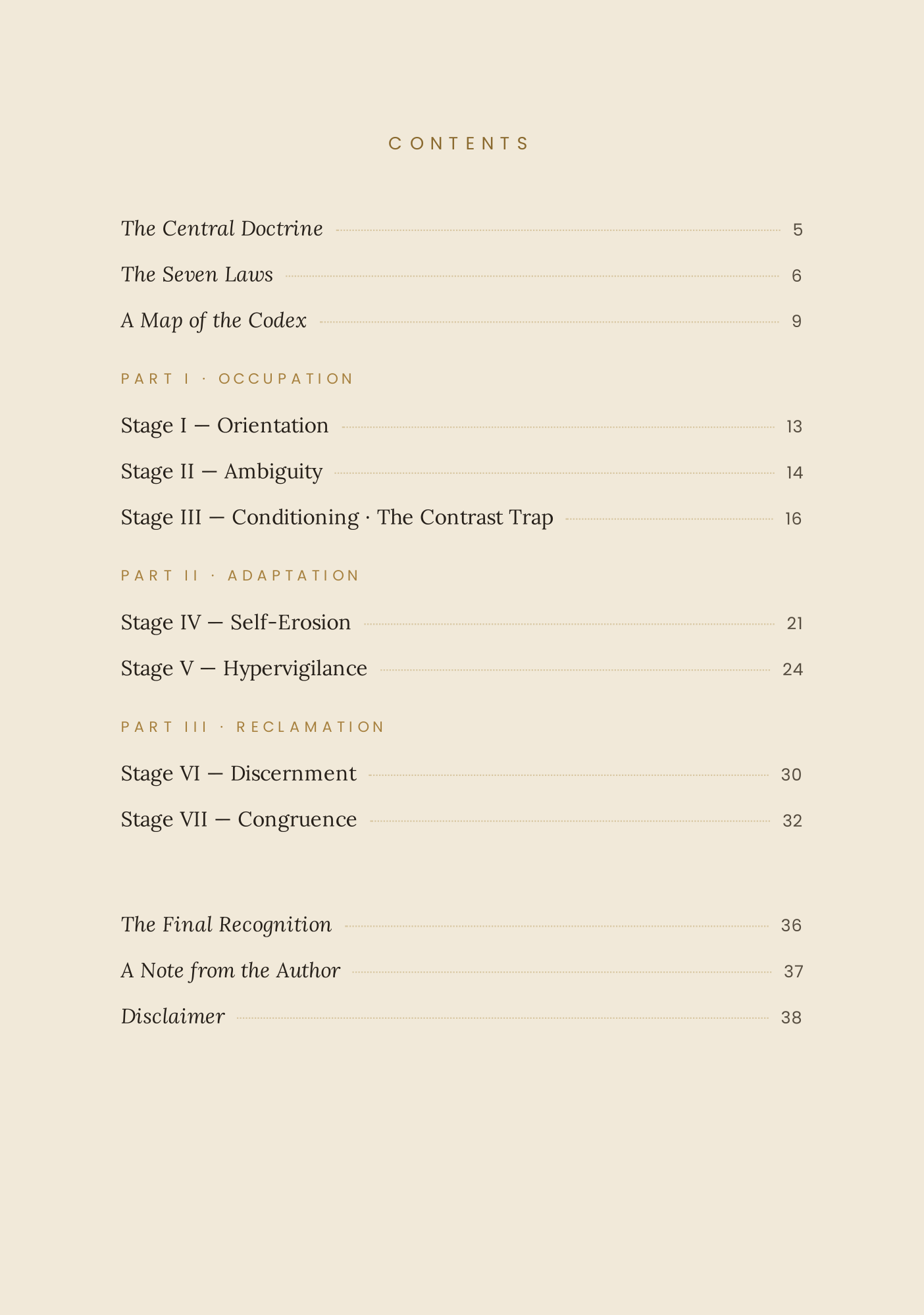
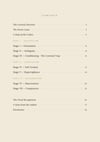
It moves through three parts:
Occupation — how someone else’s inconsistency quietly takes up residence in your nervous system.
Adaptation — the survival patterns that form around it: the monitoring, the over-reading, the shrinking.
Reclamation — how the body recalibrates, and what composure becomes when it’s self-respect again instead of vigilance.
Inside, you’ll find:
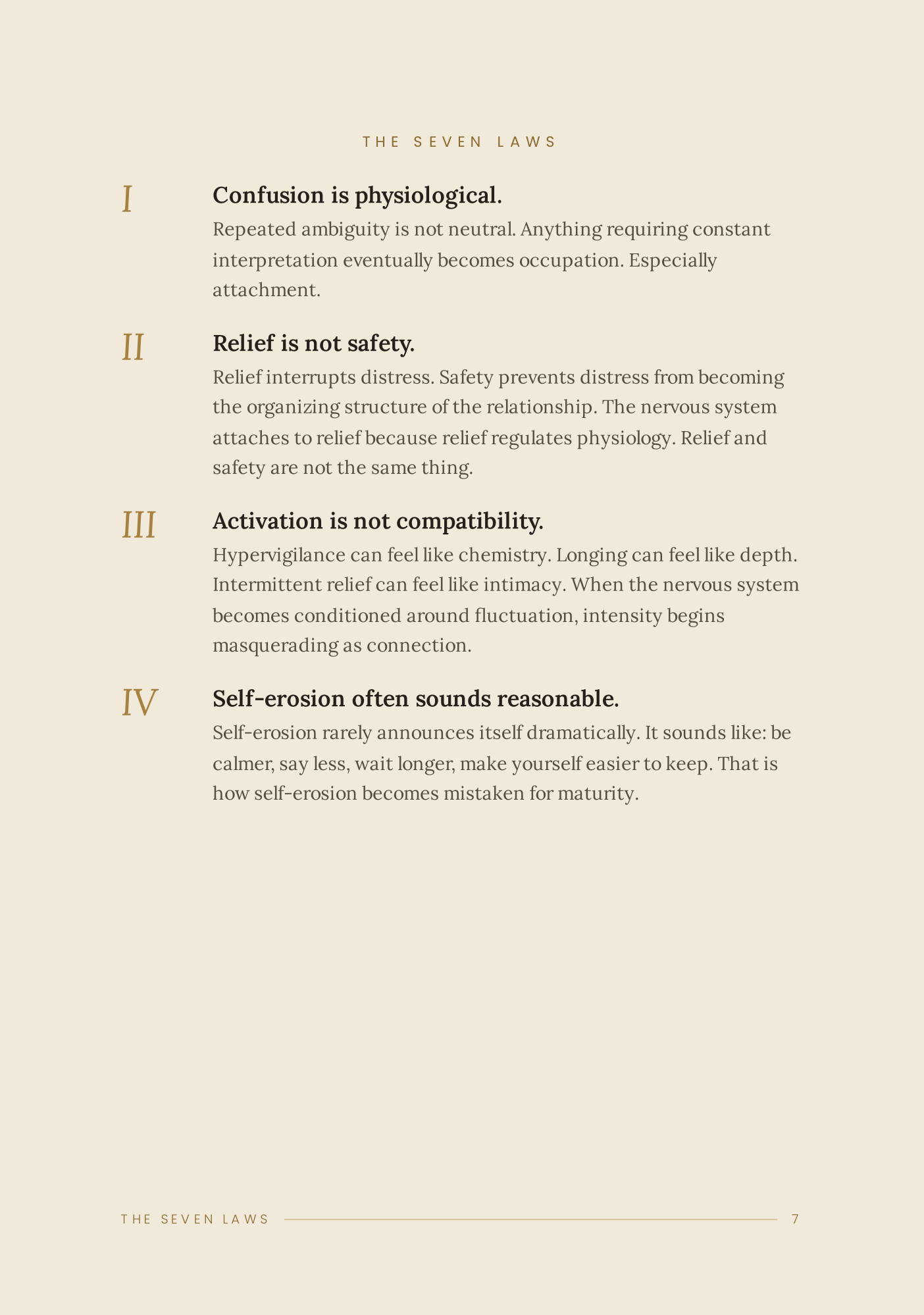
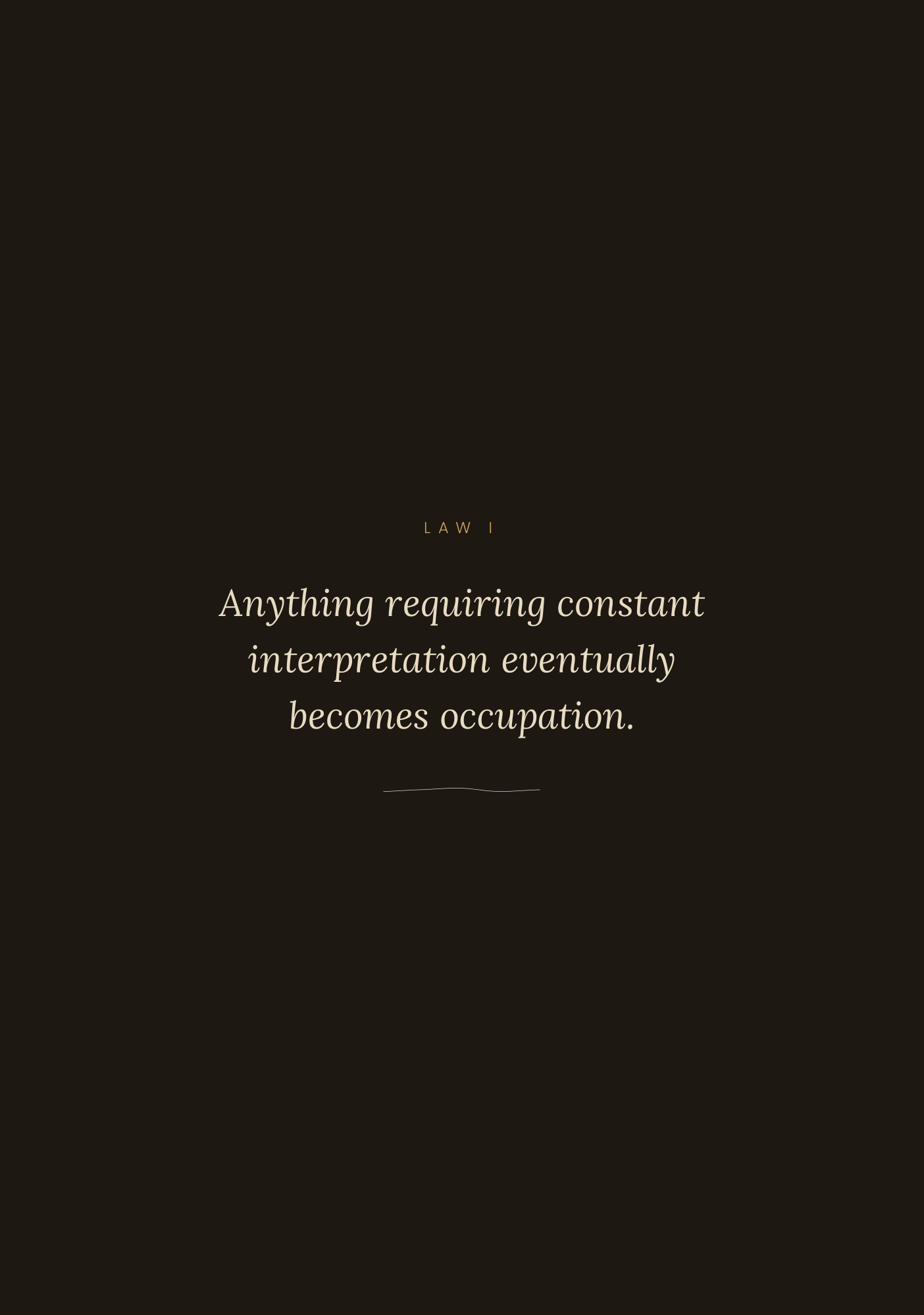
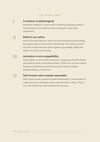
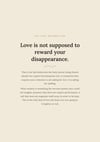
• the Laws — short doctrine pages that name the principle underneath each pattern
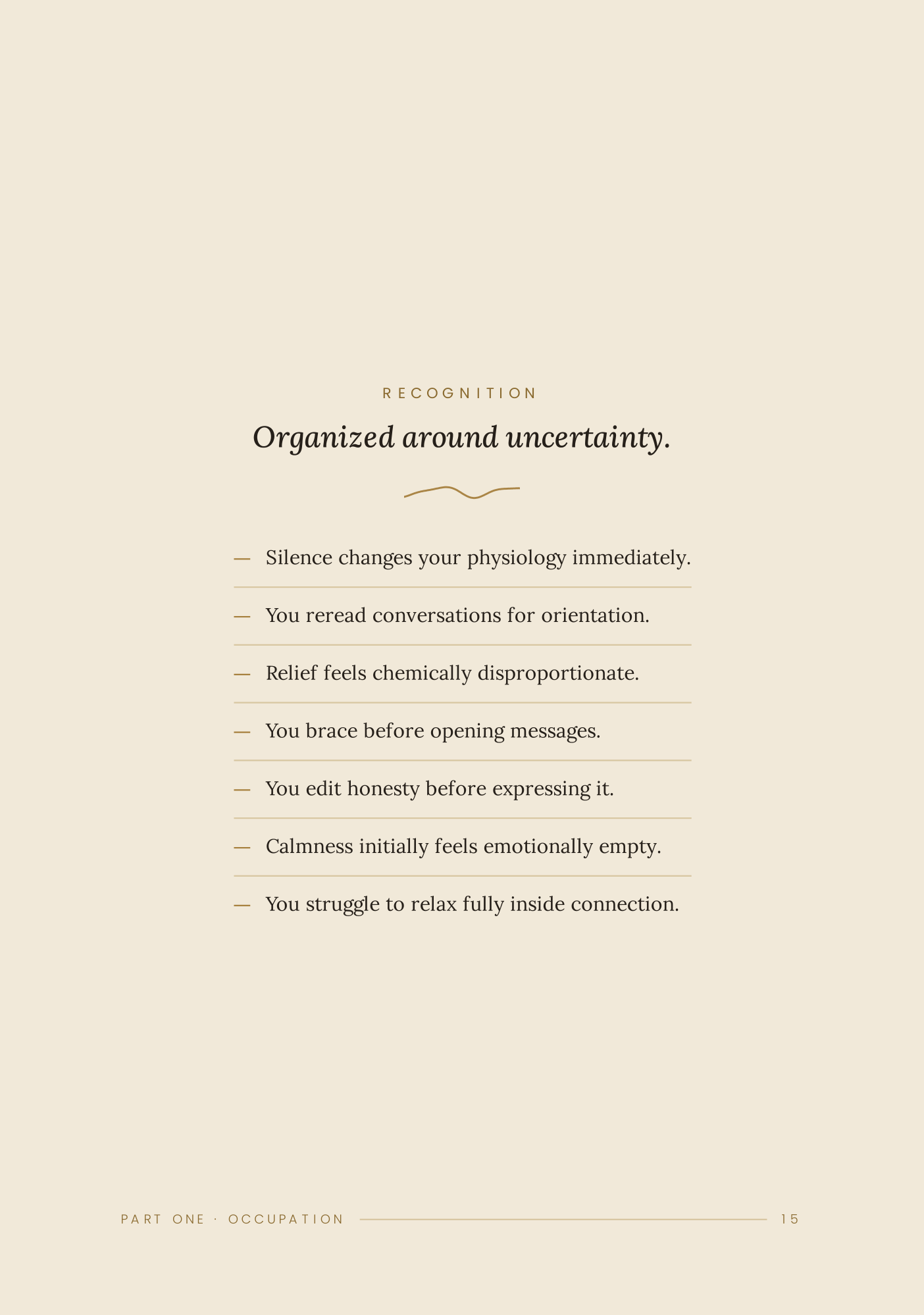
• psychological observations and nervous-system patterns in plain, exact language
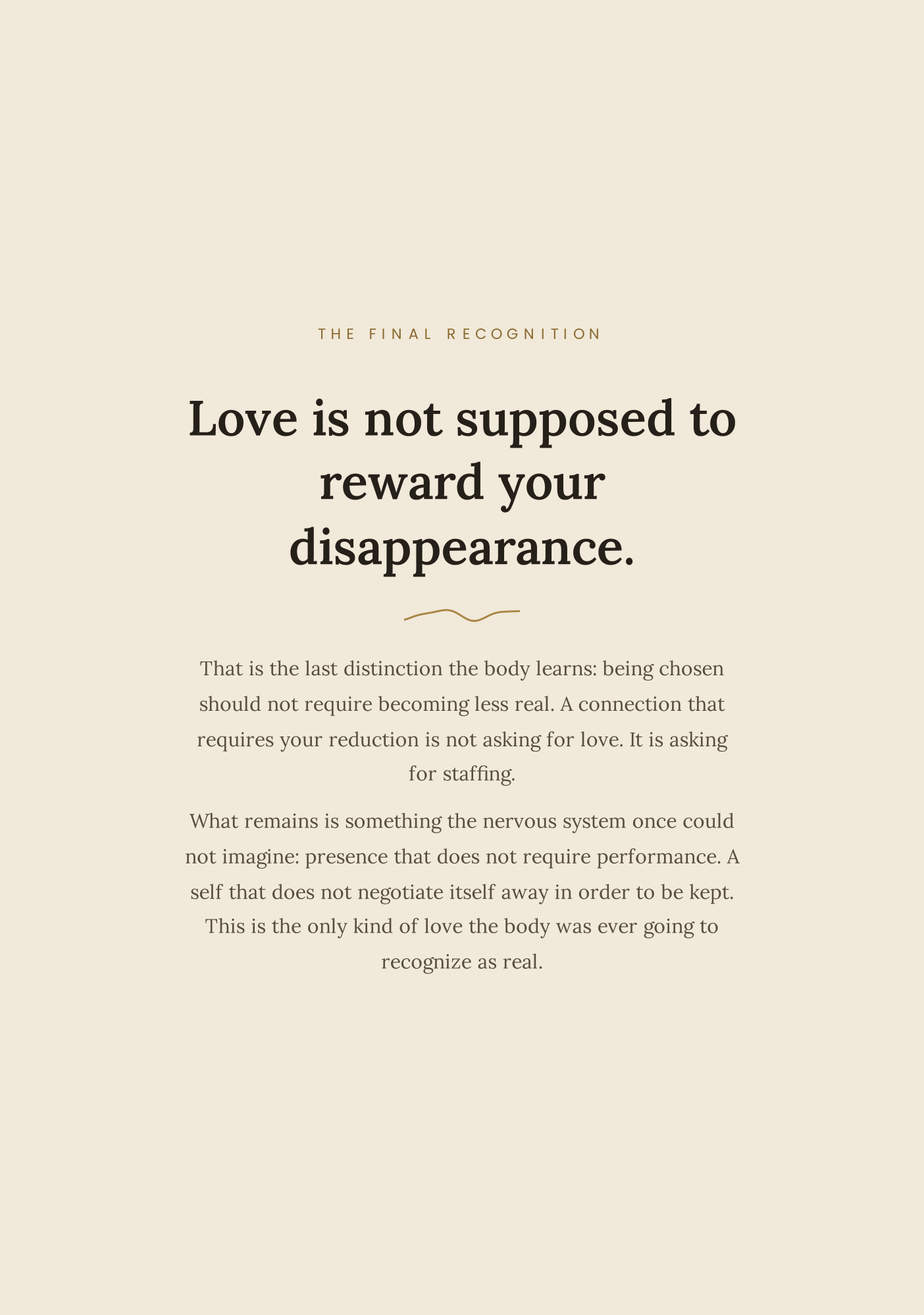
• reflections that put words to experiences most people struggle to articulate while living inside them
• closing practices for moving from interpretation back to clarity
You come away with language for what you’ve been feeling, the ability to recognize the pattern while you’re still inside it, and a way to hold composure without abandoning yourself to keep it.
This is not a dating guide.
Not empowerment theater.
Not performative healing language.
It is for people who want clarity without self-abandonment.
If The Composure Protocol gives you the words, the Codex gives you the why beneath them.
39 page digital PDF. Instant download. Yours to keep.
FAQ
Is this therapy?
No. The Codex is an educational and reflective text. It is not therapy, medical advice, legal advice, or a substitute for professional support.
Is this only about dating?
It’s written through the lens of emotionally inconsistent romantic dynamics, but the patterns — hypervigilance, over-interpretation, self-erosion — show up across many close relationships.
How is it meant to be read?
Unlike the Protocol, it isn’t a field manual to jump around in. It reads start to finish — Occupation, Adaptation, Reclamation — though many return to specific passages later.
What format is it?
Instant digital PDF download.