
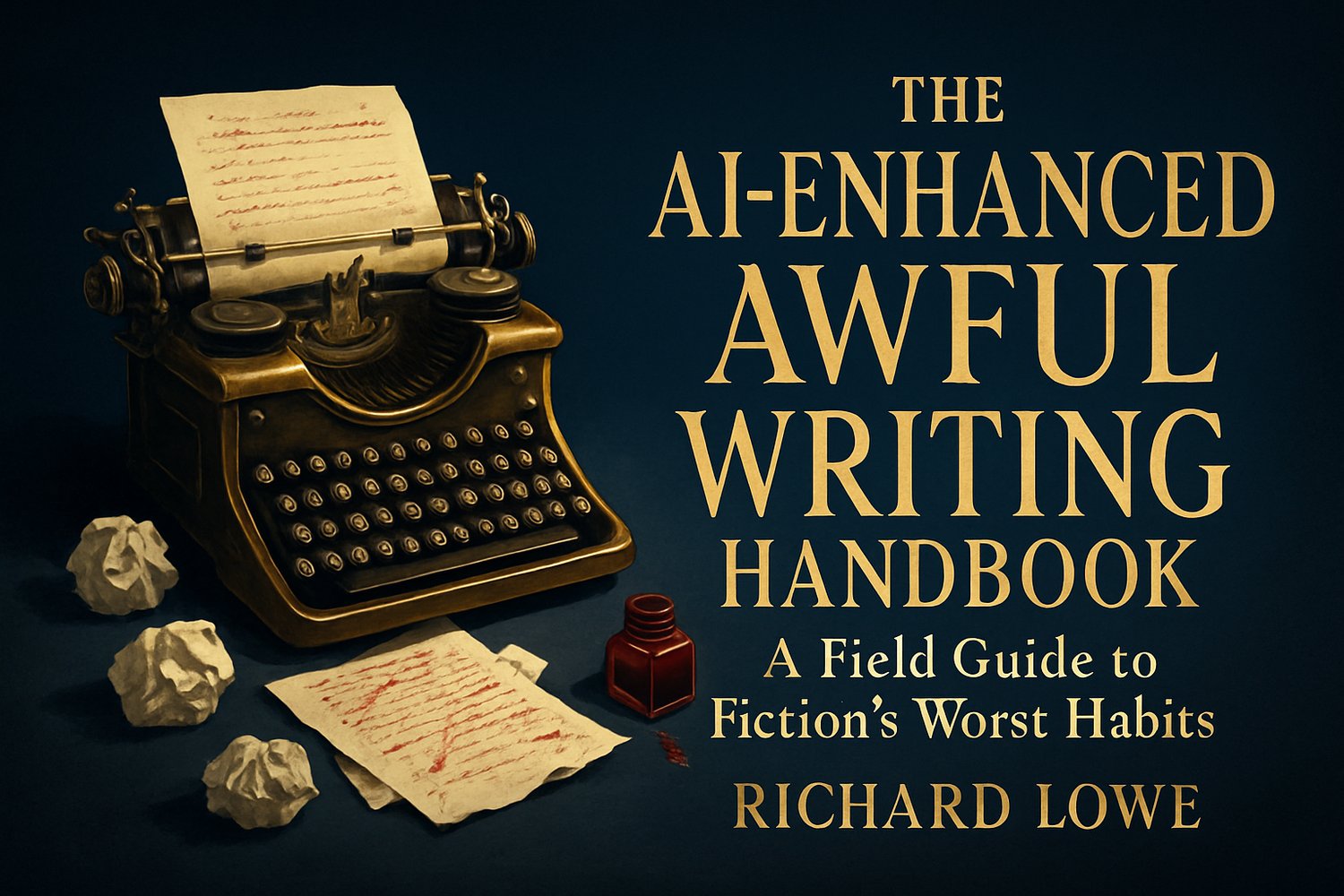
AI-Enhanced Awful Writing Handbook
Stop Making Mistakes You Can't Even See
Beta readers say the pacing is "off." Your critique partner mentions the dialogue feels "flat." Agents send form rejections without explanation. Your gut screams something's wrong, but you can't identify what's broken.
You've rewritten the opening six times. You've polished every sentence. You've read craft books and watched YouTube videos. The manuscript still isn't working and you don't know why.
That's the gap between writers who revise effectively and writers who spin their wheels for years. Great revision requires diagnosis. You need vocabulary for failure before you can recognize failure in your own work. Bad revision is guessing. You rewrite scenes that weren't broken. You miss problems hiding in plain sight. You can't fix what you can't name.
Sixty-Eight Ways Fiction Goes Wrong
The handbook catalogs every sin across nine categories. Character sins cover protagonists who are too perfect and supporting casts that exist only to validate them. The Mary Sue wins through specialness rather than struggle. The Girl Boss shows competence without vulnerability. The Cardboard Love Interest has no goals outside the romance. Plot sins include tension-killing prophecies, idiot plots where characters act stupid to serve the story, and escalating stakes that lose all meaning. Exposition sins catch the "As You Know, Bob" conversations, info-dumps, and world-building lectures that stop the story cold. Prose sins target purple prose, filtering that distances readers, and adverb addiction. Dialogue sins fix same-voice syndrome where every character sounds like the author. Structural sins diagnose sagging middles, rushed endings, and prologues that spoil their own stories.
AI-Generated Sins You Can't See
If you're using AI to help write, you're probably committing sins you can't detect. AI has tells. Readers sense them even when they can't articulate what's wrong.
Telltale vocabulary includes words AI overuses that humans rarely choose. "Delve," "tapestry," "testament," "myriad," "palpable." The handbook gives you the complete list to search and destroy. Sycophantic pivots create characters who agree too easily and conflict that resolves without friction. Committee voice produces prose that sounds like no one because it's trying not to sound like anyone. Unearned emotional beats hit without buildup. Characters cry at revelations the reader hasn't experienced. Both-sides-ism hedges every argument and qualifies every position until your characters have no real opinions.
AI is your drafting assistant, not your revision tool. This handbook shows you how to fix what AI breaks.
Film and Book Examples Throughout
Mad Max: Fury Road demonstrates stakes without world-ending escalation. Game of Thrones shows early seasons enforcing consequences versus later seasons rushing endings and abandoning character logic. The Road commits to meaning without hedging in prose that AI-assisted writing should aspire to and never achieves. Pride and Prejudice delivers banter that actually works with subtext underneath every line. Breaking Bad earns every beat of protagonist transformation with consequences that compound. Plus examples from Casablanca, The Silence of the Lambs, Beloved, Great Expectations, and dozens more.
What's Inside
The handbook covers fifteen character sins from Mary Sues to monologuing villains. Twelve plot sins from coincidence-driven plotting to consequence-free storytelling. Eight exposition sins including flashback overload. Ten prose sins covering mirror scenes and weather openings. Nine dialogue sins addressing speeches that replace conversation. Eight AI-generated sins with detection and repair strategies. Six structural sins tackling wrong chapter breaks and over-explaining epilogues.
Seven appendices provide a quick-reference sin finder, master AI prompt collection with 68+ prompts, complete revision checklist, and indices of every film and book referenced.
From an Author With 113 Published Books
I've ghostwritten dozens more for clients who've secured over $30 million in venture capital. Books where every element was chosen with intention because I learned to see what was wrong before I tried to fix it. When I realized I'd been committing the same writing sins for decades without seeing them, I did what my brain demanded: I cataloged every way fiction fails.
399 pages. 68 chapters. 7 appendices. AI prompts for every sin.
You can't fix what you can't name. This handbook names everything.