

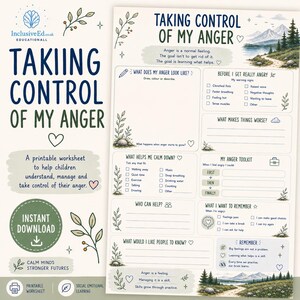
Anger Management Worksheet | Emotional Regulation Printable PDF | Understanding Triggers and Calming Strategies
A practical, child-friendly worksheet designed to help children and teenagers understand their anger, recognise triggers and develop healthier coping strategies.
Anger is a normal human emotion. The goal is not to get rid of it but to understand it, manage it and respond to it in helpful ways.
This printable worksheet encourages children to reflect on what anger feels like, identify warning signs, explore what makes situations worse and build their own personalised anger management toolkit.
Perfect for use at home, in school, during counselling sessions or as part of emotional wellbeing and emotional regulation support.
What This Resource Helps Children Do
✔ Understand what anger feels like
✔ Recognise early warning signs
✔ Identify triggers and patterns
✔ Explore healthy coping strategies
✔ Build emotional regulation skills
✔ Create a personal anger toolkit
✔ Develop self-awareness and confidence
✔ Learn that feelings pass and choices matter
What's Included
✅ 1 High-Quality Printable Worksheet
✅ Instant Digital Download
✅ PDF Format
✅ Suitable for home, school and therapeutic settings
Print Options
This resource is supplied as an:
A4 PDF
and can also be printed as:
✅ A3 for classroom displays and interventions
✅ Counselling and ELSA sessions
✅ Wellbeing rooms and calm spaces
✅ Home education activities
Ideal For
Anger management
Emotional regulation
Emotional wellbeing
Behaviour support
School counselling
ELSA interventions
Pastoral support
SEN support
Anxiety and overwhelm
Reflection activities
Home education
Suitable For
Parents • Teachers • SENCOs • ELSAs • Counsellors • Home Educators
Recommended for ages 8–16.
InclusiveEd Approach
At InclusiveEd, we believe big emotions are not the problem. Understanding them is the first step towards managing them.
This worksheet helps children build self-awareness, confidence and practical strategies that can support them long after the activity is complete.
Anger is a feeling. Managing it is a skill. Skills grow through practice.