
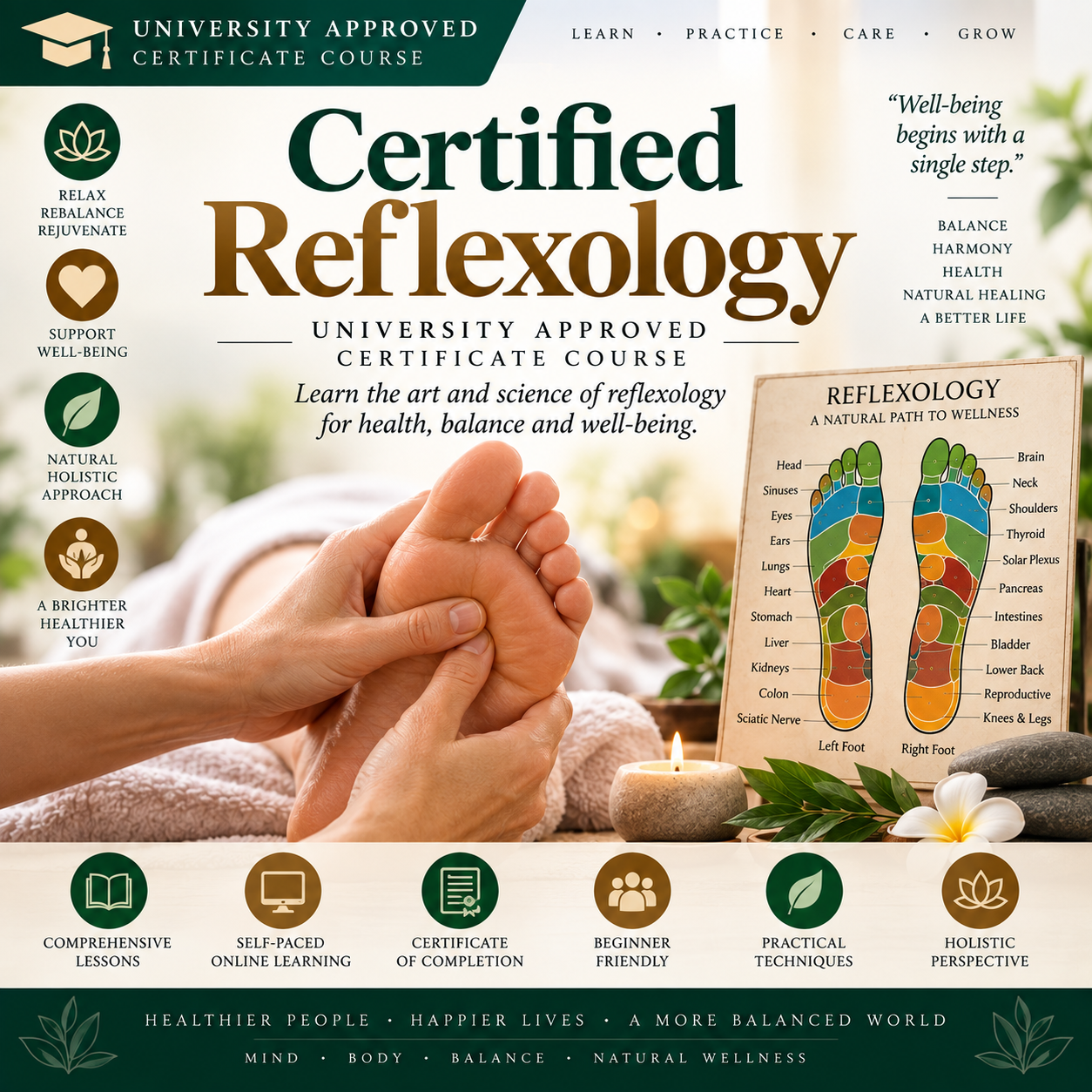
Certified Reflexology University Approved Certificate Cours
Certified Reflexology – University Approved Certificate Course
Learn the Foundations, Techniques, and Professional Principles of Reflexology
Discover the principles and practical foundations of reflexology with the Certified Reflexology – University Approved Certificate Course.
This online course has been designed to provide learners with a clear and structured introduction to reflexology, including its history, commonly taught reflex maps, practical techniques, client care, hygiene, professional ethics, safety, and responsible practice.
The course is suitable for complete beginners as well as individuals interested in wellness, holistic practices, complementary therapies, massage, relaxation, spa services, personal development, and client care.
No previous reflexology qualification or experience is required to begin.
Whether you are studying for personal interest, continuing professional development, or as a foundation for further training, this course provides an accessible way to begin exploring the subject.
What Is Reflexology?
Reflexology is a complementary wellness practice involving the application of controlled pressure to specific areas, most commonly on the feet and hands.
Traditional reflexology systems use maps that associate particular areas of the feet or hands with different parts or regions of the body.
Reflexology is commonly used in wellness environments as a relaxation-focused complementary practice.
This course introduces learners to these traditional concepts while also emphasizing responsible communication, client safety, professional boundaries, and the importance of avoiding unsupported medical claims.
What You Will Learn
Throughout the course, you will explore topics such as:
- Introduction to reflexology
- History and development of reflexology
- Reflexology principles
- Reflex zones and maps
- Foot reflexology
- Hand reflexology
- Common reflexology techniques
- Pressure and movement techniques
- Client preparation
- Consultation principles
- Session structure
- Hygiene and safety
- Contraindications and precautions
- Professional ethics
- Client communication
- Record keeping
- Scope of practice
- Practitioner responsibilities
- Relaxation and wellness principles
The course is structured to help learners develop knowledge progressively.
History and Development of Reflexology
Reflexology has developed through different historical traditions involving touch, pressure, massage, and wellness practices.
Learners will explore the historical background of reflexology and gain an understanding of how modern reflexology practice emerged.
Studying this history helps learners appreciate the difference between traditional reflexology concepts and modern medical or scientific healthcare.
Reflexology Zones and Maps
A central part of reflexology education involves understanding commonly used reflexology maps.
Students will be introduced to:
- Reflex zones
- Foot maps
- Hand maps
- Commonly referenced reflex areas
- Directional orientation
- Pressure areas
- Session sequencing
The objective is to understand how practitioners traditionally organise a reflexology session.
Foot Reflexology
Foot reflexology is one of the most widely known forms of reflexology.
The course introduces learners to:
- Basic foot structure
- Foot positioning
- Client comfort
- Preparation of the feet
- Thumb movements
- Finger techniques
- Pressure control
- Reflexology sequencing
- Relaxation movements
- Practitioner posture
Learners are encouraged to develop techniques gradually and carefully.
Hand Reflexology
In addition to foot reflexology, the course introduces basic concepts associated with hand reflexology.
Topics may include:
- Hand reflex maps
- Common pressure areas
- Hand positioning
- Finger movements
- Thumb techniques
- Short reflexology routines
- Client comfort
Hand reflexology provides learners with another perspective on pressure-based complementary wellness practice.
Practical Reflexology Techniques
Students will be introduced to commonly taught reflexology movements and methods.
These may include:
- Thumb walking
- Finger walking
- Circular movements
- Gentle pressure
- Controlled compression
- Relaxation strokes
- Structured sequences
- Smooth transitions
The objective is to develop awareness of technique, consistency, comfort, and appropriate pressure.
Understanding Pressure
One of the most important practical elements of reflexology is learning how to apply controlled pressure.
More pressure does not automatically mean a better session.
Learners are encouraged to consider:
- Client comfort
- Individual sensitivity
- Practitioner control
- Consistent pressure
- Communication
- Gradual technique development
Responsible practice requires continuous awareness of the client’s comfort.
Basic Anatomy and Physiology Awareness
Anyone studying a hands-on wellness practice can benefit from a basic awareness of anatomy and physiology.
The course introduces selected concepts involving:
- Skin
- Muscles
- Bones
- Joints
- Nervous system
- Circulatory system
- Feet
- Hands
- General body systems
This section is intended for educational awareness and does not replace formal medical or healthcare training.
Preparing for a Reflexology Session
A professional reflexology session begins before physical techniques are used.
Learners will explore how to prepare:
- The treatment environment
- Equipment
- Seating or treatment area
- Towels and materials
- Client positioning
- Practitioner positioning
The importance of creating a calm, clean, comfortable, and professional environment is also discussed.
Client Consultation
Good communication is an essential part of responsible reflexology practice.
Before beginning a session, practitioners should understand the importance of obtaining relevant information and explaining the process clearly.
The course covers topics such as:
- Client expectations
- Relevant health information
- Consent
- Comfort
- Professional boundaries
- Communication
- Confidentiality
Learners are encouraged to communicate honestly and avoid making promises about medical outcomes.
Contraindications and Precautions
There are situations in which reflexology may not be appropriate or where professional medical advice may be necessary.
The course introduces learners to the concept of contraindications and precautions.
Examples of situations requiring additional consideration may include:
- Recent injury
- Open wounds
- Skin infections
- Severe swelling
- Acute inflammation
- Recent surgery
- Severe unexplained pain
- Certain circulatory conditions
- Serious illness
When there is uncertainty, learners should seek guidance from an appropriately qualified healthcare professional.
Hygiene and Professional Standards
Good hygiene is essential in any hands-on practice.
Students will explore principles including:
- Hand washing
- Cleaning equipment
- Fresh towels and materials
- Maintaining a hygienic environment
- Infection control awareness
- Personal hygiene
- Safe positioning
- Practitioner ergonomics
These practices contribute to a safer and more professional client experience.
Relaxation and Wellness
Many people use reflexology as part of a general relaxation and wellness routine.
The course explores how environmental factors such as:
- Calm surroundings
- Comfortable positioning
- Gentle touch
- Breathing
- Relaxation
- Quiet
- Client communication
may contribute to a positive wellness experience.
Reflexology should not be presented as a guaranteed cure or medical treatment.
Planning a Reflexology Session
Learners will gain an understanding of how a basic reflexology session may be structured.
A typical sequence may involve:
- Consultation
- Client preparation
- Positioning
- Relaxation movements
- Structured reflexology techniques
- Closing movements
- Feedback
- After-session guidance
- Record keeping
Learning a consistent structure can help beginners develop confidence.
Professional Communication
Professional communication is about more than being friendly.
Learners will explore the importance of:
- Clear explanations
- Active listening
- Respect
- Appropriate boundaries
- Confidentiality
- Honest advertising
- Responsible language
- Referral when appropriate
Good communication helps build trust and supports responsible professional practice.
Professional Ethics
Ethical practice is an important part of the course.
Topics include:
- Respect for clients
- Client dignity
- Consent
- Confidentiality
- Professional boundaries
- Scope of competence
- Honest communication
- Appropriate referrals
- Responsible marketing
Students are encouraged to practise only within the limits of their education, experience, and applicable local regulations.
Record Keeping
Professional practitioners may need to maintain appropriate client records.
Students are introduced to basic considerations involving:
- Client information
- Consultation notes
- Session records
- Consent
- Confidentiality
- Privacy
- Data protection
Requirements vary depending on local laws and professional regulations.
Developing Practical Confidence
Learning reflexology requires patience and practice.
Learners are encouraged to develop practical confidence progressively.
Important areas of development include:
- Hand positioning
- Pressure control
- Movement
- Accuracy
- Coordination
- Timing
- Communication
- Client comfort
- Practitioner posture
The goal is not speed.
The goal is controlled, comfortable, responsible practice.
Who Is This Course For?
This course may be suitable for:
- Complete beginners
- Reflexology enthusiasts
- Wellness practitioners
- Massage practitioners
- Spa professionals
- Complementary therapy students
- Holistic wellness learners
- Beauty professionals
- Personal development learners
- Care professionals
- Coaches
- People interested in relaxation techniques
- Lifelong learners
No previous reflexology knowledge is required.
Beginner Friendly
The course introduces reflexology step by step.
You do not need specialist medical knowledge or previous practical experience.
The learning materials are designed to help beginners understand terminology, principles, reflex maps, techniques, and professional considerations gradually.
Flexible Online Learning
Study online according to your own schedule.
This format is particularly suitable for learners combining education with:
- Work
- Family responsibilities
- Other courses
- Professional development
- University study
You can revisit course material whenever necessary and progress at a comfortable pace.
What You Can Gain from This Course
By completing the course, you can develop a broader understanding of:
- Reflexology history
- Reflexology principles
- Reflex maps
- Foot reflexology
- Hand reflexology
- Common techniques
- Client preparation
- Consultation
- Hygiene
- Safety
- Contraindications
- Professional boundaries
- Ethics
- Session planning
- Client care
- Responsible complementary wellness practice
A Foundation for Further Study
This course can provide a foundation for further learning in subjects such as:
- Advanced reflexology
- Massage
- Anatomy and physiology
- Complementary therapies
- Spa therapy
- Holistic wellness
- Aromatherapy
- Relaxation practices
- Wellness coaching
- Client care
Learners intending to practise professionally should check any regulatory, licensing, insurance, or certification requirements applicable in their own country.
Professional and Career Development
Knowledge gained from reflexology education may complement work in wellness-related settings such as:
- Wellness centres
- Spas
- Holistic wellness businesses
- Complementary therapy environments
- Beauty and personal care services
- Relaxation services
The course may also support continuing professional development for people already working in related fields.
However, completion of the course does not automatically provide a licence to practise in a regulated healthcare profession.
Certificate of Completion
Learners who successfully complete the applicable course requirements may receive a:
Certified Reflexology – University Approved Certificate Course Certificate of Completion
The certificate may be useful for:
- Your CV or résumé
- LinkedIn profile
- Professional development portfolio
- Continuing education documentation
- Personal learning records
- Demonstrating additional subject knowledge
Course Format: Online
Level: Beginner / Introductory
Study Method: Self-Paced
Subject: Reflexology and Complementary Wellness
Certificate: Available upon successful completion of applicable course requirements
Why Choose This Course?
Comprehensive Introduction
Study the essential foundations of reflexology in one structured program.
Beginner Friendly
Start without previous reflexology experience.
Practical Perspective
Learn common techniques and session structures.
Flexible Online Learning
Study wherever and whenever it suits you.
Professional Awareness
Learn about hygiene, ethics, consultation, communication, and professional boundaries.
Holistic Perspective
Explore reflexology as part of a broader wellness and relaxation approach.
Certificate of Completion
Receive documentation of your learning upon successful completion.
Learn. Practice. Care. Grow.
Reflexology combines knowledge, touch, observation, communication, and client care.
The Certified Reflexology – University Approved Certificate Course offers an accessible introduction to this field and helps learners build a structured understanding of both theory and responsible practice.
Explore reflexology maps.
Understand the traditional principles.
Learn practical techniques.
Develop awareness of hygiene and safety.
Build professional confidence.
Study at your own pace.
Begin Your Reflexology Learning Journey Today.
Important Health and Professional Disclaimer
This course is provided for educational and personal/professional development purposes only.
Reflexology is a complementary wellness practice and should not replace medical diagnosis, medical treatment, physiotherapy, psychotherapy, or care provided by an appropriately licensed healthcare professional.
Completion of this course does not qualify the learner as a physician, nurse, physiotherapist, podiatrist, psychologist, psychotherapist, or other regulated healthcare professional.
Learners should not diagnose medical conditions, prescribe medications or treatments, advise clients to discontinue medical care, or claim that reflexology can cure or prevent specific diseases.
Professional practice, insurance, licensing, registration, and certification requirements vary between jurisdictions. Anyone intending to offer reflexology services professionally should confirm and comply with the requirements applicable in their own country or region.