






ELENOVE Vol.02 - Natural Deodorants: Scientific Formulation Library
ELENOVE Vol. 02 - Natural Deodorants
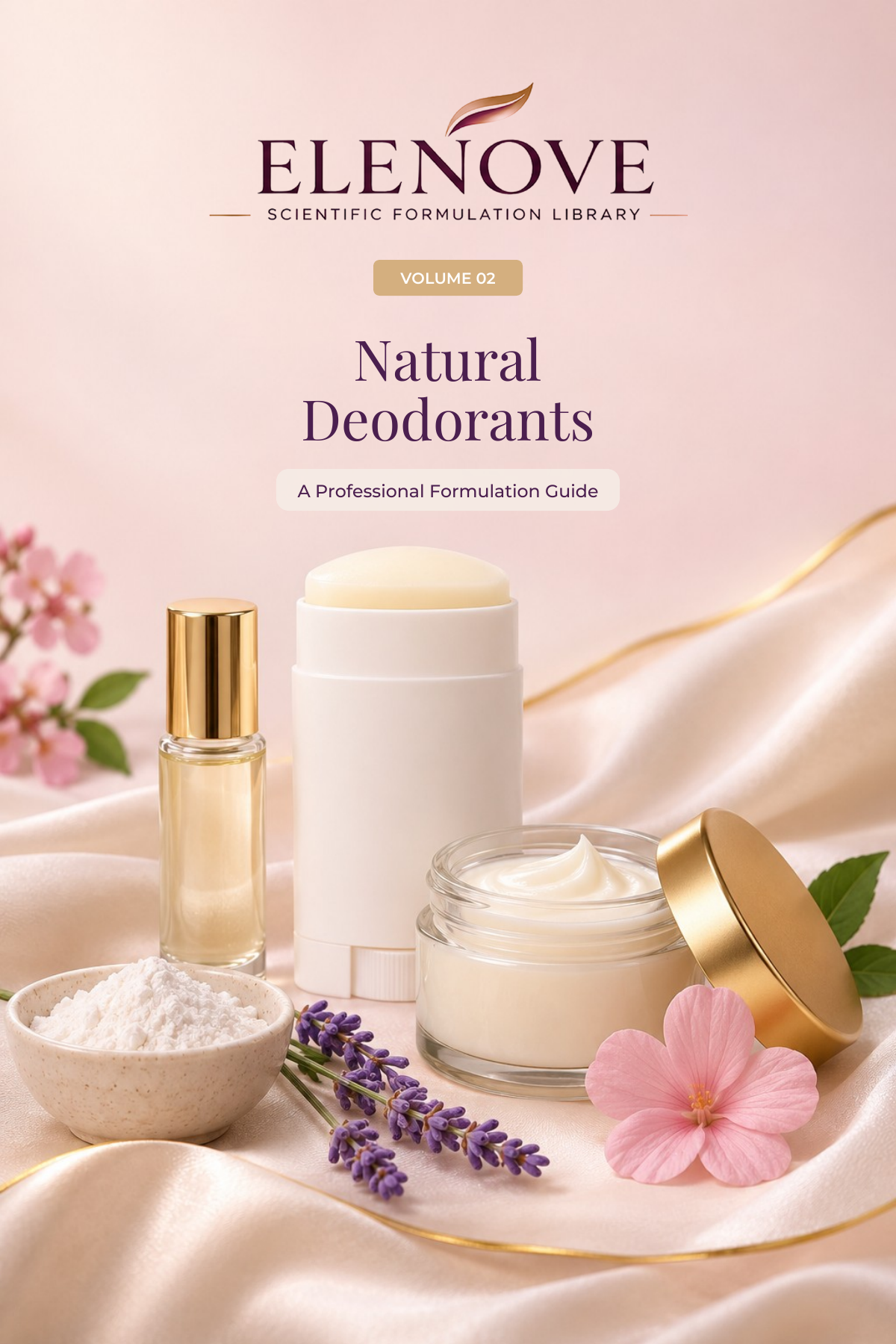
A Professional Formulation Guide
WHAT YOU GET
• 138-page PDF formulation book
• Excel formulation calculator (.xlsx) for scaling and costing your batches
• Instant digital download after payment
A deodorant is a cosmetic that controls body odor, mainly under the arms. It works by absorbing moisture, neutralizing odor, slowing the bacteria that create odor, or covering the smell with fragrance. Most products combine several of these.
A deodorant does not stop you from sweating. Sweating is normal and healthy, and it cools the body. The goal of a deodorant is only to make the skin surface a less friendly place for odor.
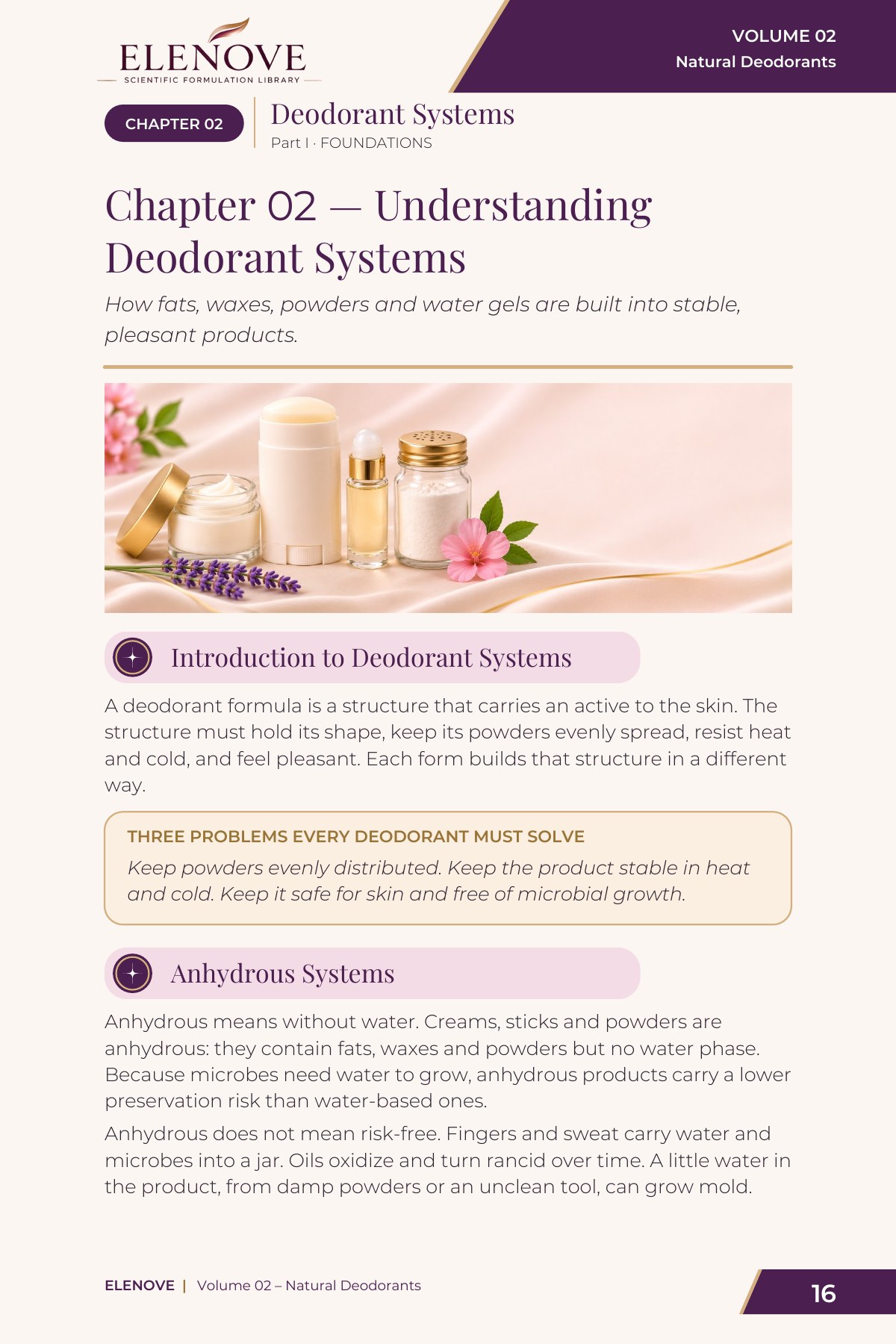
This volume covers aluminum-free deodorants in four forms: cream, stick, roll-on and powder. It does not cover antiperspirants, which reduce sweat and are regulated differently.
WHAT YOU WILL LEARN
• What a deodorant does, where odor comes from, and what separates a deodorant from an antiperspirant
• The main ingredient families in a deodorant and the job of each
• How to set up a clean, safe workspace, convert percentages into grams and scale batches without errors
• How to design a formula from scratch: choose the deodorant system, build the base, and select actives
• Ten complete formulation concepts, and why each was designed the way it was
• How to control manufacturing from heating to filling, document every batch, and evaluate and troubleshoot the result
• Stability, preservation, packaging, safety assessment, labeling, and shelf life at an introductory level
CONTENTS
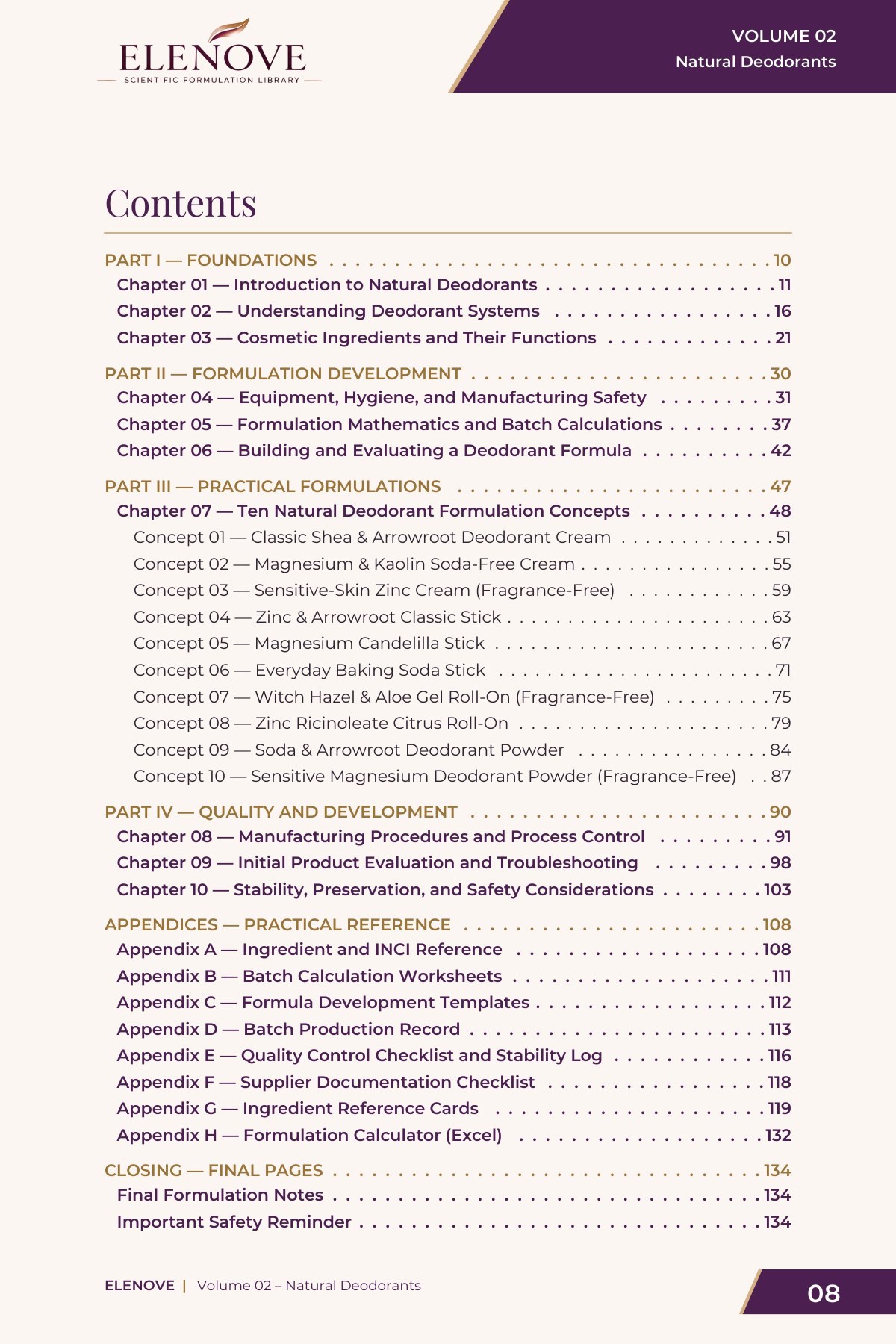
Part I - Foundations
Ch. 01 Introduction to Natural Deodorants
Ch. 02 Understanding Deodorant Systems
Ch. 03 Cosmetic Ingredients and Their Functions
Part II - Formulation Development
Ch. 04 Equipment, Hygiene, and Manufacturing Safety
Ch. 05 Formulation Mathematics and Batch Calculations
Ch. 06 Building and Evaluating a Deodorant Formula
Part III - Practical Formulations
Ch. 07 Ten Natural Deodorant Formulation Concepts: Classic Shea & Arrowroot Deodorant Cream, Magnesium & Kaolin Soda-Free Cream, Sensitive-Skin Zinc Cream (Fragrance-Free), Zinc & Arrowroot Classic Stick, Magnesium Candelilla Stick, Everyday Baking Soda Stick, Witch Hazel & Aloe Gel Roll-On (Fragrance-Free), Zinc Ricinoleate Citrus Roll-On, Soda & Arrowroot Deodorant Powder, Sensitive Magnesium Deodorant Powder (Fragrance-Free)
Part IV - Quality and Development
Ch. 08 Manufacturing Procedures and Process Control
Ch. 09 Initial Product Evaluation and Troubleshooting
Ch. 10 Stability, Preservation, and Safety Considerations
Appendices: Ingredient and INCI Reference, Batch Calculation Worksheets, Formula Development Templates, Batch Production Record, Quality Control Checklist and Stability Log, Supplier Documentation Checklist, Ingredient Reference Cards, Formulation Calculator (Excel)
WHO THIS BOOK IS FOR
Beginners who have made a few simple products and want a structured foundation in deodorant systems and cosmetic ingredients. Independent brand founders, aspiring formulators, cosmetic science students, and small-batch makers who want to improve consistency, documentation, and safety practices. No chemistry degree is required.
IMPORTANT NOTE ON CLAIMS
Describe what you have verified. Say "reduces odor" or "helps absorb moisture". Do not say "stops sweat", "detoxifies", or "safe for everyone". In the United States, a claim that a product reduces sweat or wetness makes it an antiperspirant, which is an over-the-counter drug and is subject to drug rules. This book therefore keeps all claims to odor.
EDUCATIONAL USE
This book is an educational reference. The example formulas are teaching tools. They are starting points for bench development, not finished, market-ready products. None of the ten concepts in this book uses alum or another aluminum salt.
IMPORTANT DISCLAIMER
The formulas are concepts, not approved products. None of the ten formulas in Chapter 07 has been laboratory tested by the publisher. The concepts follow structures published by ingredient retailers and by MakingCosmetics, which publish no stability or challenge-test data, and the percentages are adapted, not copied. Treat every formula as a starting point for your own testing.
Before you sell any product made from these concepts:
• Run stability testing on your own batches, in your own packaging.
• Always perform a patch test.
• Have the preservative verified by a challenge test where required.
• Obtain a cosmetic safety assessment where your market requires one.