
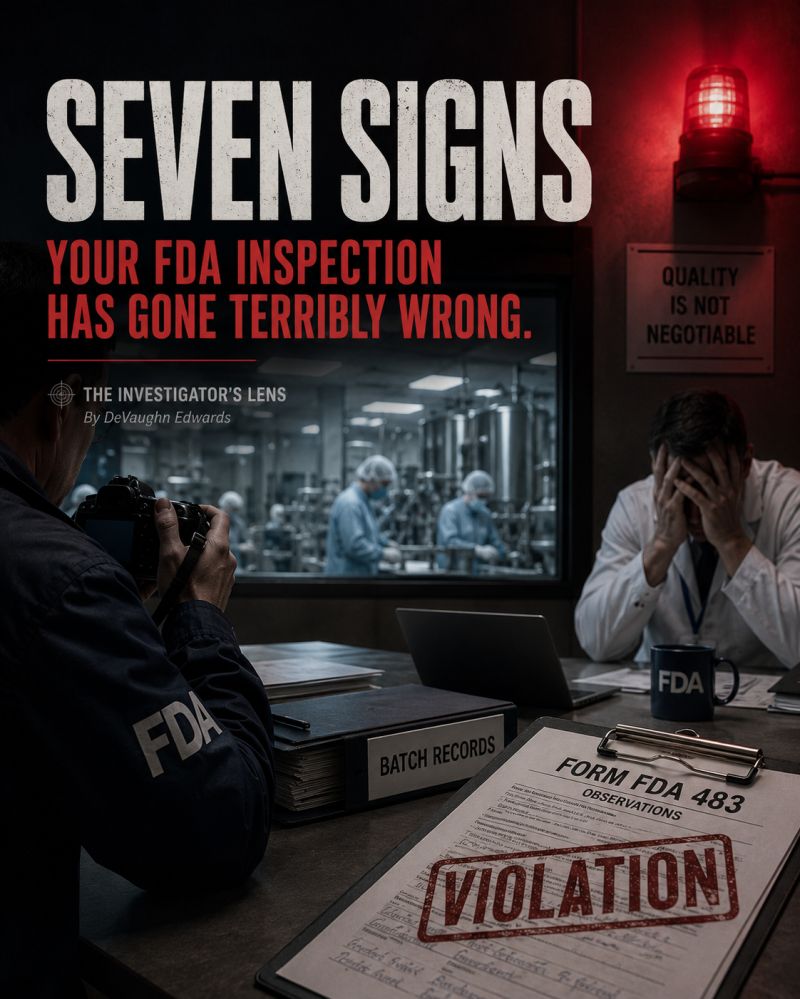
Seven Signs Your Inspection Has Gone Terribly Terribly Wrong
Seven Signs Your FDA Inspection Has Just Gone Terribly...Terribly Wrong
Written by a former FDA Investigator who spent 14 years issuing Form 483s, then 13 years on the other side of the table as a pharmaceutical quality executive, including work navigating J&J out of consent decree.
Most quality teams treat every FDA inspection like the same event. It is not. Some inspections cross an invisible line, from routine compliance review into federal enforcement proceeding, and almost nobody in the room except the Investigator can see it happen.
[This is an employer-reimbursable professional compliance resource. Send this page to your Quality Director, Site Head, Regulatory Affairs leader or Learning and Development department for approval.]
This document breaks down the seven behavioral and procedural signals that tell you the line has been crossed:
- Why a request for interstate commerce records means the Investigator is establishing federal jurisdiction, not asking about your supply chain
- What it actually means when an Investigator hands you an affidavit to sign, and why "just confirming accuracy" is not what's happening
- The moment the conversation stops and only requests remain, and why that shift is the clearest signal in the entire inspection
- Why an inspection extension or a second Investigator walking through your door means the district office has already gotten involved
- What is really happening during a multi-day mid-inspection absence, and why that time is the most consequential part of the entire process
- What it means when photography shifts from documenting facility conditions to building exhibit-level evidence
- Why an Investigator going quiet is the single most misread signal in any inspection, and what your team should do when it happens
Each sign includes a first-person Investigator's Perspective, a clear escalation signal your quality team can act on in real time, and specific guidance for what to do next.
If your team recognizes two or more of these signs in a current or recent inspection, you are not managing a routine compliance event. This document tells you what is actually happening in rooms you will never see, so you can respond to your 483 like the legal document it actually is.
For informational purposes only. Does not constitute legal advice.