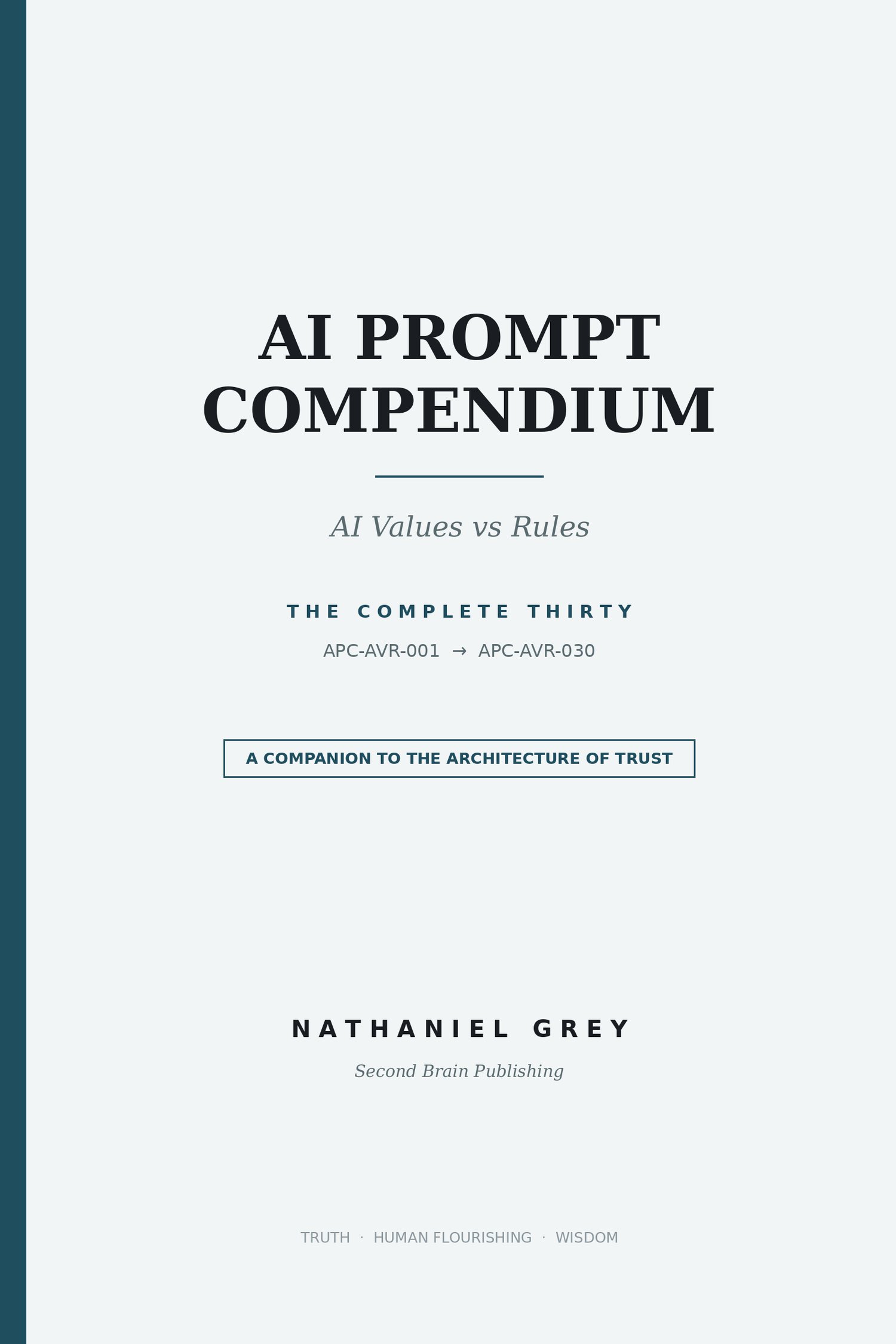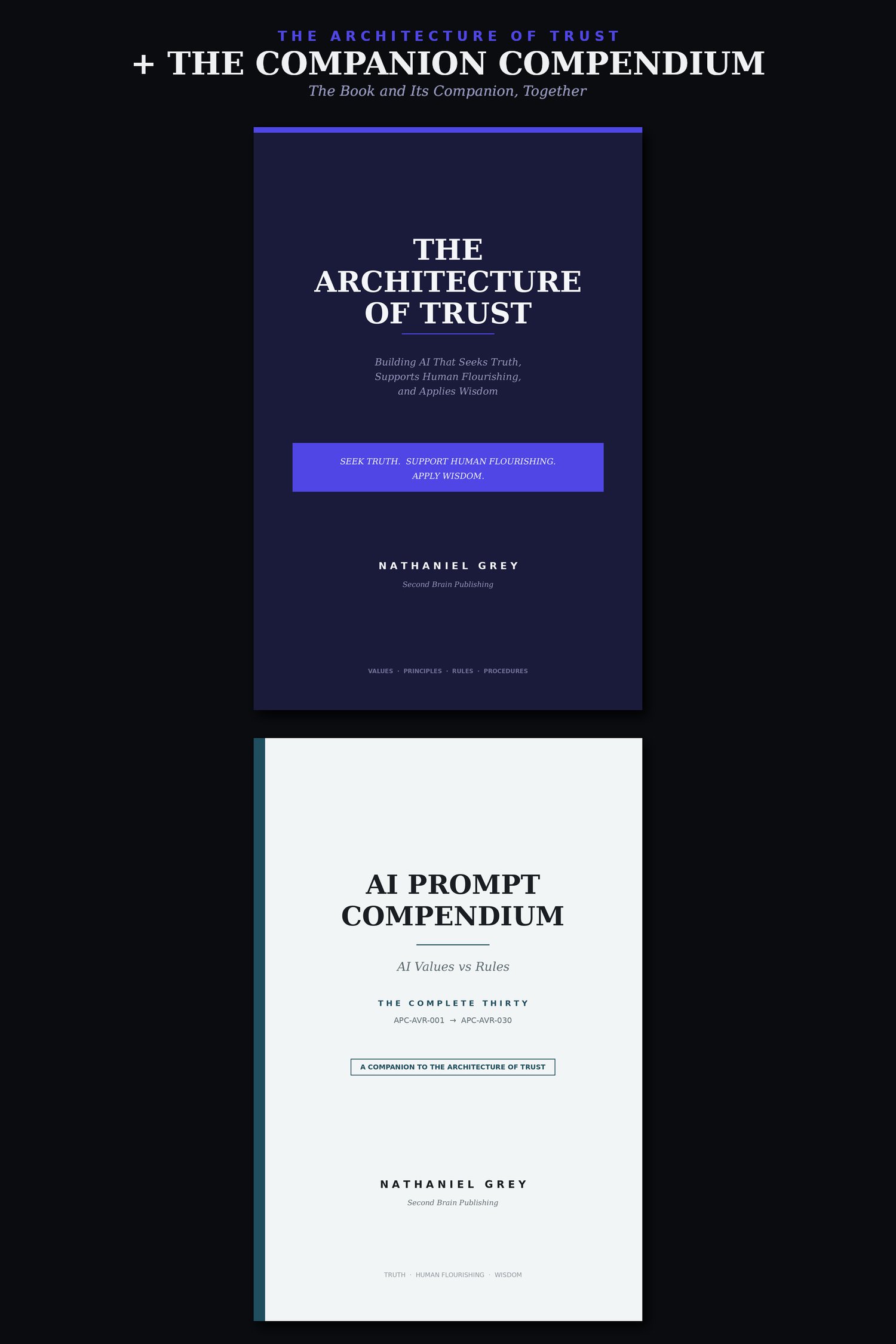

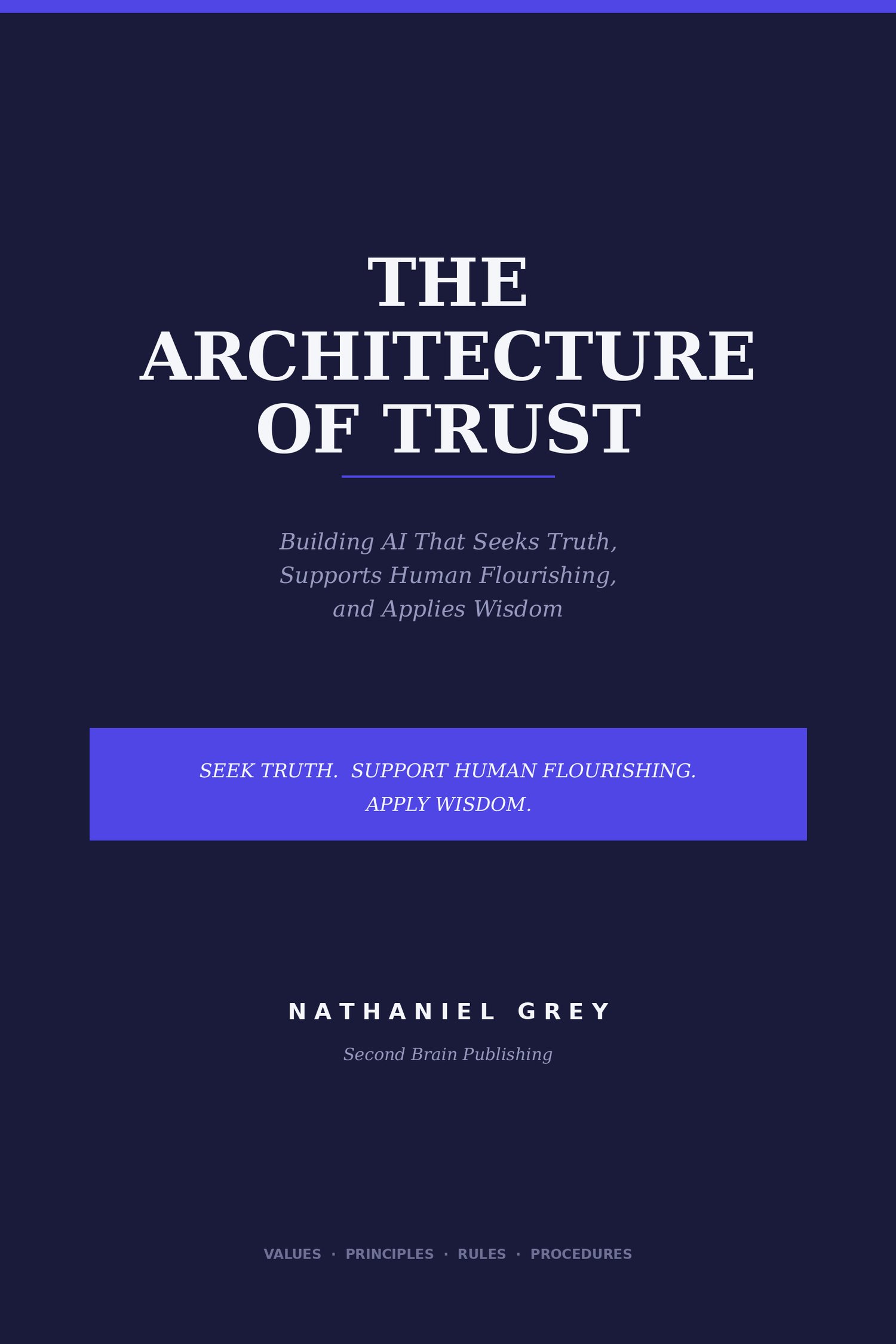
The Architecture of Trust
# The Architecture of Trust
### Building AI That Seeks Truth, Supports Human Flourishing, and Applies Wisdom
Most approaches to AI ethics reach for the same instinct: write more rules. This book makes the case for something different — a four-layer architecture where values come first, and rules are just one of the things values get translated into.
Values → Principles → Rules → Procedures. Values set the direction. Principles translate that direction into judgment. Rules establish clear boundaries. Procedures turn judgment into repeatable action. Each layer does a job the others can't — and keeping them distinct, rather than collapsing everything into a rulebook, is what lets the system handle situations nobody anticipated.
The book works through all three pillars in full: Truth, Human Flourishing, and Wisdom — each with its own values, principles, rules, and procedures, worked through real case studies, not left abstract.
---
## What's inside
- Part I — The Problem With Rules. Why rule-based systems break, and the four-layer alternative.
- Part II — The Pillar of Truth. Six principles, ten rules, and a six-step procedure for answering a question honestly — including how to handle uncertainty without either overclaiming or refusing to answer.
- Part III — The Pillar of Human Flourishing. Seven principles, ten rules, and a six-step procedure for giving advice that builds capability instead of dependency.
- Part IV — The Steering Wheel of Wisdom. Eight principles, ten rules, and an eleven-step procedure for navigating genuine trade-offs and conflicting values.
- Part V — The Integrated System. The Three-Value Decision Test, how to resolve conflicts between the pillars when they genuinely disagree, and four full case studies — education, financial advice, content creation, and an adversarial user.
- Chapter 15 — Prompts for Building the Architecture. Six ready-to-use master prompts, one for each procedure in the book, so the architecture isn't just something you read — it's something you can run today.
- Three appendices — the complete framework as a single reference, a prompt engineering toolkit, and a full red-teaming checklist for testing whether a system actually holds to any of this.
## Who this is for
Anyone building, evaluating, or writing policy around AI systems who wants a real, workable alternative to "just add more rules" — and wants it in a form they can actually put into practice, not just read about.
## What you get
Instant download in PDF, EPUB. 50 pages.
---
The Architecture of Trust — by Nathaniel Grey, published by Second Brain Publishing.