

Chinese Spas & Hot Springs Guide (2026 Edition)
On Sale
$7.99
$7.99
You walk into a Chinese bathhouse. Someone hands you a wristband, points to a locker, and gestures toward the pool area. Everyone is unclothed. You have no idea what the protocol is, where the towels are, or why a stranger is offering to scrub your back with a rough cloth.
Chinese spa culture is completely different from Western spas. It's communal, functional, and incredibly affordable — a full bathhouse experience with scrub, sauna, pajamas, food, and lounge access can cost under ¥200. The ¥50 foot massage is one of the best deals in the country. And the hot springs? China has thousands of them, from mountain resorts to volcanic pools.
WHAT'S INSIDE (8 Chapters):
- The reality check: Chinese spas are communal, functional, and intense — here's how to navigate the culture shock
- Bathhouse culture (洗浴中心): the grand bathhouses of northern China, the complete protocol from wristband to lounge, the legendary scrub (搓澡), overnight stays for the price of a coffee
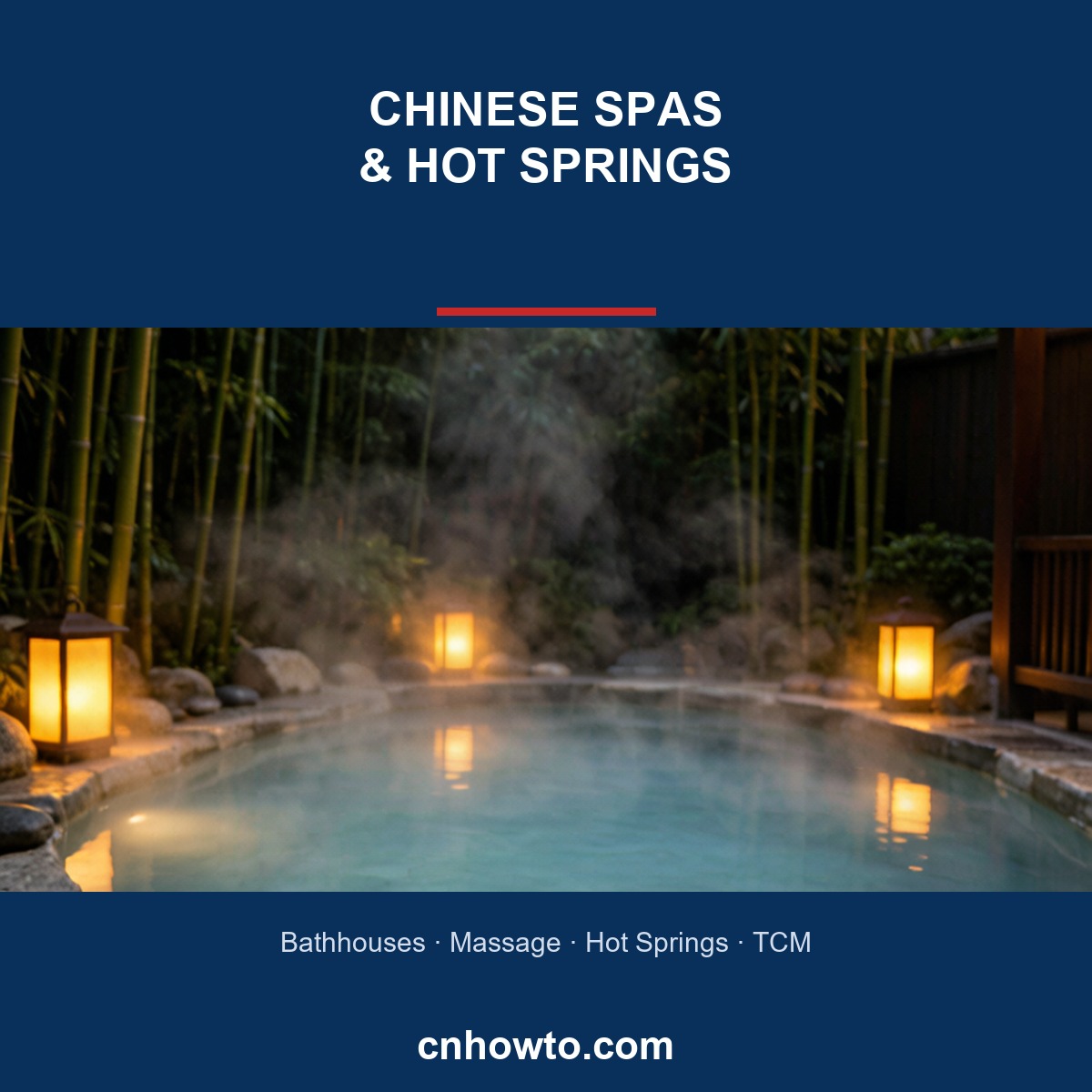
- Hot springs (温泉): natural vs heated pools, five best destinations across China, outdoor pools with mountain views, etiquette and what to wear
- Massage: therapeutic tuina (推拿), blind massage (盲人按摩, highly skilled practitioners), foot reflexology (¥50-100/hour), how to communicate pressure preferences
- Foot reflexology (足疗): China's most popular treatment, the foot map concept, the reclining chair experience, reputable chains
- Traditional Chinese treatments: cupping (拔罐, the circular marks), gua sha (刮痧), moxibustion (艾灸) — what they treat, what to expect, aftercare
- High-end spa experiences: luxury hotel spas (¥600-1,500), tea ceremony + massage combinations, private hot spring resorts, weekend retreats
- Quick reference: spa vocabulary, how to book, what to bring, no tipping culture, the one rule: bath areas are nude-only — follow local custom, it feels normal within minutes
FORMAT: PDF (instant download) UPDATED: July 2026 PRICE: $7.99