



Rock Mass Classification Cheat Sheets – RMR · Q · GSI · SMR (22-page PDF + Excel Calculator with Stereonet) · US · UK · EU
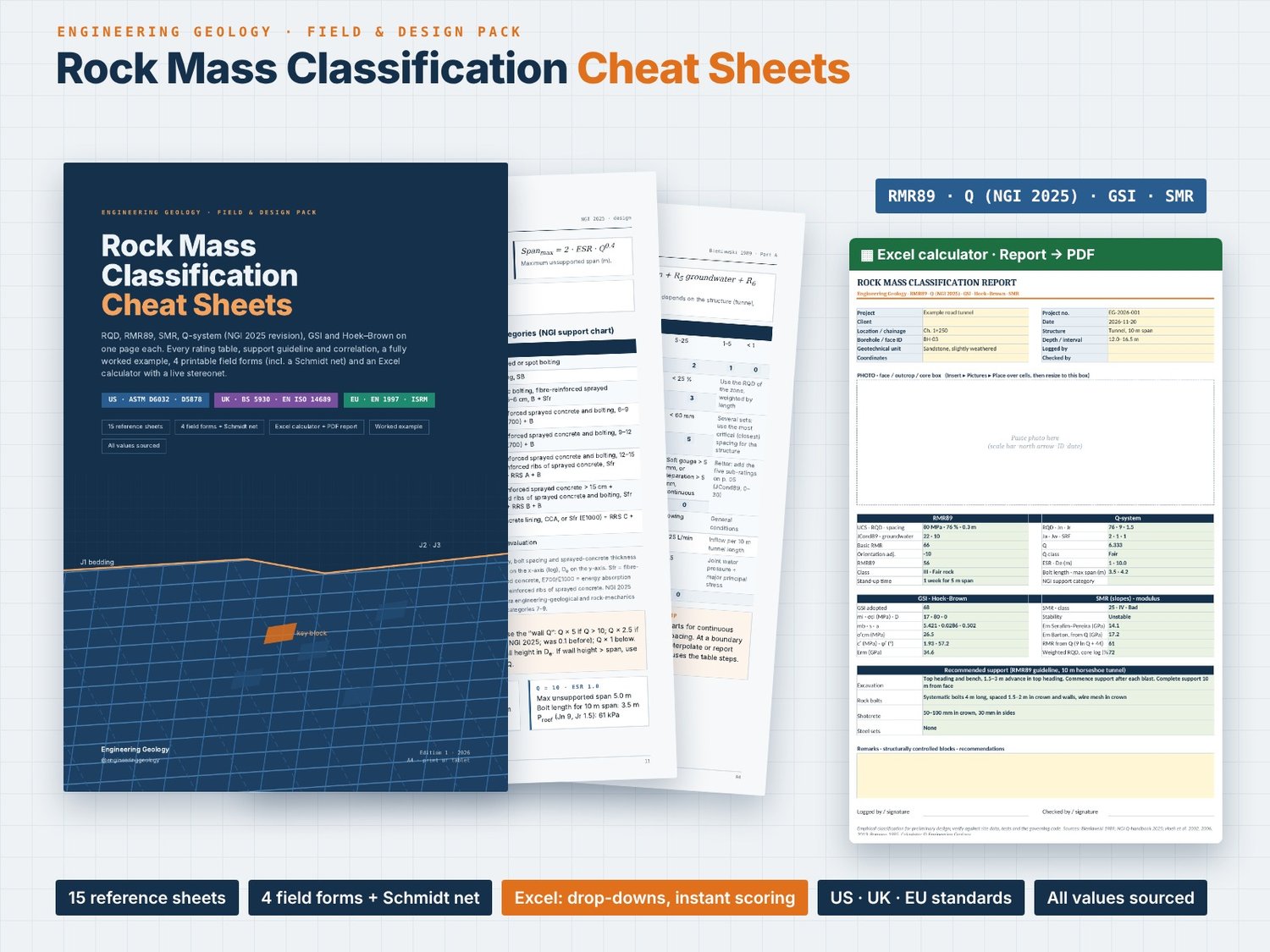
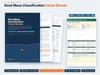
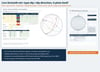
Classify a rock mass in minutes, not hours. RMR89, Q-system (NGI 2025), GSI, Hoek–Brown, SMR and RQD in one 22-page PDF, plus an Excel calculator that scores everything the moment you pick a value. You also get a live stereonet and a two-page report you can file as PDF.
The tables are normally spread across five books and three handbooks. Here every one is on a single page, checked against the originals and tested on published worked examples.
Why engineers buy it
- Saves hours on every project. No more hunting for the right table, edition or footnote.
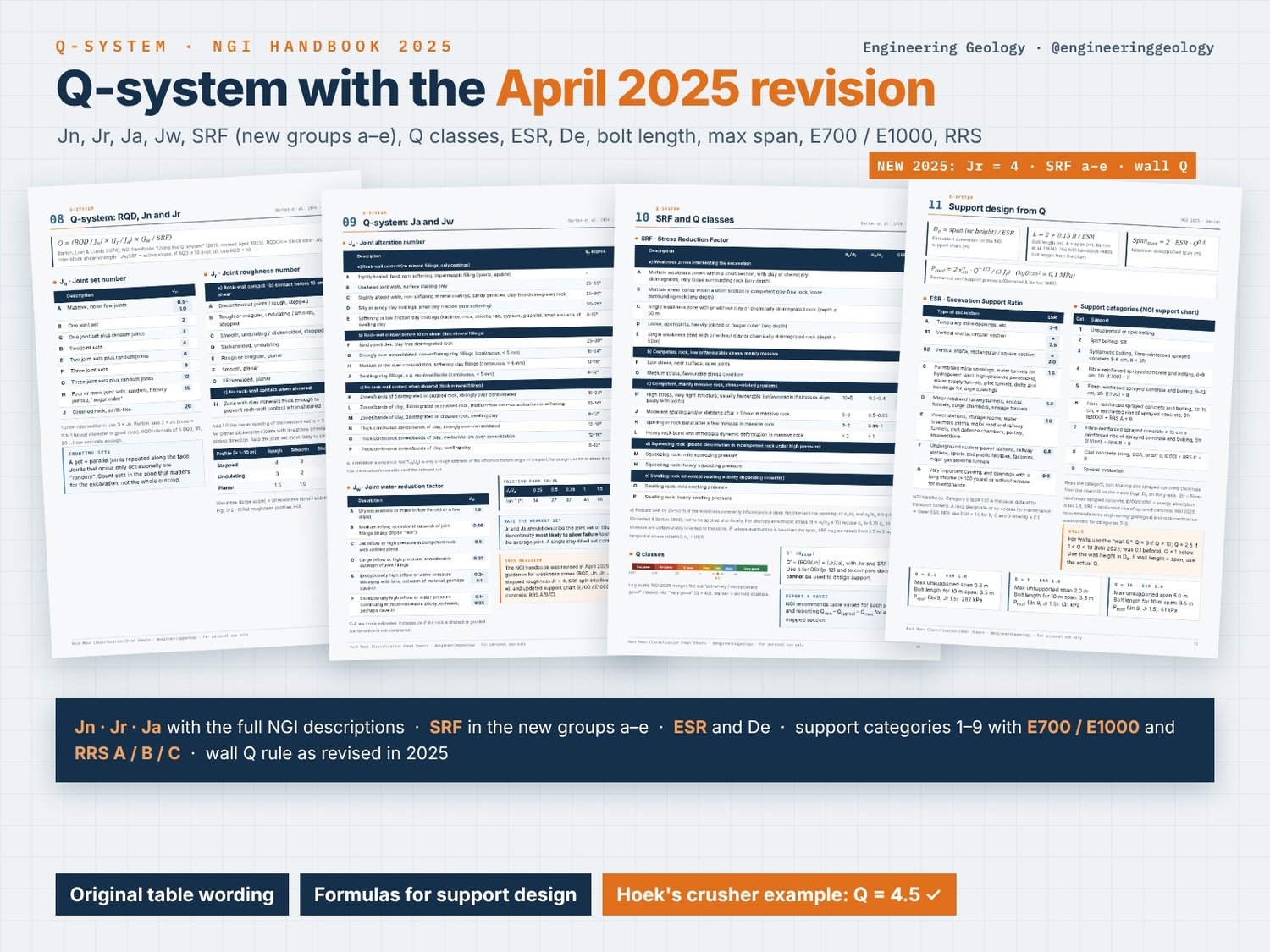
- Up to date. The Q-system follows the NGI handbook April 2025 revision: Jr = 4 for stepped joints, SRF groups a–e, E700/E1000, RRS A/B/C and the new wall-Q rule. Most cheat sheets online are still on the 1974/1993 tables.
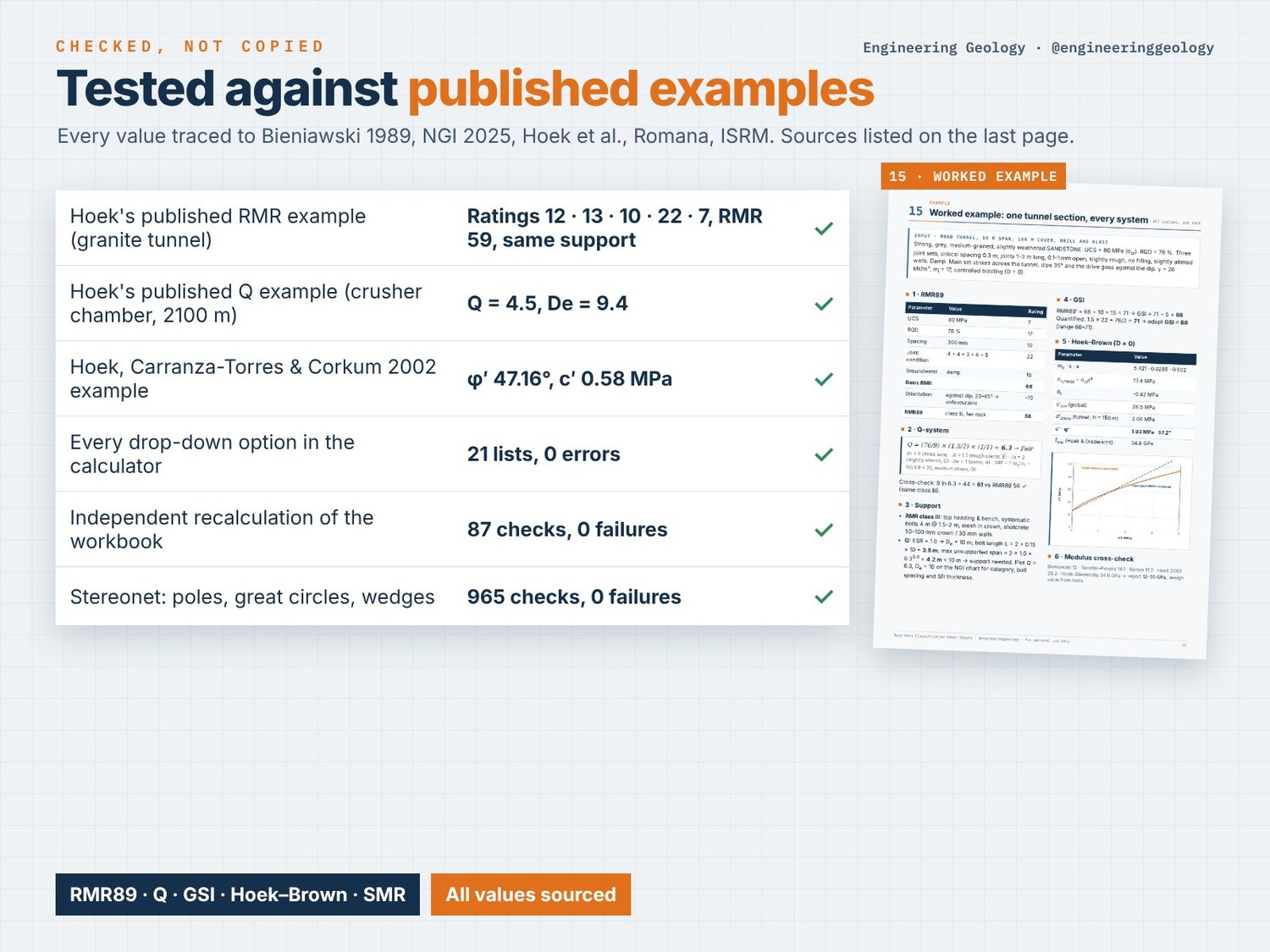
- Accurate and traceable. Every value is traced to Bieniawski 1989, NGI 2025, Hoek et al. 2002/2006/2013, Romana and ISRM, and the full source list is on the last page.
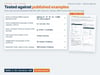
- Tested on published examples. Hoek's RMR granite tunnel example gives RMR 59 and Hoek's Q crusher chamber gives Q = 4.5, the same as the books. The Hoek–Brown 2002 example gives φ′ 47.16° and c′ 0.58 MPa. On top of that, 1,000+ automatic checks run with 0 errors.
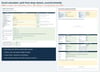
- Field ready. Four printable forms come with a project header and a photo box, including a blank Schmidt net.
- US · UK · EU. Mapped to ASTM D6032 / D5878, BS 5930, EN ISO 14689, Eurocode 7 and the ISRM suggested methods.
Excel calculator (included)
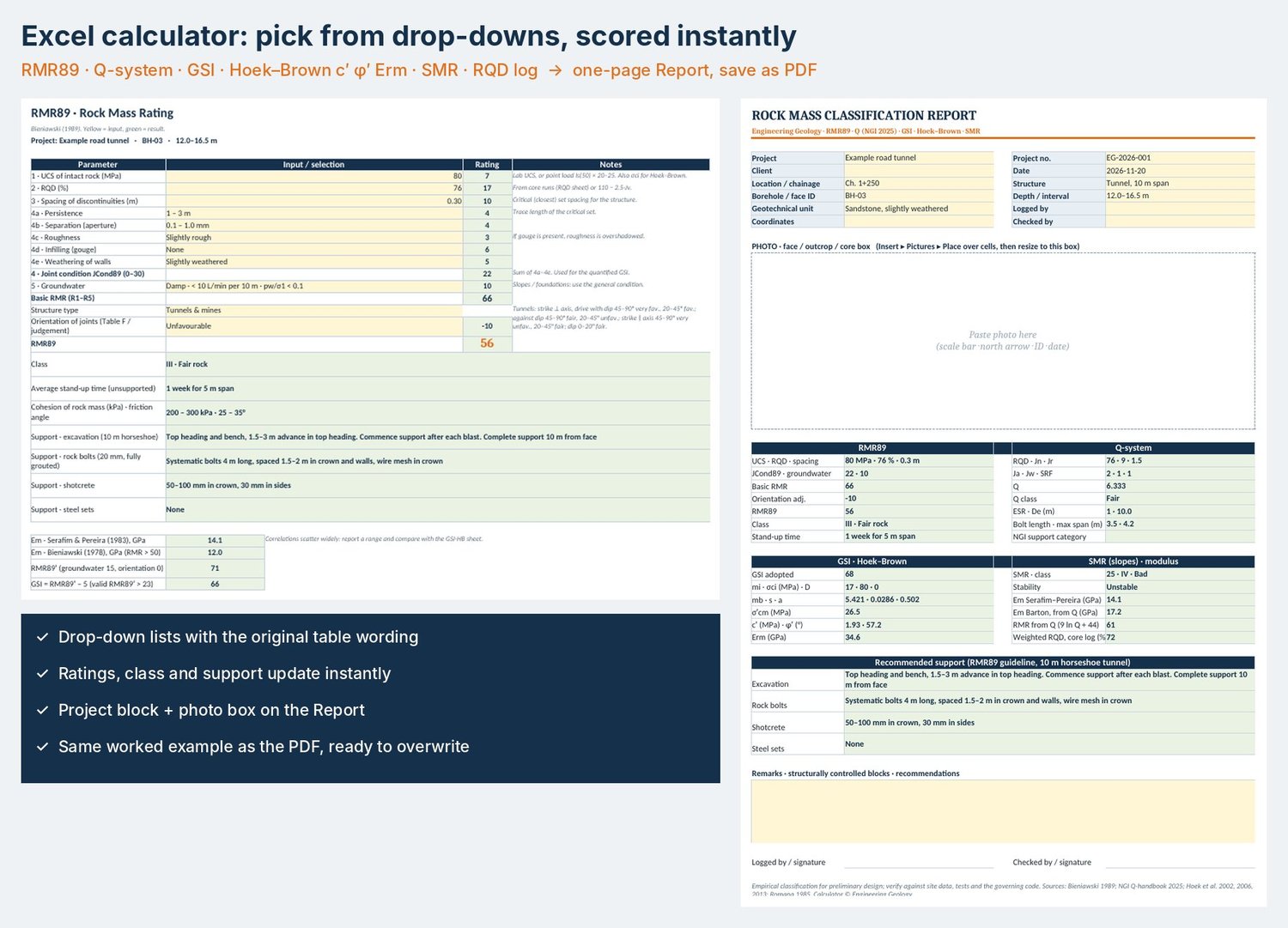
- Drop-down lists with the original table wording for every parameter. Ratings, classes and support update instantly.
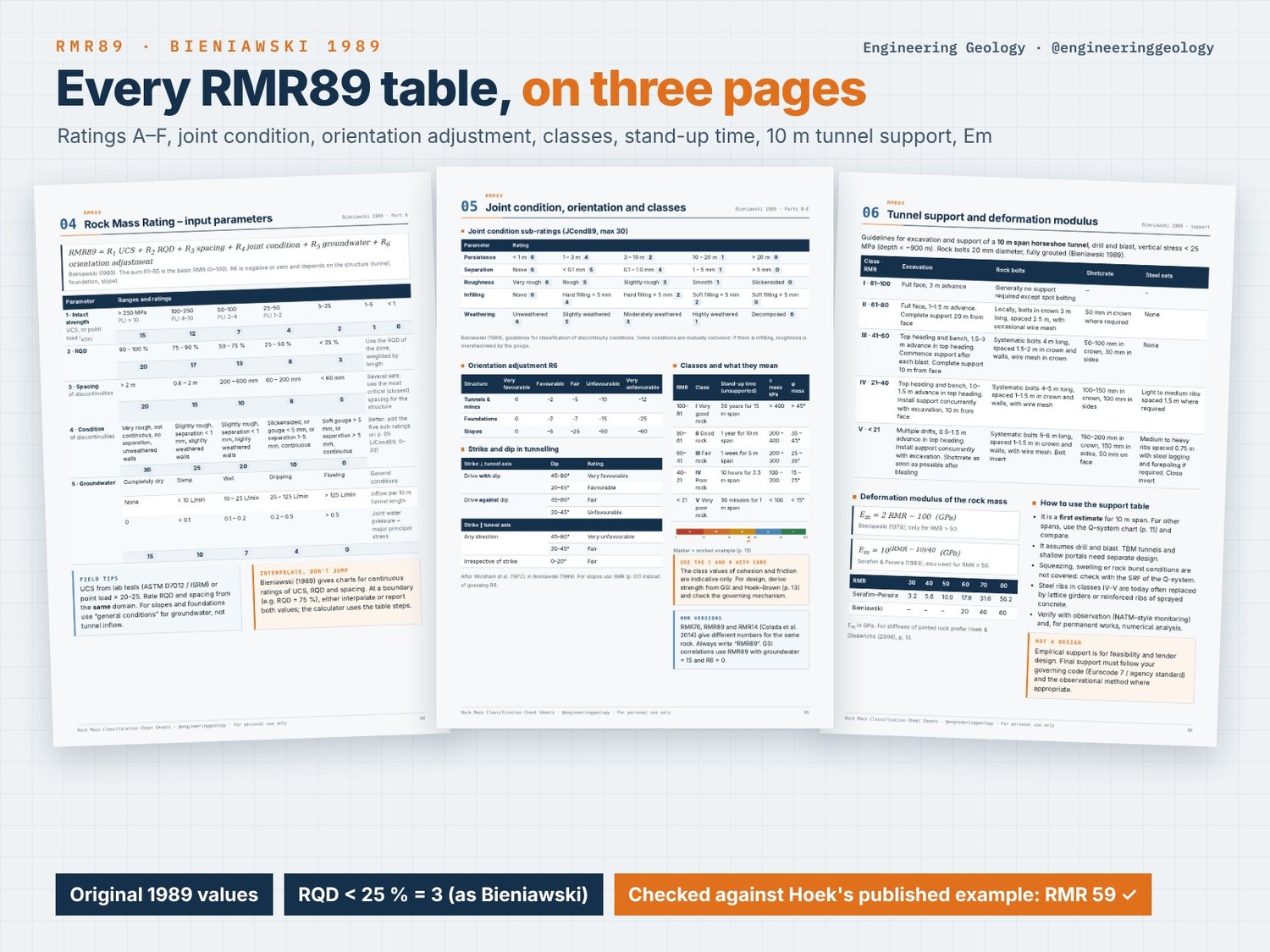
- RMR89: all ratings, class, stand-up time, 10 m tunnel support and deformation modulus.
- Q-system (NGI 2025): Q, Q class, ESR, De, bolt length, maximum unsupported span and roof pressure.
- GSI and Hoek–Brown 2002: GSI from RMR, from the quantified chart and from Q′, plus the mi table, D factor, mb, s, a, σcm, c′, φ′ and Erm. Includes a Hoek–Brown envelope chart with the Mohr–Coulomb fit.
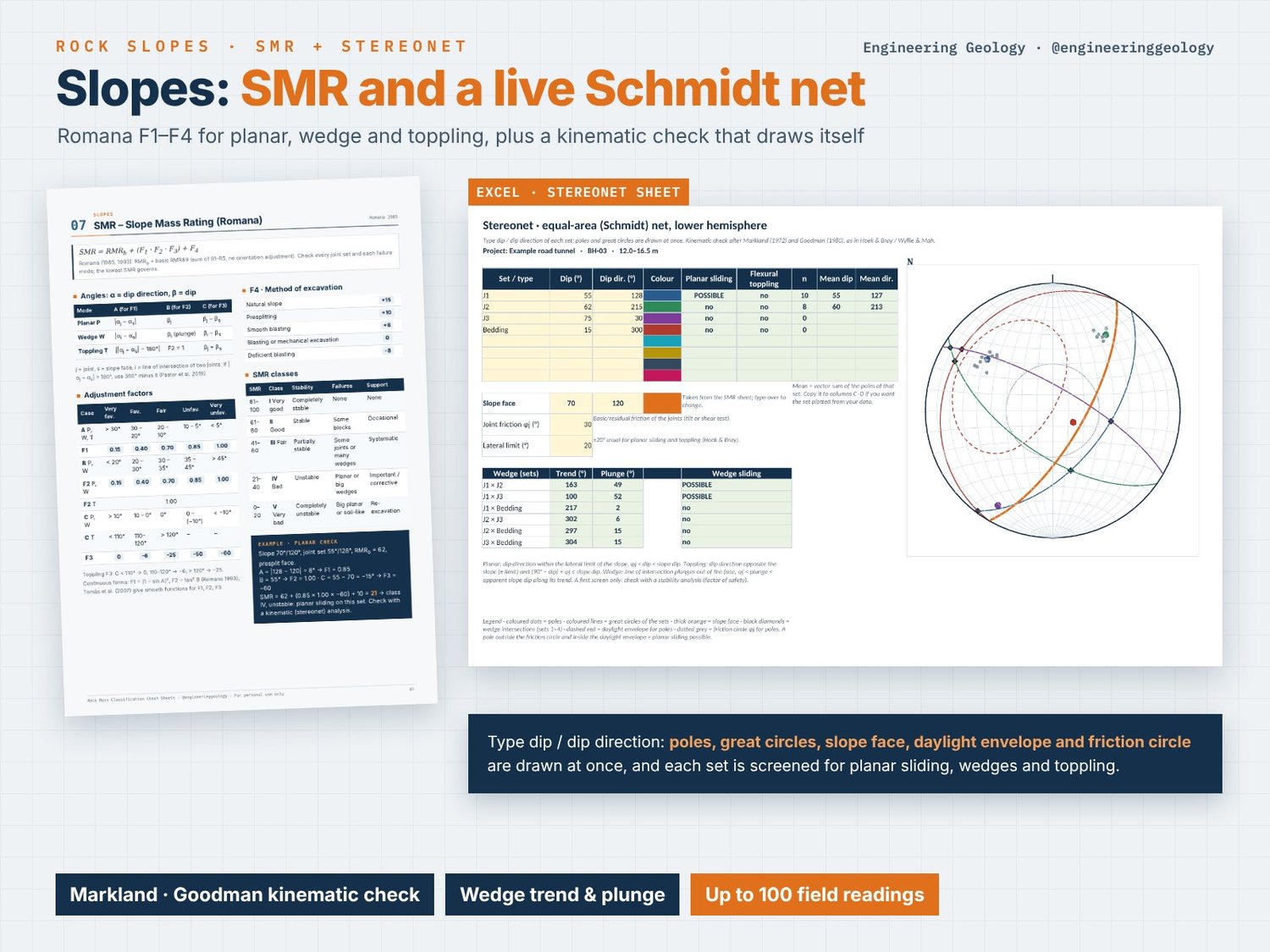
- SMR for rock slopes: F1–F4 for planar, wedge and toppling failure.
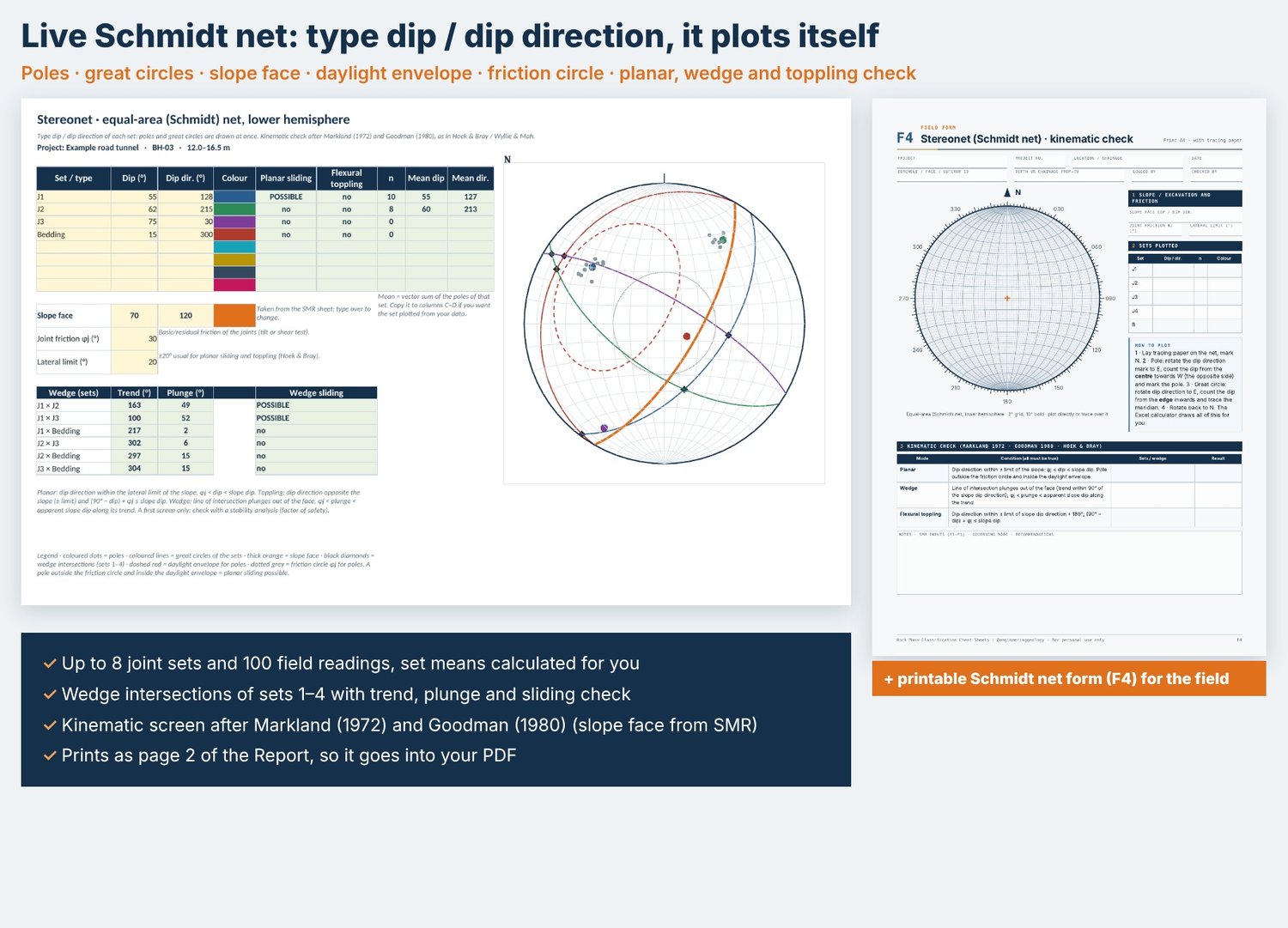
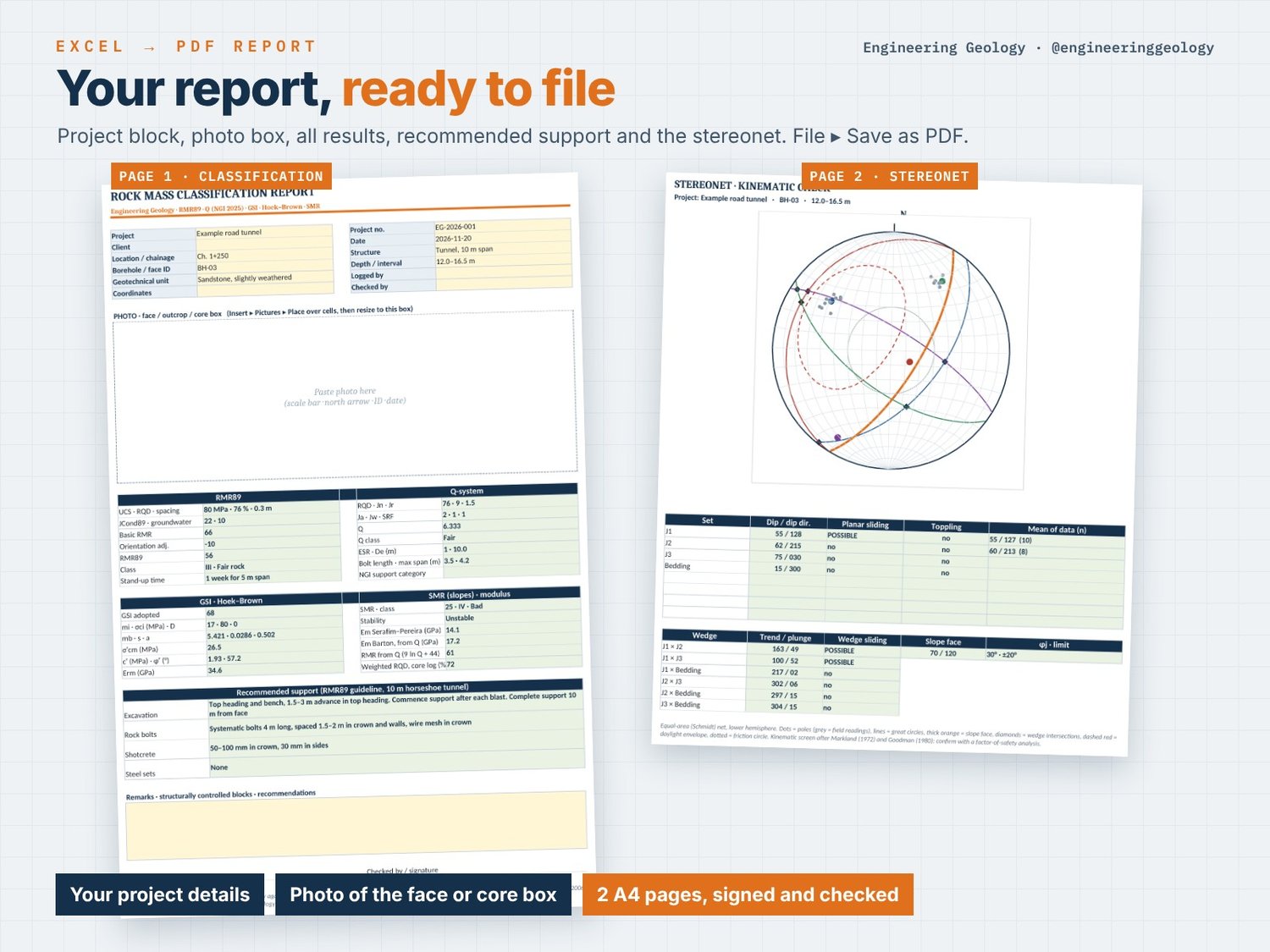
- Live Schmidt net (stereonet). Type dip and dip direction for up to 8 joint sets and 100 field readings. Poles, great circles, slope face, daylight envelope and friction circle are drawn at once.
- Kinematic check: planar sliding, wedge sliding and toppling (Markland, Goodman), with the trend and plunge of each wedge and the mean orientation of each set.
- RQD core log: TCR, SCR, RQD and fracture index per run, plus RQD from Jv or a scanline.
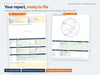
- Two-page Report with project details, a photo of the face or core box, all results, recommended support and the stereonet. Save it as PDF for your file.
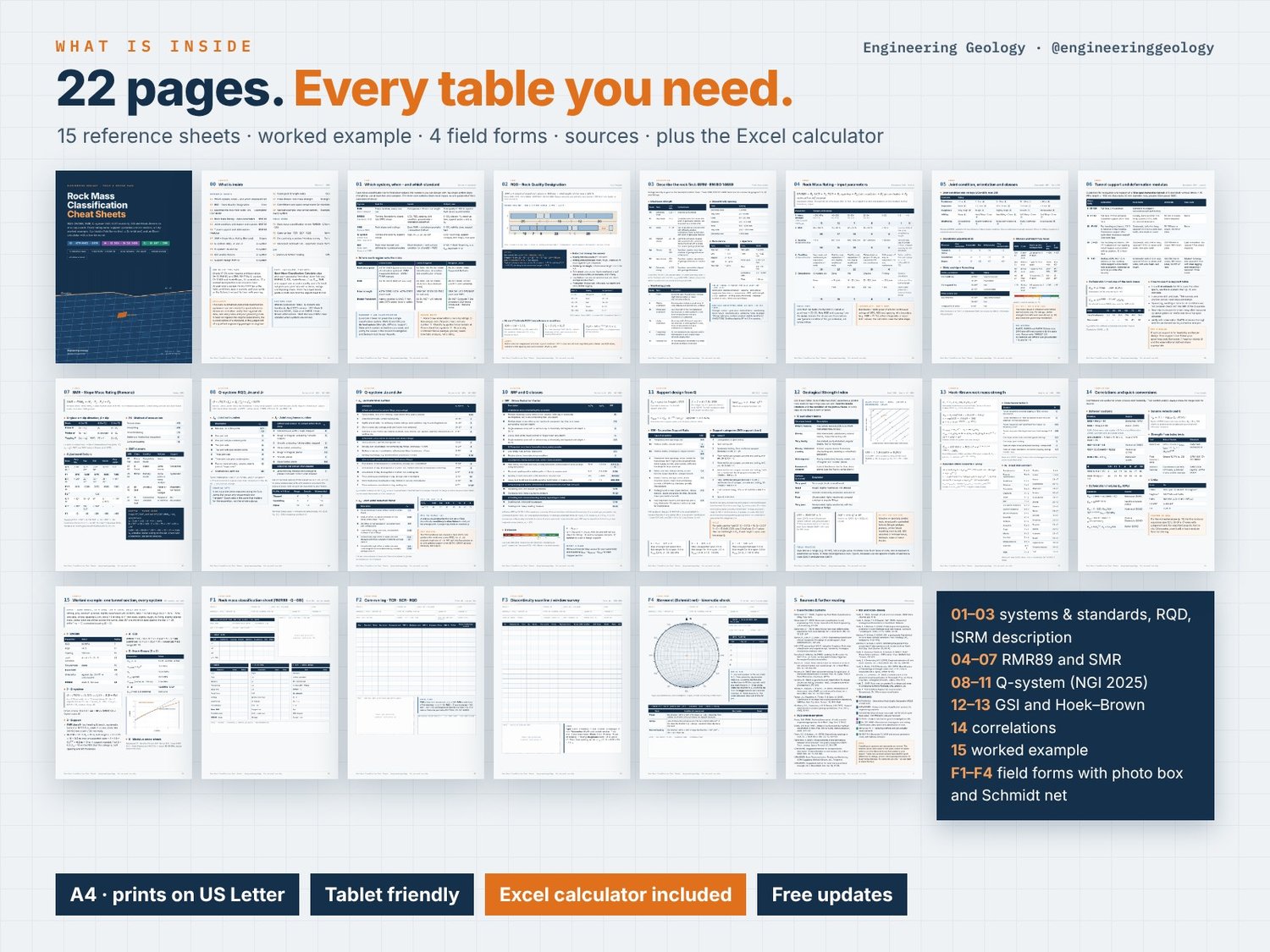
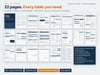
Inside the 22-page PDF
- 01 Which system when, and which standard applies
- 02 RQD: the logging rules that change the answer, a worked core box, RQD from Jv and scanlines
- 03 Rock and discontinuity description (ISRM / EN ISO 14689)
- 04–06 RMR89: every rating table, joint condition, orientation adjustment, classes, stand-up time, tunnel support, modulus
- 07 SMR for rock slopes with a worked example
- 08–11 Q-system with the NGI 2025 revision and support design
- 12 GSI chart terms and the quantified GSI chart
- 13 Hoek–Brown 2002: mb, s, a, D, mi, equivalent c′ and φ′, rock mass modulus
- 14 Correlations: RMR–Q–GSI, modulus equations, Vp from Q, unit conversions
- 15 One worked example: a tunnel section taken through every system
- F1–F4 Field forms: classification sheet, core run log, scanline survey, Schmidt net with kinematic checklist
Who it is for
Engineering geologists, geotechnical and tunnel engineers, mining geologists, and students preparing for PG / PE / chartership exams.
What you get
- A ZIP with 1 PDF (A4, 22 pages; prints well on US Letter with "fit to page") and 1 Excel workbook (.xlsx, works in Excel and LibreOffice)
- Instant download
- Free updates when the systems are revised
A quick reference that summarises published classification systems in our own words. Values are indicative, so verify them against site data, tests and your governing code. It does not replace the original publications or engineering judgement. For personal use only · © Engineering Geology · Questions: Instagram DM @engineeringgeology