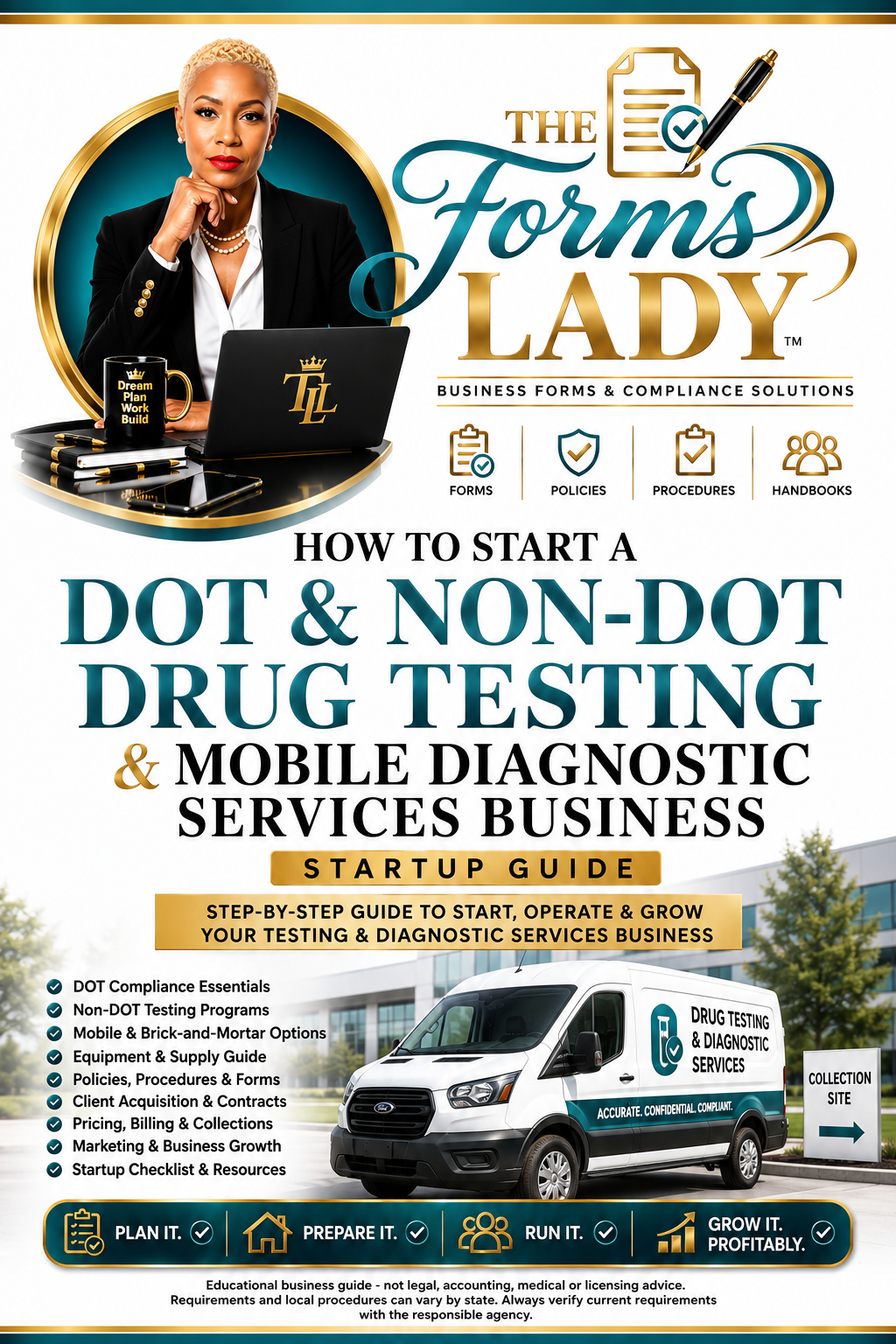
How to Start a DOT & Non-DOT Drug Testing & Mobile Diagnostic Services Business
.Want to start a Drug Testing or Mobile Diagnostic Services Business but confused about DOT, Non-DOT and diagnostic services? This beginner-friendly guide breaks the business down step by step.
The DOT & Non-DOT Drug Testing & Mobile Diagnostic Services – Beginner Master Startup Guide was created to help new entrepreneurs understand that these are different service lanes with different requirements, training, paperwork and operating procedures.
You can build your business around one service lane or combine services—but you need to understand the differences first.
Inside this eBook, you’ll learn:
• The difference between DOT, Non-DOT and Mobile Diagnostic Services
• How to decide which services your business will offer
• Collection-only services vs. actually performing clinical testing
• Why that distinction matters for your business
• DOT urine collection
• DOT oral-fluid collection considerations
• DOT alcohol-testing considerations
• Collector qualification and training considerations
• Non-DOT workplace drug-testing services
• Mobile phlebotomy and blood collection
• DNA and buccal-swab collection
• Wellness and point-of-care service considerations
• How CLIA may apply to clinical testing
• How to research state and local requirements
• Business registration and insurance considerations
• Mobile vs. fixed-site vs. hybrid business models
• How laboratories, MROs and TPAs fit into the business
• How to approach laboratories about working together
• How to approach employers for testing accounts
• Potential diagnostic outreach markets
• Equipment and supply planning
• Step-by-step specimen collection workflow
• Specimen labeling, handling, transport and courier coordination
• Chain-of-custody considerations
• Privacy, record security and confidentiality
• Quality assurance and rejected-specimen procedures
• Forms, logs, policies and procedures you may need
• Startup-budget examples
• How to price mobile appointments
• Travel, supplies and administrative-cost considerations
• Business accounts and service agreements
• Marketing your services without overclaiming what your business does
• Professional outreach scripts
• Proposals and capability statements
• Employee/collector training records
• Incidents, errors and recollection procedures
• Official resources to use when researching requirements
• Common beginner mistakes to avoid
• A 90-day startup roadmap
• “What Do I Do Next?” guidance throughout the eBook
• Service-menu and pricing worksheets
THE DIAGNOSTIC SIDE IS INCLUDED: This guide doesn’t focus only on drug testing. It also explains mobile phlebotomy, blood specimen collection, DNA/buccal collection, wellness services, point-of-care considerations, laboratory relationships and specimen transportation.
BEGINNER FRIENDLY: You don’t have to already understand the industry. The guide explains the terminology, gives examples and helps you understand what to research, what training may be needed, who to contact and what steps to take next.
BONUS: The guide also explains how The Forms Lady can assist with customized intake forms, collection logs, diagnostic forms, employer/client forms, policies & procedures, SOPs, employee documents, service agreements, scripts, proposals and complete business-document packages.
PLEASE NOTE: This eBook is for educational and informational purposes only. DOT testing is federally regulated, while Non-DOT workplace testing and diagnostic services may be affected by state law, laboratory requirements, professional scope and the specific services provided. Always verify current requirements before providing services.
DIGITAL PRODUCT: Instant-download eBook. No physical product will be mailed.