
What They Say vs. What They Mean: A Figurative Language Guide
What They Say vs. What They Mean: A Guide to Idioms, Sarcasm & Sayings for Neurodivergent Young People
"It's raining cats and dogs." "Pull your socks up." "Break a leg."
For many autistic and neurodivergent children and teens, figurative language like this doesn't just sound odd — it can be genuinely confusing, anxiety-inducing, or isolating when everyone else seems to be in on a joke they don't understand.
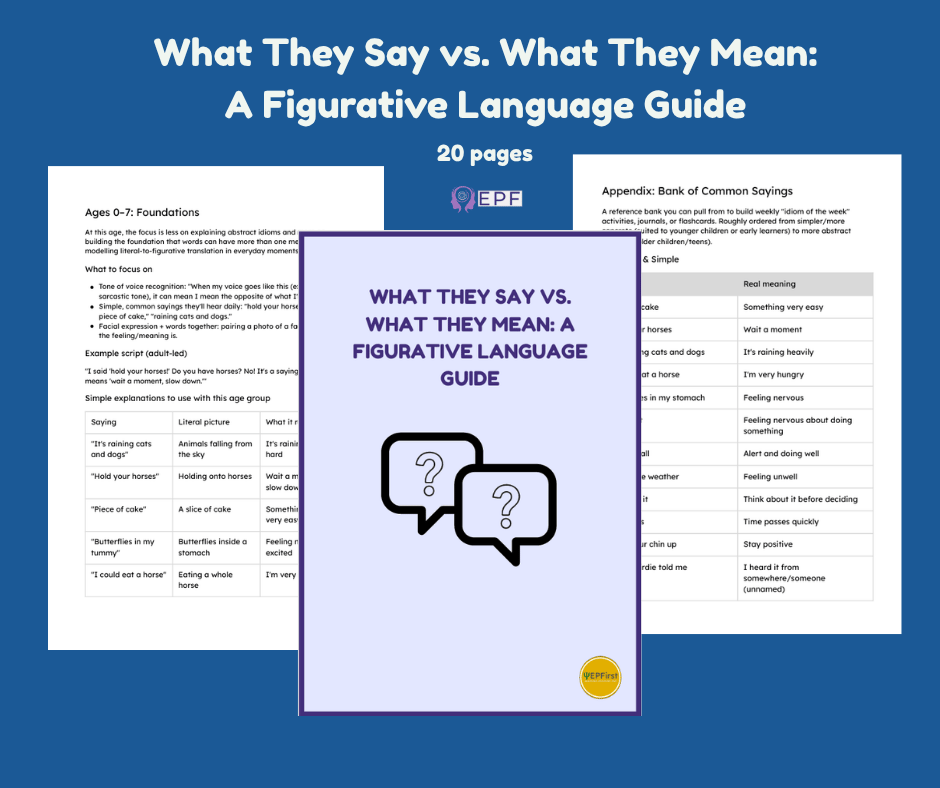
This guide gives counsellors, parents, and teachers a practical, ready-to-use resource for explicitly teaching idioms, sarcasm, and common sayings — broken down by age (0–7 and 7–16), with scripts you can use word-for-word, visual "literal vs. real meaning" tables, and strategies for building lasting, independent understanding rather than just memorising individual phrases.
What's inside:
- Core strategies for explaining figurative language, suitable for home, school or 1:1 sessions
- Age-banded guidance (0–7 foundations; 7–16 building independence)
- Ready-to-use explanation scripts for adults
- A "figurative language checklist" for in-the-moment support
- A huge appendix bank of nearly 90 sayings, idioms and proverbs — organised from simple to abstract — with literal and real meanings
- A dedicated sarcasm section, since tone and context need separate teaching from idioms
Who it's for: Counsellors, SENCOs, teachers, teaching assistants, and parents/carers supporting neurodivergent children and teens with social communication and language processing differences.
Consistent language and visuals across home and school make the biggest difference — this guide is designed so everyone in a child's life can use the same approach.