
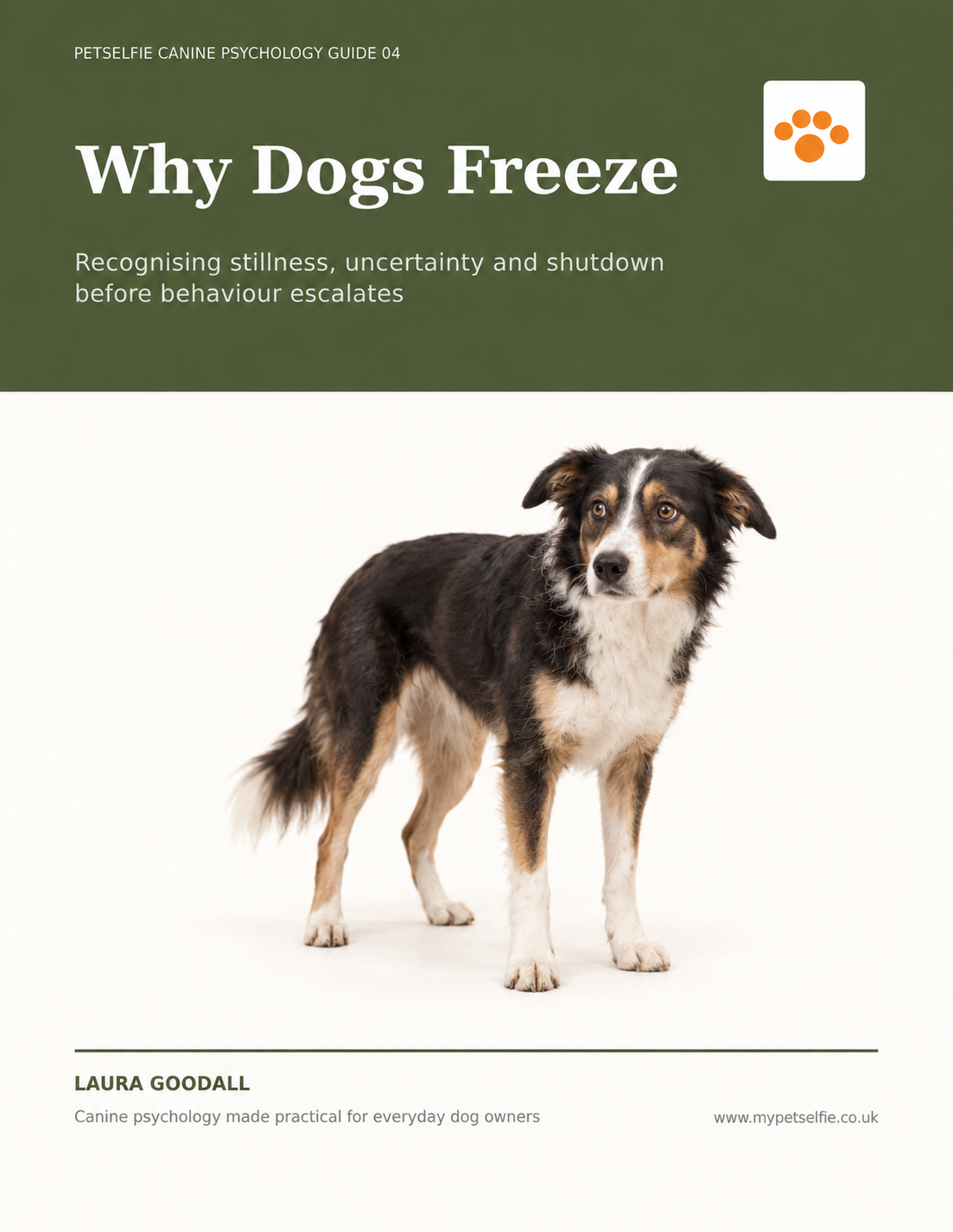
Why Dogs Freeze: Recognising Stillness, Uncertainty and Shutdown Before Behaviour Escalates
On Sale
£1.99
£1.99
Why does a dog suddenly become completely still?
Freezing is one of the most important forms of canine communication, yet it is often missed or misunderstood. A dog that freezes may be feeling uncertain, overwhelmed, frightened or unable to decide what to do next.
Why Dogs Freeze helps dog owners understand what stillness can mean and how to recognise the wider body-language signals that appear alongside it.
This practical guide explains:
- What freezing can look like in dogs
- The difference between calm stillness and stress-related freezing
- Why dogs may freeze when they feel uncertain or under pressure
- How facial expression, posture, eyes, ears, tail and movement provide important context
- How freezing can appear before growling, barking, snapping or attempts to escape
- Why punishing warning signals can make situations more dangerous
- How to respond calmly and reduce pressure
- How to give a dog more choice, distance and time
- When repeated freezing may indicate that professional behavioural support is needed
Written in clear, straightforward language, this guide is designed to help everyday dog owners become better observers of canine behaviour and recognise the quieter signals that dogs use before behaviour escalates.
Part of the PetSelfie Canine Psychology Guide series by Laura Goodall.