






What to do When you Get a Subpoena
You Got a Subpoena. Now What?
A Step-by-Step Guide with Scripts, Checklists, and Templates for Therapists
Receiving a subpoena for therapy records or testimony can be stressful, especially when you're unsure what you're legally required to disclose, how to protect your client's confidentiality, or what to say to the attorney requesting information.
A subpoena doesn't always mean you must immediately release records. However, ignoring one can also have serious consequences.
This practical guide helps therapists understand what to do when a subpoena arrives, which questions to ask, when to seek legal guidance, and how to respond without making unnecessary disclosures.
Written by Kristen McClure, MSW, LCSW, a licensed clinical social worker with more than 30 years of clinical experience, this resource offers straightforward explanations, sample language, and practical tools for navigating requests for confidential therapy information.
What's Included
1. Understanding the Subpoena
- How subpoenas differ from court orders
- Confidentiality, HIPAA, and therapist-client privilege
- Why receiving a subpoena doesn't automatically authorize releasing records
- Important deadlines and legal considerations
2. What to Do First
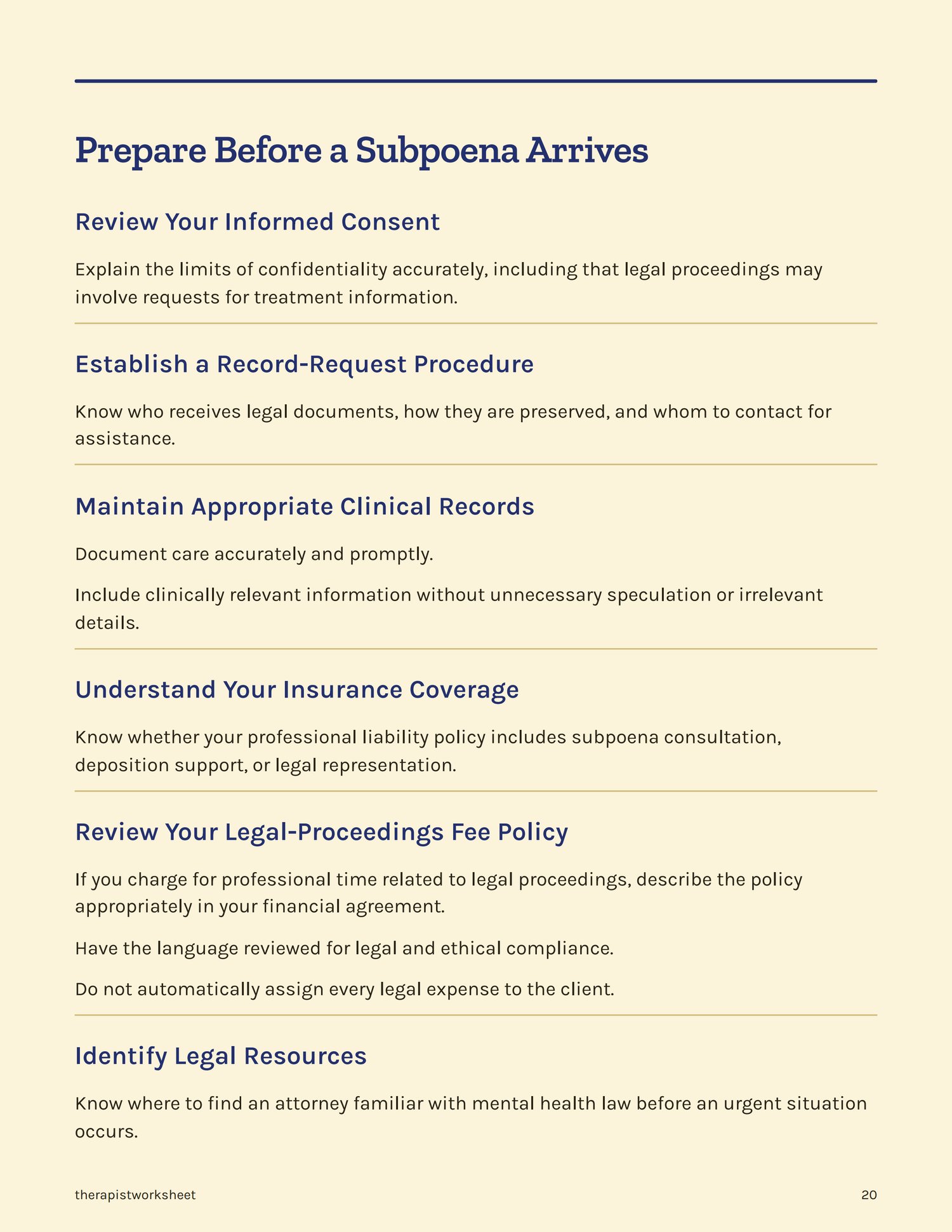
- Steps to take when a subpoena arrives
- How to preserve records and document requests
- When to contact your malpractice insurance carrier or an attorney
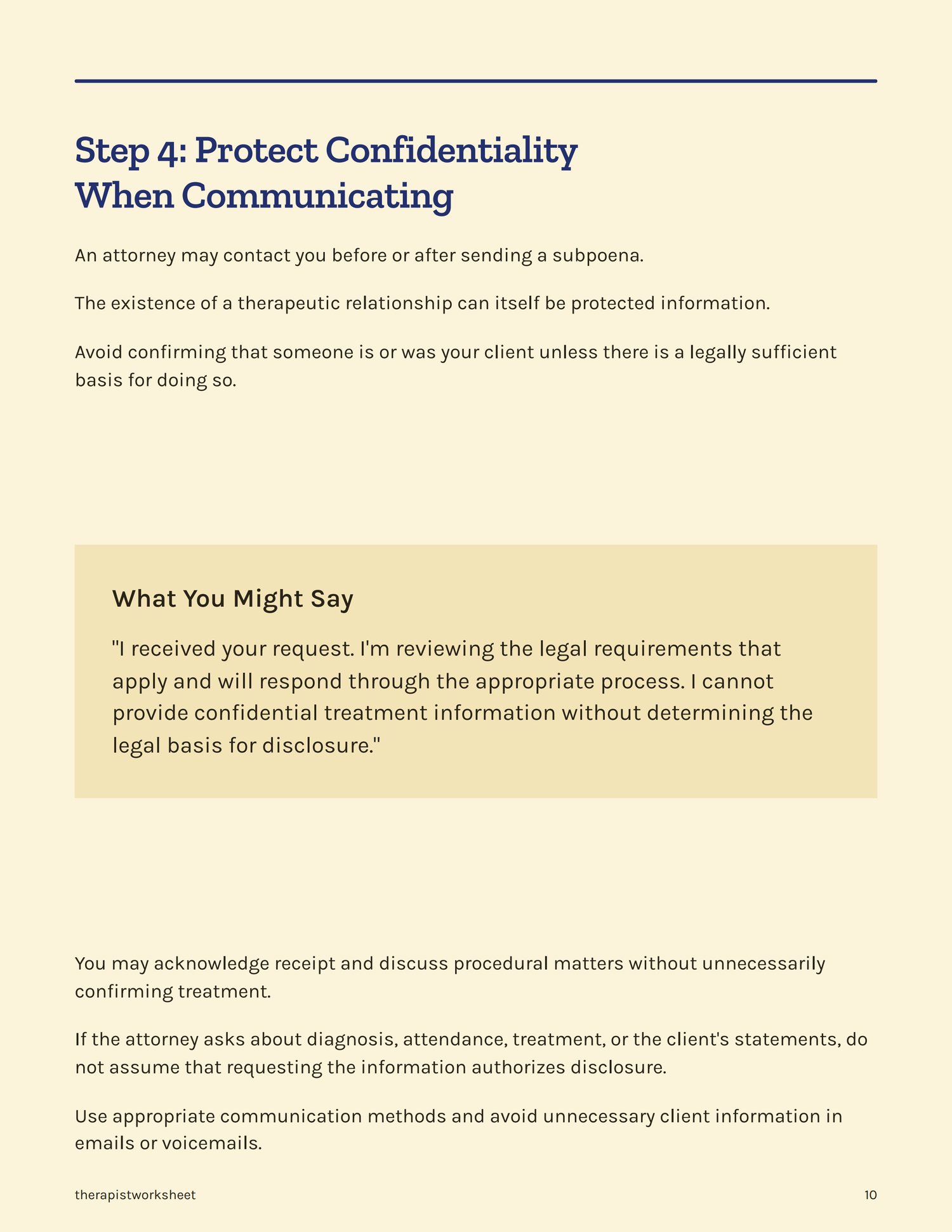
- What to consider before communicating with the requesting party
3. Protecting Client Confidentiality
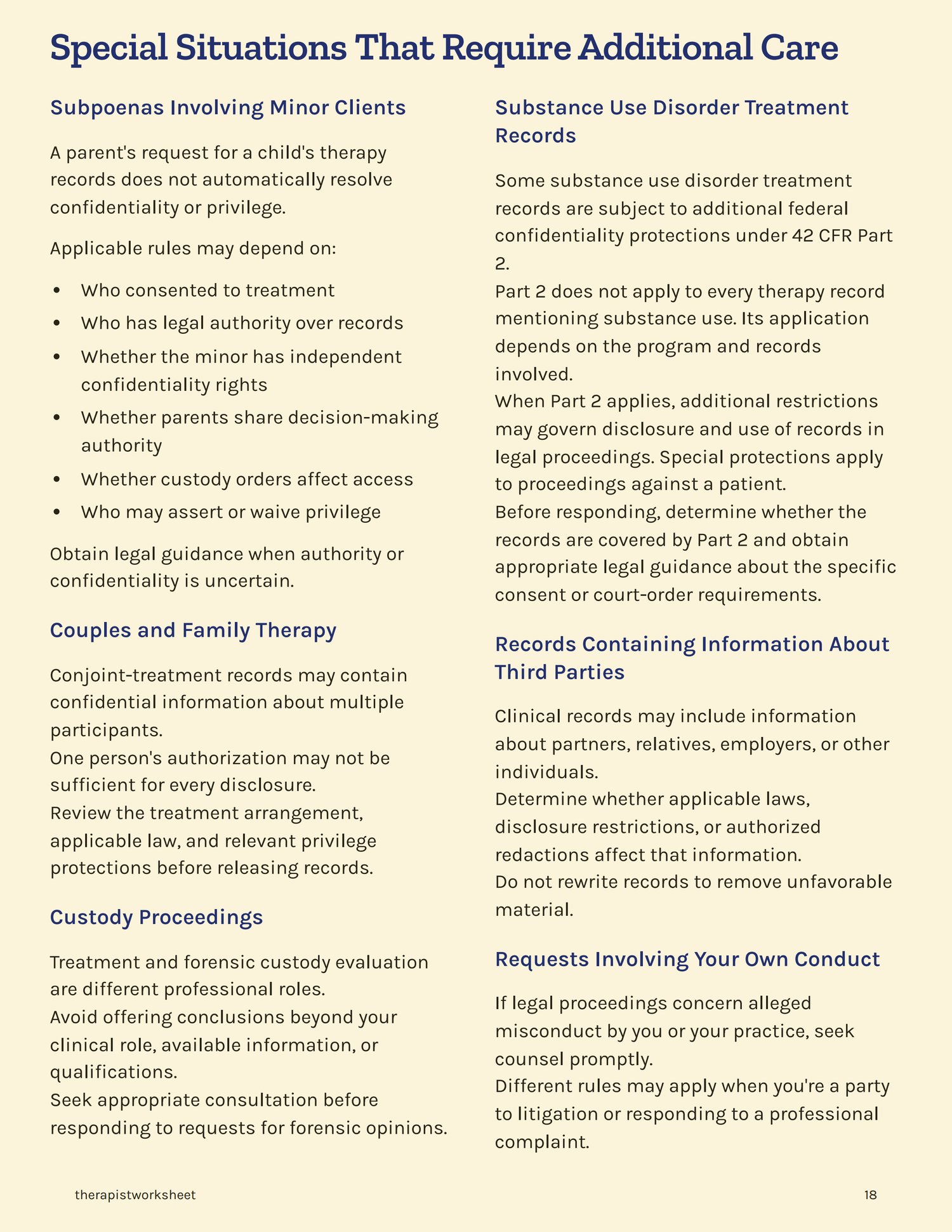
- Understanding client authorization and consent
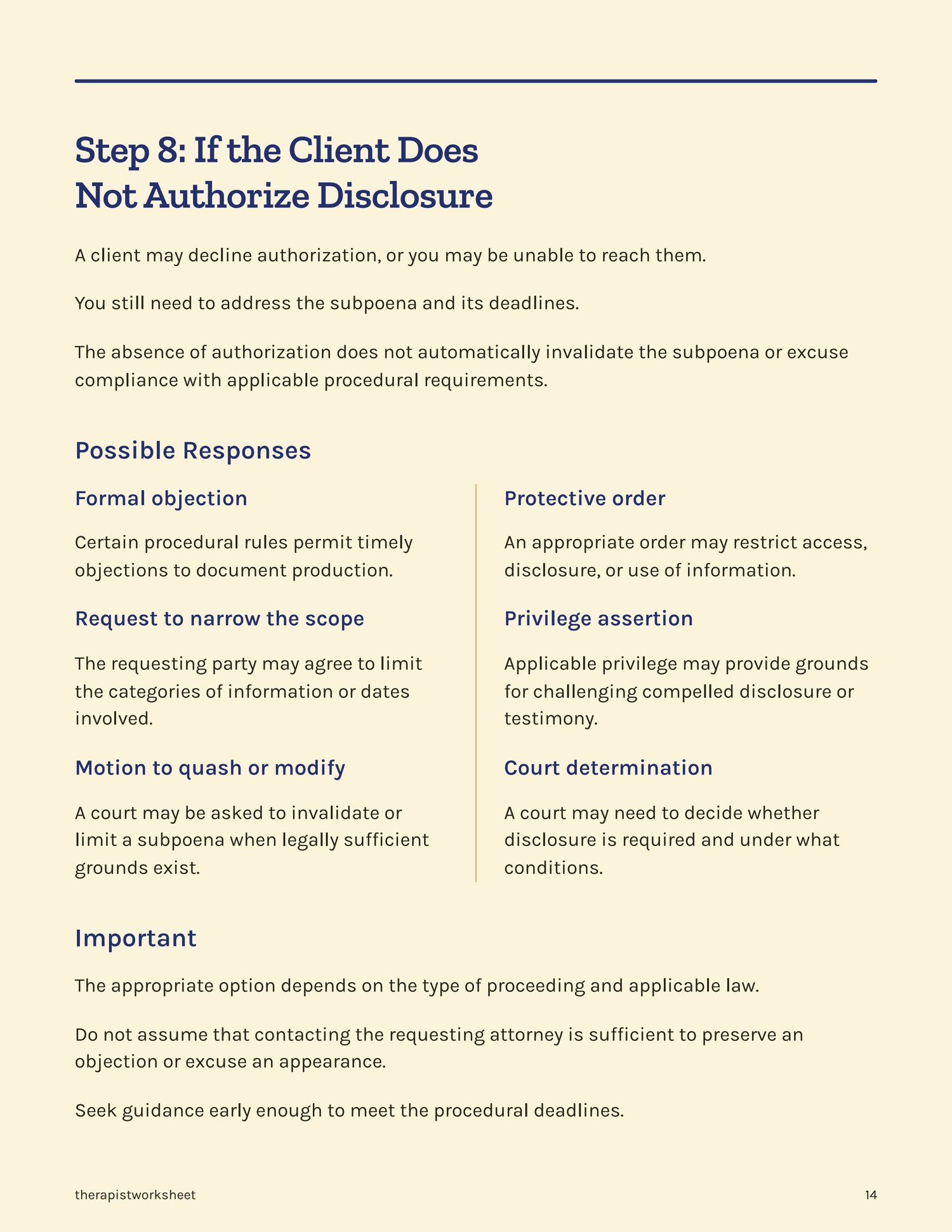
- Responding when a client does not consent
- Considering objections and limitations on disclosure
- Handling requests involving sensitive or potentially harmful information
4. Scripts and Correspondence Templates
- Communicating with the requesting attorney
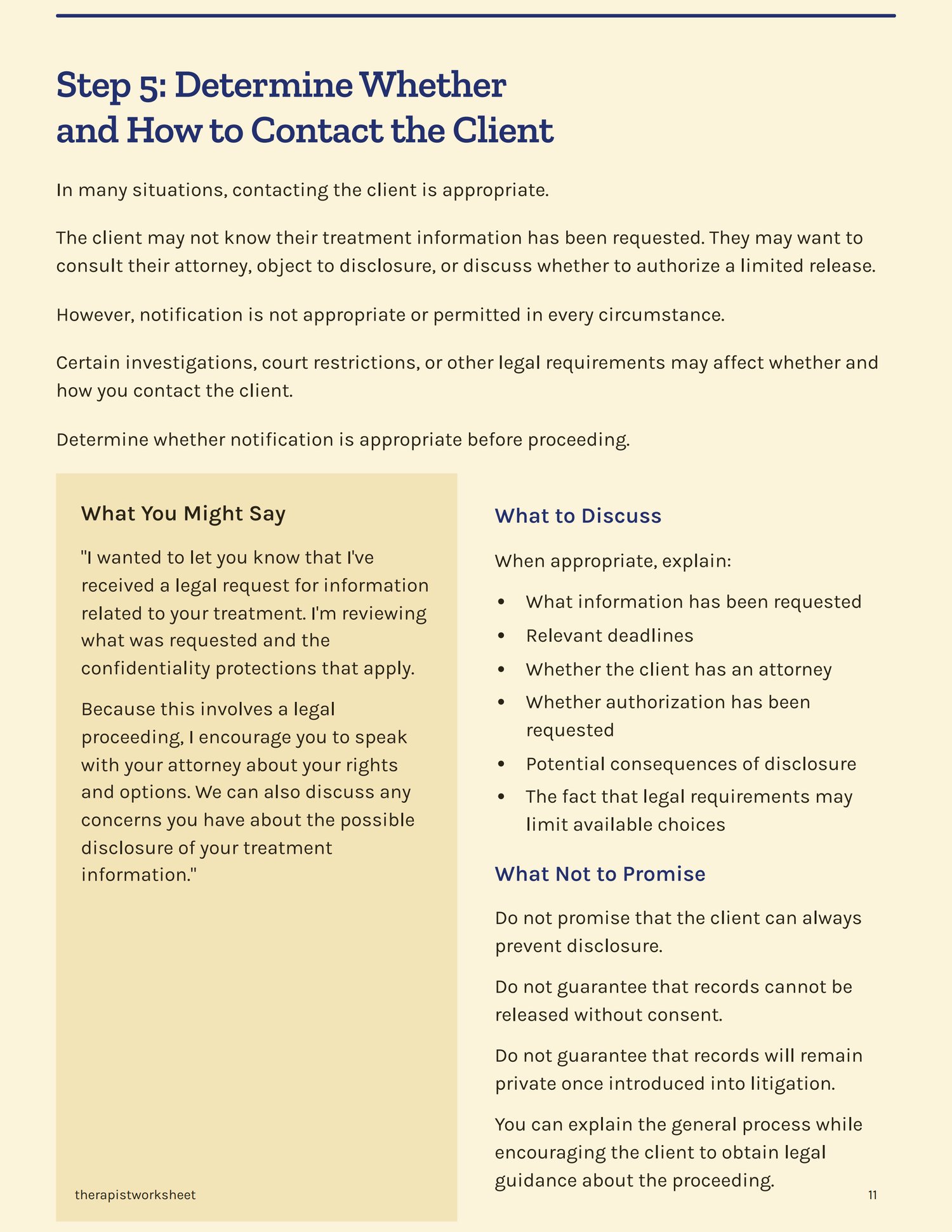
- Discussing the subpoena with your client
- Requesting clarification or additional information
- Communicating with your malpractice carrier
- Preparing written responses while protecting confidential information
5. Documentation and Preparation Tools
- Subpoena intake worksheet
- Response and communication log
- Practical response checklists
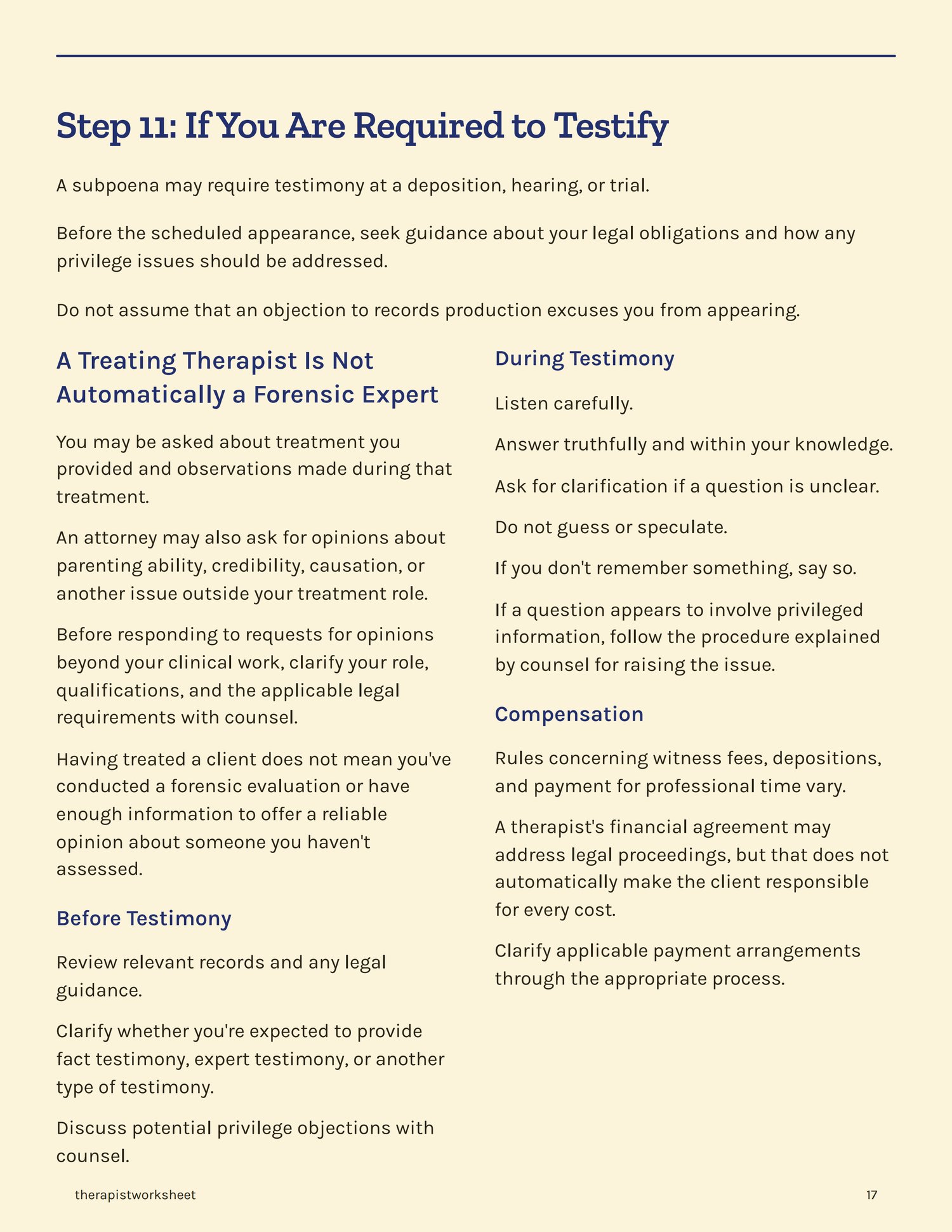
- Testimony preparation worksheet
- References for further legal and professional guidance
Who This Guide Is For
- Therapists in private practice
- Licensed clinical social workers
- Professional counselors
- Psychologists and other mental health clinicians
- New therapists learning about legal requests for records
- Experienced clinicians who want an organized reference for handling subpoenas
Why Keep This Guide in Your Practice?
Subpoenas often come with deadlines and requests for sensitive information. It can be difficult to sort through legal terminology and determine your next steps while managing a full clinical schedule.
This guide provides an organized reference you can return to when you receive a request for records or testimony. The included scripts and worksheets help you prepare questions, keep track of communications, and approach the situation carefully.
Product Details
Format: Digital PDF download
Includes: Step-by-step guidance, scripts, correspondence templates, worksheets, and checklists
Audience: U.S. mental health professionals
Author: Kristen McClure, MSW, LCSW
Delivery: Instant digital download
Important: This guide is an educational resource, not legal advice. Subpoena requirements vary by jurisdiction, type of proceeding, and circumstances. Therapists should consult a qualified attorney and review applicable federal and state laws, professional obligations, and court requirements before responding.
© 2026 Kristen McClure, MSW, LCSW. All rights reserved.