






Computer Science — Algorithm Design & Problem Solving Complete Pack
Computer Science — Algorithm Design & Problem Solving Complete Pack
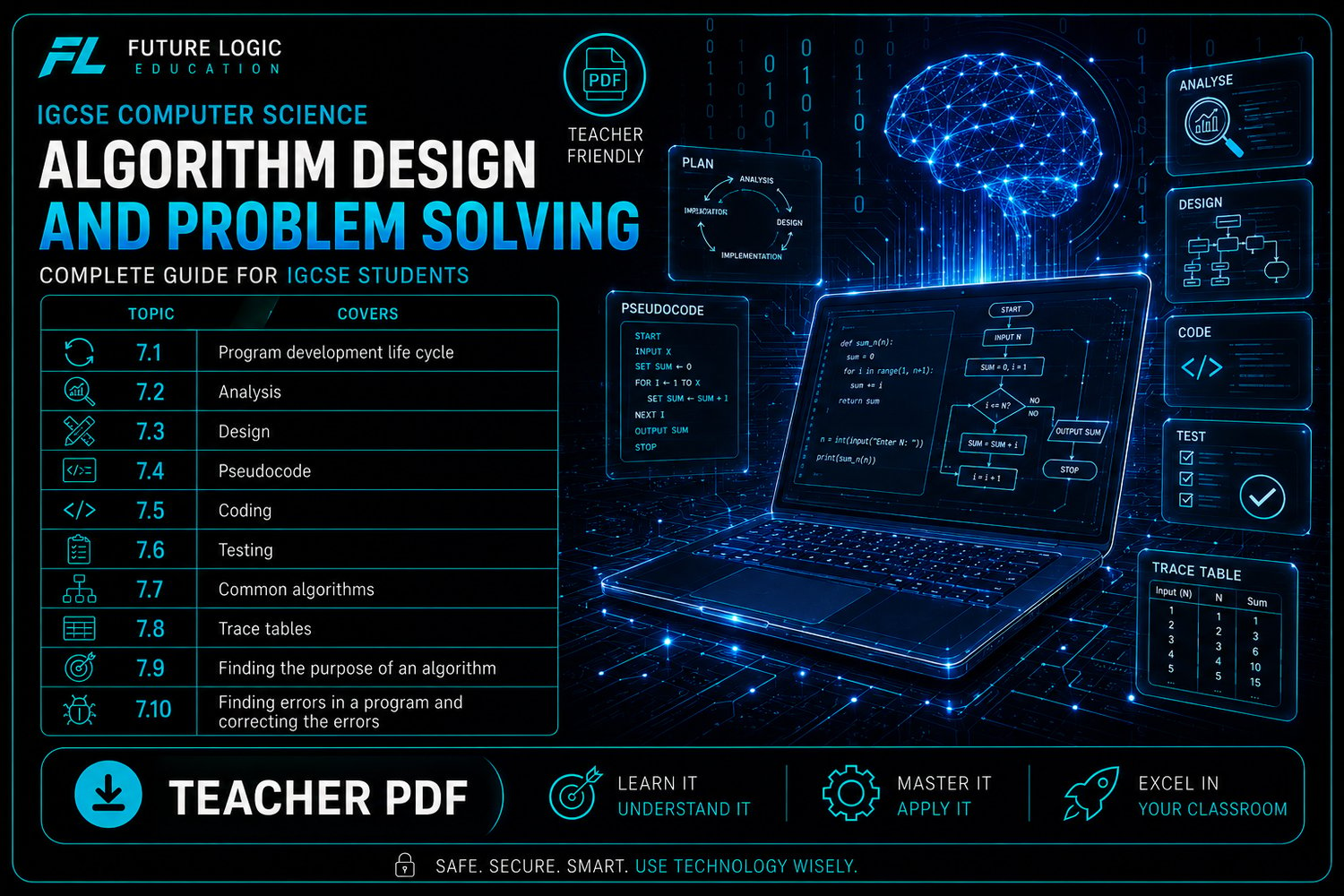
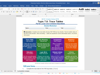
Master the most heavily examined topic in IGCSE Computer Science. This complete Algorithm Design and Problem Solving pack covers everything you need — from understanding how programs are developed and designed, to writing pseudocode, tracing algorithms, sorting and searching, and identifying and fixing errors. Packed with exam-focused practice and clear explanations at every stage.
What's inside:
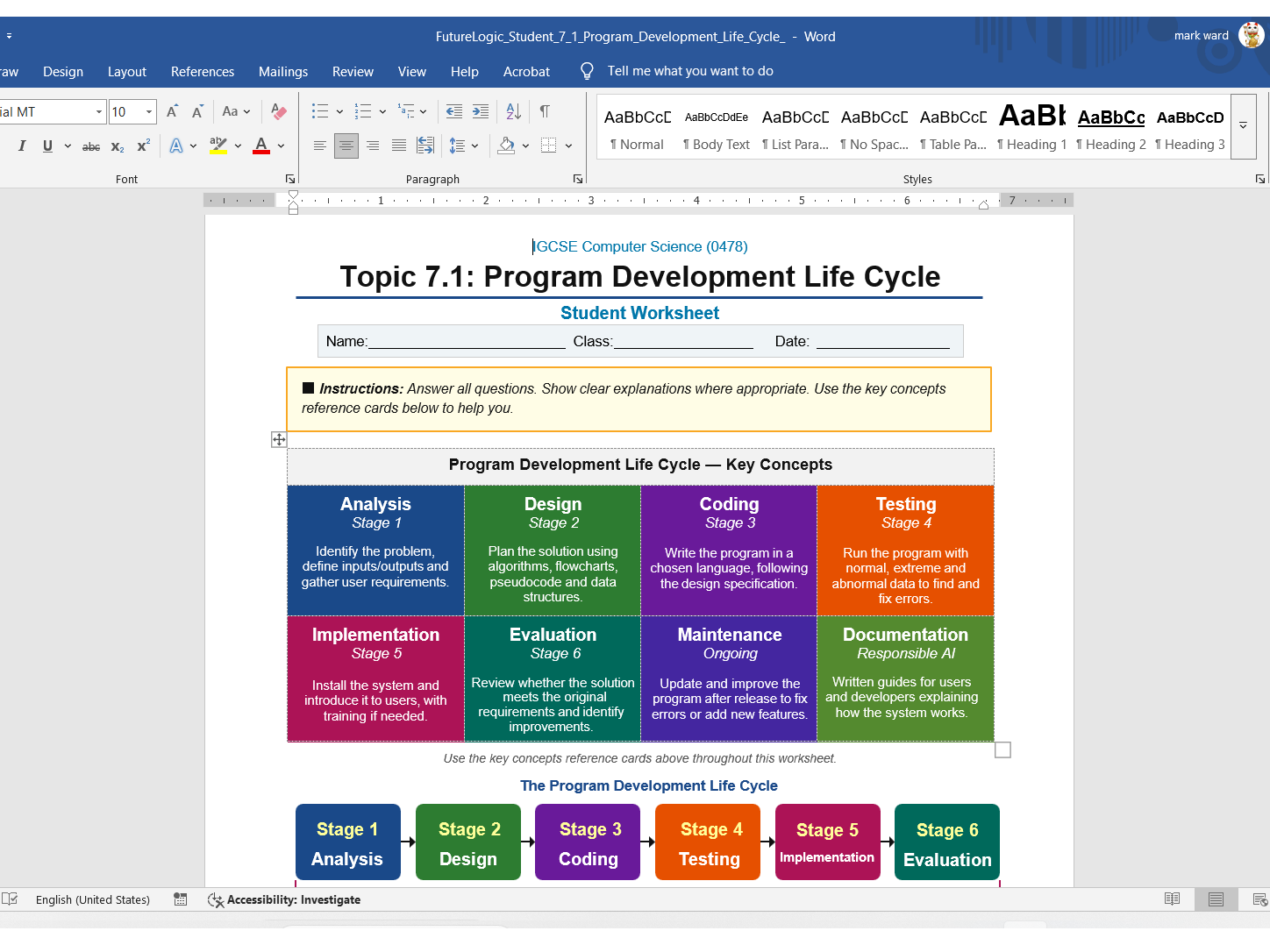
📘 7.1 Program Development Life Cycle
Understand the six stages of the PDLC — analysis, design, coding, testing, implementation and evaluation — and how each stage connects to the next in a continuous development cycle.
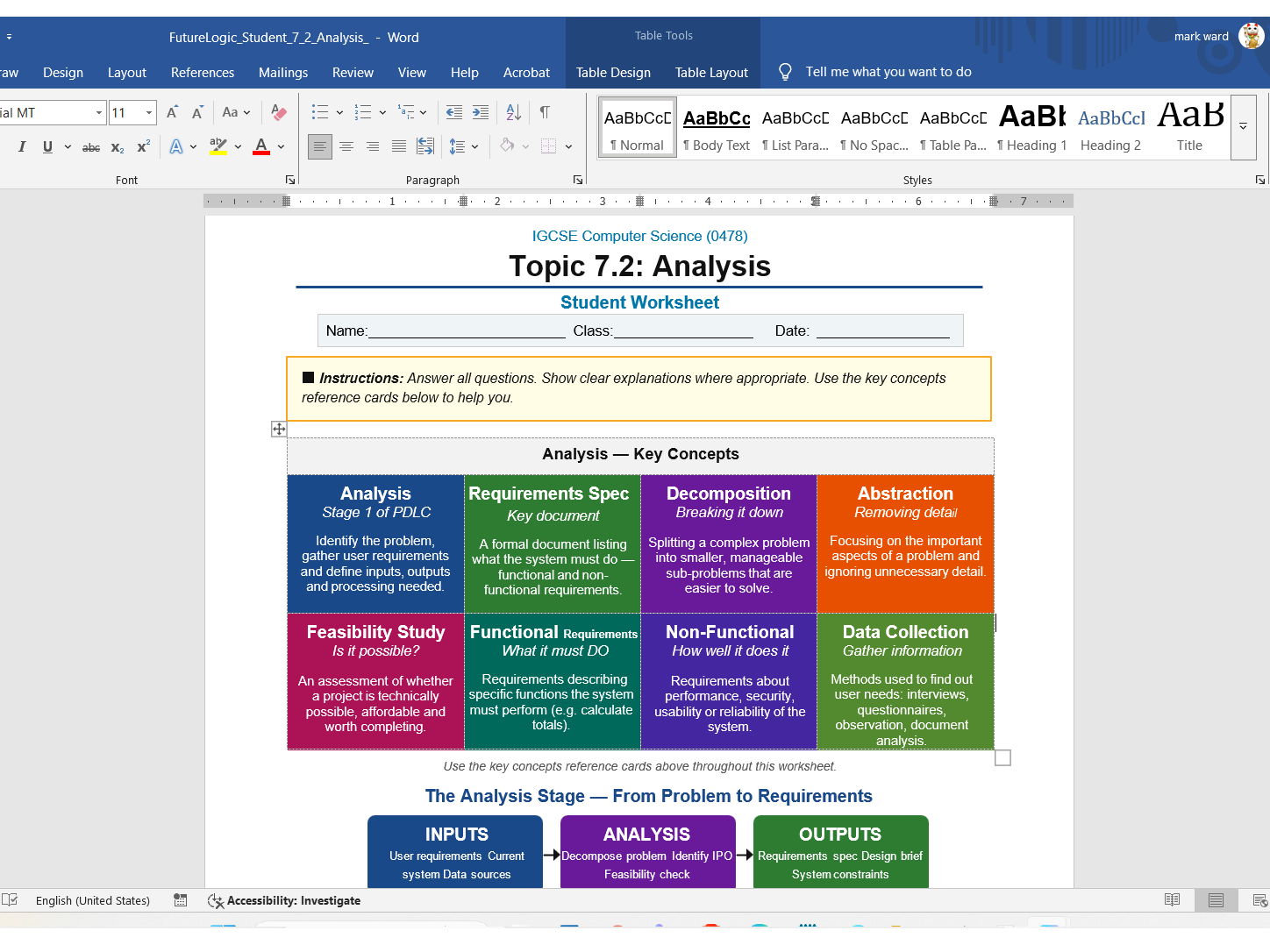
📘 7.2 Analysis
Learn how to identify problems, gather user requirements, and produce a requirements specification. Covers decomposition, abstraction, and the IPO model — the foundation everything else is built on.
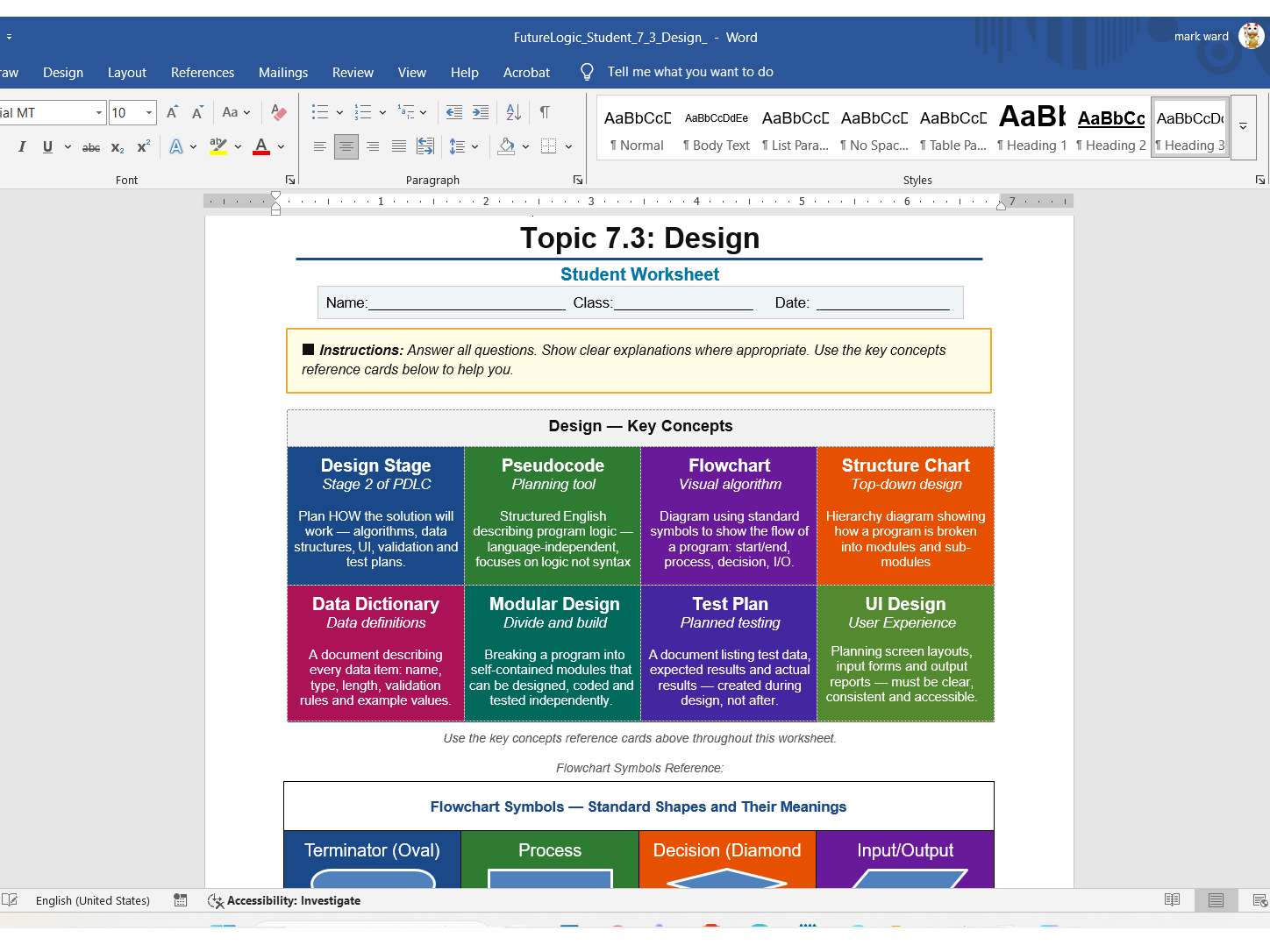
📘 7.3 Design
Explore how solutions are planned before coding begins — including pseudocode, flowcharts, structure charts, data dictionaries, UI design, and creating test plans during the design stage.
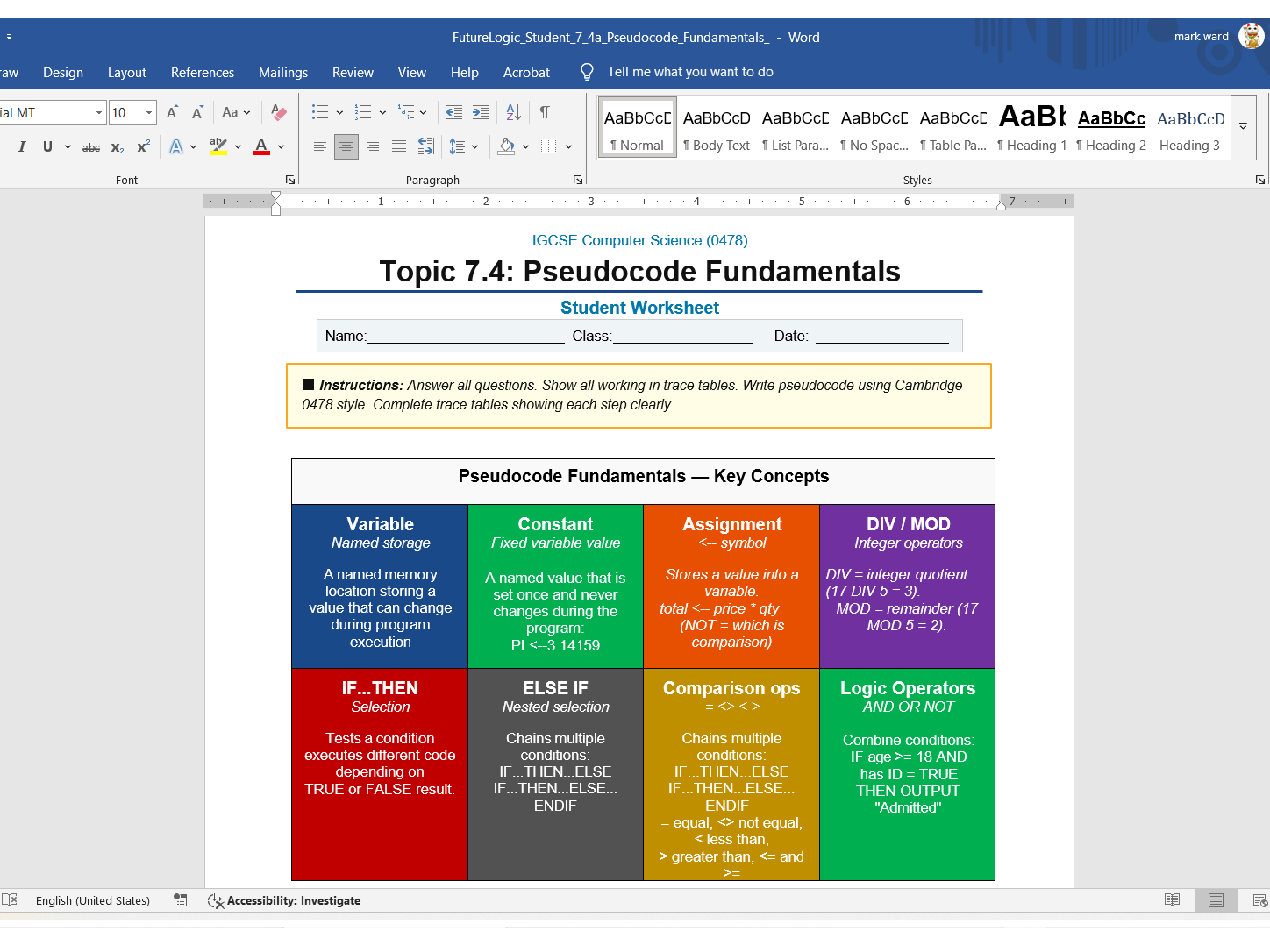
📘 7.4 Pseudocode (split into two parts)
Part A covers variables, assignment, operators, DIV and MOD, and selection with IF/ELSE — including trace tables and write-your-own pseudocode questions. Part B covers FOR, WHILE and REPEAT UNTIL loops, arrays, and combined algorithm questions in full Cambridge 0478 pseudocode style.
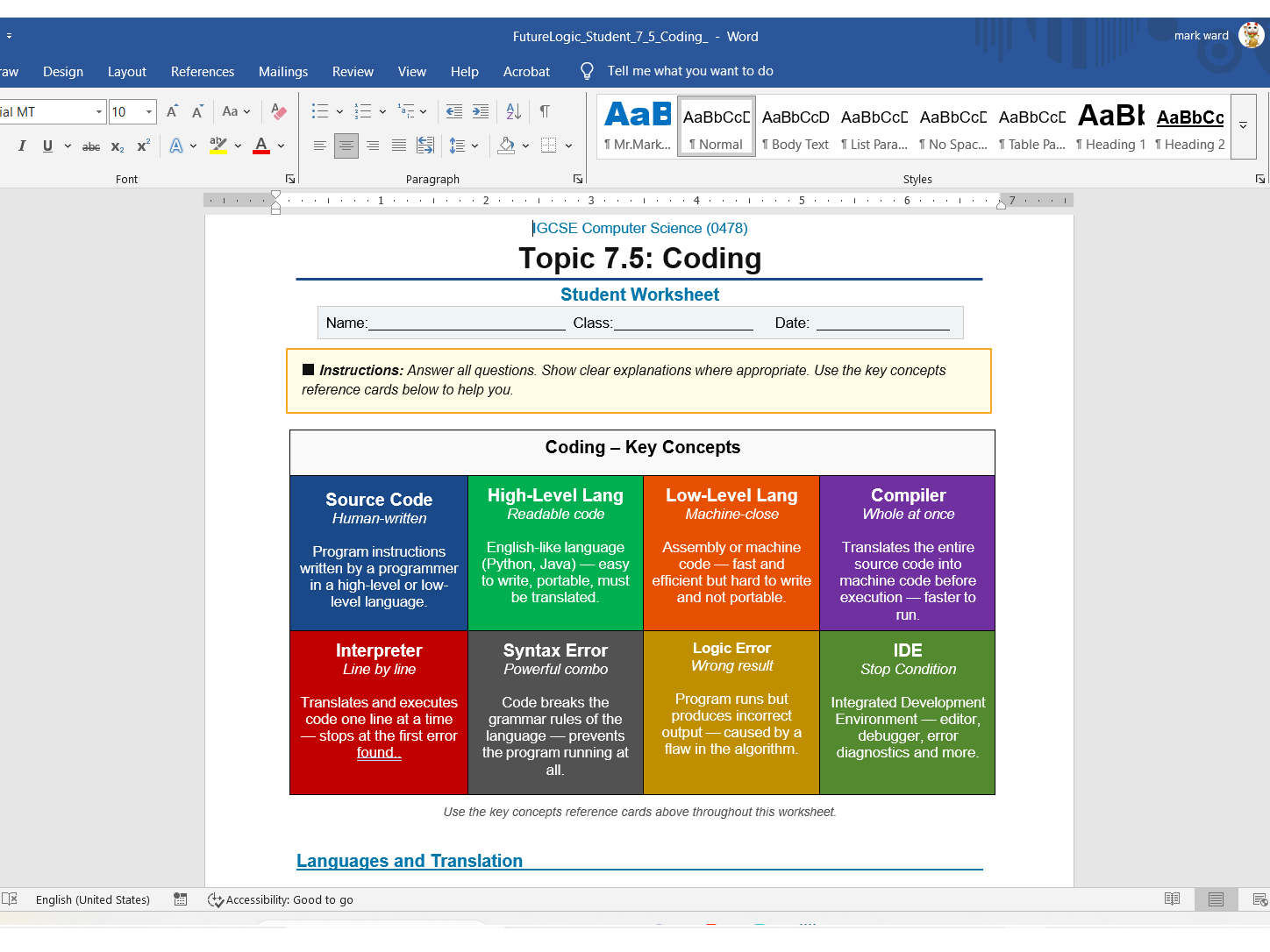
📘 7.5 Coding
Understand high-level and low-level languages, compilers and interpreters, syntax and logic errors, IDE features, libraries, modular programming, and code quality — with a compiler vs interpreter comparison table that mirrors recent Cambridge exam questions.
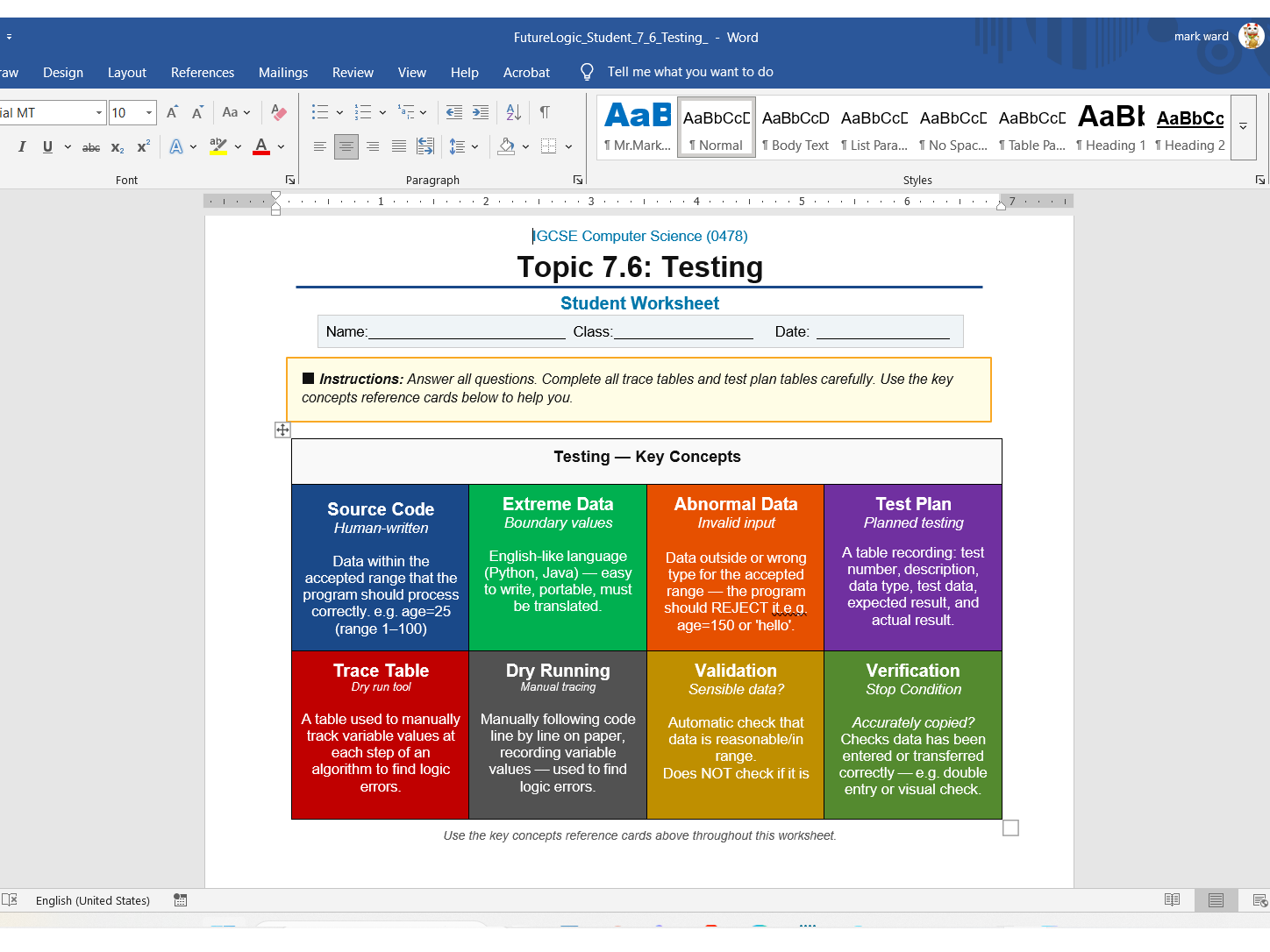
📘 7.6 Testing
Learn how to design and complete test plans using normal, extreme and abnormal data. Covers trace tables for debugging, validation vs verification, iterative and final testing, and how testing links to both the design and evaluation stages.
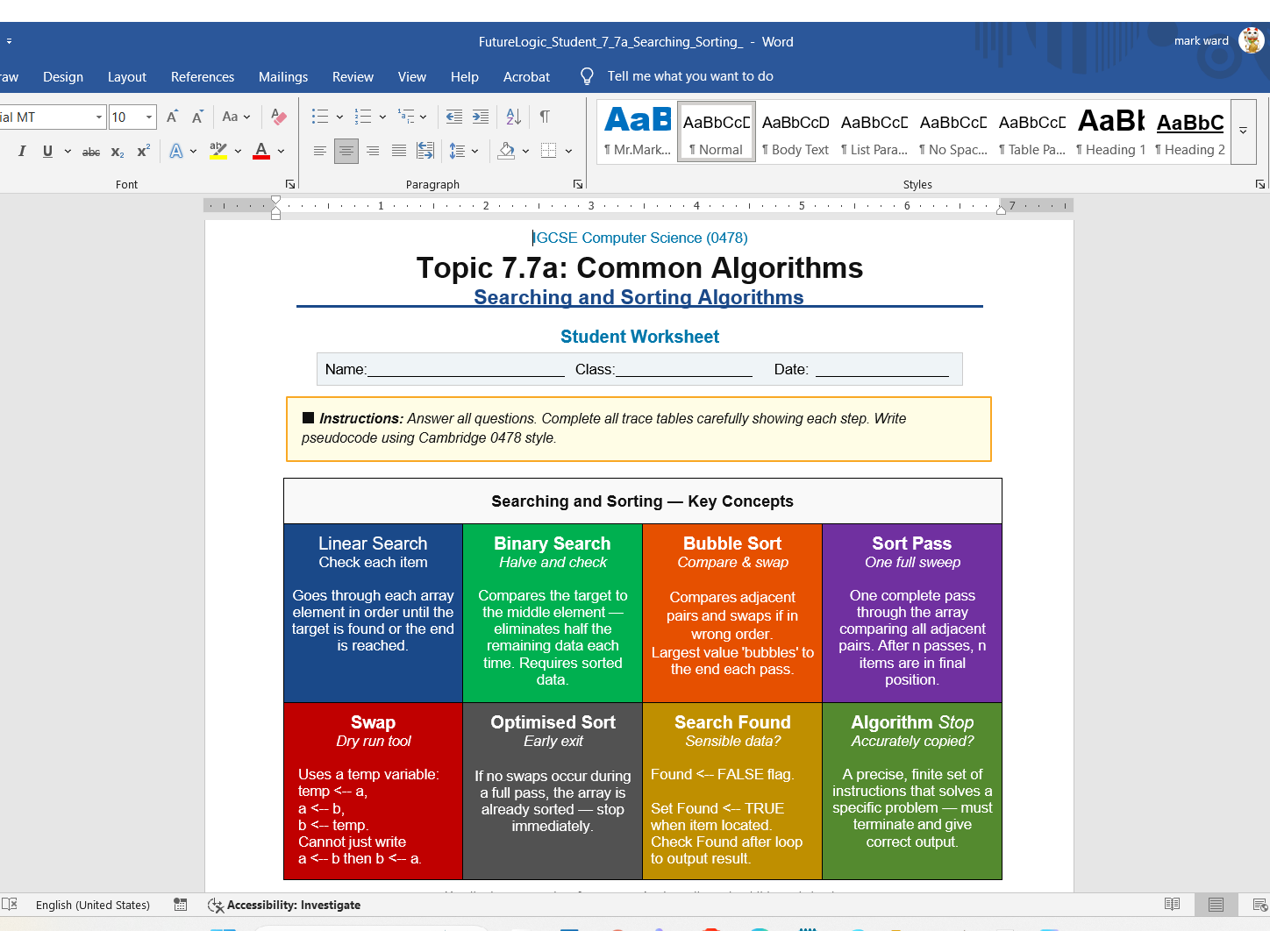
📘 7.7 Common Algorithms (split into two parts)
Part A covers linear search, binary search, and bubble sort — with pass-by-pass trace tables, pseudocode writing questions, and algorithm comparison. Part B covers totalling, averaging, counting, finding maximum and minimum values, validation loops, and combined multi-algorithm programs.
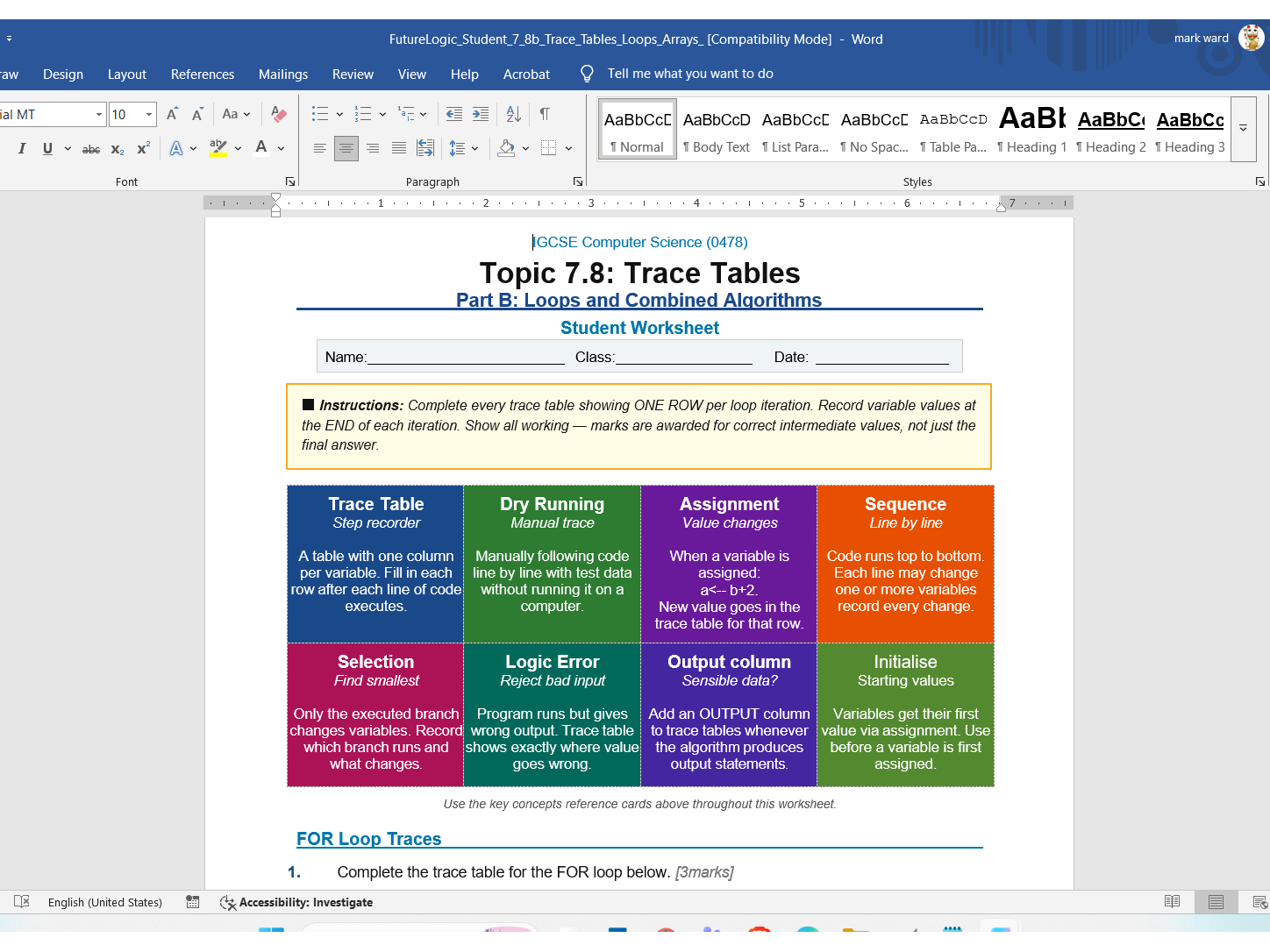
📘 7.8 Trace Tables (split into two parts)
Part A covers tracing sequences and selection — step-by-step variable tracking through arithmetic, swap algorithms, IF/ELSE and nested IF structures. Part B covers tracing loops and combined algorithms — FOR, WHILE, REPEAT UNTIL, array algorithms, off-by-one error detection, and bubble sort traces.
📘 7.9 Finding the Purpose of an Algorithm
Develop the key exam skill of reading unfamiliar pseudocode and identifying what it does — with hint boxes, trace tables, single-pattern and multi-pattern algorithms, and error-spotting questions.
📘 7.10 Finding and Correcting Errors
Identify and fix syntax, logic and runtime errors in pseudocode — with targeted questions covering the most common error types and correction strategies tested in Cambridge Paper 1.
🍎 Teacher Sheets Included
Every section comes with a full teacher copy complete with mark scheme answers, acceptable alternatives, discussion guidance, and exam technique tips — ready to use straight in the classroom.
🍎 Each topic comes complete with pdf files for printing and original Microsoft Word files.
✅ Student-friendly and exam-focused
✅ Teacher answer sheets with full explanations included
✅ Aligned to Cambridge IGCSE Computer Science (0478)
✅ Instant PDF download
✅ Perfect for classroom use, homework, and independent revision