
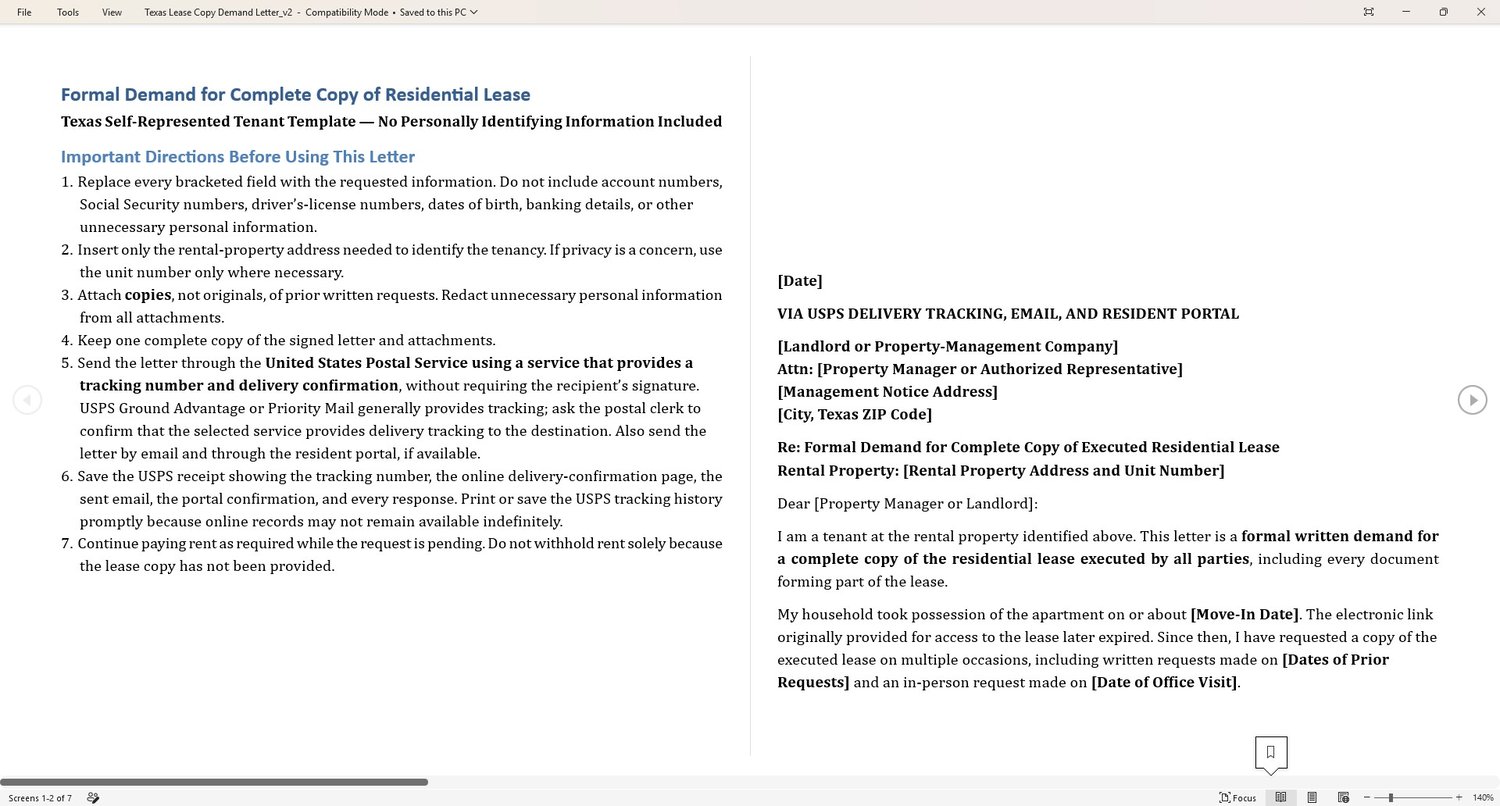
Texas Tenant Formal Lease Demand Template | Texas Property Code § 92.024 Notice Self Help
On Sale
$15.00
$15.00
Are you a Texas tenant dealing with a landlord or property management company refusing to provide a complete, signed copy of your residential lease?
Under Texas Property Code § 92.024, landlords are legally required to provide tenants with a complete copy of their executed lease, including all signed addenda, rules, and electronic signature audit trails, within three business days of receiving a written request.
This comprehensive, customizable legal template provides everything you need to issue a formal written demand, establish a paper trail, and protect your tenant rights without hiring an attorney.
What’s Included in This Package
- Formal Written Demand Template: A professionally drafted demand letter specifically tailored to Texas Property Code § 92.024 standards.
- Comprehensive Document Checklist: Covers 8 specific categories of lease documents—including electronic audit logs, fee schedules, and utility addenda—to ensure management doesn't just send an incomplete or blank form.
- Evidence Log Tracker: A one-page log to document every email, portal message, and office visit, creating clean, court-ready proof of your compliance efforts.
- Step-by-Step Instructions: Clear rules on delivery methods, tracking proofs, handling expired e-signature links, and preserving evidence for formal proceedings.
Key Features
- Designed specifically for self-represented Texas residential tenants.
- Fully customizable (simply fill in the bracketed fields).
- Direct references to applicable Texas statutory law.
- Instant digital download in text/document format for quick editing.
LEGAL DISCLAIMER
NOTICE: This document is provided for informational and educational purposes only and does not constitute formal legal advice. Purchasing, downloading, or using this template does not create an attorney-client relationship. State laws, local ordinances, and court procedures vary and change over time. If you face an active eviction, lease termination, fee dispute, or complex litigation, you should consult with a qualified Texas attorney or legal aid organization to review your specific facts before sending legal demands.