


Mortgage Overpayments And Why Timing Decides Everything
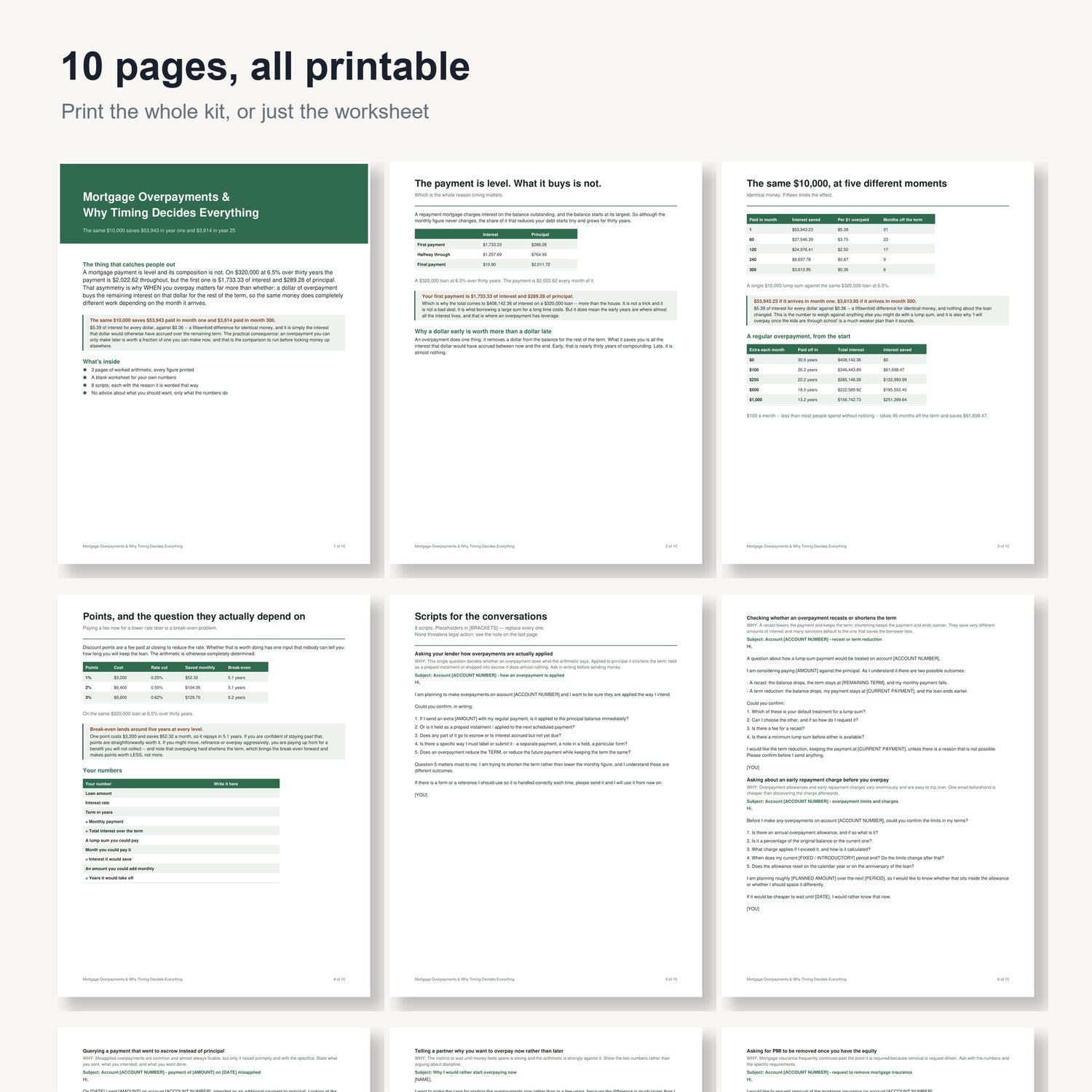
A mortgage payment is level and its composition is not. On $320,000 at 6.5% over thirty years the payment is $2,022.62 throughout, but the first one is $1,733.33 of interest and $289.28 of principal. That asymmetry is why WHEN you overpay matters far more than whether: a dollar of overpayment buys the remaining interest on that dollar for the rest of the term, so the same money does completely different work depending on the month it arrives.
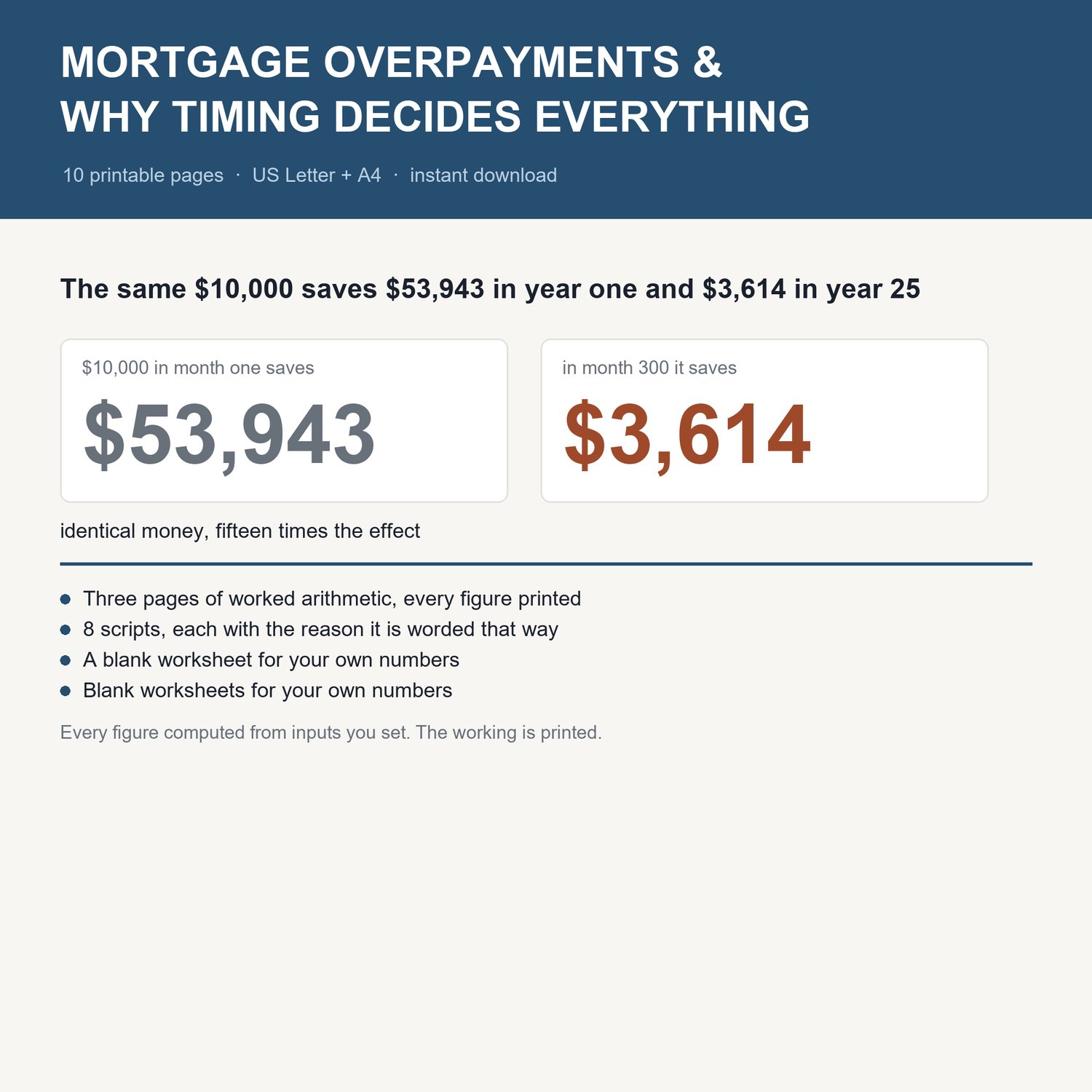
The same $10,000 saves $53,943 or $3,614, depending only on when
A mortgage payment is level and its composition is not. On $320,000 at 6.5% over thirty years the payment is $2,022.62 every month — but the first one is $1,733.33 of interest and only $289.28 of principal. By the final payment that has reversed almost completely.
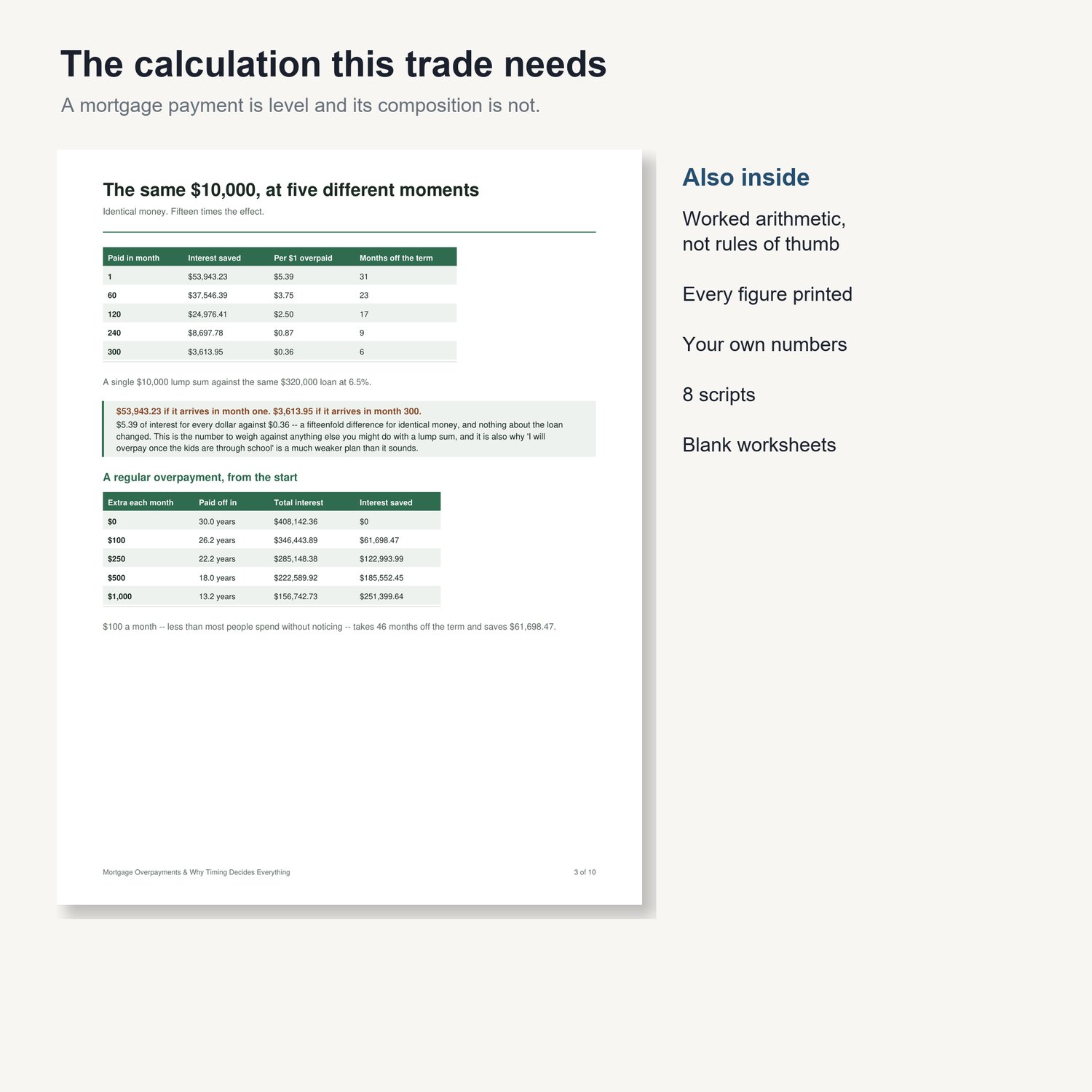
Which is why timing dominates. An overpayment removes a dollar from the balance for the rest of the term, so what it saves you is all the interest that dollar would have accrued between now and the end. Paid in month one, $10,000 saves $53,943.23 and cuts 31 months off the term. Paid in month 300, the identical $10,000 saves $3,613.95. $5.39 per dollar against $0.36 — a fifteenfold difference, and nothing about the loan changed.
A regular overpayment does the same work quietly: $100 a month from the start takes 46 months off the term and saves $61,698.47. At $1,000 a month the loan clears in 13.2 years instead of thirty.
Also inside: discount points priced properly. One point costs $3,200 and saves $52.32 a month, so it repays in 5.1 years — and the page notes the thing that makes points worth LESS, not more: overpaying hard shortens the term and brings that break-even forward.
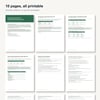
Includes a live Excel workbook — your loan, your rate, a lump sum and the month you could pay it, every formula verified by recalculation — plus eight scripts for the conversations this needs: asking how overpayments are actually applied, whether a lump sum recasts or shortens the term, and declining a refinance that resets the clock.
8 scripts for the conversations this involves
Each one carries a line explaining why it is worded that way, because
a script you do not understand is one you will not send. Placeholders are in
[BRACKETS] so nothing goes out in someone else's words.
- Asking your lender how overpayments are actually applied
- Checking whether an overpayment recasts or shortens the term
- Asking about an early repayment charge before you overpay
- Querying a payment that went to escrow instead of principal
- Asking a broker to price points against your real timeline
- Telling a partner why you want to overpay now rather than later
- Asking for PMI to be removed once you have the equity
- Declining a refinance that resets the clock
What this is not
This is arithmetic, not advice. Every figure is computed from
the inputs stated on the page, and the working is printed so you can substitute
your own. What it cannot tell you is what you should want — it shows what a
choice costs, not which choice is right for your household.
Nothing here is financial, tax or legal advice, and it is not a recommendation
to buy, sell, borrow or sign anything. The scripts are wording for a
conversation, not legal instruments, and none of them threatens anything.
Where the kit uses a published rate or threshold, it is the one current when
the kit was built. Those change; the arithmetic does not.
Honest about the format
Printable PDFs plus an editable Excel workbook, not a physical product. One US Letter PDF (10 pages) and one A4 PDF (10 pages), and one .xlsx that opens in Excel, Numbers, LibreOffice and Google Sheets. Files are available immediately after purchase; nothing ships.
Refunds
If this isn't what you expected, email me within 30 days and I'll refund you in full — no need to explain. Because it's an instant download I can't take the files back, so I'd rather you just had your money back.