


Early Recovery: A Short Reflective Workbook for the First Months
Early Recovery: A Short Reflective Workbook
The first months of recovery are rarely quiet. There's the urge itself, but there's also the noise around it, logistics, plans, other people's reactions, the pressure to explain yourself clearly and often. In amongst all of that, a much smaller and more useful question tends to get lost: what actually happened inside you, in that moment.
This short workbook was written to hold onto that question. It covers the handful of skills that tend to matter most in early recovery, noticing an urge without immediately acting on it, telling the difference between explaining yourself and actually feeling something, and knowing what a genuine repair sounds like next to a well-rehearsed case for your own defence. It also holds space for the harder truth that a lapse is not the same as a relapse, and that shame tends to make things worse, not better.
Nothing here needs to be finished in one sitting, or done in order. It's built to sit alongside the work already happening in session, not replace it.
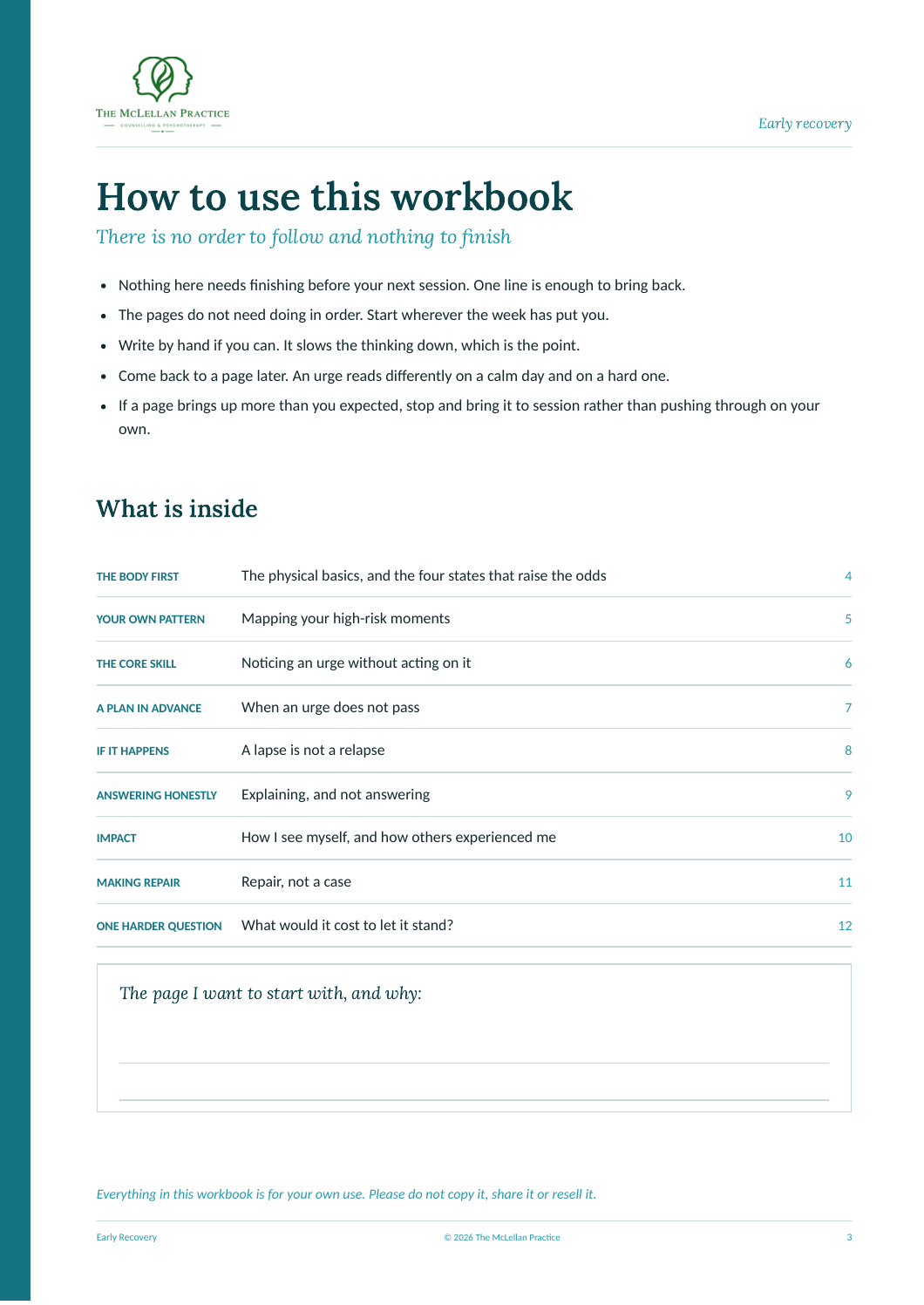
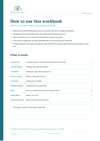
Inside you'll find:
- A look at the physical basics that quietly raise the odds of an urge (tired, hungry, alone too long, overloaded)
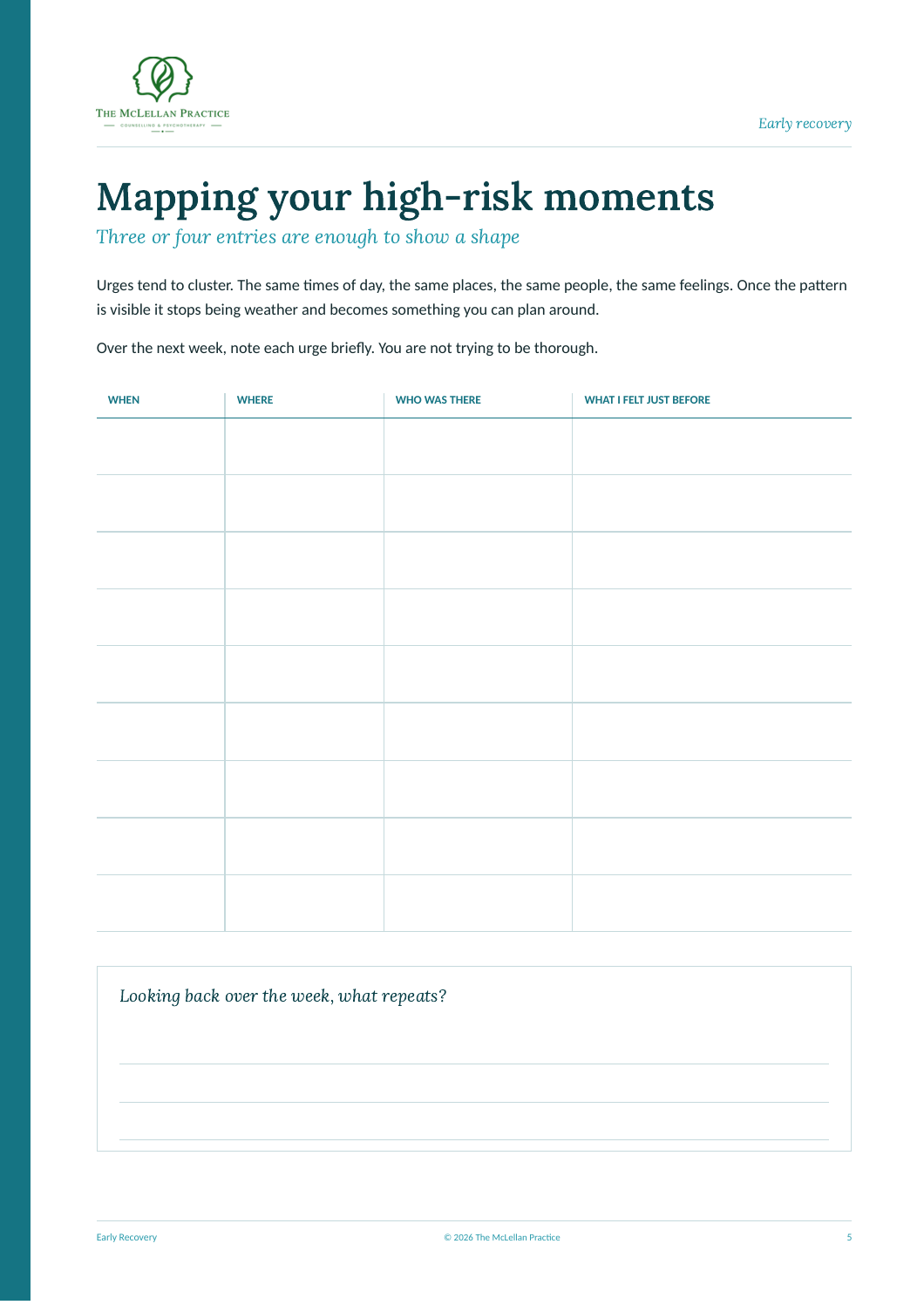
- A simple weekly tracker for spotting patterns in high-risk moments
- A five-step method for noticing an urge and letting it pass
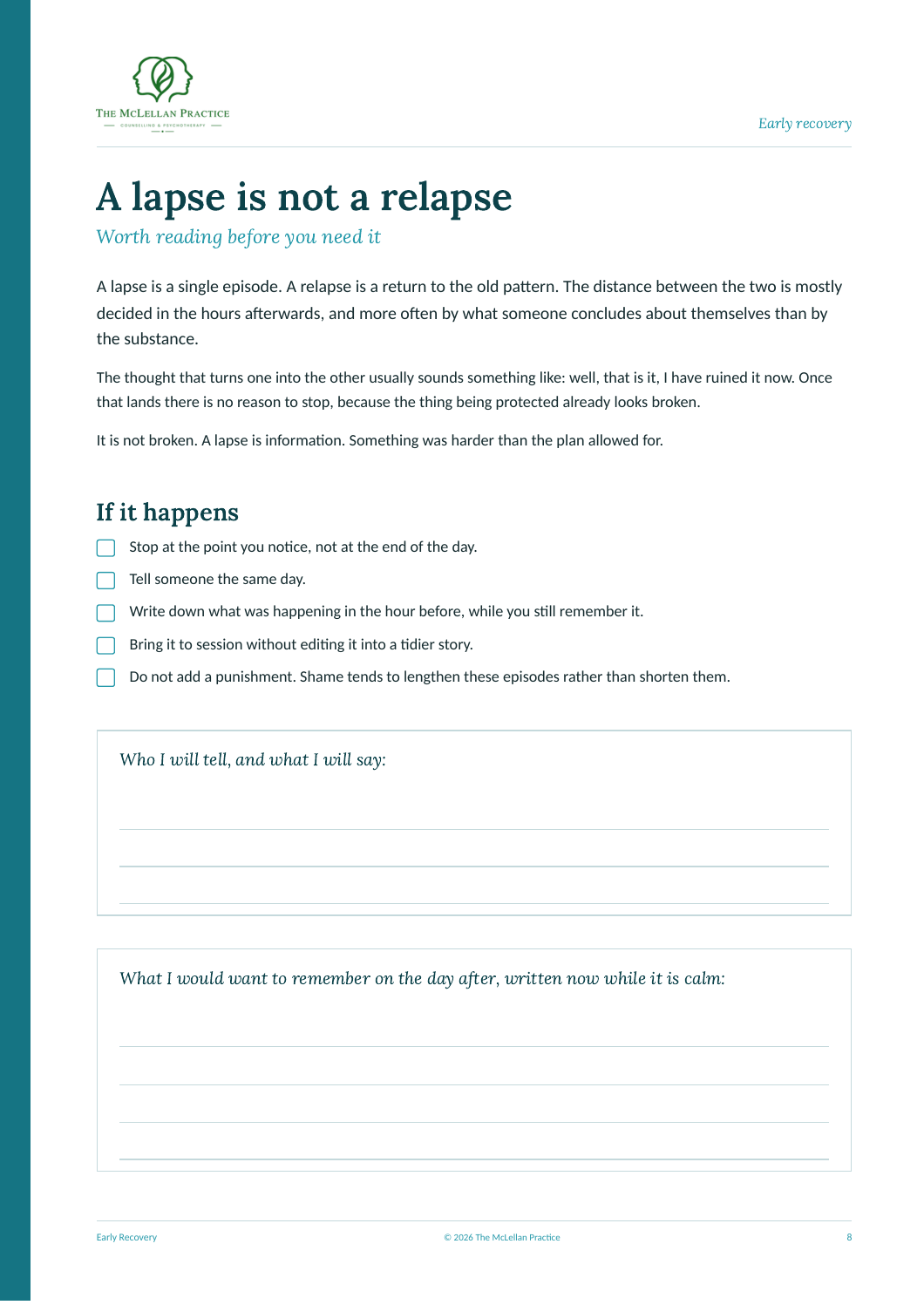
- A clear-eyed distinction between a lapse and a relapse
- Tools for telling a genuine repair apart from a well-argued case for yourself
Written for anyone in the early, unsteady months of recovery, and for the therapists and services supporting them through it.