
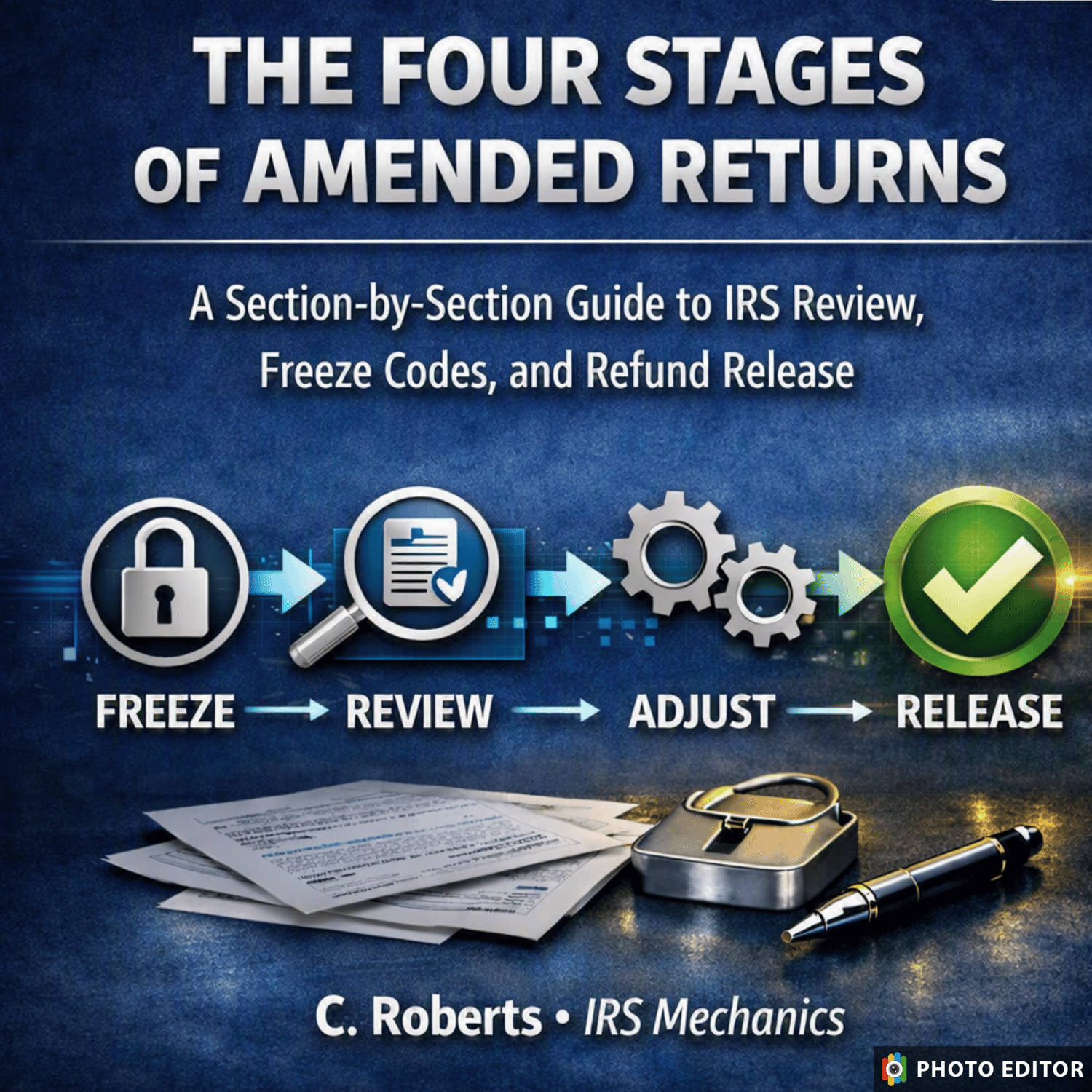
The Four Stages of Amended Returns
A clear walkthrough of how amended returns actually move through IRS processing.
This guide explains the mechanical steps the IRS uses when an amended return is filed, why certain transcript codes appear, and what happens behind the scenes while your refund is paused. Amended returns follow a predictable sequence, but the IRS doesn’t show every internal action, which makes the process feel confusing or stalled. This guide breaks that confusion down into simple, understandable parts.
Inside, you’ll find a section‑by‑section explanation of:
- What code 977 really means
- Why 971 appears (sometimes more than once)
- Why the IRS sends CP05 or CP75 notices
- Why 570 freezes refunds during verification
- How wage‑match review works
- How credit changes like 765 fit into the process
- How freeze‑clearing codes 571 and 572 work
- Why adjustments 290 and 291 appear
- What has to happen before 846 is released
Each part is written in plain language so you can understand where your amended return is in the workflow and what the next visible step usually looks like. If your transcript feels stuck, blank, frozen, or slow, this guide shows what the IRS is doing behind the scenes and why those quiet stretches are normal.
This is not a prediction tool or a calendar. It’s a mechanical explanation of the amended‑return process so you can follow the sequence with confidence and understand how the IRS moves your return from review to refund release.