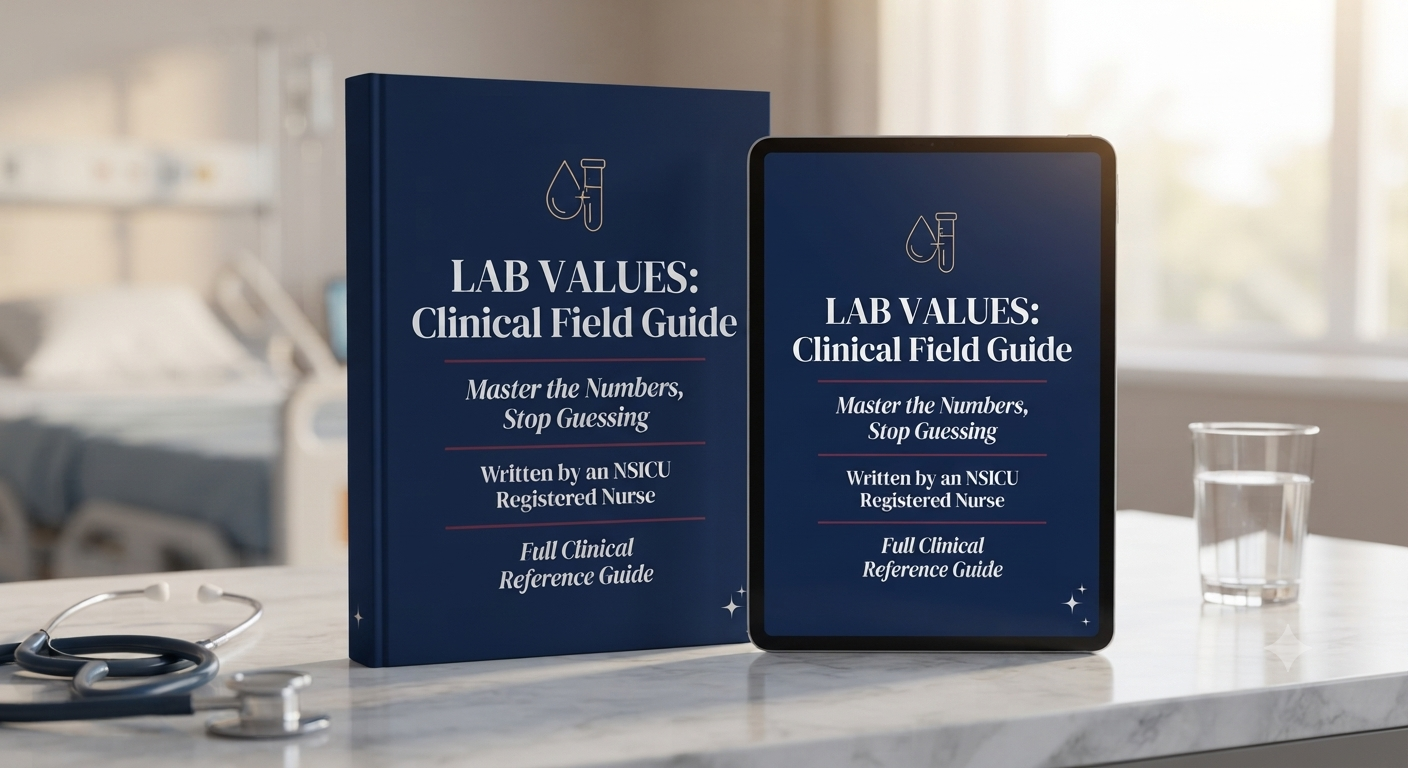



Lab Values: A Clinical Field Guide to Interpreting Lab Values for Nurses and Nursing Students (Master Guide)
Don't just read the number. Understand what it means and what to check next.
A lab report lists values, flags, and units. At the bedside, you also need to know why a value changed, whether the trend matters more than a single number, and what to check or report next.
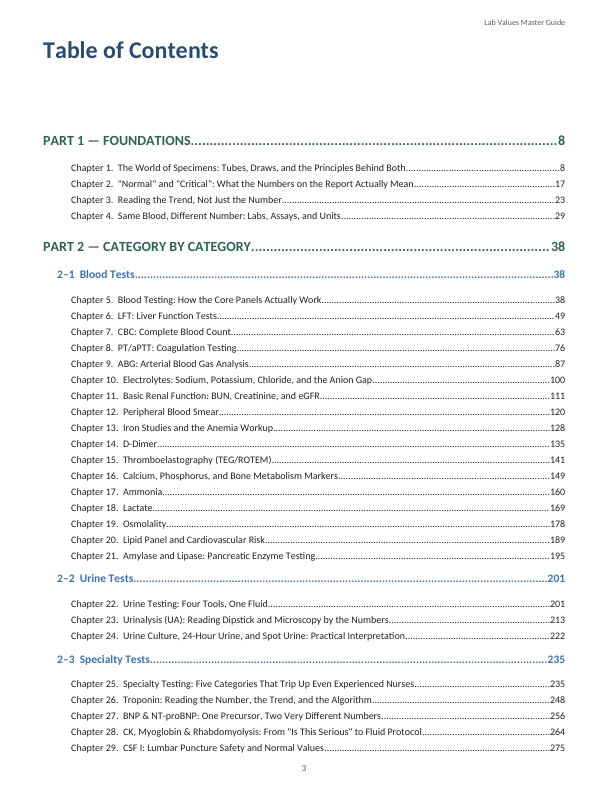
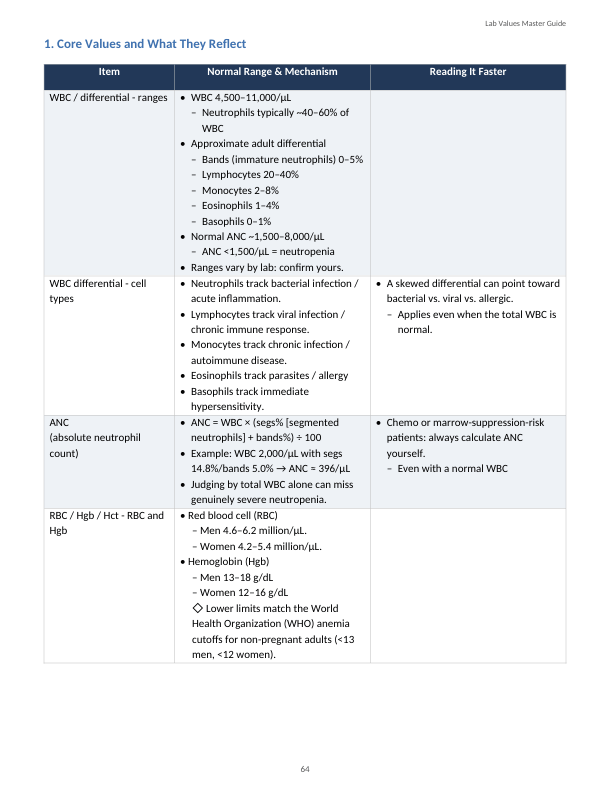
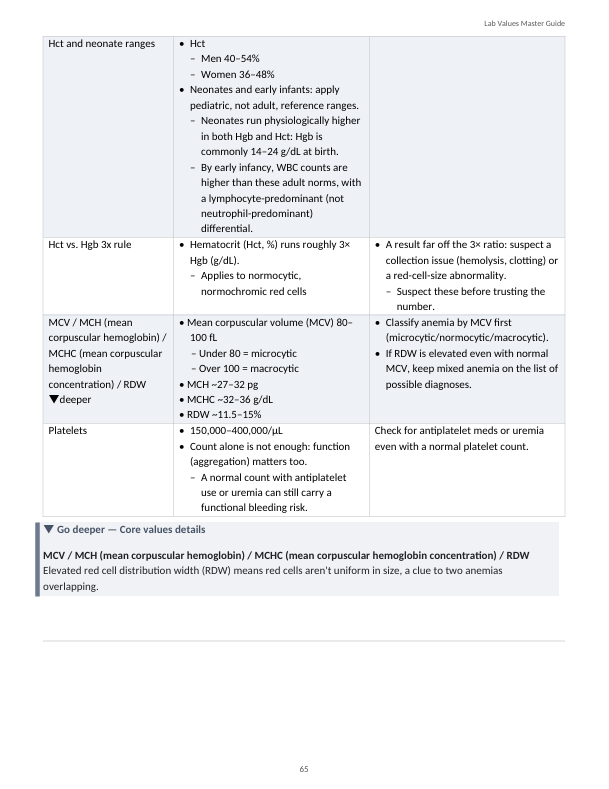
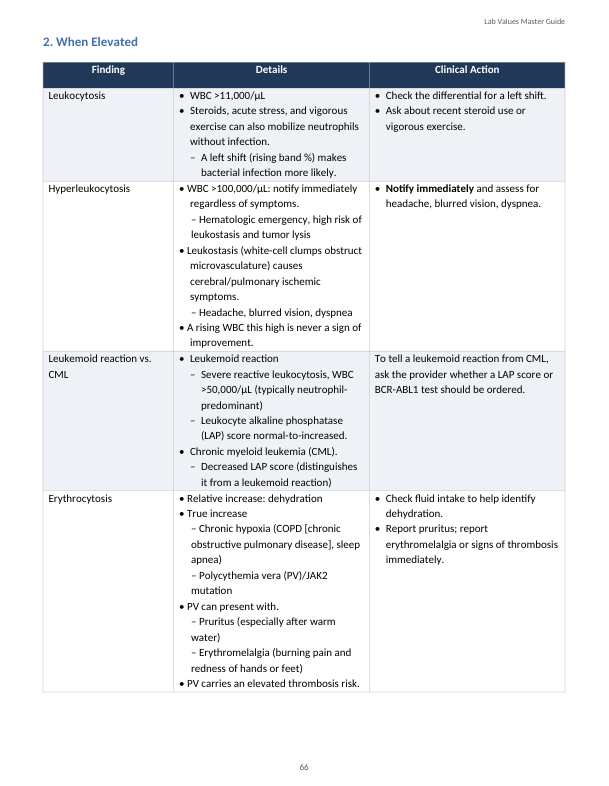
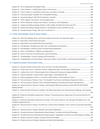
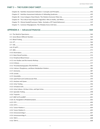
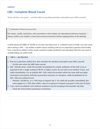
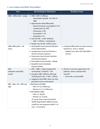
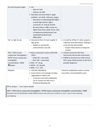
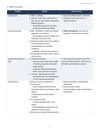
This 696-page, 71-chapter digital manual explains lab values the way they show up on the floor: how specimens are collected, what "normal" and "critical" actually mean, how to read a trend, and how each major test fits into the clinical picture. It sits between one-page lab charts (quick, but no reasoning) and large reference textbooks (thorough, but hard to use on a shift).
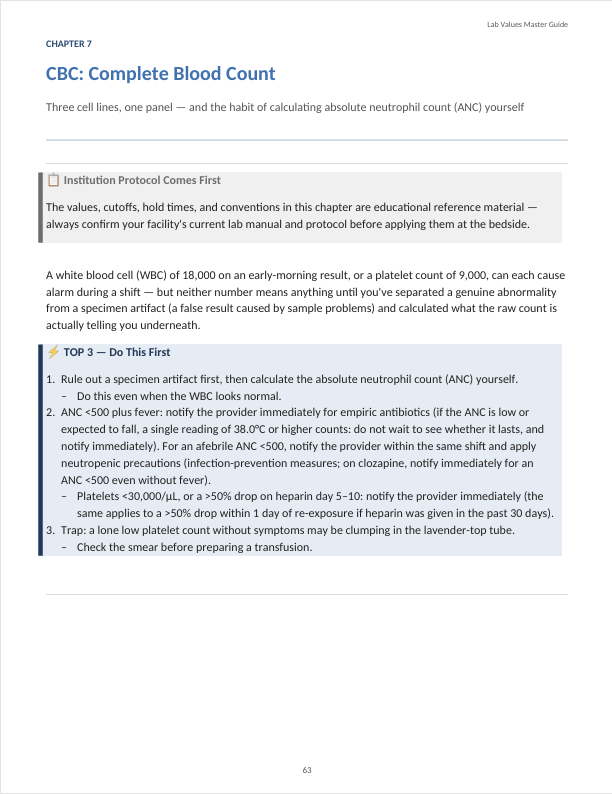
INSTITUTION PROTOCOL COMES FIRST
Reference ranges, critical values, and algorithms vary by laboratory, assay, and facility. This guide is for educational reference. Please follow your facility's current protocols, your laboratory's reference ranges, and your provider's orders at the bedside.
What's Inside
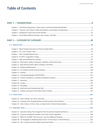
- Part 1: Foundations (Ch. 1–4): Specimens and tubes, what "normal" and "critical" mean, reading trends instead of single numbers, and why the same blood can give different numbers across labs, assays, and units.
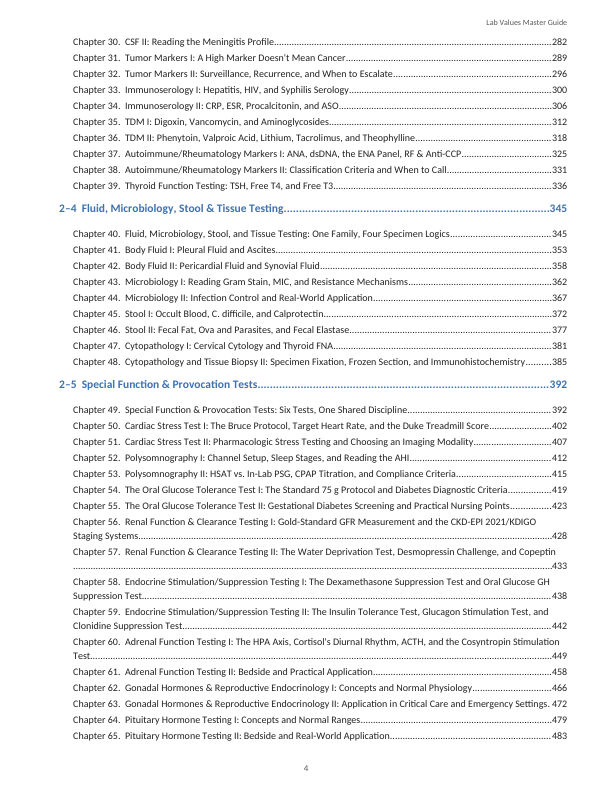
- Part 2: Category by Category (Ch. 5–65):Blood tests: LFT, CBC, PT/aPTT, ABG, electrolytes and anion gap, BUN/creatinine/eGFR, blood smear, iron studies, D-dimer, TEG/ROTEM, calcium/phosphorus, ammonia, lactate, osmolality, lipids, amylase and lipase
- Urine tests: urinalysis, culture, 24-hour and spot urine
- Specialty tests: troponin, BNP/NT-proBNP, CK and rhabdomyolysis, CSF, tumor markers, immunoserology, therapeutic drug monitoring, autoimmune markers, thyroid function
- Fluid, microbiology, stool and tissue testing
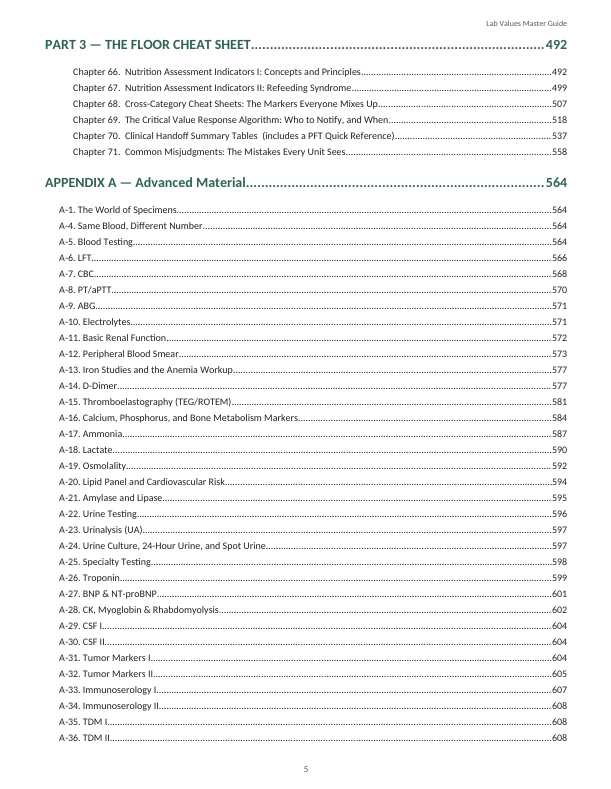
- Special function and provocation tests: cardiac stress testing, polysomnography, OGTT, renal clearance, endocrine and adrenal testing, gonadal and pituitary hormones
- Part 3: The Floor Cheat Sheet (Ch. 66–71): Nutrition indicators and refeeding syndrome, cross-category mix-ups, a critical value response algorithm (who to notify, and when), clinical handoff summary tables, and common misjudgments.
What You Get
- Lab Values Master Guide: PDF, 696 pages (about 12 MB)
- Digital download, available right after purchase
Who It's For
Nursing students, new graduate nurses, and nurses who want a clear way to interpret lab results in context. It is an educational reference, not medical advice, and not a substitute for clinical judgment, training, or facility policy.
Looking for something quicker?
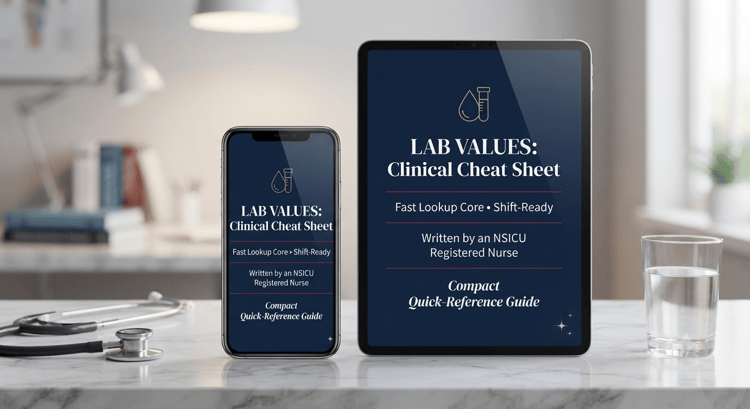
The Lab Values Clinical Cheat Sheet condenses the key points into a shift-ready format. You don't need the Master Guide to use the Cheat Sheet, and vice versa.
Digital Product Policy
This is an instant-delivery digital product, so all sales are final and non-refundable once the download link has been generated or accessed. If you have trouble with your download or file, please contact us through this store and we will help. By completing your purchase, you agree to these terms.