
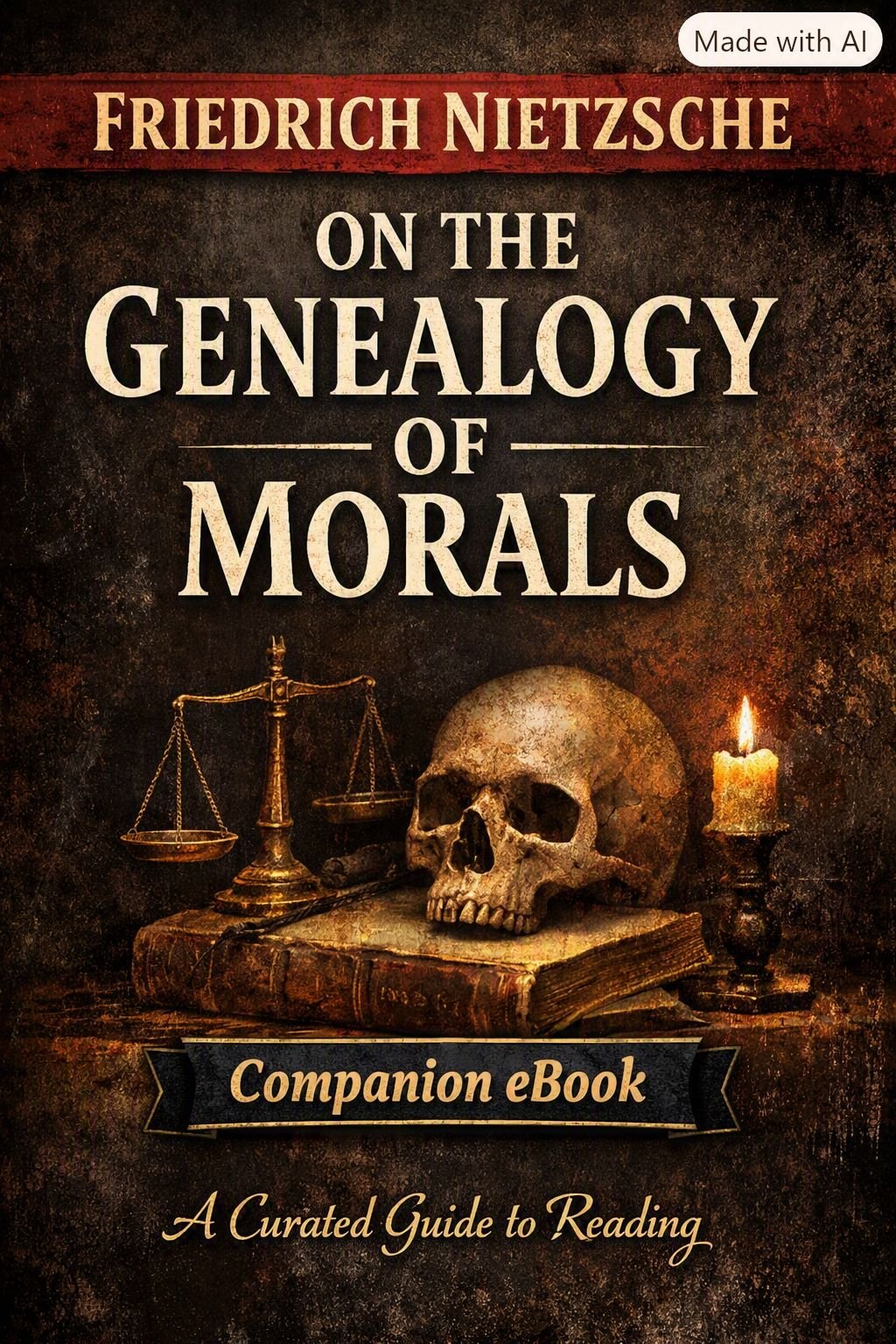
On the Genealogy of Morals
On the Genealogy of Morals: A Companion Summary & A Curated Guide to Reading
Where do our moral values come from? Are concepts such as good, evil, guilt, and conscience eternal truths, or have they evolved through history and human experience?
In Friedrich Nietzsche's On the Genealogy of Morals, one of the most influential works in modern philosophy, readers are challenged to reconsider the foundations of morality itself. Through a bold and provocative investigation, Nietzsche traces the historical origins of moral values, explores the dynamics of power and resentment, and examines the development of guilt, punishment, and the human conscience. His analysis raises profound questions about culture, religion, freedom, and the forces that shape human beliefs.
This companion guide helps readers navigate Nietzsche's complex and thought-provoking work through clear essay summaries, thematic discussions, philosophical explanations, and historical context. Whether you are studying philosophy for the first time or seeking a deeper understanding of Nietzsche's ideas, this guide offers valuable insights into one of the most challenging and influential texts of modern thought.
Inside you'll discover:
• Clear summaries of all three essays
• Analysis of key arguments and concepts
• Exploration of major philosophical themes
• Historical and intellectual context
• Explanations of important terminology and ideas
• Reflection questions for deeper engagement
• A complete overview of the book's lasting significance
Whether you are a student, educator, philosophy enthusiast, book club member, or lifelong learner, this guide provides an accessible companion to a work that continues to inspire debate, reflection, and critical inquiry.
Discover a groundbreaking examination of morality that challenges readers to question assumptions, explore the origins of values, and reconsider what it means to live authentically.