

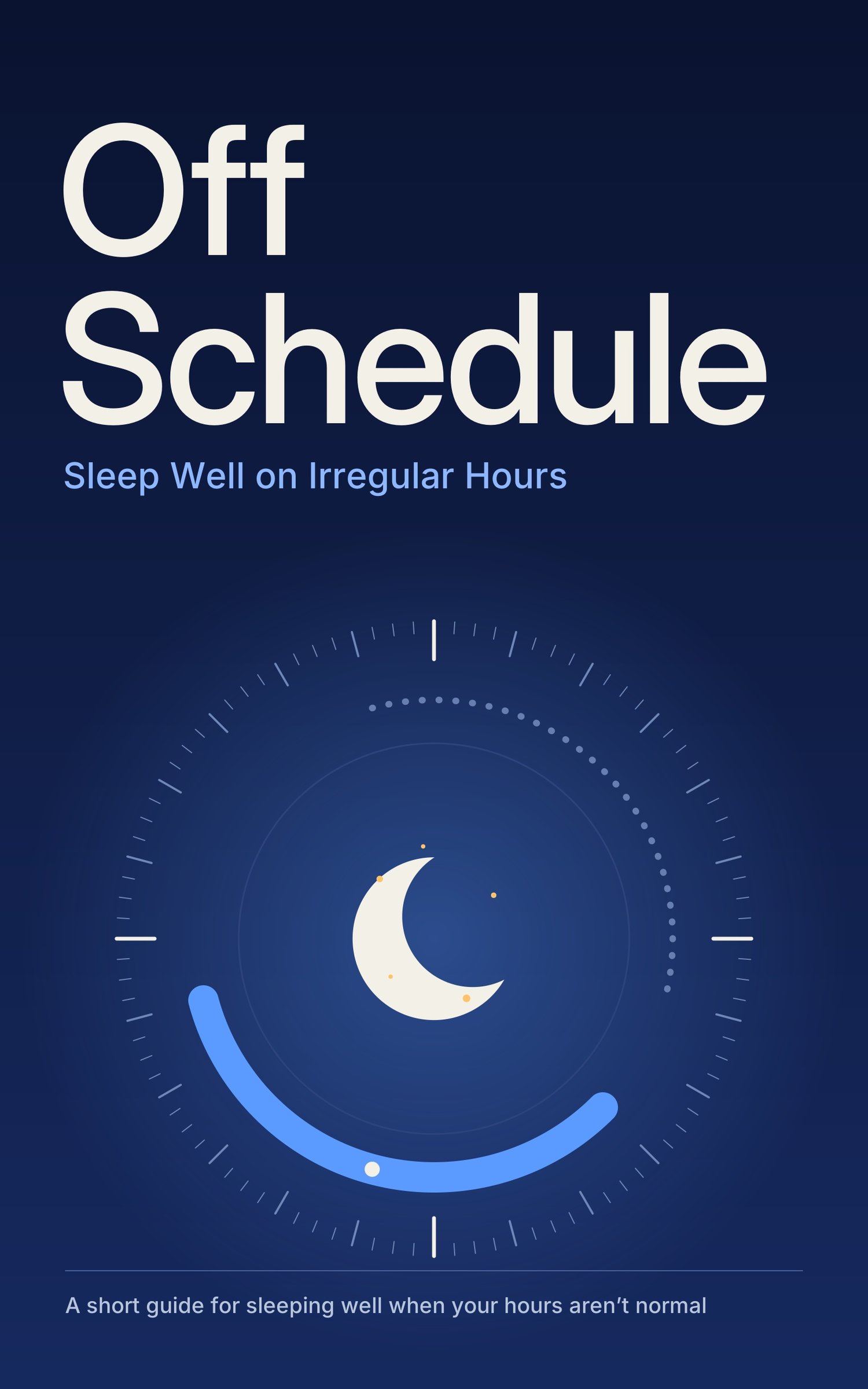
Off Schedule: Sleep Well on Irregular Hours
Night shifts, rotating rosters, a newborn, late client calls, or a schedule that changes every week? Most sleep advice assumes you go to bed at the same time every night. Off Schedule does not. This 27-page practical guide shows you how to sleep better inside an irregular schedule, with simple tools for light, darkness, routine, naps, and the people around you. It includes sample schedules, a sleep log, and a 14-day starter plan
What this book is about
Most sleep advice says "go to bed earlier" and "keep a regular schedule." That is not much help when your hours change every few days, or when your sleep window is at 10am.
Off Schedule is not about forcing your life into a normal schedule. It is about sleeping well inside an irregular one, using the same signals your body already relies on: light, darkness, temperature, routine, and timing. The steps are clear, written in plain language, and you can start tonight.
What is inside
1. Why irregular sleep hits you differently
How your body clock and sleep pressure work, and why you feel foggy, hungry, or wide awake at the wrong times. You learn to find your "anchor sleep," one protected block of sleep that gives your body a stable reference point. A quick table matches your situation (night shift, rotating shifts, new parent, freelancer, student, traveler) to the best place to start.
2. Building a "fake nighttime"
A step-by-step guide to blackout rooms, light timing, temperature, noise control, caffeine, and food. It includes a one-time darkness checklist, tips for jet lag, and a practical plan for switching between day and night shifts.
3. A wind-down routine that travels with you
A portable 15 to 20 minute routine that works at 11pm or 9am, at home or away. It includes a timed sample routine, a "brain dump" for a racing mind, simple breathing and relaxation techniques, and what to do when you cannot fall asleep.
4. Napping without wrecking your next sleep
Which nap to use in which situation, how long to nap, when to stop, and how to wake up well. It also covers drowsy driving and gives new parents a night-sharing plan with a safe-sleep reminder.
5. Protecting your sleep from other people
Scripts for family, friends, neighbors, managers, and landlords, plus a household agreement exercise so your sleep hours are respected without constant arguments.
6. When irregular sleep becomes a real problem
Clear signs that you need medical help, a note on sleep aids (check with a pharmacist or doctor first), and how to prepare for a doctor's visit.
Bonus tools
- Four sample schedules: night shift, rotating roster, new parent, and freelancer
- A 14-day sleep log
- A 14-day starter plan
- A one-page cheat sheet
Why you should buy it
- It is built for irregular hours. These are not tweaks to a 9 to 5 routine. The tools are designed for shift workers, parents, freelancers, students, and travelers.
- It is practical. Every section ends with something you can do the same day, from sealing light gaps in a room to writing a household agreement.
- It is short and easy to follow. Plain language, clear tables, and checklists, with no long theory to wade through.
- It starts small on purpose. You pick one tool and use it for a week, so you do not burn out trying to change everything at once.
- It includes safety guidance. Drowsy driving and safe sleep for babies are covered clearly, because tired people need that information most.
- It is honest. It does not promise perfect sleep or a cure. It tells you what usually helps, and when to see a doctor.
- It saves money. It costs far less than blackout gadgets, sleep apps, and trial and error, and you can reuse the plan every time your schedule changes.
Who it is for
- Nurses, doctors, security staff, factory workers, drivers, and anyone on night or rotating shifts
- New parents with broken, unpredictable nights
- Freelancers and remote workers with late calls or clients in other time zones
- Students with irregular study or work hours
- Frequent travelers dealing with jet lag
- Anyone whose sleep window keeps changing
Who it is not for
This guide is general sleep information, not medical advice. It does not diagnose or treat sleep disorders. If you fall asleep while driving or working, snore loudly with gasping or breathing pauses, or have had no improvement after several weeks, please see a doctor or sleep specialist.
What you get
- 1 digital PDF guide (27 pages)
- Instant download after purchase
- Works on phone, tablet, and computer
- Printable checklists, sleep log, and cheat sheet
Common questions
Is this only for shift workers? No. It is for anyone with an irregular schedule, including parents, freelancers, students, and travelers.
Will it fix my sleep completely? It does not promise that. It gives you tools to improve your sleep and alertness. Results vary, and some sleep problems need medical care.
Do I need special equipment? No. Basic items such as blackout curtains or a sleep mask, earplugs, and a notebook help, and the guide includes low-cost options.
Is it medical advice? No. It is general information, and the guide tells you when to see a doctor.
How long does it take to read? About 45 minutes. Most exercises take 2 to 30 minutes.
Closing line
You may never have a "normal" schedule, and that is fine. Normal was never actually the requirement for good sleep.