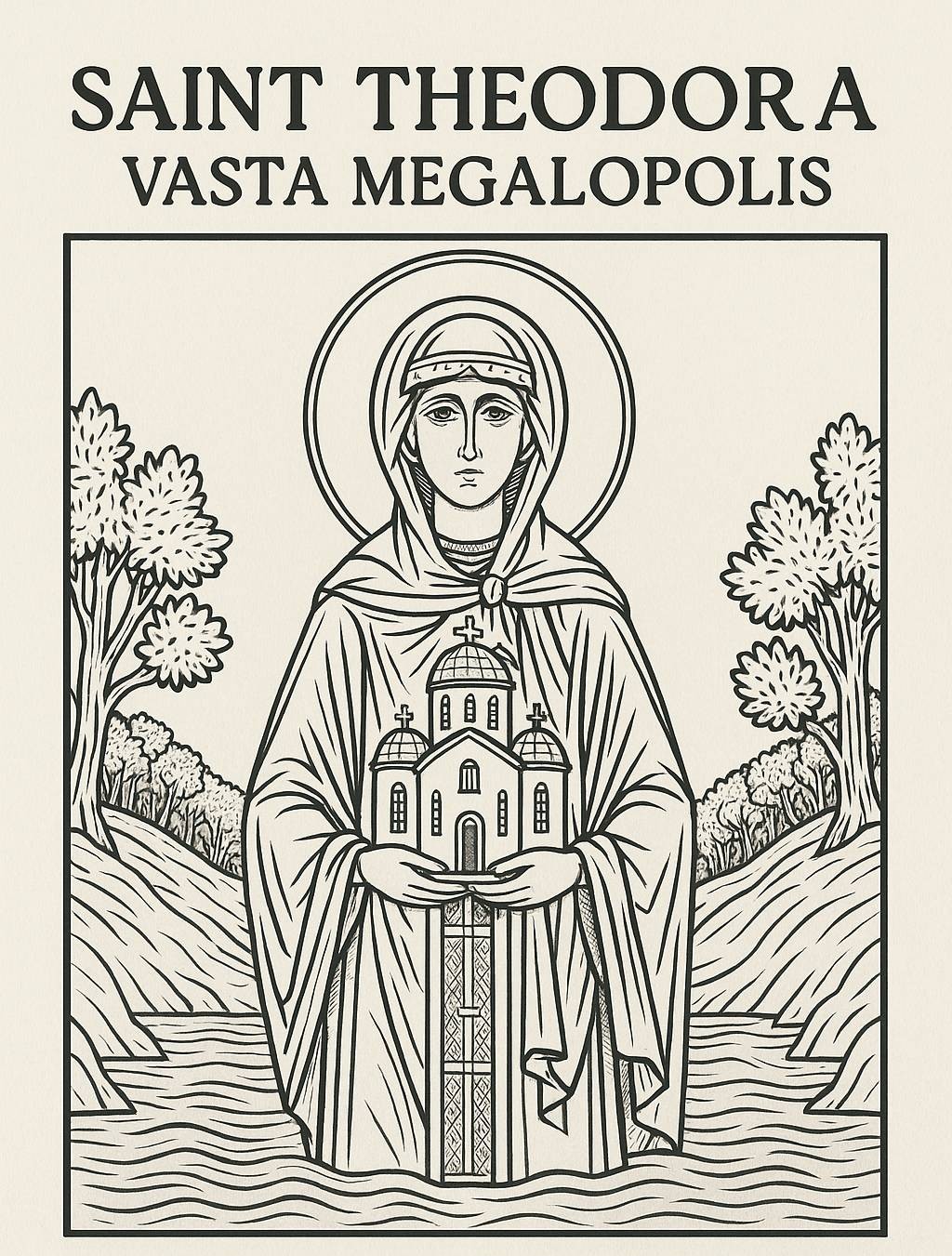
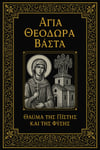
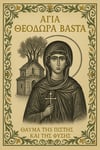
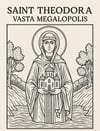
Saint Theodora of Vasta-Arcadia-Peloponnese, coloring ebook, 55 designs , digital product, instantly download
Saint Theodora of Vasta-Arcadia-Peloponnese, coloring ebook, 55 designs , digital product, instantly download. Saint Theodora, also known as “the Peloponnesian” due to her origin from the heroic and saint-bearing Peloponnese, is believed to have been born either in Arcadia or Messenia. She lived during the 9th century AD (according to others, the 10th) in the era of the Byzantine Empire.
Her parents were poor and of humble status, but deeply devoted to Christ, and from a young age they instilled in her the love for God. As a child, she showed a special inclination toward spiritual matters and a strong desire to dedicate herself entirely to the Lord, living with what the Fathers of the Church call “the Love of Christ.”
When she grew older, she decided to become a nun. However, instead of entering a women’s monastery, she disguised herself as a man, took the name “Theodoros,” and entered a male monastery, probably to hide from people who knew her. In the monastery, she became a model of obedience, humility, and patience, eventually being entrusted with important external tasks.
At that time, a great famine struck the Peloponnese, and the monastery was at risk of starvation. “Theodoros” undertook to help by visiting Christian homes to obtain food. Then, a woman falsely accused him of making her pregnant. This false accusation spread quickly, and the woman’s relatives violently dragged him to trial. Without revealing her true identity, she silently accepted the accusation and was sentenced to death by beheading.
The execution took place in the village of Vasta, Arcadia. After the beheading, the executioners realized they had killed a woman and begged God for forgiveness.
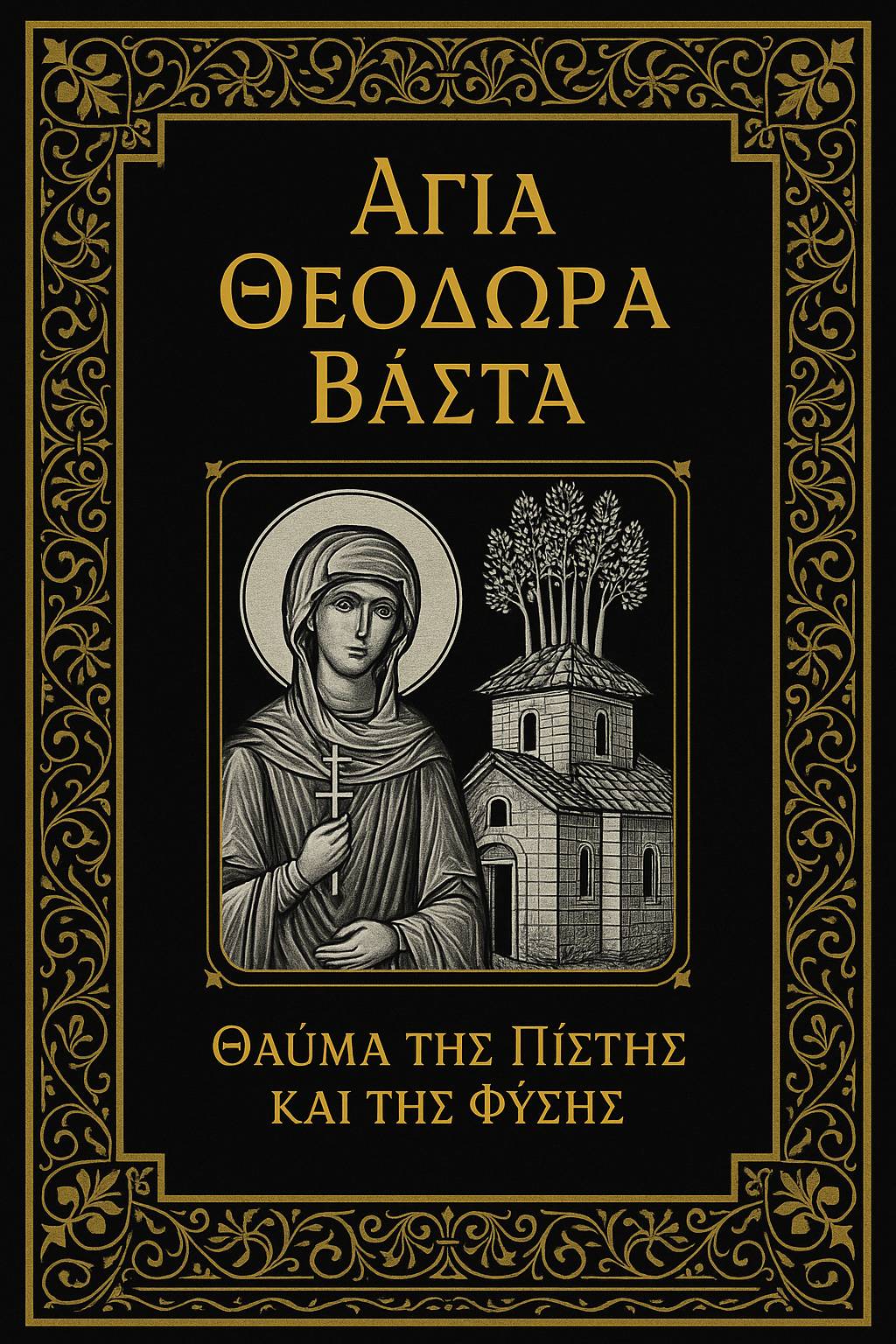
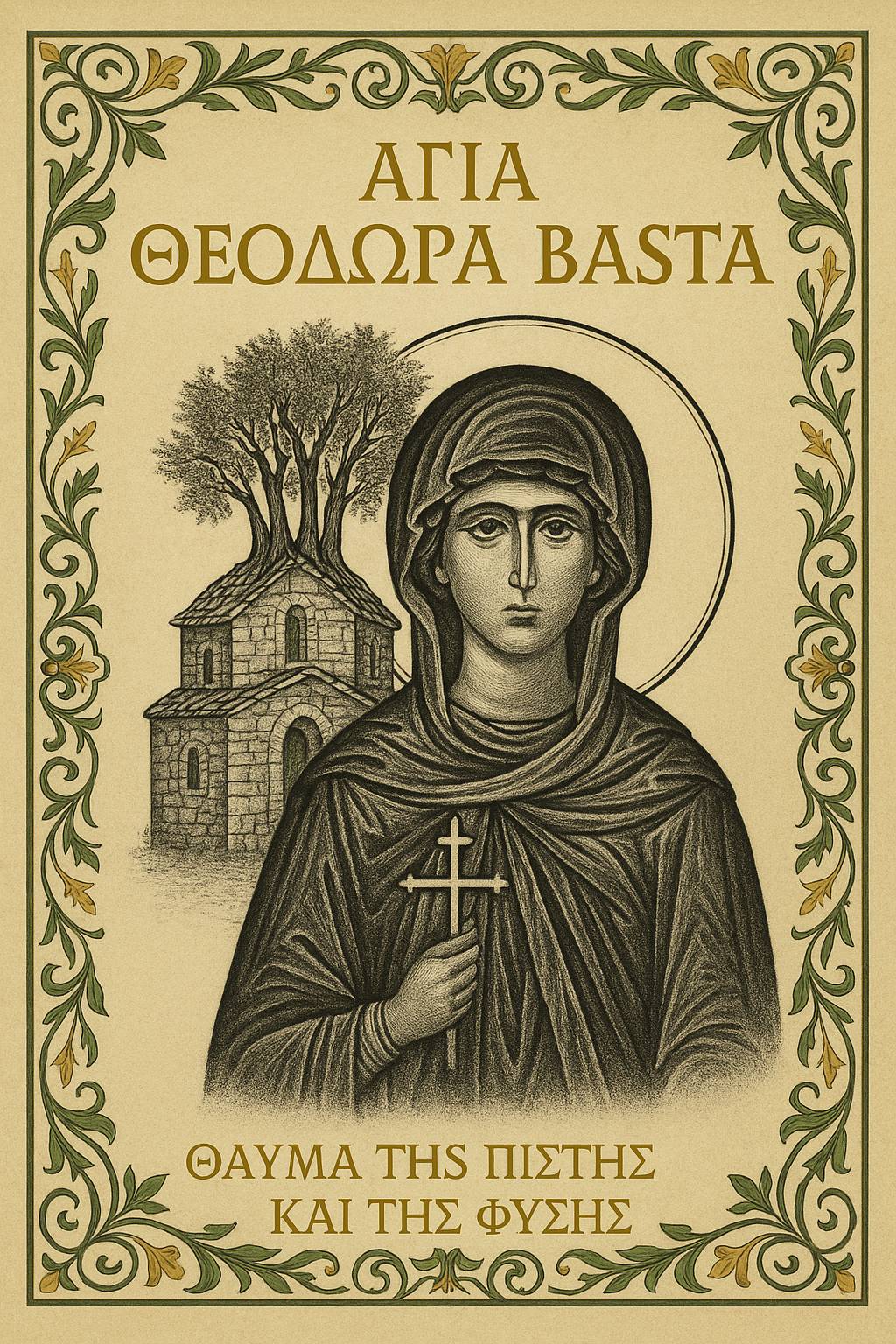
According to tradition, shortly before her death, the Saint prayed that her body would become a church, her hair would become trees, and her blood would become a river. Thus, in the church built on that spot, 17 trees miraculously grew on the roof, standing without their roots being visible, bearing witness to the saying that “where God wills it, the order of nature is changed.”
The Holy Church of Saint Theodora of Arcadia is located near the village of Vasta, in a lush ravine surrounded by dense forest with giant oaks. It is a unique natural phenomenon, as 17 oak trees grow on the roof of the small Byzantine church, with no visible roots anywhere. From its foundations flows a spring of running water.
The most widely accepted explanation is that the arched stone roof of the church contains a small amount of soil, in which a small shrub first sprouted. Over time, it dropped seeds, leading to the growth of other plants, until the 17 oak trees developed. The people attributed this phenomenon to a miracle.
The church, built in the 11th century, combines Byzantine architecture with this wondrous natural occurrence and attracts numerous pilgrims every year, especially on the Saint’s feast day, September 11.
In 1996, the University of Patras conducted research for the Directorate of Restoration in order to study the structural stability of the church, as the weight of the trees exerted great pressure on the building. Georadars and electrical tomography revealed that the trees’ roots pass through the gaps in the side walls and reach the ground, creating a natural “network” that both supports and gradually damages the structure.
Between 1998 and 1999, restoration works were carried out. The walls were cleaned and repointed without cement, to avoid damaging the roots. The roof was cleared of leaves and soil, asphalt sheeting was placed around the trunks to reduce moisture, and a slate covering was added.
Today, the Church of Saint Theodora stands as a unique combination of history, tradition, and a miracle of nature.