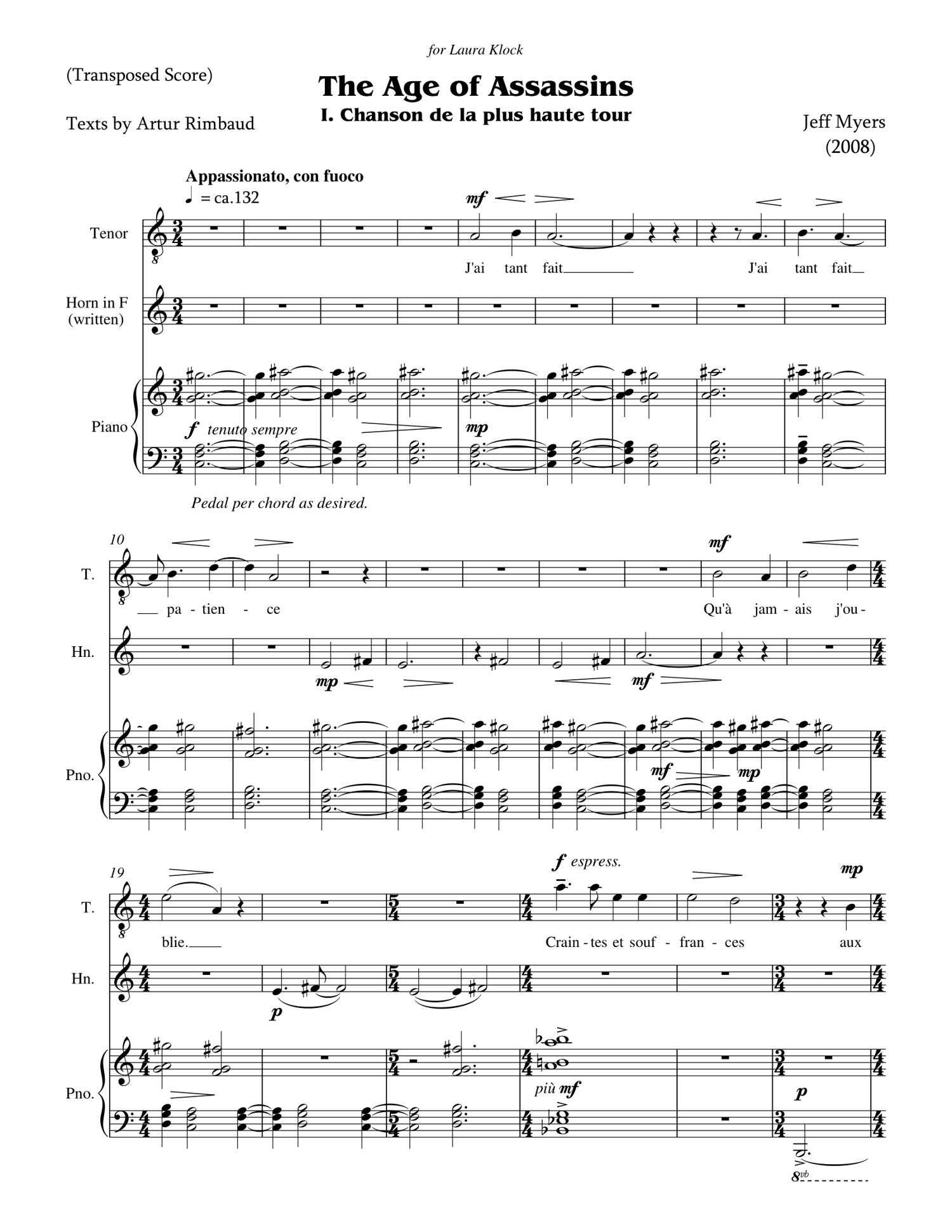
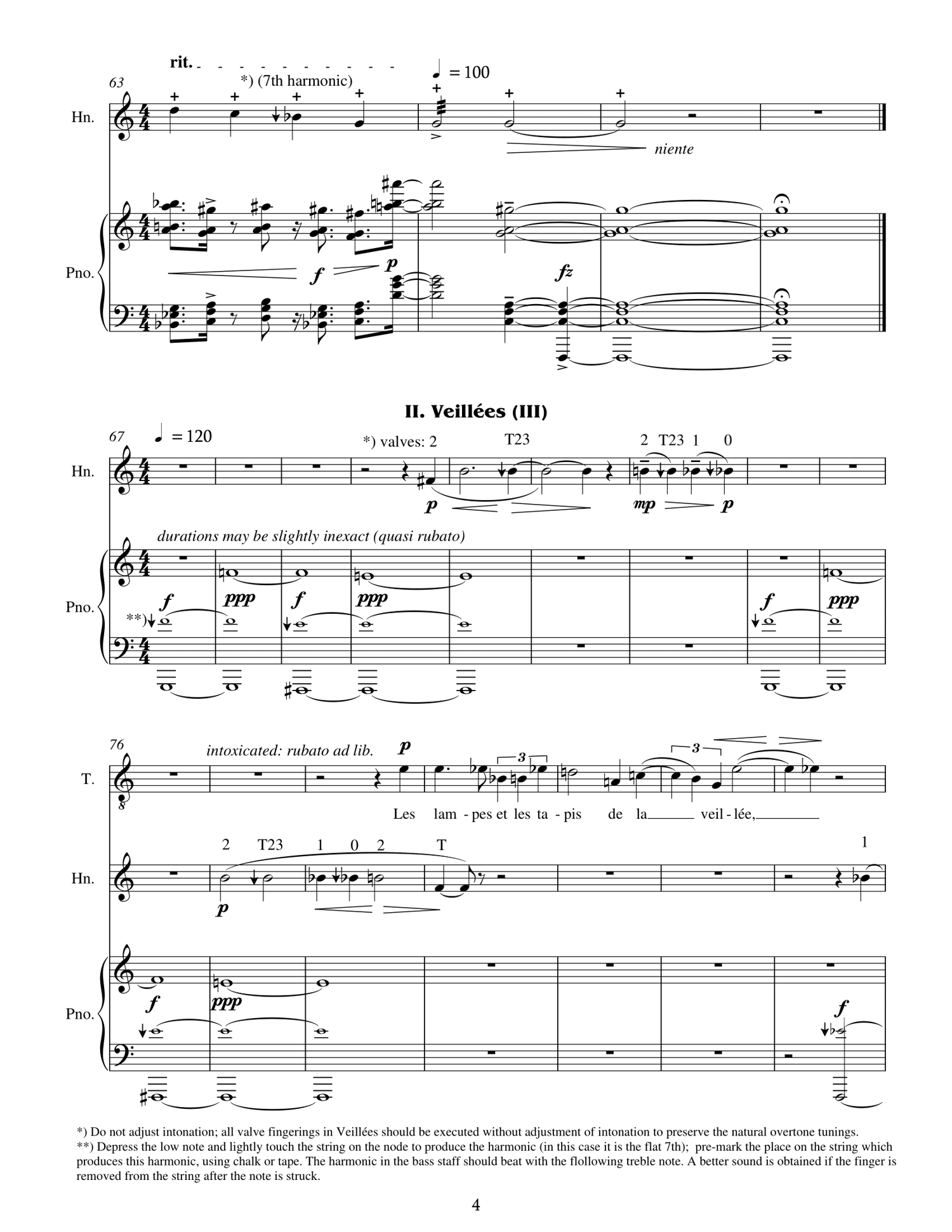
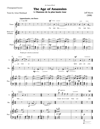

The Age of Assassins for tenor, horn, and piano - Score and Part PDF
From the composer:
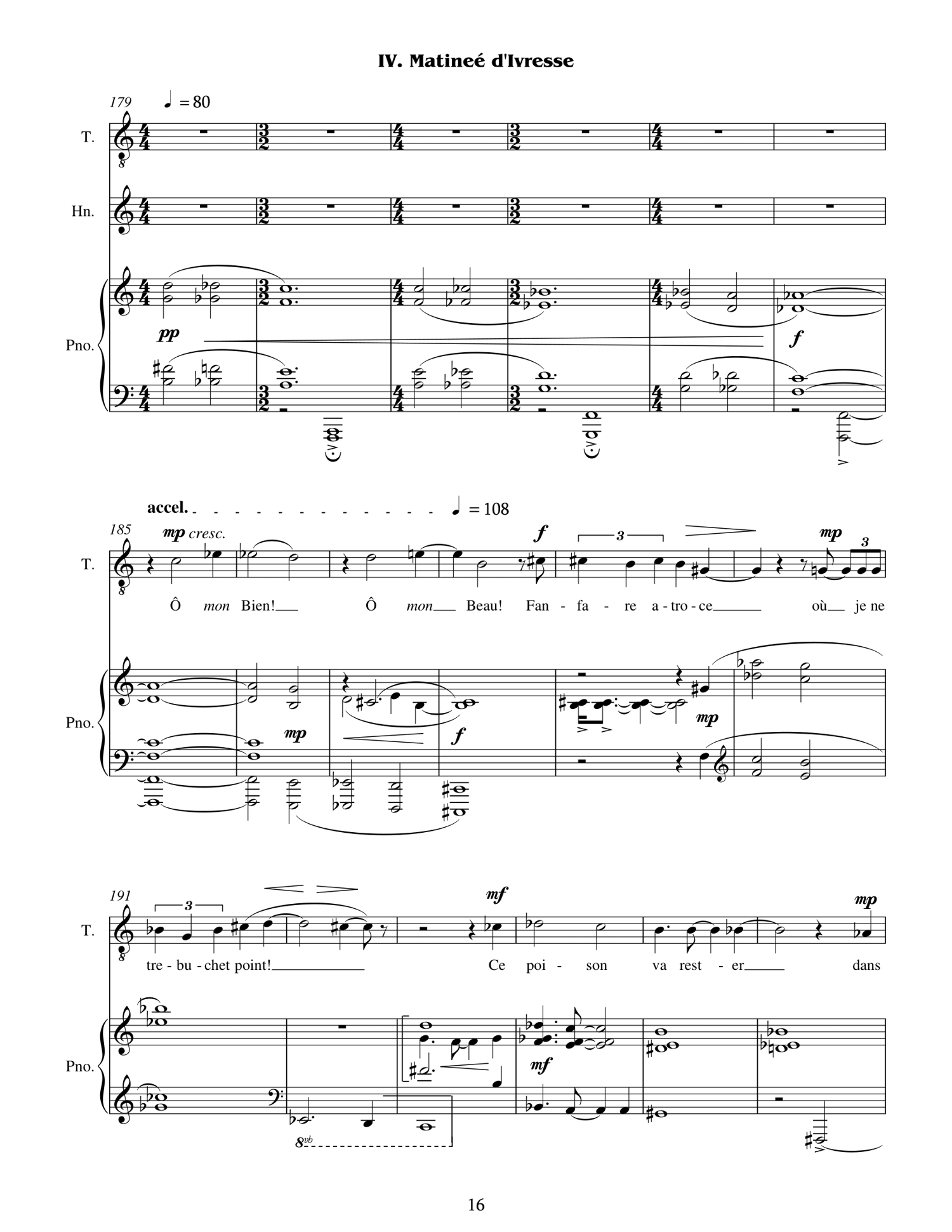
Arthur Rimbaud (1854-1891) wrote poetry for only a few years of his youth, but he left a legacy of poetry which had a lasting reverberance for poets and artists which followed him. The title of my song cycle comes from the last line of his Matinée d’Ivresse, “Voici le temps des ASSASSINS.” Rimbaud makes a subtle etymological reference to the Arabic hashshashïn, or “hash-eaters,” ancient Arab assassins which were rumored to be under the influence of hashish. It is a fact that Rimbaud himself was under the influence of hashish and probably alcohol or absinthe in order to become a seer. In his own words, “The poet makes himself a seer by a long, prodigious, and rational disordering of all the senses…” Some of the poems in his brief, but impressive output does indeed smell of hashish and appear to be under the influence of this “disordering of the senses.”
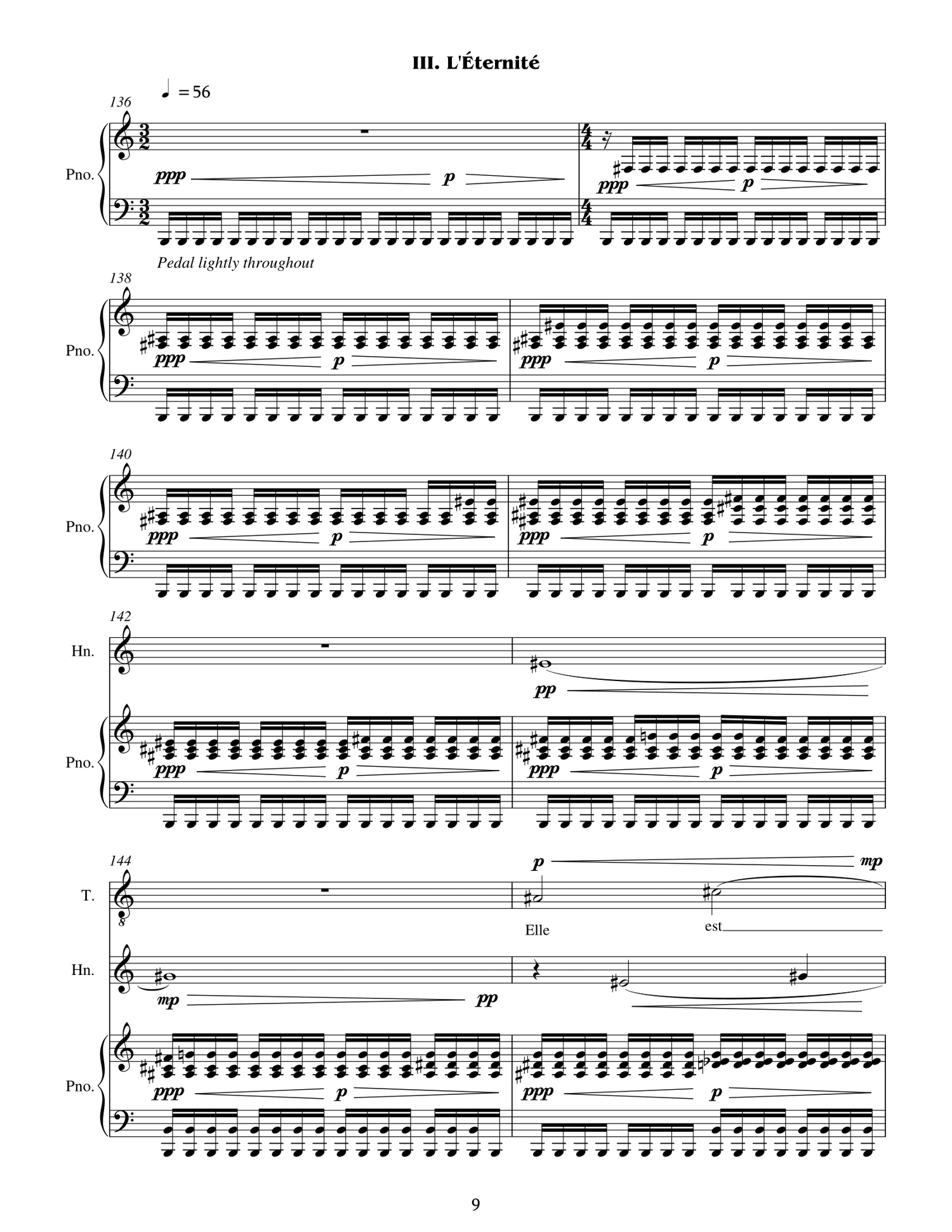
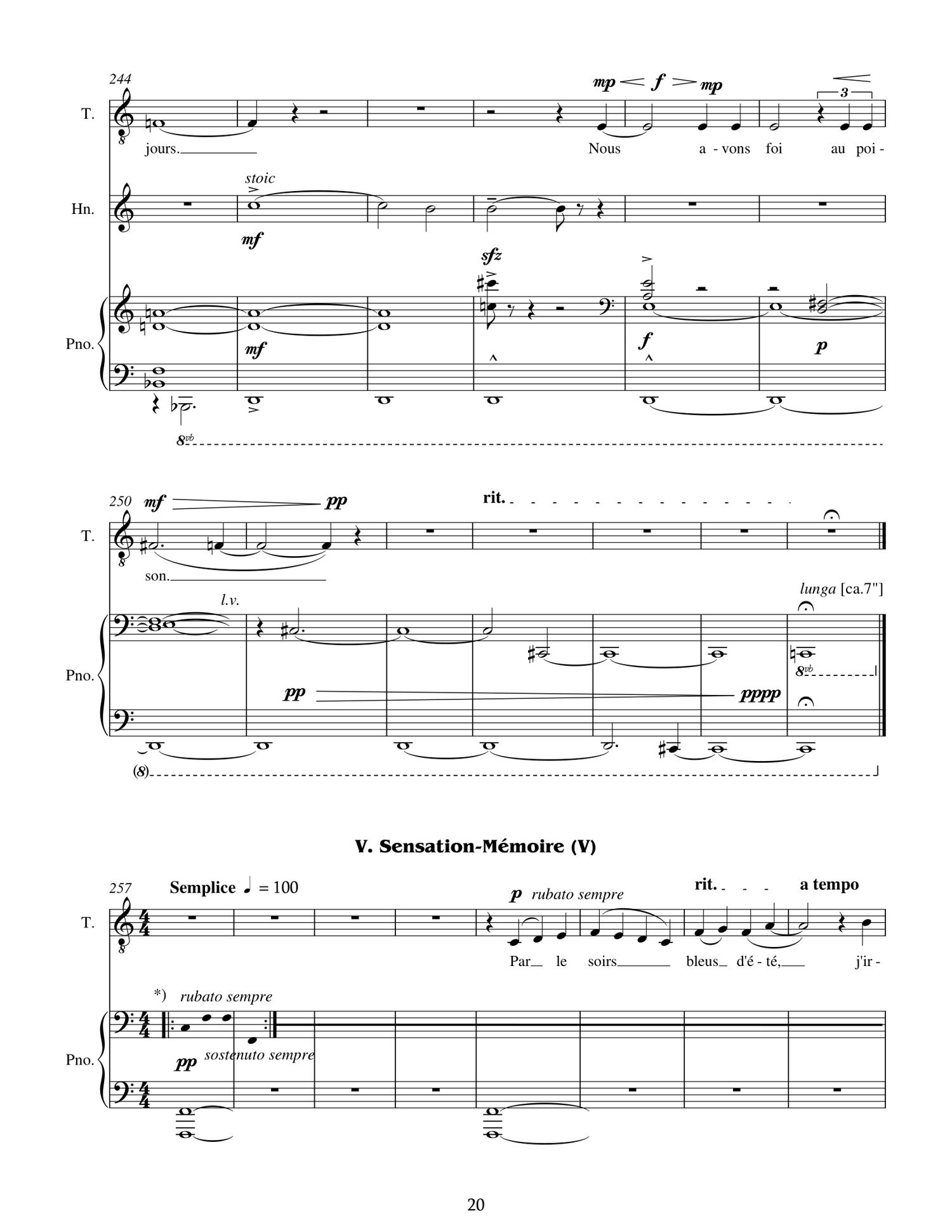
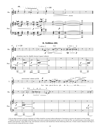
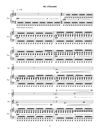
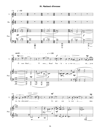
I chose to set poems and fragments of poems which resonated with my own personal experiences, the details of which remain cryptic to say the least. The format Rimbaud’s poetry is quite varied—there are Alexandrines, metered poems disguised as free-verse, prose poems, rhymed couplets etc. Some poems, such as “Veillées III” and “Matinée d’Ivresse” are more narrative, which lent a more dramatic, operatic setting. The first song, “Chanson de la plus haute tour” has a refrain and rhythms, so I made it into more of a “number.” The transcendent tone of “L’Éternité” provided me with the opportunity to explore an introspective kind of setting, this time more about the inner meaning of the text than narrative. The last song is a combination of two poems, “Sensation” and “Mémoire V.” These Alexandrine poems are somewhat narrative, but also descriptive of a state. These poems express an attitude towards longing and love—I believe— through metaphors found in nature. According to my interpretation, in “Sensation” the open countryside is a metaphor for the attainment of transcendent love and happiness, while in “Mémoire V” the poet is caught between two loves (flowers) and cannot achieve happiness because he cannot grasp either while he is stuck on his immobile boat in the “mournful” water. Thus, we see both the good and bad side of desire.
25 pages; duration 18'