
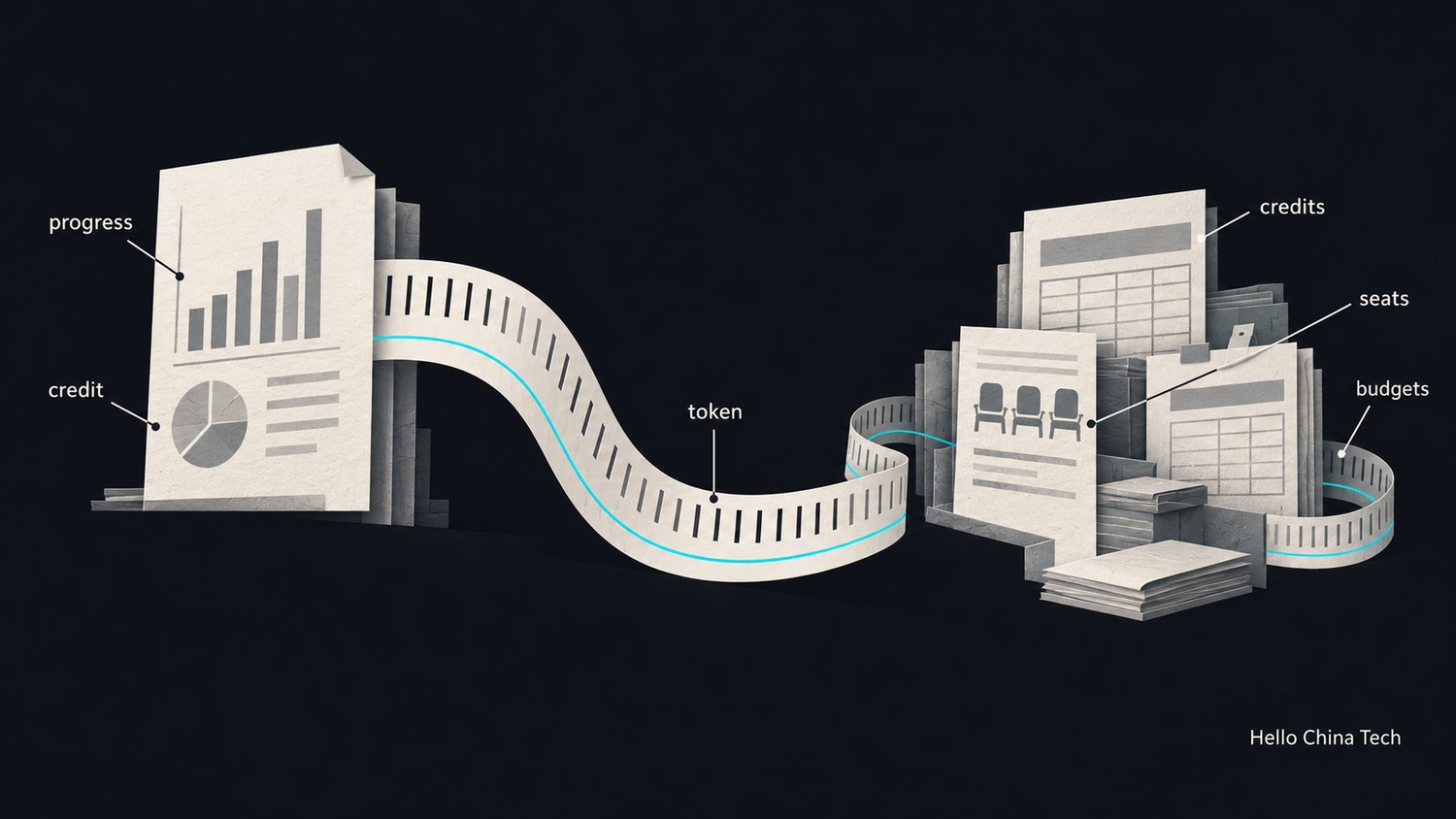
China's Token Economy: The Count and the Invoice (2026 Edition)
China's token count now feeds national briefings, credit programs, carrier strategy and company budgets. This report shows who uses the number, what it leaves out, and who carries the risk when it is misread.
Three questions this report answers
- What do China's national token figures actually count, and why do they not line up?
- 2. What happens when a token count becomes an input for subsidies, credit and procurement?
- 3. Why do some sellers and buyers move to credits, seats and revenue as they get closer to the bill, and what do run rates really measure?
Contents
Executive Summary. The full argument in short points, with four questions to ask of any token number.
Introduction. How a technical unit became an official measure in China, and the pattern this report tests.
The State Names the Unit. The official name, the national figures side by side, and what China's measuring programs do and do not cover.
Cities and Carriers Turn It Into Business. Token-linked loans and subsidies in Guangzhou, local counts in Shantou, the largest tender I found, and carriers that report no separate token revenue.
Closer to the Invoice, Other Units Appear. Credits, seats and peak prices, what sales incentives reward, and quotas inside the buying company.
At the Border, the Token Changes Name. One kind of API call under China's draft export rules, Chinese local programs and a US federal notice, and what routing data can and cannot show.
What the Ruler Gets Wrong. What sits inside one number, what sits beside it, how run rates are defined, and who bears which risk.
Where to Look. Five directions to watch, with near tests.
Data Appendix. Seven tables: who uses the token and for what, official figures, market measures, run-rate definitions, how tokens are sold, local instruments and public procurement. Each figure carries its source.
Who it is for
Investors who meet token counts and run rates in Chinese AI earnings calls and filings.
Policy researchers who follow China's AI measurement, local credit programs and export rules.
Industry readers who buy, sell or price AI services and need to compare units across vendors.
What makes it different
The report sets official statements, filings, tender notices and media reports side by side, and says which is which. Where my earlier calls were wrong, I say so in the chapter where it matters and name the assumption that failed.
Format
About 8,900 words, plus seven data tables. PDF, 33 pages. 2026 Edition. Data as of October 31, 2026.
Price
Paid subscribers to Hello China Tech: use your member code at checkout.
Free sample
Read the Executive Summary and Chapter 2 in full before you buy.