

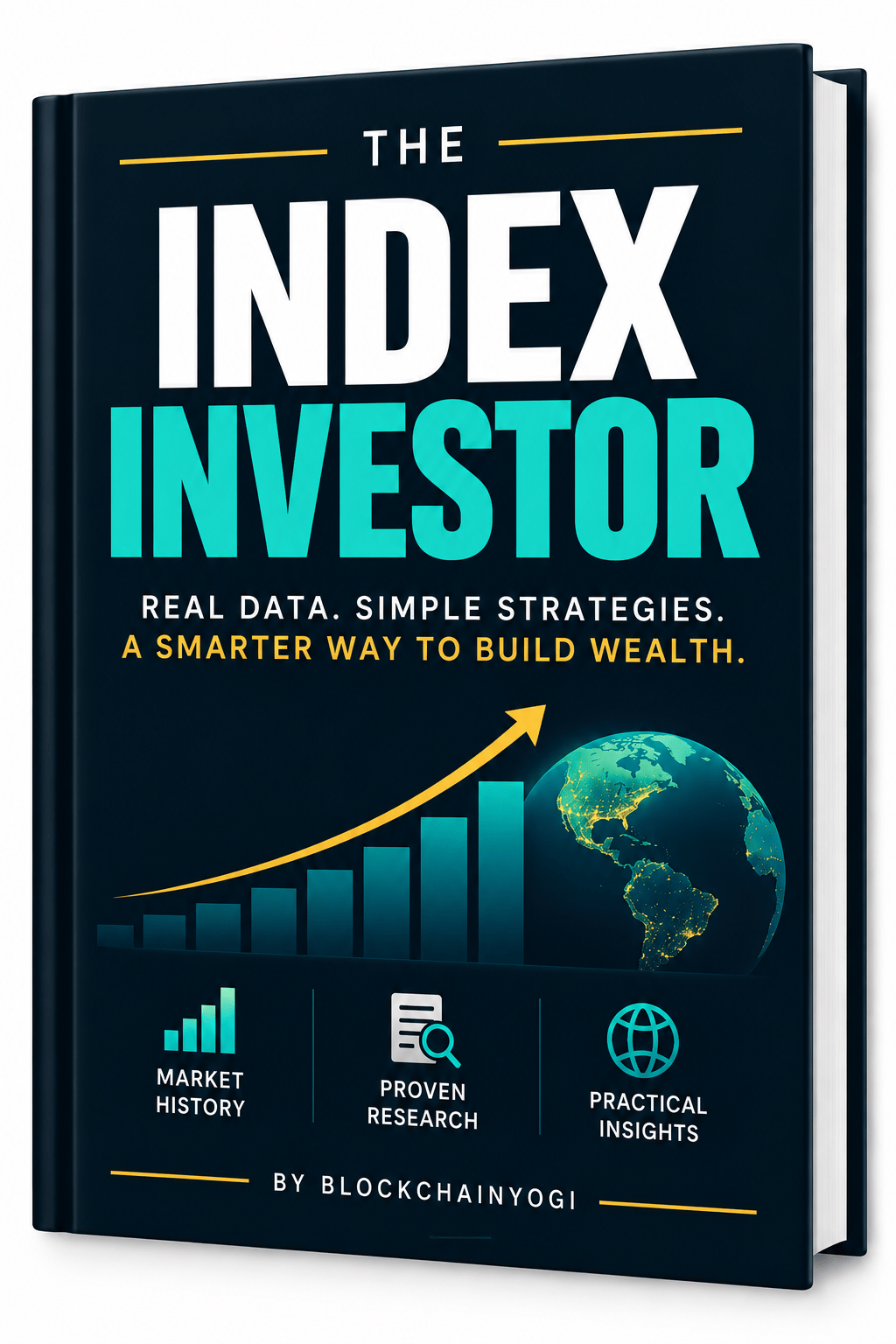
The Index Investor
The Index Investor
What if building long-term wealth in the stock market has less to do with picking the next winning company and more to do with owning the market itself?
Every year, investors spend countless hours researching individual stocks, following market trends, and trying to find the next Apple, Amazon, or Nvidia. But what does the historical evidence actually tell us about stock picking?
The Index Investor takes a closer look at more than 100 years of stock market history, examining which companies created lasting wealth, why so many others fell behind, and what everyday investors can learn from the results.
Drawing on academic research, historical examples, and the investing philosophy of John Bogle, this e-book explores why broad-market index investing may be one of the simplest approaches to building wealth over time.
What You'll Discover
- 100 Years of Stock Market History: How companies rise, fall, and shape the market over time.
- What the Research Reveals: A closer look at major studies examining thousands of stocks and the challenges of consistently picking winners.
- Why Professionals Struggle Too: What research on active fund managers and individual investors tells us about beating the market.
- The Case for Index Investing: Why owning hundreds or thousands of companies through low-cost funds can be a practical alternative to individual stock picking.
- Keeping Investing Simple: Understanding broad-market funds, diversification, costs, and long-term investing.
Who Is This Book For?
Whether you're completely new to investing, already own individual stocks, or simply want a better understanding of how the stock market creates wealth, this book offers a research-backed perspective without unnecessary financial jargon.
The goal isn't to tell you which stock to buy next. It's to help you understand why you may not need to pick one at all.
For educational purposes only. This book does not provide personalized financial advice. Investing involves risk, including possible loss of principal.