
The Qualitative Coding Kit: 45 Fillable Templates (US Letter + A4)
For the researcher with a stack of transcripts and a deadline: from first reading to codebook, themes and a committee-ready audit trail.
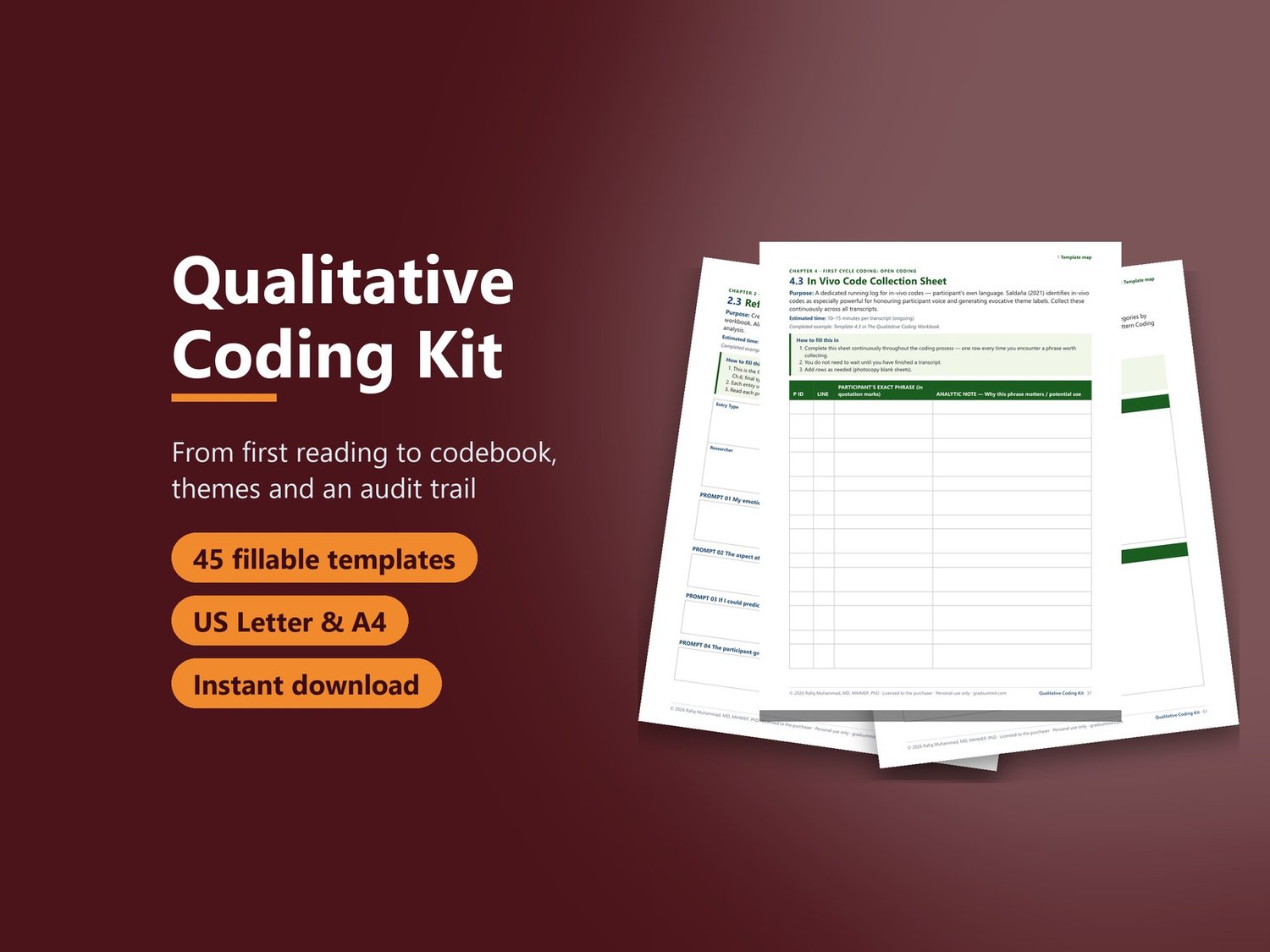
All 45 templates from the workbook, ready to type into: from first reading to codebook, themes and a committee-ready audit trail.
WHAT YOU GET
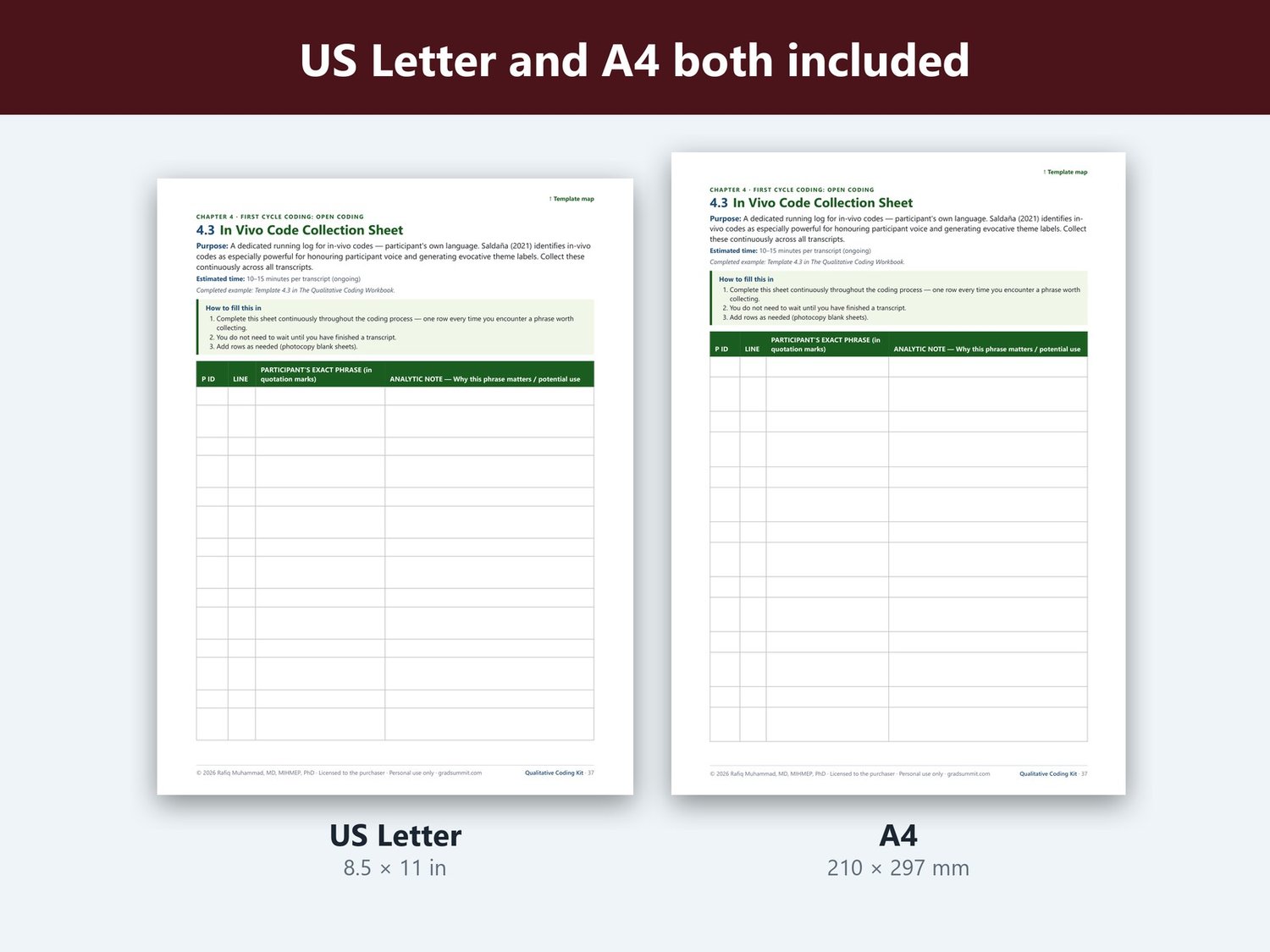
- 45 fillable templates in one fillable PDF (113 pages in US Letter, 110 in A4, 3023 fillable fields)
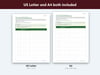
- US Letter and A4 versions, both included
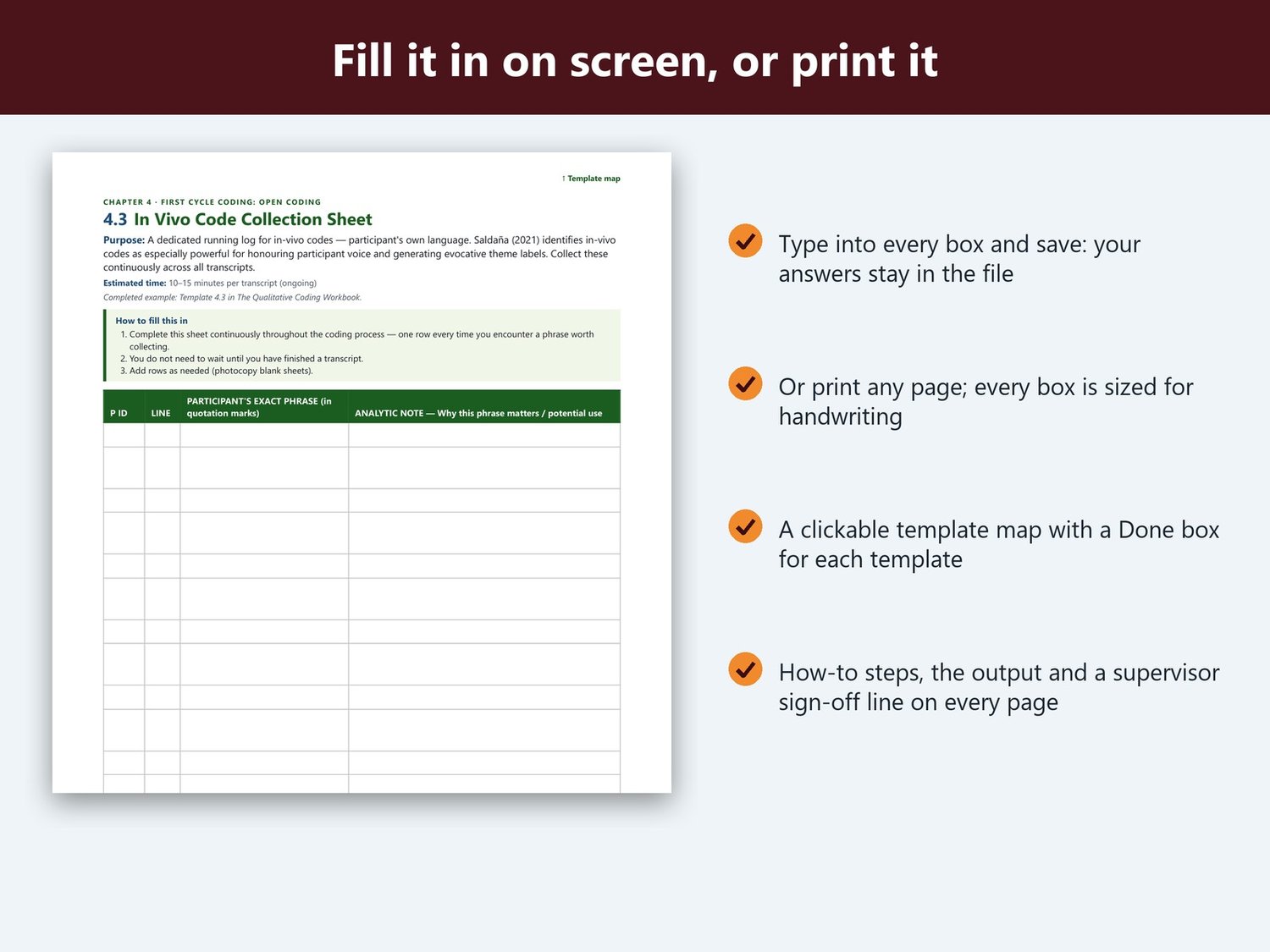
- Type into the boxes and save, or print and write by hand
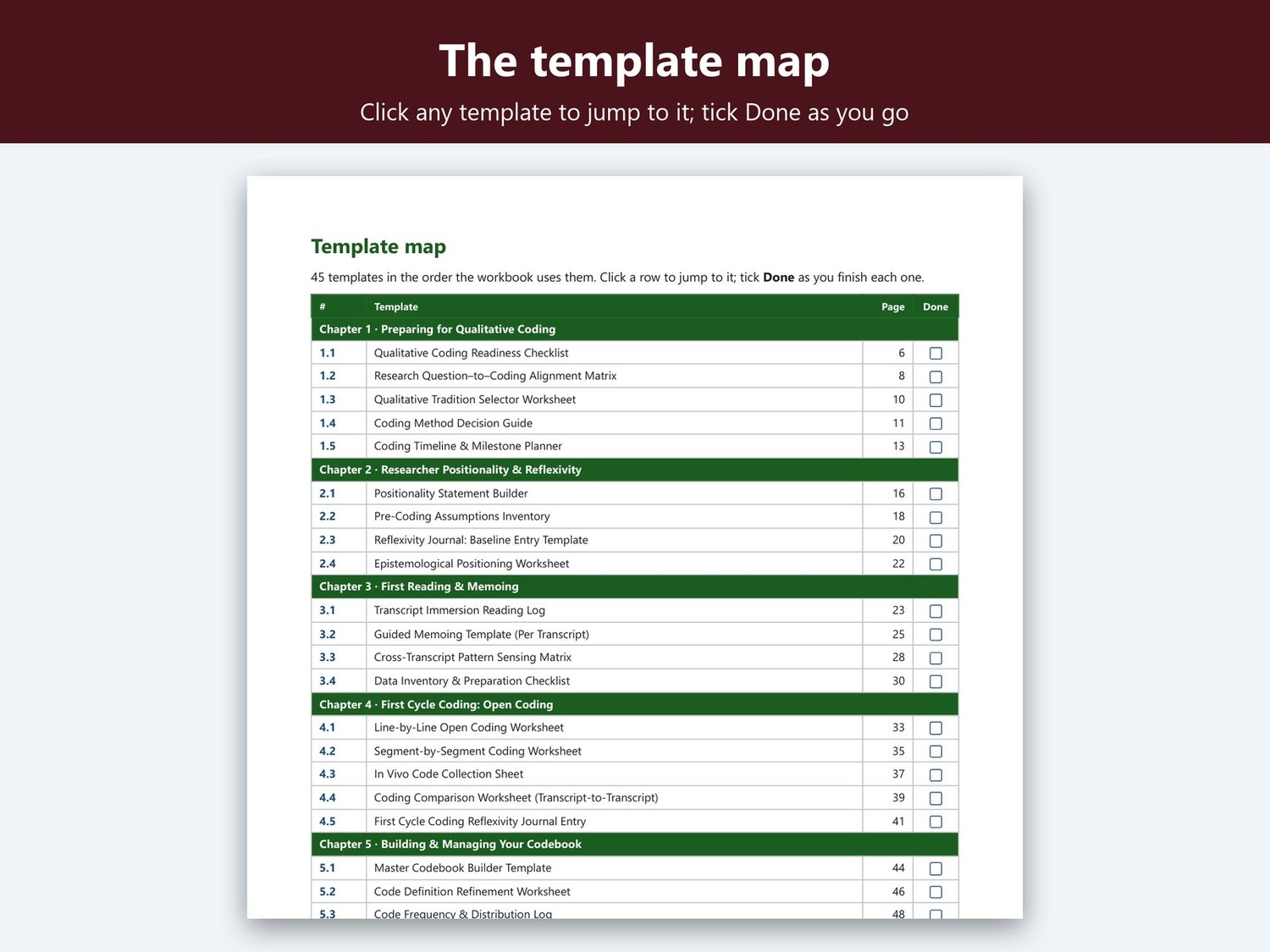
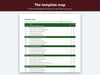
- A clickable template map with a Done box for every template, and bookmarks
WHAT'S INSIDE
- 1.1 Qualitative Coding Readiness Checklist
- 1.2 Research Question–to–Coding Alignment Matrix
- 1.3 Qualitative Tradition Selector Worksheet
- 1.4 Coding Method Decision Guide
- 1.5 Coding Timeline & Milestone Planner
- 2.1 Positionality Statement Builder
- 2.2 Pre-Coding Assumptions Inventory
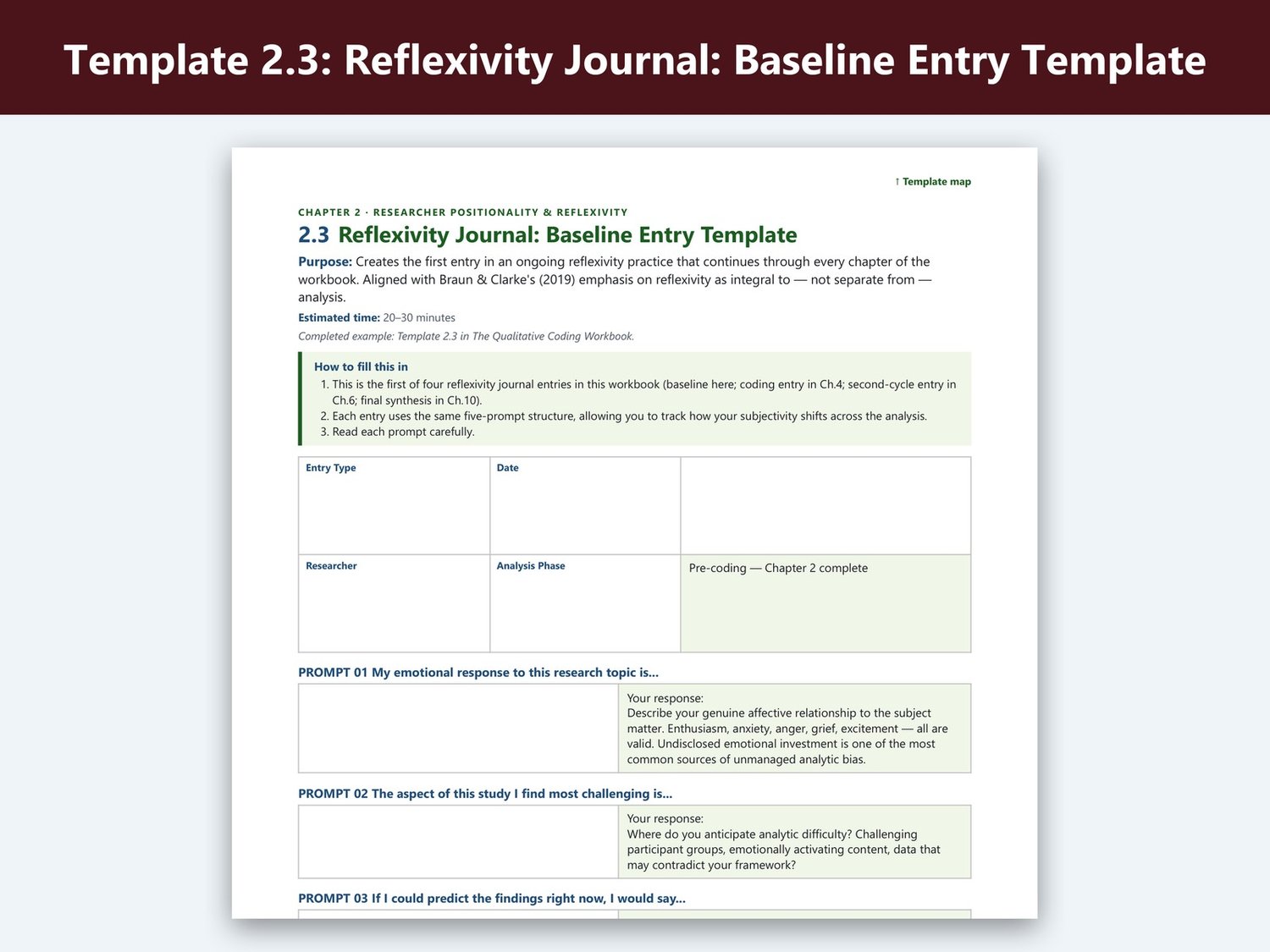
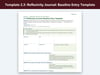
- 2.3 Reflexivity Journal: Baseline Entry Template
- 2.4 Epistemological Positioning Worksheet
- 3.1 Transcript Immersion Reading Log
- 3.2 Guided Memoing Template (Per Transcript)
- 3.3 Cross-Transcript Pattern Sensing Matrix
- 3.4 Data Inventory & Preparation Checklist
- 4.1 Line-by-Line Open Coding Worksheet
- 4.2 Segment-by-Segment Coding Worksheet
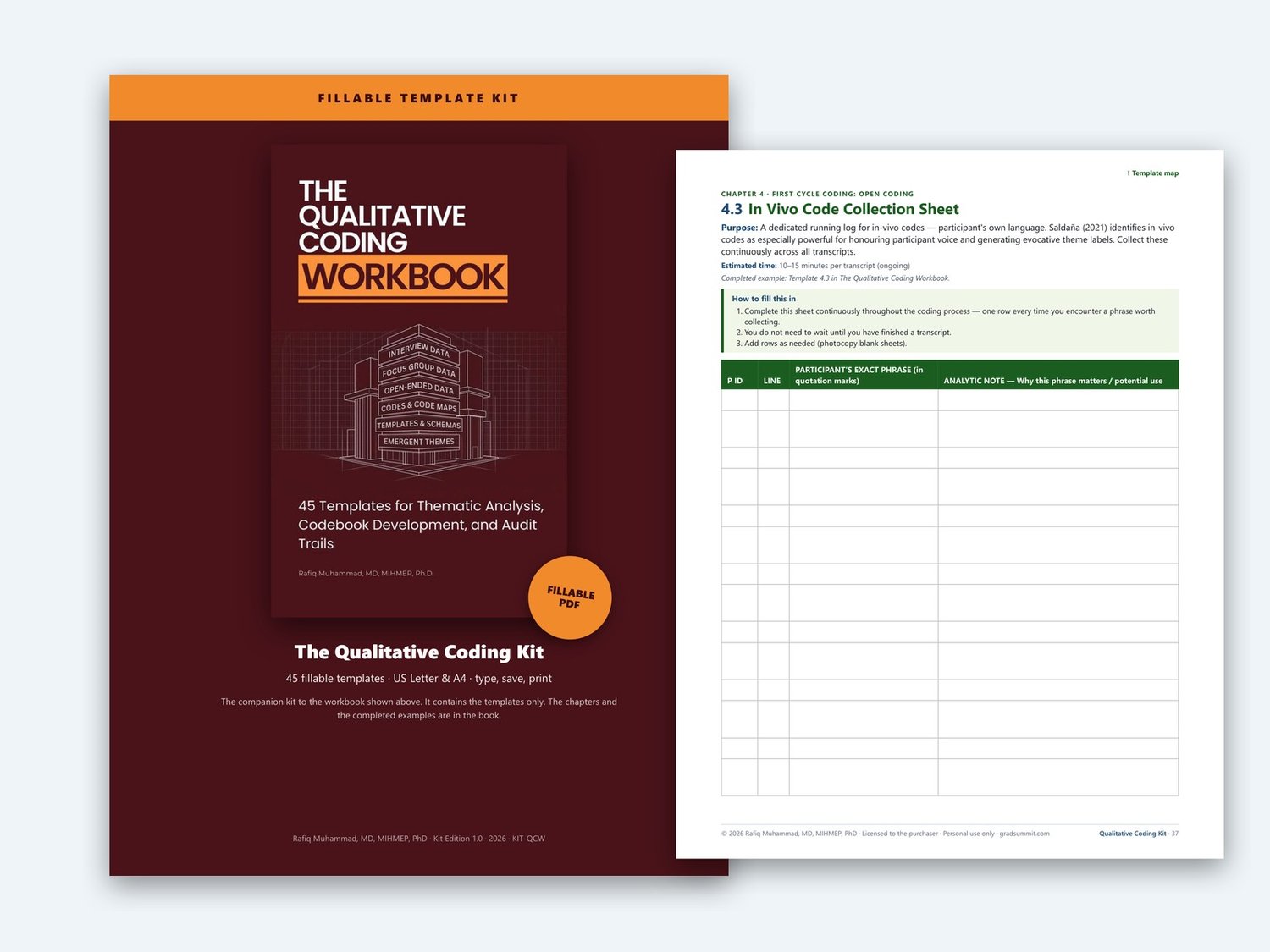
- 4.3 In Vivo Code Collection Sheet
- 4.4 Coding Comparison Worksheet (Transcript-to-Transcript)
- 4.5 First Cycle Coding Reflexivity Journal Entry
- 5.1 Master Codebook Builder Template
- 5.2 Code Definition Refinement Worksheet
- 5.3 Code Frequency & Distribution Log
- 5.4 Codebook Version Control Log
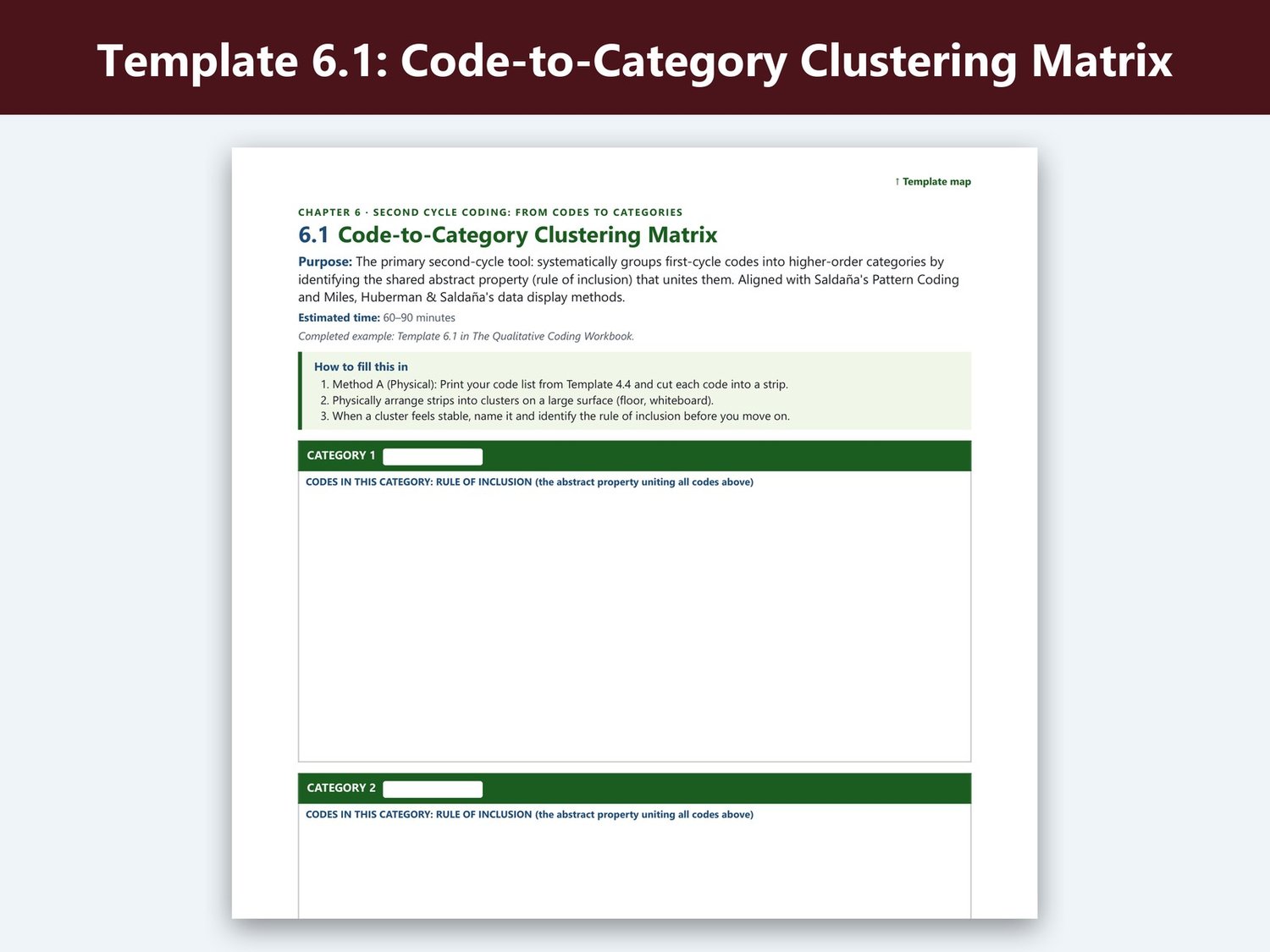
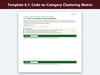
- 6.1 Code-to-Category Clustering Matrix
- 6.2 Rule-of-Inclusion Definition Worksheet
- 6.3 Category Relationship Mapping Canvas
- 6.4 Axial Coding Worksheet (for Grounded Theory Studies)
- 6.5 Second Cycle Coding Reflexivity Journal Entry
- 7.1 Theme Development Canvas
- 7.2 Theme Naming Workshop Worksheet
- 7.3 Thematic Map Builder
- 7.4 Theme Quality Review Checklist
- 7.5 Theme-to-Research-Question Alignment Matrix
- 8.1 Tradition-Specific Coding Adaptation Guide
- 8.2 Phenomenological Meaning Unit Extraction Worksheet
- 8.3 Grounded Theory Constant Comparison Log
- 8.4 Cross-Language Coding Protocol Worksheet
- 9.1 Inter-Coder Reliability Planning Worksheet
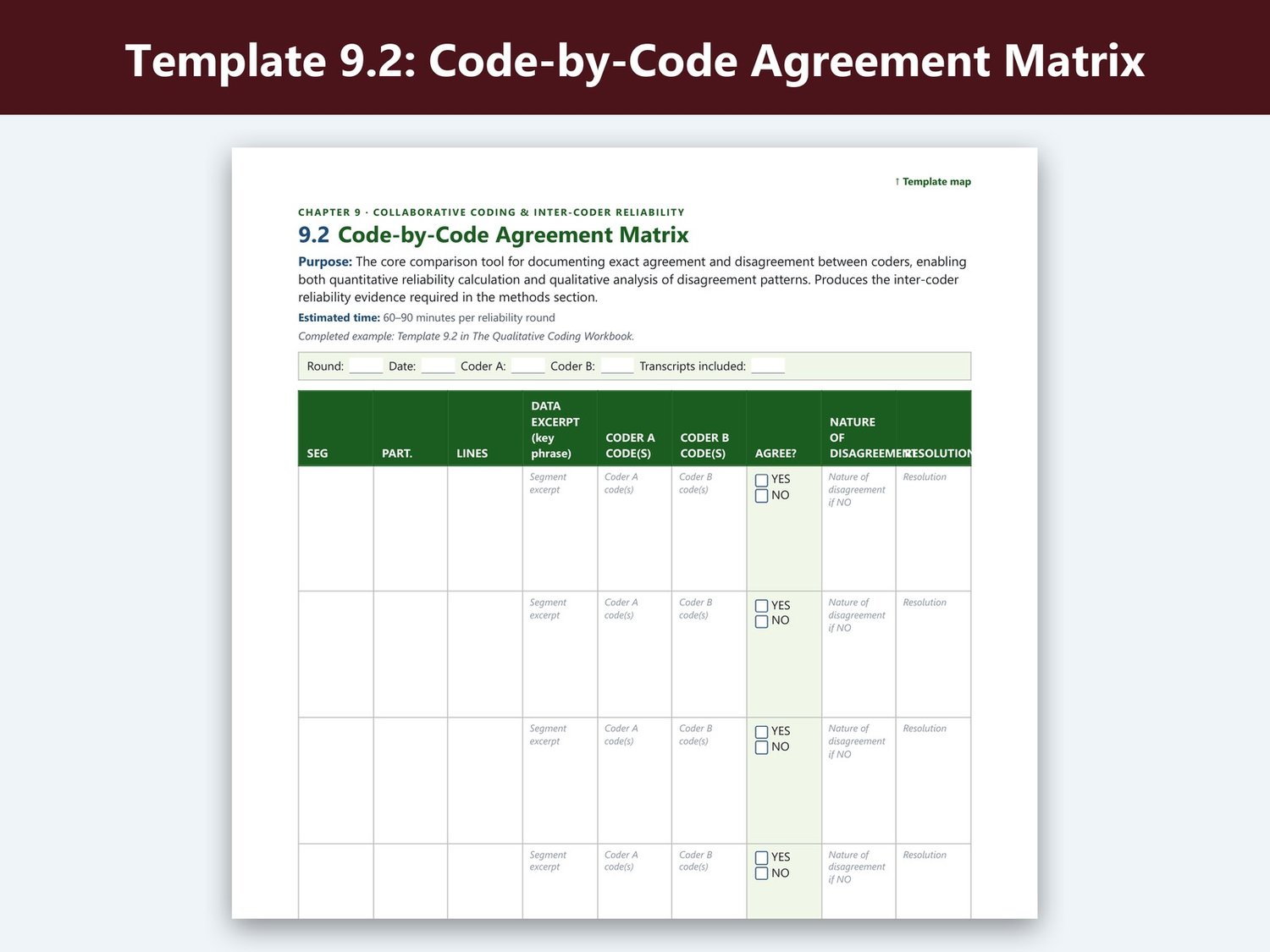
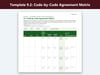
- 9.2 Code-by-Code Agreement Matrix
- 9.3 Disagreement Resolution Protocol Template
- 9.4 Collaborative Coding Meeting Agenda Template
- 10.1 Comprehensive Audit Trail Compilation Checklist
- 10.2 Trustworthiness Evidence Summary Table
- 10.3 Data Saturation Assessment Tool
- 10.4 Final Reflexivity Journal Entry & Synthesis
- 10.5 Software Transfer Planning Worksheet
EVERY TEMPLATE PAGE GIVES YOU
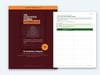
- Its purpose and how long it takes
- Short steps on how to fill it in
- Fillable boxes sized for real answers
- The output it produces
- A supervisor sign-off line
- Where to find the completed example in the workbook
HOW TO USE IT
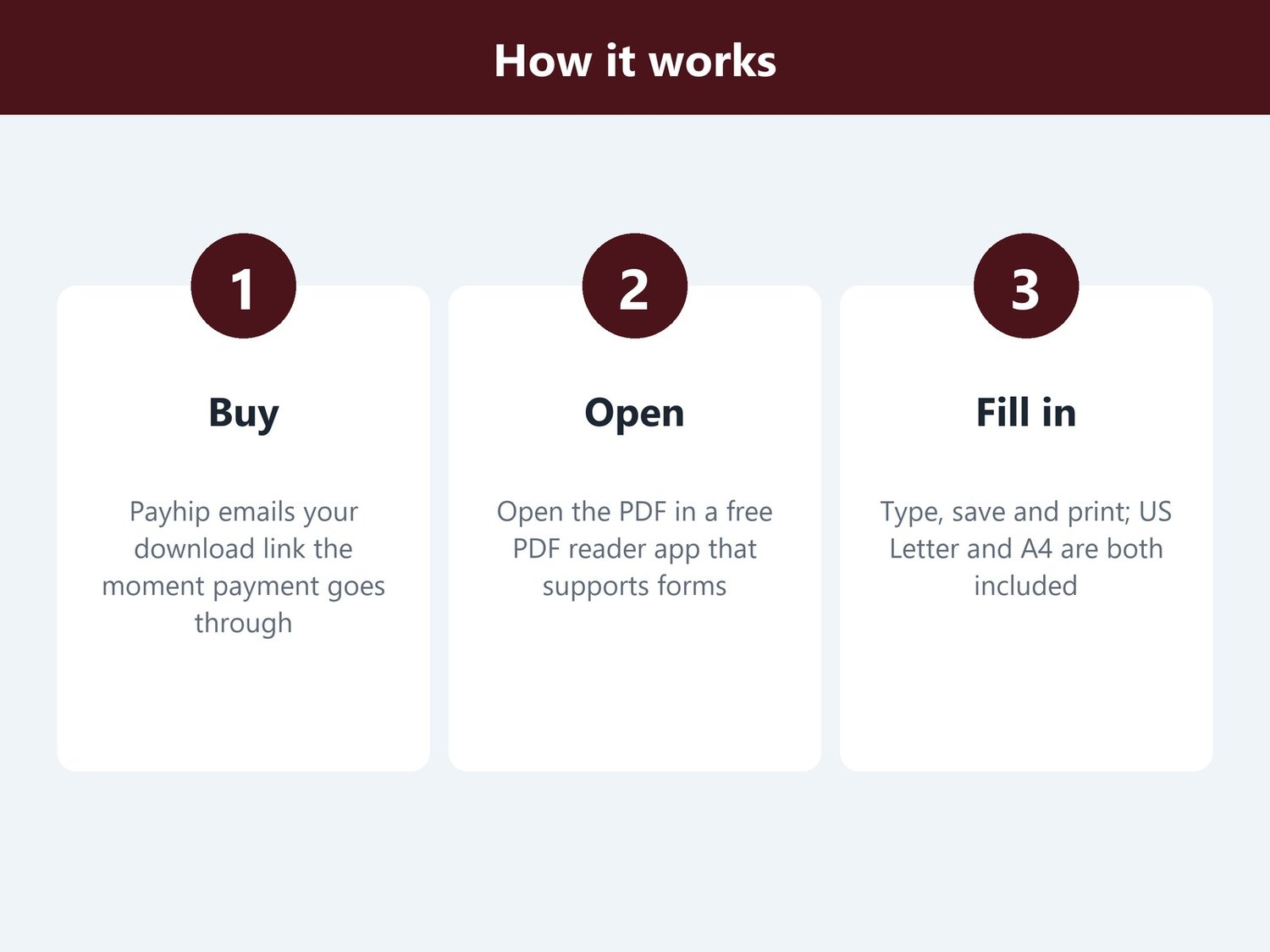
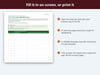
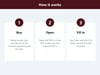
- Open the PDF in a free PDF reader app that supports fillable forms (Adobe Acrobat Reader is free and works best). Some phone and browser viewers do not save typed answers.
- Click a box and type. Save often: your answers stay in the file.
THE KIT AND THE WORKBOOK
The kit gives you the tools. The Qualitative Coding Workbook teaches the method: it explains every template and shows a completed example of each one. If this is your first time, start with the workbook: https://www.gradsummit.com/workbooks/qualitative-coding-workbook/
LICENCE
For the buyer's own use. Every page is stamped with the buyer's email and the purchase date. Please do not share or resell the files. For a class or research group, ask about a group licence.
By Rafiq Muhammad, MD, MIHMEP, PhD. The templates were drafted with the help of AI tools and written, checked and laid out by the author.