
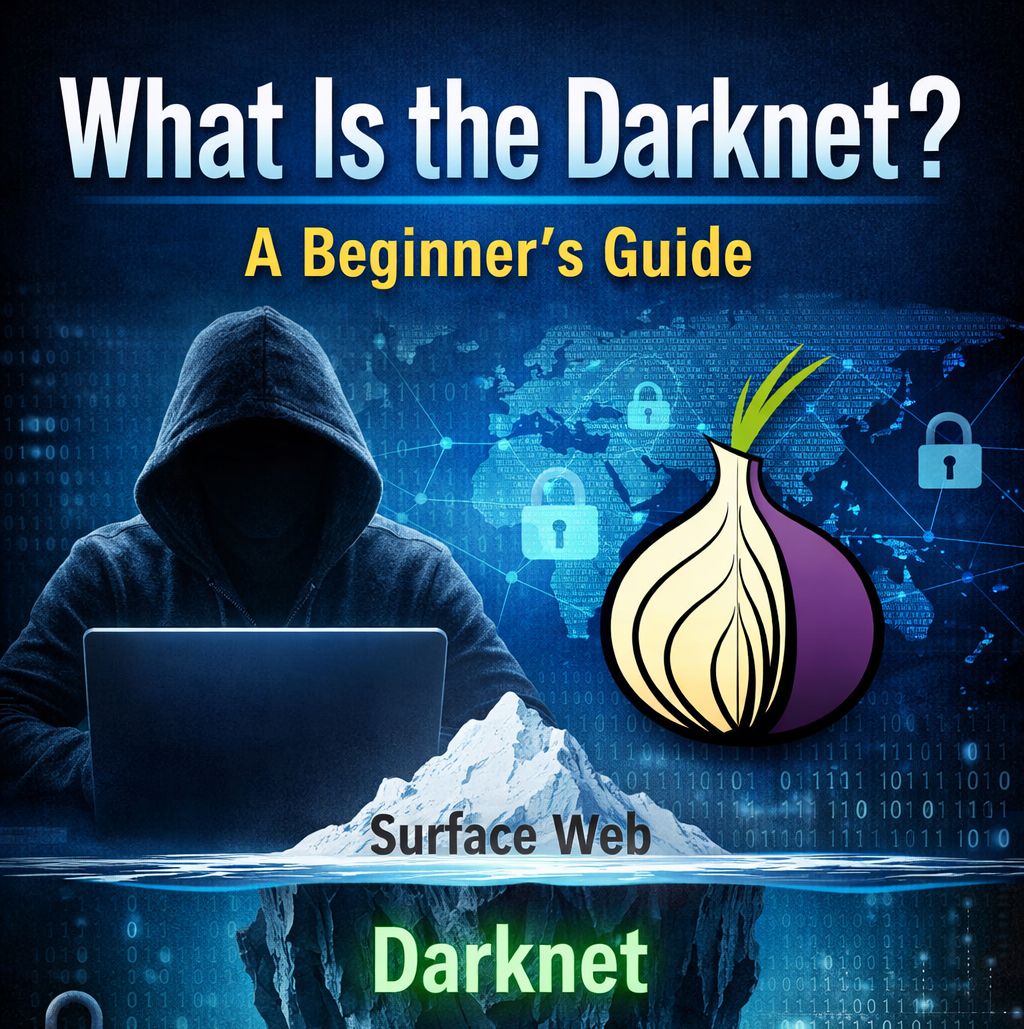
What Are Darknet Markets and How Darknet Markets Work in the Real World
The idea of a hidden online marketplace has fascinated the public for more than a decade. Long before mainstream media began associating them with cybercrime headlines, darknet markets existed as a quiet experiment in anonymity, trust, and digital economics. To understand what these platforms really are, and how darknet markets work beneath the surface, it helps to step away from sensationalism and look at them as a product of technology, human behavior, and the evolving structure of the internet itself.
Darknet markets did not appear out of nowhere. They emerged as a natural extension of earlier online forums, peer-to-peer trading spaces, and encrypted communities that valued privacy above all else. As the surface web became increasingly monitored, commercialized, and regulated, a portion of users sought environments where identity was optional and transactions could occur without the visibility of traditional platforms. The result was an underground economy that mirrored legitimate e-commerce in structure while operating in a radically different legal and ethical landscape.
Defining Darknet Markets Beyond the Myths
At their core, darknet markets are online marketplaces hosted on privacy-focused networks rather than the public internet. Unlike conventional websites indexed by search engines, these markets exist in digital spaces designed to conceal both user identity and server location. This architectural choice is not accidental. It reflects a demand for anonymity driven by fear of surveillance, censorship, or legal consequences.
Public discussion often reduces these platforms to a single narrative centered on illegal goods. While unlawful activity has undeniably played a major role in their history, this narrow framing misses the broader point. Darknet markets function as complex ecosystems. They include vendors, buyers, intermediaries, dispute mechanisms, reputational systems, and informal governance. In many ways, they resemble early versions of eBay or Amazon, except that trust is established through cryptography and community enforcement rather than corporate oversight.
Understanding how darknet markets work requires acknowledging that they are not chaotic free-for-alls. They are structured environments with rules, norms, and social consequences. Participants who violate expectations often face swift exclusion, not because of law enforcement intervention, but because trust is the most valuable currency in a system where identities are disposable.
The Technological Foundation of Anonymity
The technological backbone of darknet markets is what separates them most clearly from surface-web platforms. These markets rely on layered encryption and routing systems that obscure the origin and destination of traffic. This design makes it difficult for outside observers to determine who is accessing the market or where it is physically hosted.
From a technical perspective, this anonymity changes the dynamics of online interaction. Users are not building long-term personal brands tied to real names or social media profiles. Instead, they construct reputations tied to cryptographic identities. A username may carry years of credibility within a market, even though it has no connection to a real-world identity.
This separation between person and persona has profound consequences. It allows individuals to participate without fear of personal exposure, but it also creates an environment where trust must be earned through consistent behavior rather than external credentials. Reviews, transaction histories, and dispute outcomes become the primary indicators of reliability.
How Darknet Markets Work as Economic Systems
When examining how darknet markets work from an economic standpoint, it becomes clear that they follow many of the same principles as legitimate online marketplaces. Supply and demand drive pricing. Competition encourages specialization. Reputation influences visibility and success. What differs is the enforcement mechanism.
In traditional commerce, contracts are enforced through legal systems, payment processors, and regulatory bodies. In darknet markets, enforcement is decentralized and social. Escrow systems hold funds until both parties confirm satisfaction. Moderators intervene in disputes, not as legal authorities, but as trusted arbiters whose legitimacy depends entirely on community perception.
This self-regulating structure creates an unusual balance of power. Market administrators hold significant influence, yet they must maintain user trust to survive. Buyers and sellers rely on the platform, but they are also quick to migrate if confidence erodes. This constant tension explains why many darknet markets rise quickly and disappear just as fast.
The Role of Cryptocurrency and Digital Trust
No discussion of darknet markets is complete without addressing the role of digital currencies. Cryptocurrencies provided the missing financial layer that made anonymous marketplaces viable at scale. They allowed value to move across borders without relying on banks, credit card companies, or identity verification systems.
However, money alone does not create trust. What makes these markets function is the combination of cryptographic payment systems with human oversight. Escrow arrangements, multisignature wallets, and transaction confirmations serve as substitutes for legal guarantees. They do not eliminate risk, but they reduce it enough for commerce to occur.
Over time, users have become increasingly sophisticated in how they assess risk. Experienced participants understand that no system is perfectly secure and that anonymity is always relative. This awareness shapes behavior, encouraging caution, redundancy, and skepticism. In this sense, darknet markets have fostered a culture of operational awareness that is rare on the open internet.
Social Dynamics Inside Darknet Communities
Beyond technology and economics, darknet markets are social spaces. They are supported by forums, message boards, and communication channels where users share experiences, warn each other of scams, and debate market policies. These discussions reveal a surprisingly strong sense of collective identity.
Participants often see themselves as part of an experiment in decentralized commerce rather than mere consumers. This mindset reinforces informal norms around fairness, transparency, and accountability. Vendors who consistently meet expectations are celebrated. Those who exploit trust are publicly criticized and ostracized.
This social layer is critical to understanding how darknet markets work over time. Markets that fail to cultivate community trust rarely last. Those that actively engage users, communicate clearly, and enforce standards tend to attract more activity, at least until external pressures intervene.
Law Enforcement, Risk, and Market Evolution
Darknet markets exist in constant tension with law enforcement agencies around the world. This pressure has shaped their evolution from the earliest platforms to more recent iterations. Each high-profile takedown has led to new adaptations, including improved security practices and more cautious user behavior.
From an analytical perspective, this cat-and-mouse dynamic has driven innovation. Market operators learn from past failures. Users become more selective. Entire communities migrate in response to perceived threats. The result is an ecosystem that is resilient but fragmented, characterized by cycles of growth and collapse.
Understanding this context is essential when discussing what a darknet market actually represents. It is not a static entity but a moving target. Its form at any given moment reflects the balance between technological capability, user demand, and external enforcement pressure.
Ethical and Legal Ambiguities
One of the most challenging aspects of discussing darknet markets is navigating their ethical complexity. While many activities associated with them are illegal, the underlying motivations are not always criminal. Privacy advocates, journalists, and researchers have long argued that anonymous networks serve legitimate purposes, particularly in repressive environments.
This ambiguity complicates public discourse. It is easier to label darknet markets as purely criminal than to acknowledge the broader implications of privacy-preserving technologies. Yet doing so obscures important questions about surveillance, autonomy, and the future of online commerce.
A mature understanding of how darknet markets work requires holding these contradictions in mind. They are neither heroic experiments nor simple dens of wrongdoing. They are systems created by humans responding to technological and social constraints, with all the moral complexity that entails.
Media Representation Versus Reality
Mainstream portrayals of darknet markets often focus on extremes. Headlines emphasize dramatic arrests, shocking products, and sensational narratives. While these stories capture attention, they rarely convey the everyday reality of how these markets function.
In practice, most activity within darknet markets is mundane. Transactions follow predictable patterns. Disputes are resolved through established channels. Users discuss reliability, pricing, and service quality in ways that would feel familiar to anyone who has used an online marketplace.
This gap between perception and reality matters because it shapes public understanding and policy responses. When the conversation is driven by fear rather than analysis, it becomes harder to address the underlying issues that give rise to underground markets in the first place.
Why Darknet Markets Continue to Exist
Despite repeated shutdowns and growing public awareness, darknet markets persist. Their endurance suggests that they are not simply a law enforcement problem but a symptom of deeper structural forces. Demand for anonymity, dissatisfaction with traditional systems, and global connectivity all contribute to their continued re-emergence.
As long as there are users who value privacy and technologies that enable it, some form of underground marketplace is likely to exist. The specific platforms may change, but the underlying model remains adaptable.
This reality underscores the importance of informed discussion. Resources like darknetcentral.com aim to provide contextual, research-driven perspectives rather than alarmist narratives. By examining how darknet markets work in a grounded and analytical way, it becomes possible to move beyond myths and toward understanding.
The Future of Darknet Markets
Looking ahead, the future of darknet markets will likely be shaped by broader trends in technology and regulation. Advances in cryptography, shifts in digital payment systems, and evolving legal frameworks will all influence how these platforms operate.
At the same time, user expectations continue to evolve. Trust, usability, and security are no longer optional features. Markets that fail to meet these standards are quickly abandoned. This ongoing refinement suggests that darknet markets are not stagnating but responding dynamically to both internal and external pressures.
Whether they expand, contract, or transform into something entirely new, their existence raises enduring questions about privacy, governance, and the boundaries of online commerce. These questions extend far beyond any single platform or community.
Conclusion: Understanding Without Sensationalism
To ask what darknet markets are is ultimately to ask how humans adapt technology to meet unmet needs. To explore how darknet markets work is to examine the intersection of anonymity, trust, and economic exchange in a digital age.
They are controversial, often misunderstood, and undeniably risky. Yet they are also structured, rule-bound, and deeply human in their design. Recognizing this complexity does not mean endorsing illegal activity. It means acknowledging reality as it is, rather than as it is often portrayed.
A single darknet market may rise and fall, but the forces that created them remain. Understanding those forces is the first step toward any meaningful conversation about the future of privacy, commerce, and control on the internet.