
HACCP Plan Toolkit (Excel) — the Codex 12 steps with significance and CCP determination calculated for you
Most HACCP plans that fail an audit do not fail on microbiology. They fail on paperwork logic. A flow diagram that does not match the floor. A hazard analysis with no justification column. A critical limit nobody can point to evidence for. And a plan in which either everything is a critical control point or nothing is.
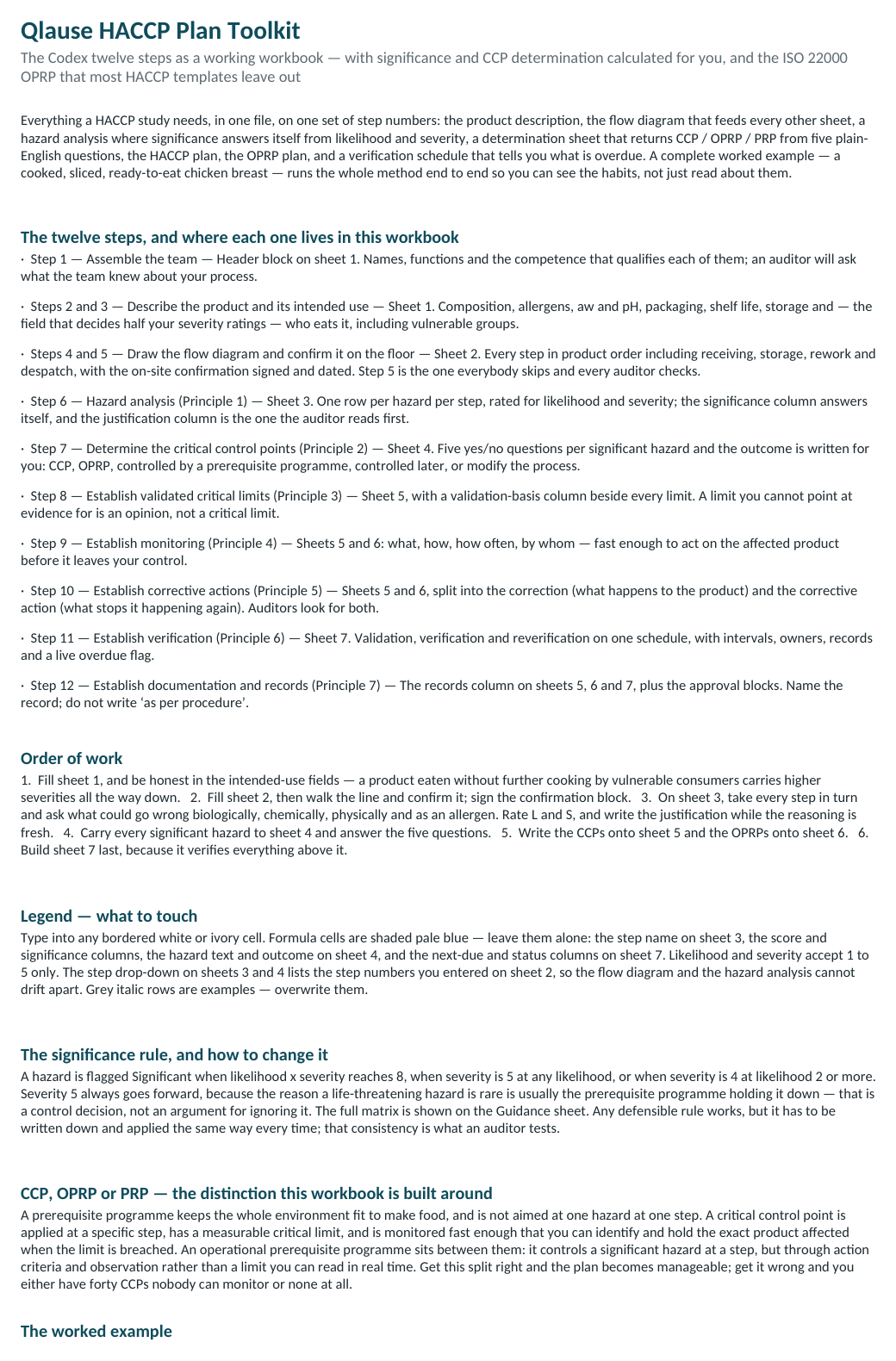
This toolkit is a complete HACCP study as a working Excel workbook — the Codex twelve steps in order, on one set of step numbers, with the two judgements that slow every team down calculated for you.
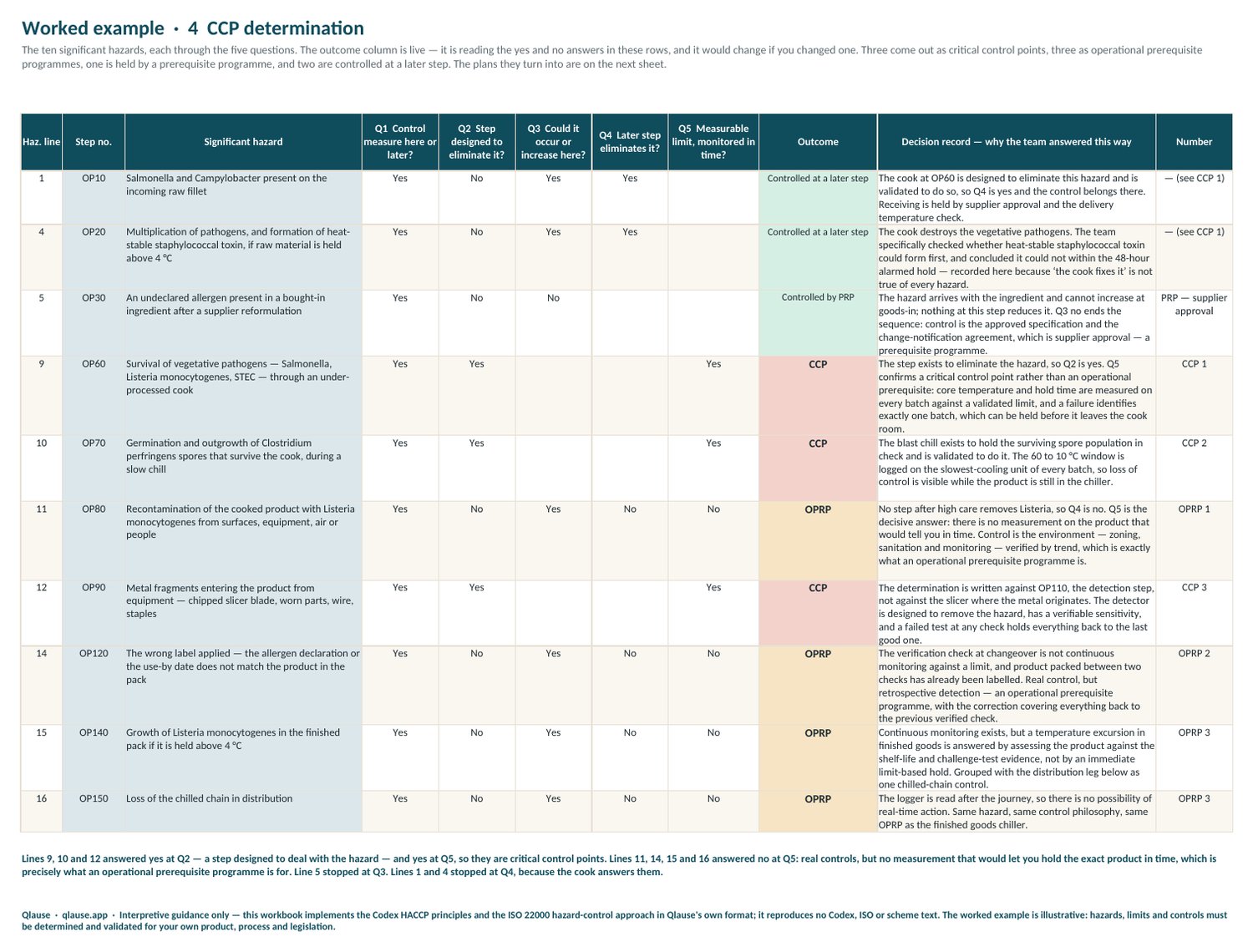
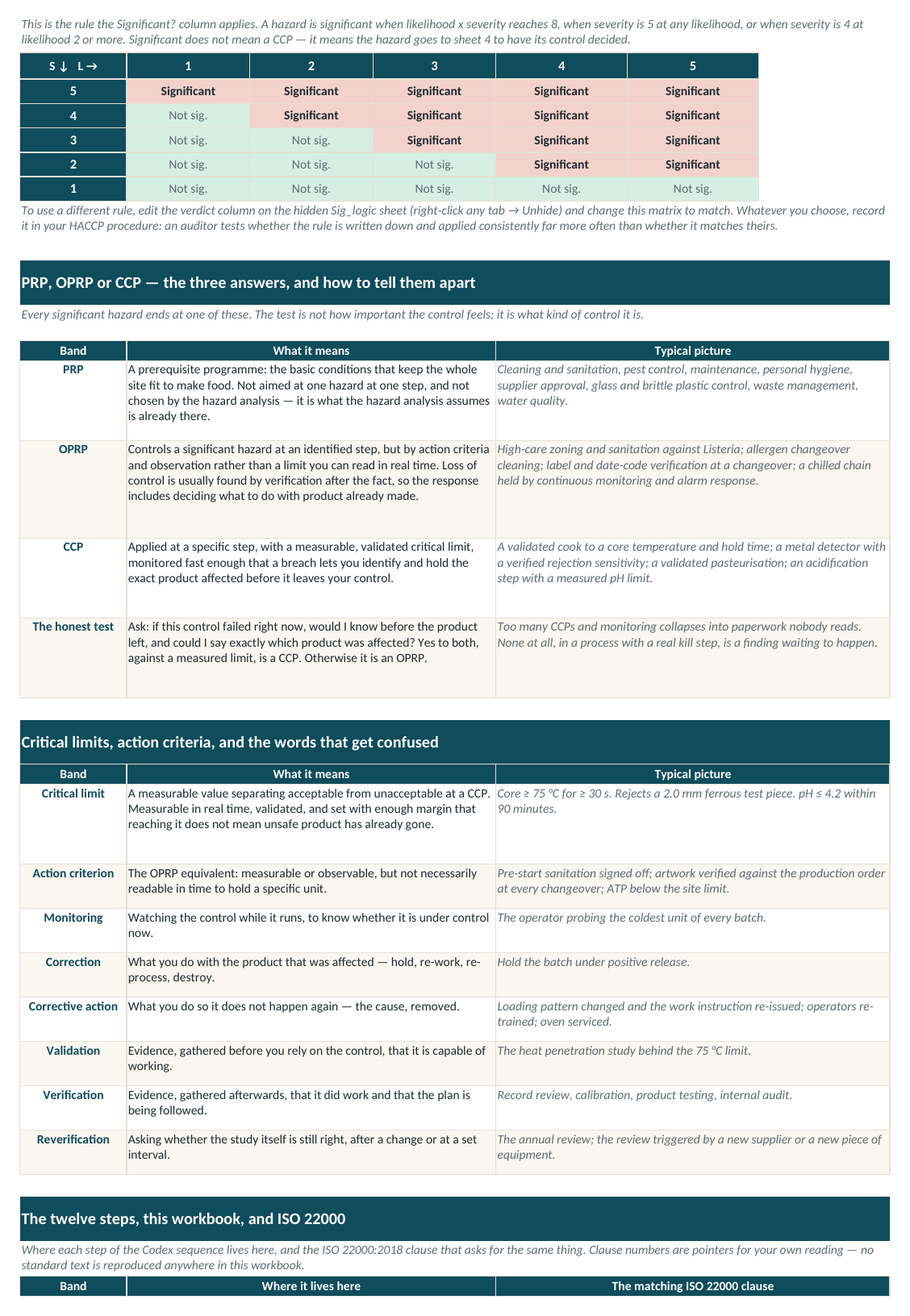
Enter likelihood and severity and the significance column answers itself from a documented, editable rule. Take a significant hazard to the determination sheet, answer five plain-English questions, and the outcome is written for you and colour-coded: CCP, OPRP, controlled by a prerequisite programme, controlled at a later step, or modify the process. No decision tree to redraw, no team argument about where a line belongs that cannot be traced back to an answer on the sheet.
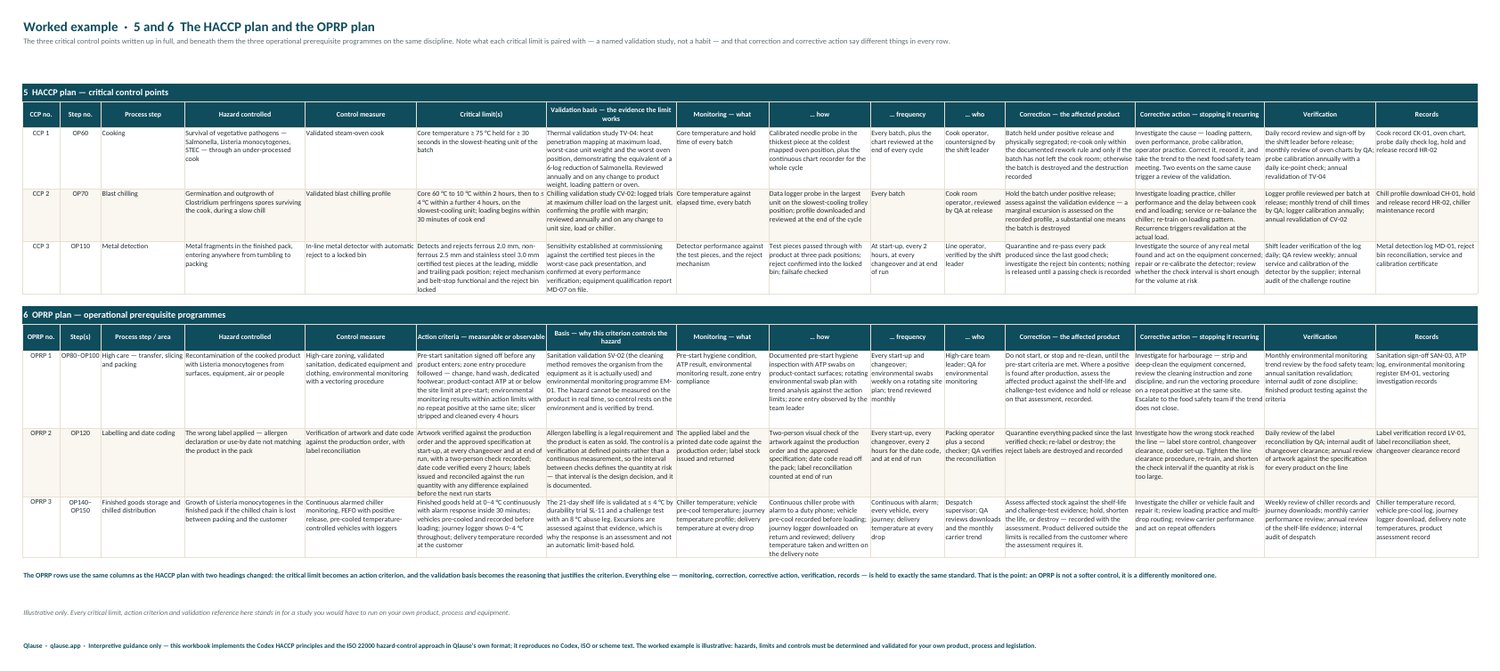
And it carries the sheet most HACCP templates simply do not have: the OPRP plan. Codex names one outcome, the critical control point. ISO 22000 splits control measures into CCPs and OPRPs and calls the two plans together the hazard control plan — so any site certified to ISO 22000 or FSSC 22000 needs both, held to the same standard. Here they are, side by side, with the same columns and the same discipline.
Built by working quality auditors, in plain English. No macros, no add-ins, no setup — open it and start on your next product.
What's inside — fourteen sheets
- Product description and intended use (steps 1–3) — every field with a note saying what belongs in it and why it matters later, including the two intended-use fields that decide half your severity ratings.
- Process flow (steps 4–5) — every step in product order with inputs, outputs, safety parameters and hygiene zone, plus the on-site confirmation block. Your step numbers feed the drop-downs on every sheet that follows, so the flow and the analysis cannot drift apart.
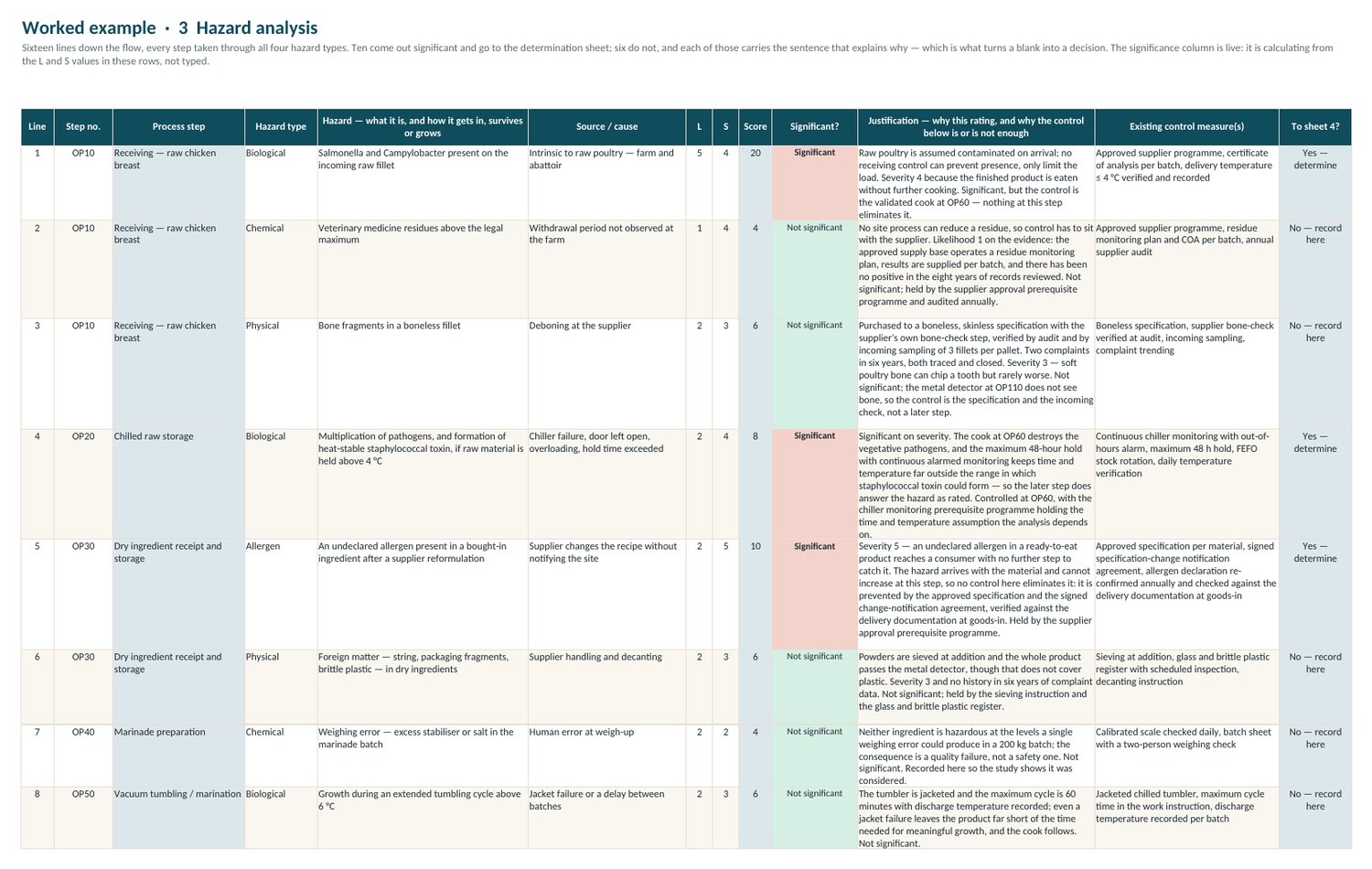
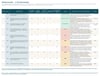
- Hazard analysis (Principle 1) — one row per hazard per step across all four hazard types, with the step name pulled in automatically, a live significance verdict from likelihood × severity, and the justification column an auditor reads first.
- CCP determination (Principle 2) — the hazard text arrives from the analysis sheet by line number; five yes/no answers produce the outcome, colour-coded, with a decision-record column for the reasoning.
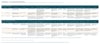
- HACCP plan (Principles 3–7) — critical limits each paired with a validation basis column, monitoring split into what / how / how often / by whom, and correction kept separate from corrective action. Prints on A3 landscape.
- OPRP plan — the same columns with action criteria in place of critical limits, so the difference is visible rather than described.
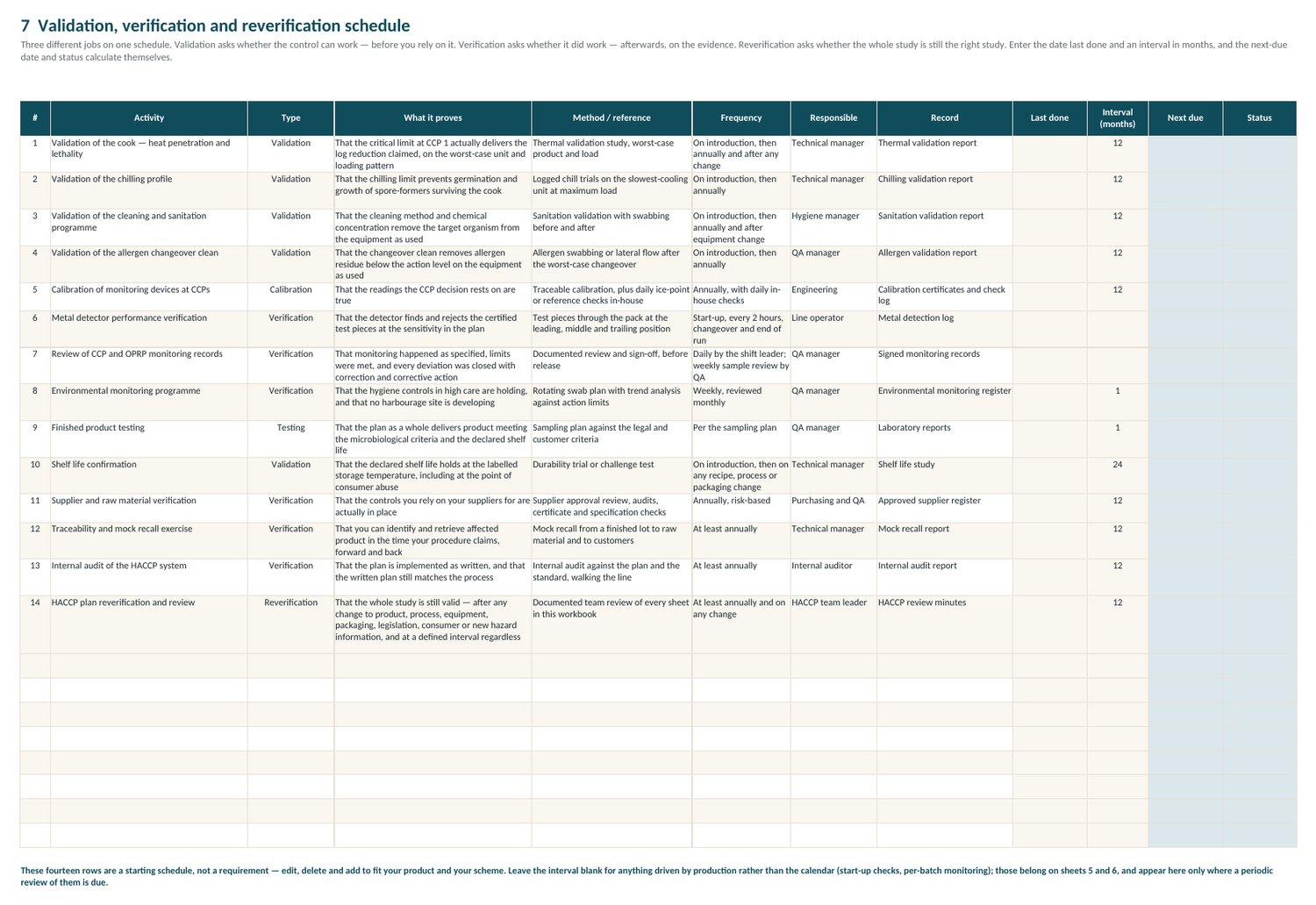
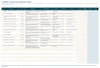
- Validation, verification and reverification schedule — fourteen activities already written (thermal validation, calibration, metal detector performance, record review, environmental monitoring, shelf life, traceability exercise, internal audit, plan reverification and more), with intervals, owners, records, a self-calculating next-due date and a live Overdue / Due soon / OK flag.
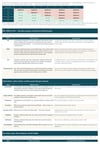
- Guidance — the four hazard types, plain-language likelihood and severity bands, the significance matrix shown in full, the CCP / OPRP / PRP distinction with the honest test for telling them apart, the vocabulary that gets confused (validation, verification, monitoring, correction, corrective action), and the twelve steps mapped to ISO 22000 clause numbers.
- A complete worked example across five sheets — a cooked, sliced, soy-marinated ready-to-eat chicken breast: full product description, a fifteen-step flow, sixteen hazard lines (ten significant, six deliberately not, each with the sentence that explains why), all ten determinations, and the finished plans — three CCPs and three OPRPs, written out in full.
Who it's for
Food safety and quality managers, technical managers and HACCP team leaders building or rebuilding a study — in food manufacturing, catering, packaging or storage and distribution, and whether you are working to Codex, ISO 22000, FSSC 22000, BRCGS or your national food legislation.
Why buy it
- See exactly what's inside before you buy — the sheets are previewed above.
- Instant download, secure checkout (Visa, Mastercard, PayPal).
- Single-organisation licence — use it across your whole site, no per-user fees.
- Plain Excel — works anywhere, nothing to install, no macros.
Start free: the HACCP Flow Diagram & Product Description Template covers Codex steps 1 to 5 with the same worked example and a 12-point health check — this toolkit is steps 6 to 12.
This workbook implements the Codex HACCP principles and the ISO 22000 hazard-control approach in Qlause's own format; it reproduces no Codex, ISO or scheme text. The worked example is illustrative only. Determine and validate hazards, limits and controls for your own product, process and legislation — and where your scheme, customer or national legislation prescribes a particular decision tree or format, use theirs. Qlause is an independent templates and training provider; this is not accredited training and not a food-handler or Person-in-Charge certificate.
HACCP, HACCP plan, HACCP template, HACCP plan template Excel, hazard analysis, hazard analysis template, CCP, critical control point, CCP decision tree, OPRP, operational prerequisite programme, ISO 22000, FSSC 22000, Codex Alimentarius, food safety management, food safety plan, prerequisite programmes, PRP, critical limits, validation verification, food safety audit, BRCGS, ready to eat, Listeria, allergen control, food manufacturing