

5-day-notebook
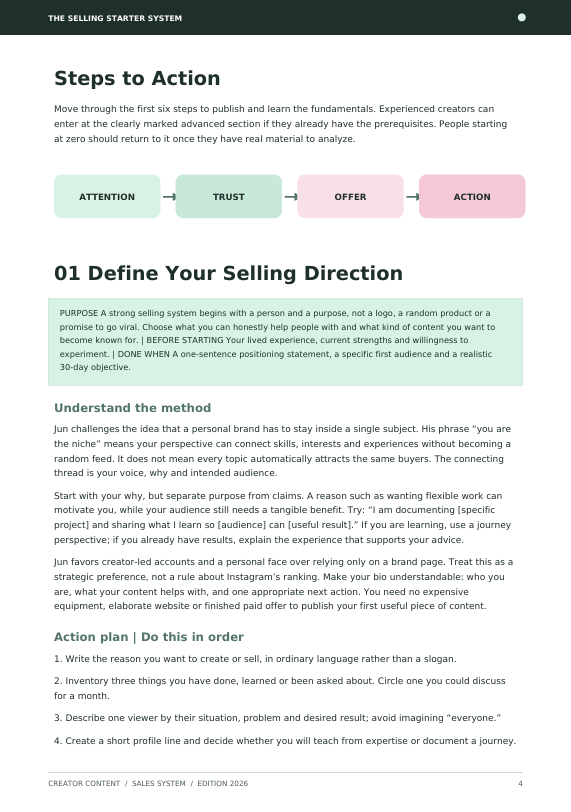
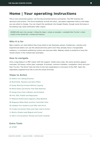
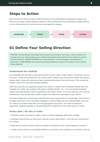
Steps to Action
01 Define Your Selling Direction
02 Build Skills, Passions and Story Pillars
03 Study Winning Formats Without Copying
04 Write Hooks and Stories That Hold Attention
05 Assign Every Post a Mission and Schedule
06 Film, Edit, Publish and Repurpose
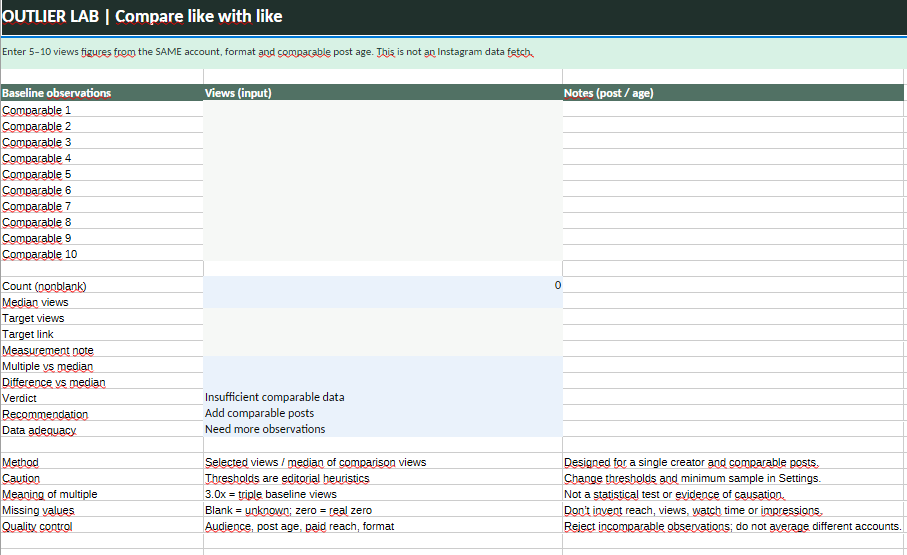
07 Measure Performance Against a Real Baseline
08 Diagnose Weak Reels and Run Controlled Tests
09 Validate Your Audience and Offer with M.A.P.
10 Create Conversion Posts and Clear Calls to Action
11 Build a Simple Lead Magnet and Funnel
12 Sell in Conversations, Review and Scale Carefully
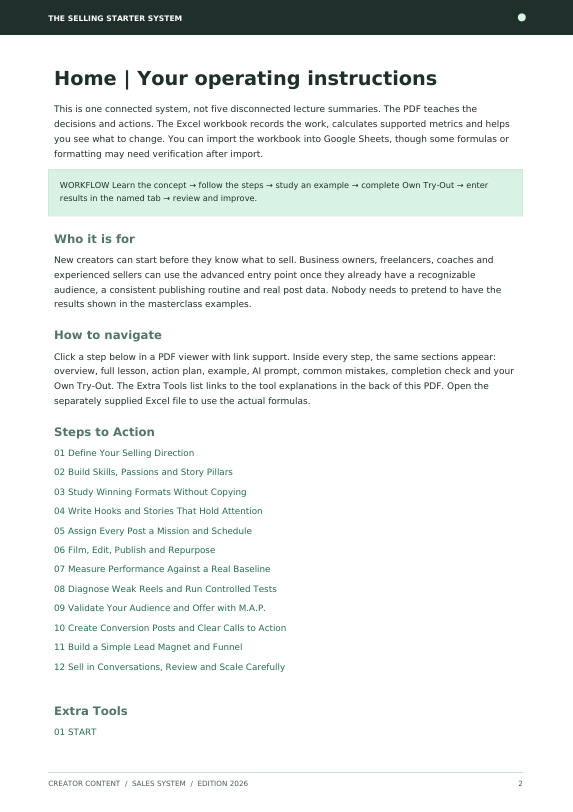
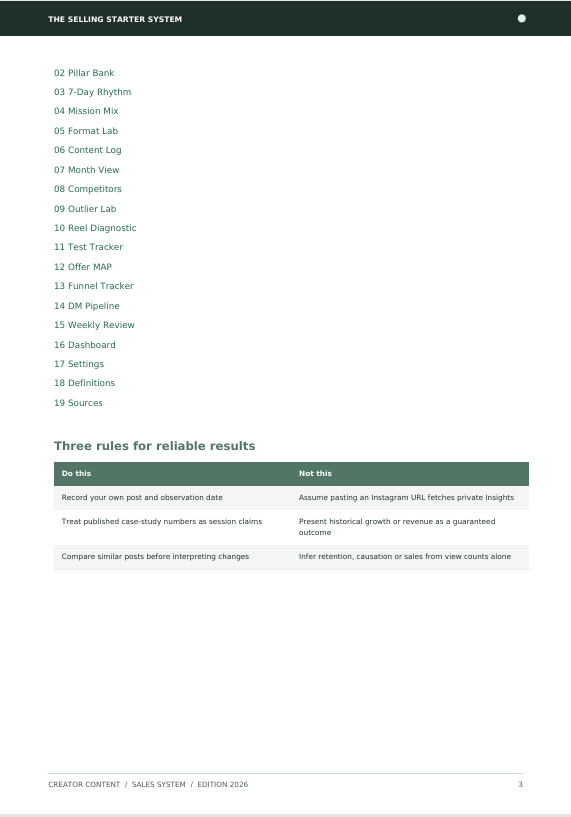
Extra Tools 01 START 02 Pillar Bank 03 7-Day Rhythm 04 Mission Mix 05 Format Lab 06 Content Log 07 Month View 08 Competitors 09 Outlier Lab 10 Reel Diagnostic 11 Test Tracker 12 Offer MAP 13 Funnel Tracker 14 DM Pipeline 15 Weekly Review 16 Dashboard 17 Settings 18 Definitions 19 Sources
Source inventory
Three pillars; original seven-day rhythm; format/3Ps techniques; four missions;
funnels, W.O.W., S.T.O.R.Y., M.A.P.; editing; DM flow.
Action plan 1: What You Should Actually
Be Posting About
Beginner/advanced paths; pillars, hooks, 7-day calendar and review.
Action plan 2: How To Grow & Monetize
Your Audience
Format breakdown, trend analysis, script planner, hooks and examples.
Action plan 3: Content Missions and the
Digital Product Funnel
Mission audit/mix, product choice, audience journey and funnel numbers.
Action plan 4: The Systems That Turn
Content into Cash
MAP, headline lab, landing page, offer, DM mindset and pipeline.
Action plan 5: Scripting, Filming, Editing
and Posting
Hooks, content scorecard, script studio, carousel, editing, posting and DM
tools.
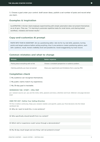
Who it is for
New creators can start before they know what to sell. Business owners, freelancers, coaches and
experienced sellers can use the advanced entry point once they already have a recognizable
audience, a consistent publishing routine and real post data. Nobody needs to pretend to have the
results shown in the masterclass examples.
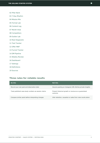
How the user should validate an actual account
Replace any example or empty input with authentic records, compare post metrics at equivalent
elapsed time, verify source/profile links before making real-world claims, and revisit default
thresholds once enough account-specific results exist. For a Google Sheets import, verify formula
semantics, date locale, charts and list validation after conversion.