



Dust Bowl Interactive Simulation Game | Surviving the Dirty Thirties
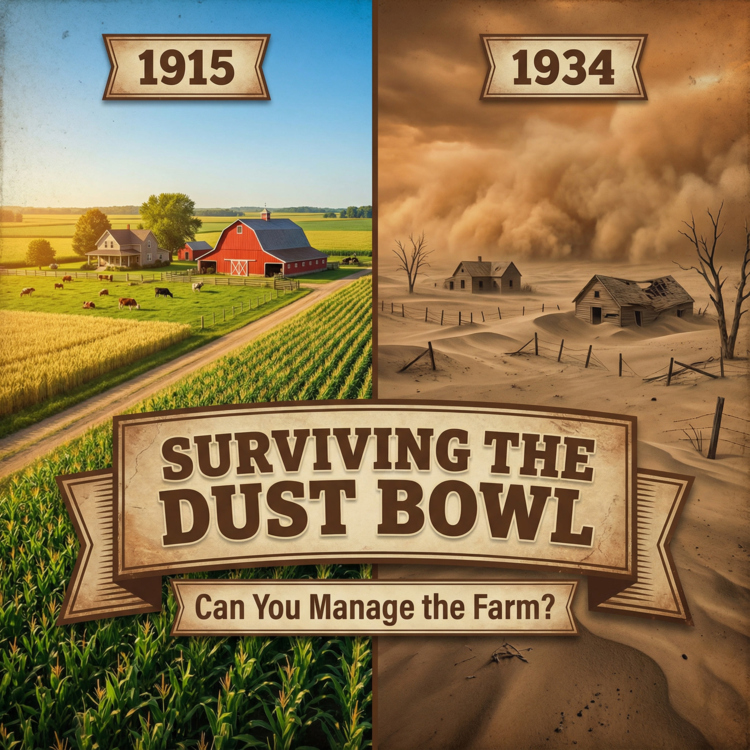
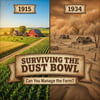
Students manage a Great Plains farm from 1915-1934 and discover why the Dust Bowl happened through their own decisions. Will you plow everything for profit or protect the soil? Can you survive the "Dirty Thirties"?
This interactive simulation teaches cause-and-effect through simple gameplay. Students see how WWI wheat boom + Depression collapse + drought + poor farming practices combined to create America's worst environmental disaster.
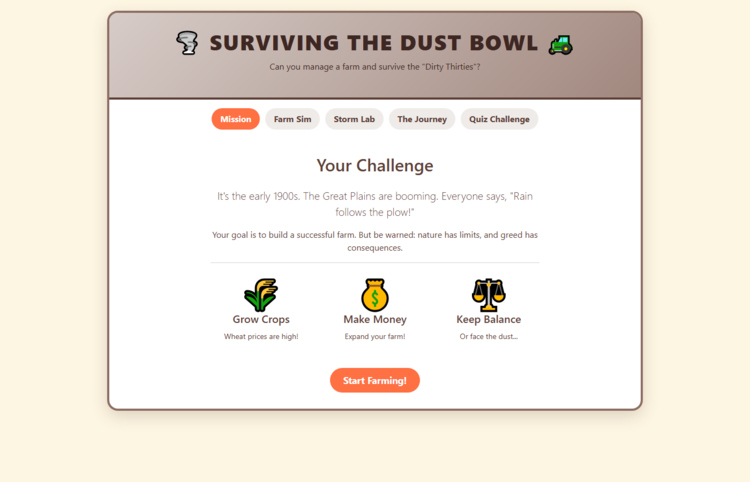
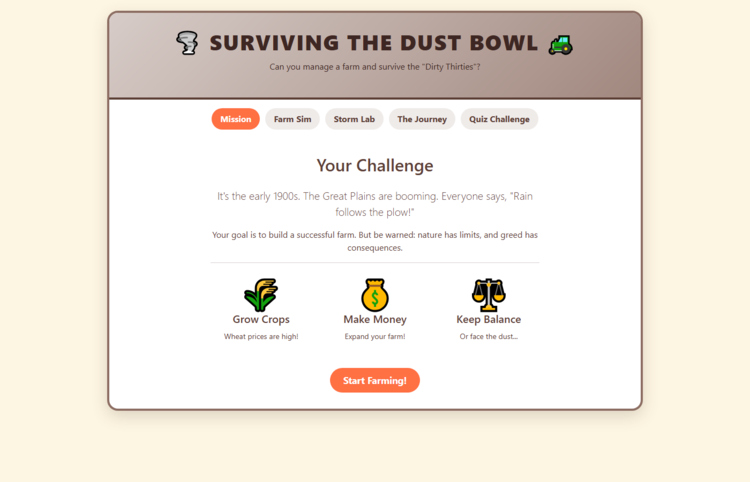
Four learning experiences are included in this resource:
- Farm Simulation Game - Make real decisions farmers faced. Buy tractors and plow more land? Rest fields to preserve soil? Each choice affects cash and soil health through four historical periods (1915 WWI boom, 1920 price crash, 1929 Depression, 1934 Black Sunday). Multiple endings based on decisions.
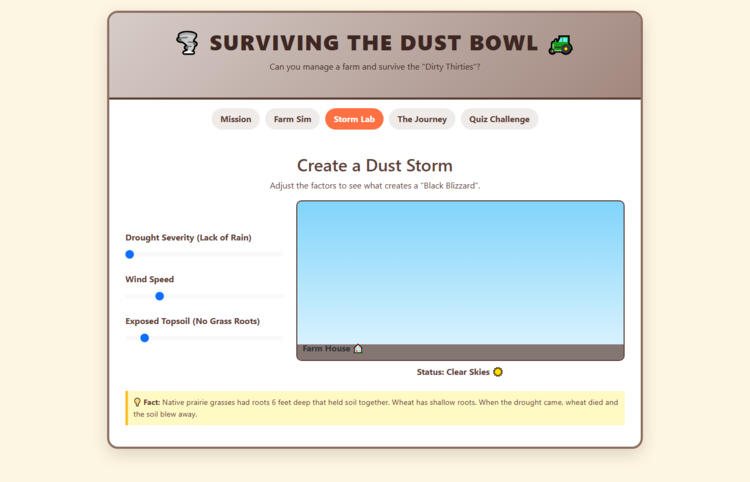
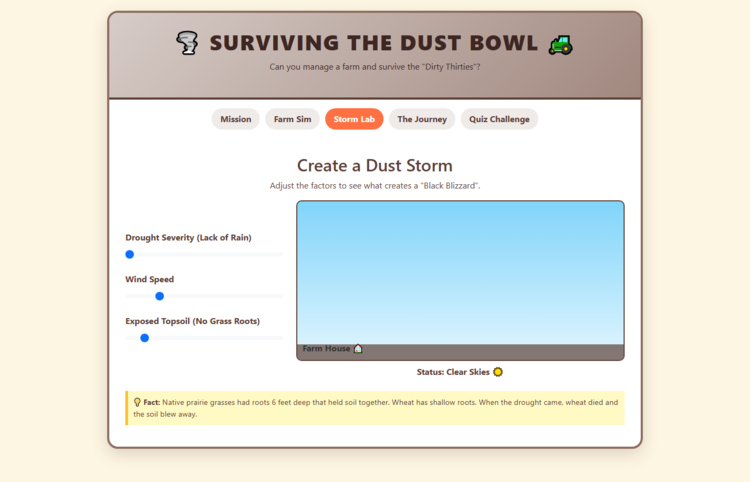
- Storm Lab - Create dust storms by adjusting drought severity, wind speed, and exposed topsoil. Watch the visualization shift from "clear skies" to "BLACK BLIZZARD" as conditions worsen. Learn why native prairie grass (6-foot roots) prevented erosion but wheat (shallow roots) didn't.
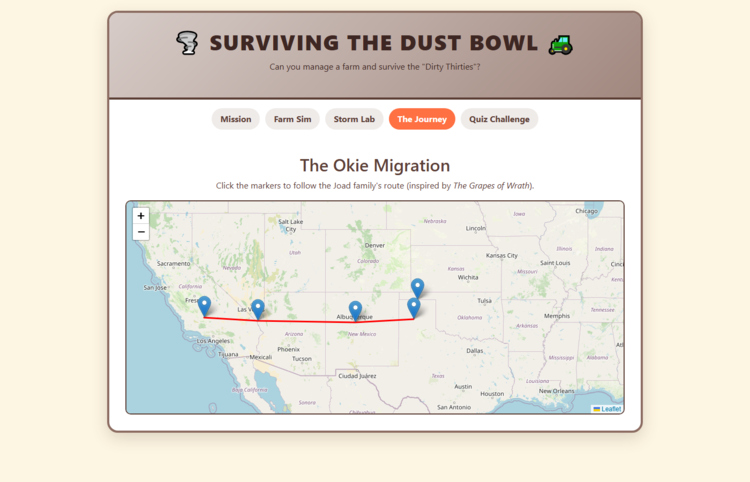
- The Journey - Follow the Okie migration on an interactive map from Oklahoma to California. Click five stops along Route 66 to read diary entries inspired by The Grapes of Wrath. Understand the human cost: 2.5 million displaced.
- Quiz Challenge - Test knowledge with true/false questions. Was the Dust Bowl natural or man-made? What made the storms so destructive? Where did migrants go?
What students learn
Historical causation: How multiple factors combined (economic pressure + drought + farming practices) to create environmental disaster. Not just "drought happened" - students understand WHY farmers made destructive choices that seemed rational at the time.
Environmental science: Drought + wind + exposed topsoil = erosion. Why native grasslands were stable for centuries but wheat farming destroyed soil in 15 years. Conservation vs. exploitation trade-offs.
Economic decision-making: WWI wheat boom created incentive to plow marginal land. Depression collapse forced farmers to plant even more to survive. Short-term profit vs. long-term sustainability.
Migration and social impact: 2.5 million displaced. "Okies" moving to California. Route 66 journey. Human cost of environmental collapse.
Historical empathy: Students experience farmer decisions from inside, not judging from outside. "I would have done the same thing" understanding.
Connects to: Great Depression unit, 1930s timeline, Grapes of Wrath literature, New Deal programs, environmental history, agricultural economics.
Why teachers love this
- Zero prep - Download and open. Perfect for substitute teachers.
- Engagement guaranteed - Students experience cause-and-effect through gameplay, not passive reading.
- Science + history integrated - Environmental science meets social history in one resource.
- Replayable - Multiple outcomes based on decisions. "Can you survive if you always pick safe?"
- Flexible time - 20 min (one section) to 60 min (full experience). You choose depth.
- One file, infinite use - Works on any device with browser. Chromebooks, iPads, laptops, desktops. No installation, no accounts, no student logins.
$4.99 | one file that opens in any browser