

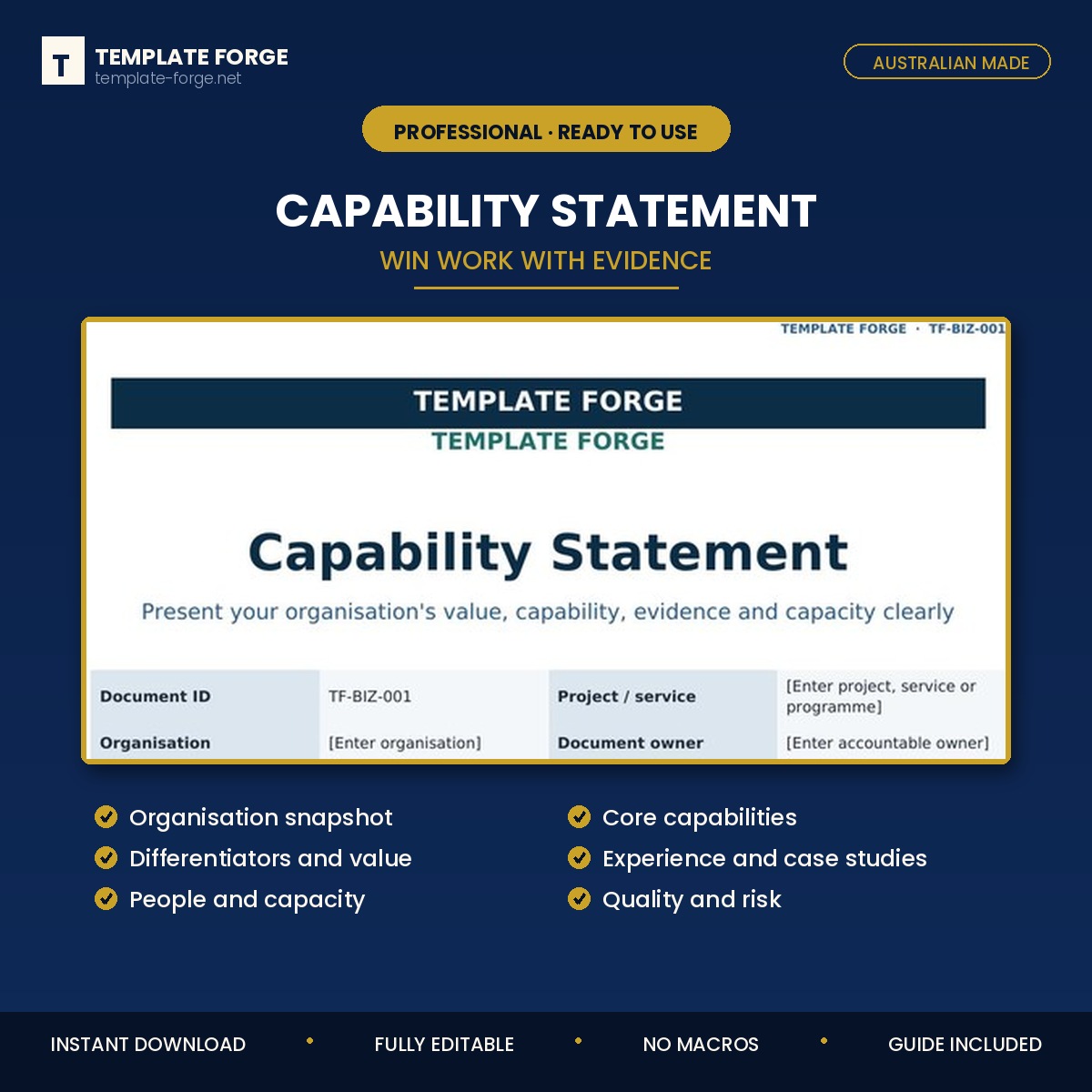
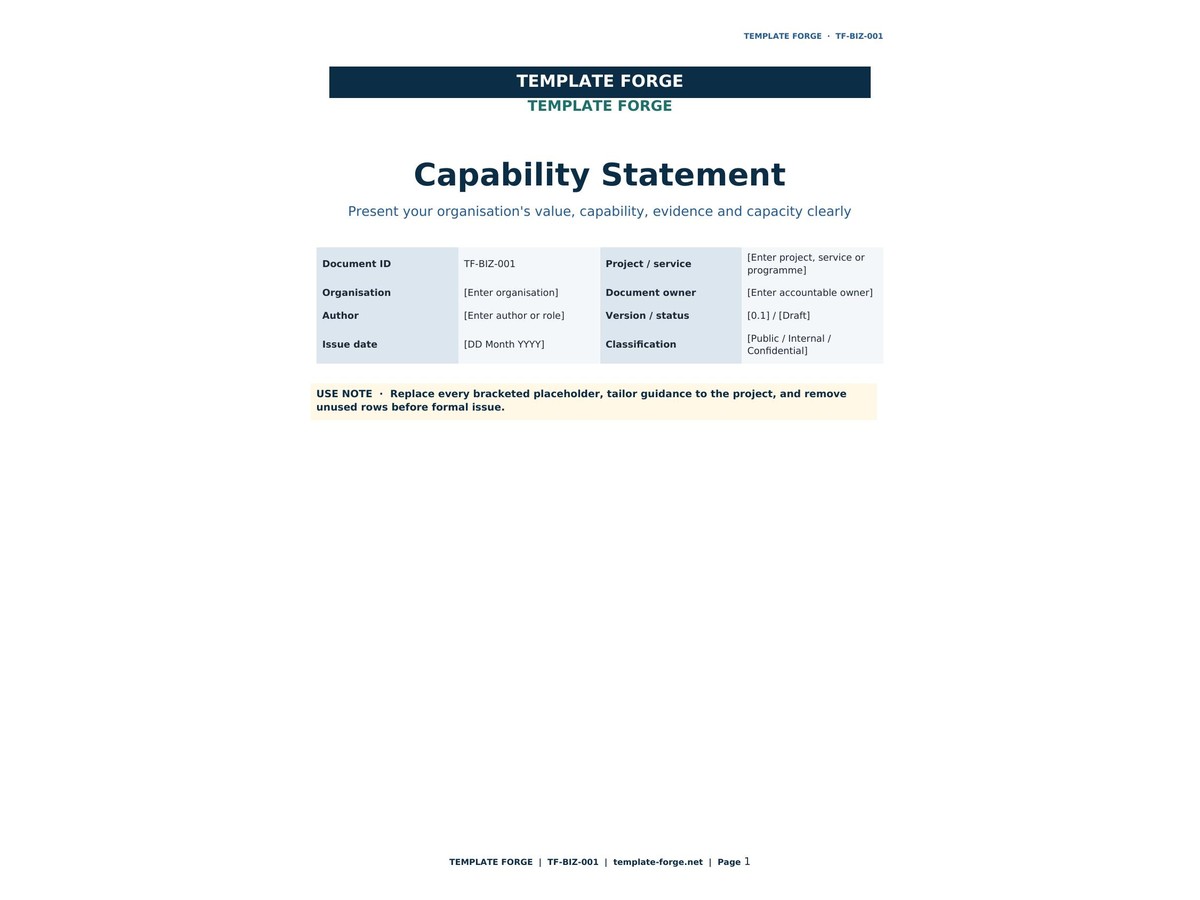
Capability Statement Template
The document you send when a prospective client asks what you do — evidence-led, not adjective-led.
Most capability statements are two pages of adjectives. This one is structured around what a buyer actually needs to decide: can you do this work, have you done it before, do you have the people, and will you be a safe organisation to deal with.
What's inside
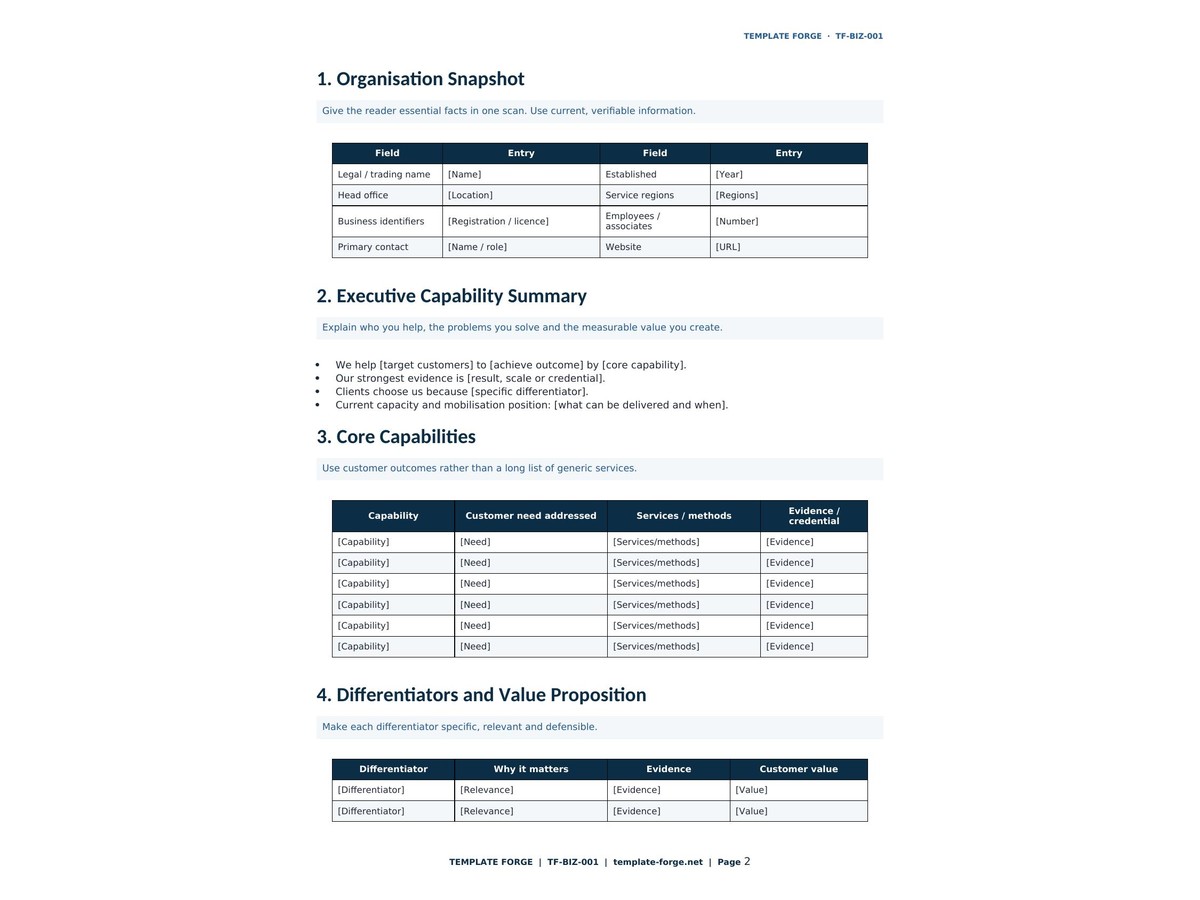
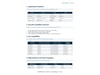
- Organisation snapshot — who you are, ABN, size, where you operate, insurances and accreditations
- Executive capability summary — the short version, for someone who reads nothing else
- Core capabilities — what you deliver, described as services a buyer can purchase
- Differentiators and value proposition — why you rather than the other three quotes
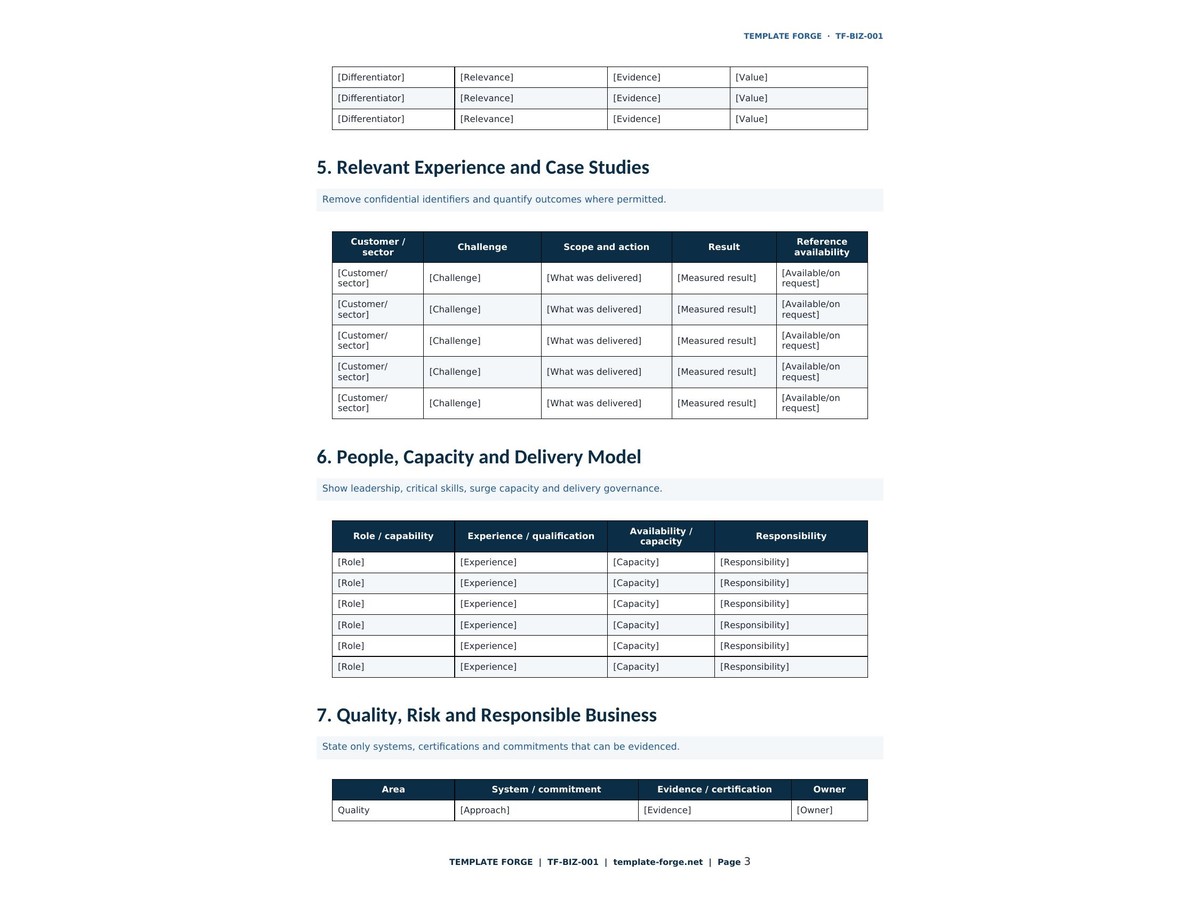
- Relevant experience and case studies — projects with context, action and result
- People, capacity and delivery model — who does the work and whether you can take more on
- Quality, risk and responsible business — systems, safety, insurances, and how you handle problems
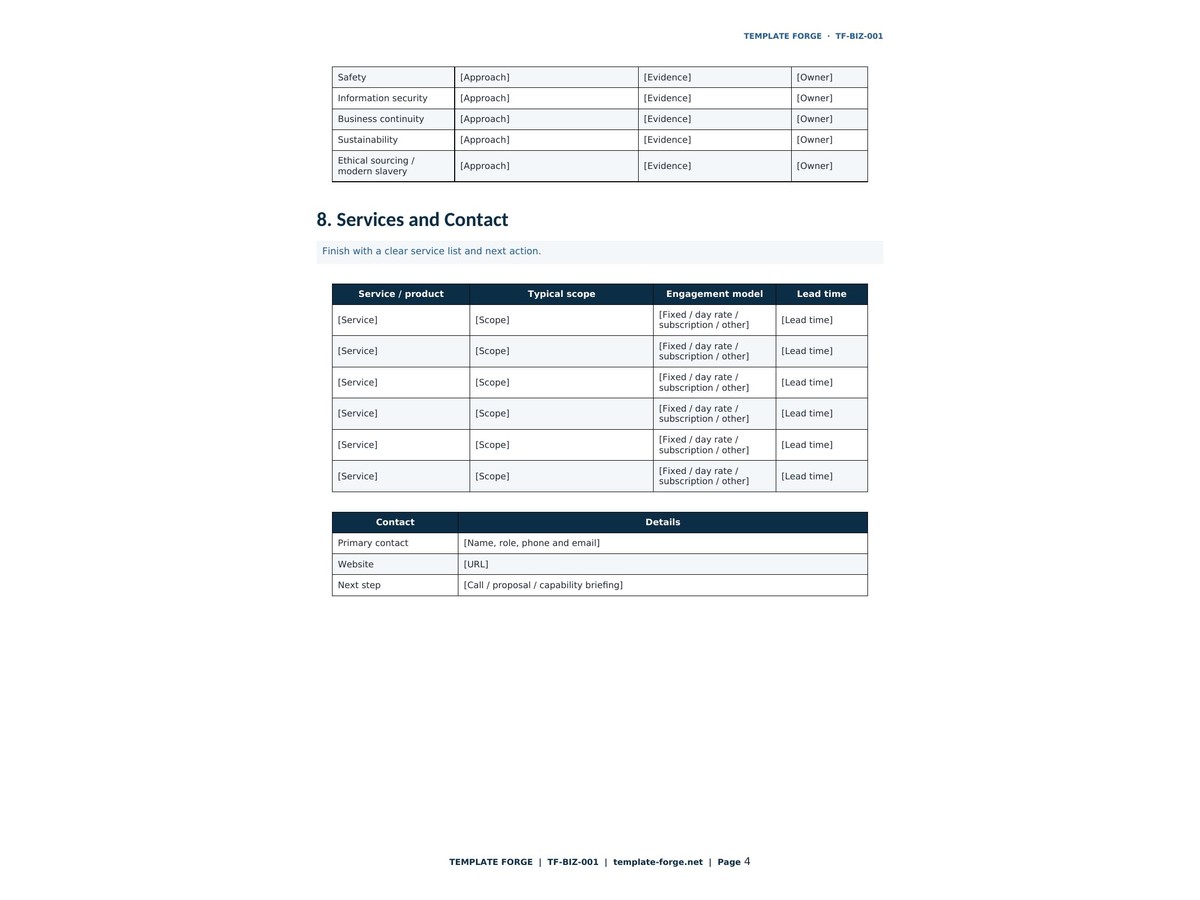
- Services and contact — what to buy and how to start
Nineteen pre-built tables.
Why the experience section is the whole document
Buyers discount claims and believe examples. A case study with a named context, the action you took and a measurable result does more than a page of capability statements ever will.
Who it's for
Consultants, contractors, trades, professional services firms and small businesses tendering for work or responding to a request for quote — particularly anyone dealing with government or large corporate buyers who ask for a capability statement by name.
How you use it
Complete it once properly, then tailor the summary and case studies for each opportunity. Keep it current — an out-of-date capability statement is worse than none.
Editable Word document. No macros, no subscription.
Built in Australia from more than twenty years of program delivery experience, on both sides of the procurement table. Instant download, yours to keep.
Benefits Management Approach · A$16
Who owns each benefit, how it will be measured, and what happens when the project team leaves.
Benefits are promised by projects and delivered by operations, which is why so many go missing in the gap. This document closes it: every benefit gets an owner outside the project, a measure, a baseline, and a handover point.
What's inside
- Purpose and benefits principles — what counts as a benefit and what does not
- Benefits governance and roles — who owns each benefit after the project closes
- Benefit profiles — one per benefit: description, measure, baseline, target, timing, owner, dependencies
- Measurement and data quality — where the data comes from and whether it can be trusted
- Realisation, transition and review — how benefits pass to business as usual, and when they are reviewed
Thirteen pre-built tables.
The distinction that matters
A benefit is not an output. Delivering a new system is an output. Reducing processing time by forty per cent is a benefit — and only someone in operations can deliver it. Naming that person, in writing, at the start, is the single thing that most improves realisation.
Who it's for
Programme managers, benefits owners, PMOs, and executives who have approved business cases and want the benefits actually pursued.
Pairs with the Benefits Review Plan (A$16), which schedules the checks, and the Detailed Business Case (A$24), where the benefits were first claimed.
Built in Australia from more than twenty years of program delivery experience. Instant download, yours to keep.