
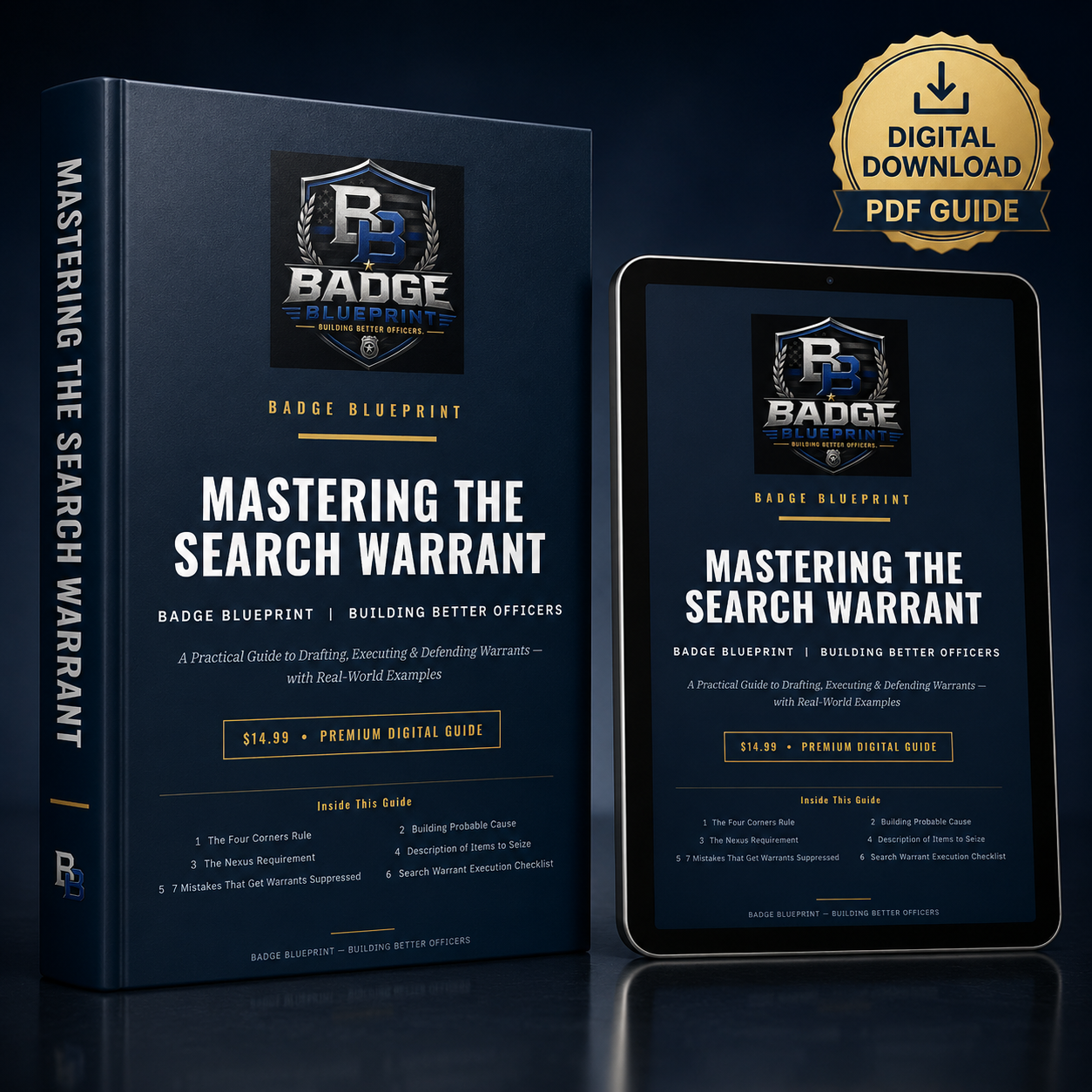
Mastering the Search Warrant
Mastering the Search Warrant
A search warrant is one of the most powerful tools in an investigator’s case. A poorly written affidavit, weak nexus, or vague description can also lead to suppressed evidence and a damaged investigation.
Mastering the Search Warrant is a practical digital guide built for patrol officers, new detectives, experienced investigators, supervisors, and law enforcement professionals who want to draft stronger affidavits, execute warrants correctly, and prepare their cases for courtroom review.
This guide breaks the search‑warrant process into clear, manageable steps and uses real‑world examples to show the difference between language that establishes probable cause and language that leaves a warrant vulnerable to attack.
Inside the Guide
- The Four Corners Rule
- The five essential parts of a search warrant
- How to establish the affiant’s credibility
- Building probable cause fact by fact
- Evaluating information sources and reliability
- Establishing a clear nexus between the crime, evidence, and location
- Writing accurate premises descriptions
- Describing items to be seized with particularity
- Seven common mistakes that lead to suppression
- Good and bad affidavit examples
- Pre‑mission, on‑scene, and post‑mission execution checklists
Ideal For
- Patrol officers moving into investigative assignments
- Detectives preparing their first search warrant
- Experienced investigators needing a quick refresher
- Field Training Officers and supervisors
- Academy and in‑service instructors
Draft it right. Execute it cleanly. Protect your case.
Learn how to write with purpose, connect every fact, stay within the warrant’s scope, document the execution, and build a warrant that stands firm when challenged in court.
Digital product notice: This is an instant‑download PDF guide. No physical product will be shipped. This resource is educational and should be used alongside your agency’s policies, applicable laws, and guidance from your prosecutor or legal advisor.