Moral Injury Is Not Burnout: A Field Guide & Workbook for Nurses (PDF)
Moral Injury Is Not Burnout: A Field Guide & Workbook for Nurses (PDF)
You've been told it's burnout. You've been handed a resilience module, a pizza party, and a reminder about the employee assistance program.
None of it touched the thing that's actually wrong.
I'm a working nurse. I wrote this guide for the nurse who drives home after a shift and can't explain why it hurt so much. That hurt has a name. It's called moral injury. It's what happens when you know exactly what your patient needs, and the system won't let you give it.
This isn't a pep talk. It's the field guide I wish someone had handed me, and it comes with a workbook you can print and write in.
Inside the guide:
- Seven short chapters that explain what moral injury is, why it isn't burnout, how it shows up on a real nursing unit, what the research says, and what real repair requires.
- A side-by-side comparison of burnout and moral injury: the wound, the feelings, and what each one actually needs.
- The eight signs of moral injury, written the way nurses really feel them.
- Research you can trust, with every source cited and linked, including the 2026 NSI turnover data and a 2026 JAMA study on hospital spending.
Inside the workbook:
- Worksheet 1: My Morally Injurious Moments. A checklist that maps where your wound comes from.
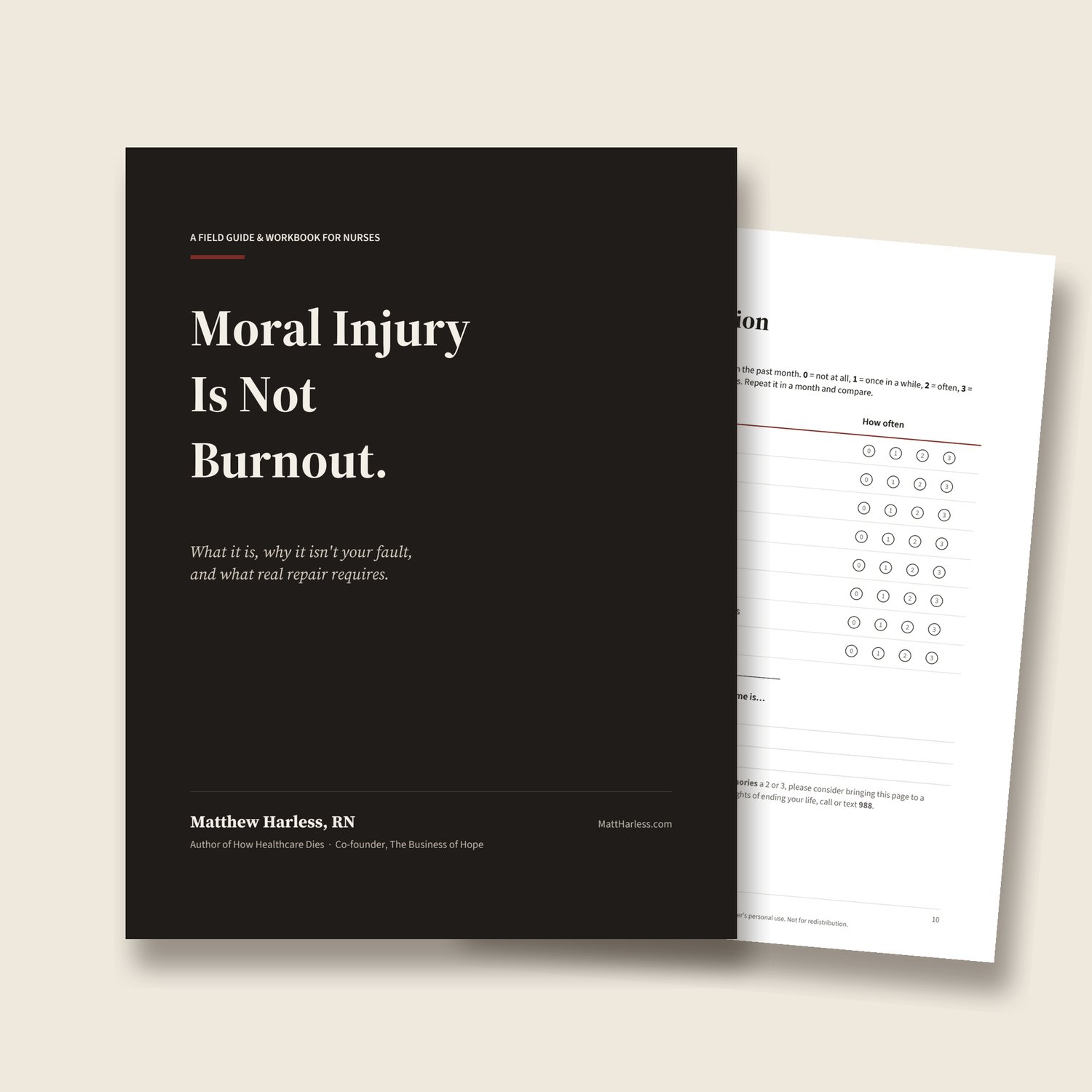
- Worksheet 2: Signs Self-Reflection. A simple 0 to 3 rating you can repeat each month to track change.
- Worksheet 3: My Personal Repair Plan. Five small, specific steps you can start this week.
- Worksheet 4: Naming It Out Loud. Ready-to-use words for talking to a manager, a struggling coworker, or hospital leadership without being labeled "difficult."
- Five reflection prompts with room to write.
This guide is for you if:
- You love nursing but feel like the job keeps asking you to betray it.
- You've thought about leaving the bedside and feel guilty for it.
- You're a nurse leader, educator, or student who wants language that's honest.
- You're tired of being treated like the broken part.
You are not the broken part. The setup is. And choices that broke it can fix it.
What you get: One 20-page PDF (US Letter), designed to read on screen and print at home. You'll get the download right after checkout.
A note on care: This guide is for education and reflection. It does not diagnose and it doesn't replace care from a licensed professional. If you're in crisis, call or text 988 any time.
Matthew Harless, RN
Author of How Healthcare Dies and Transition to Care · Co-founder, The Business of Hope