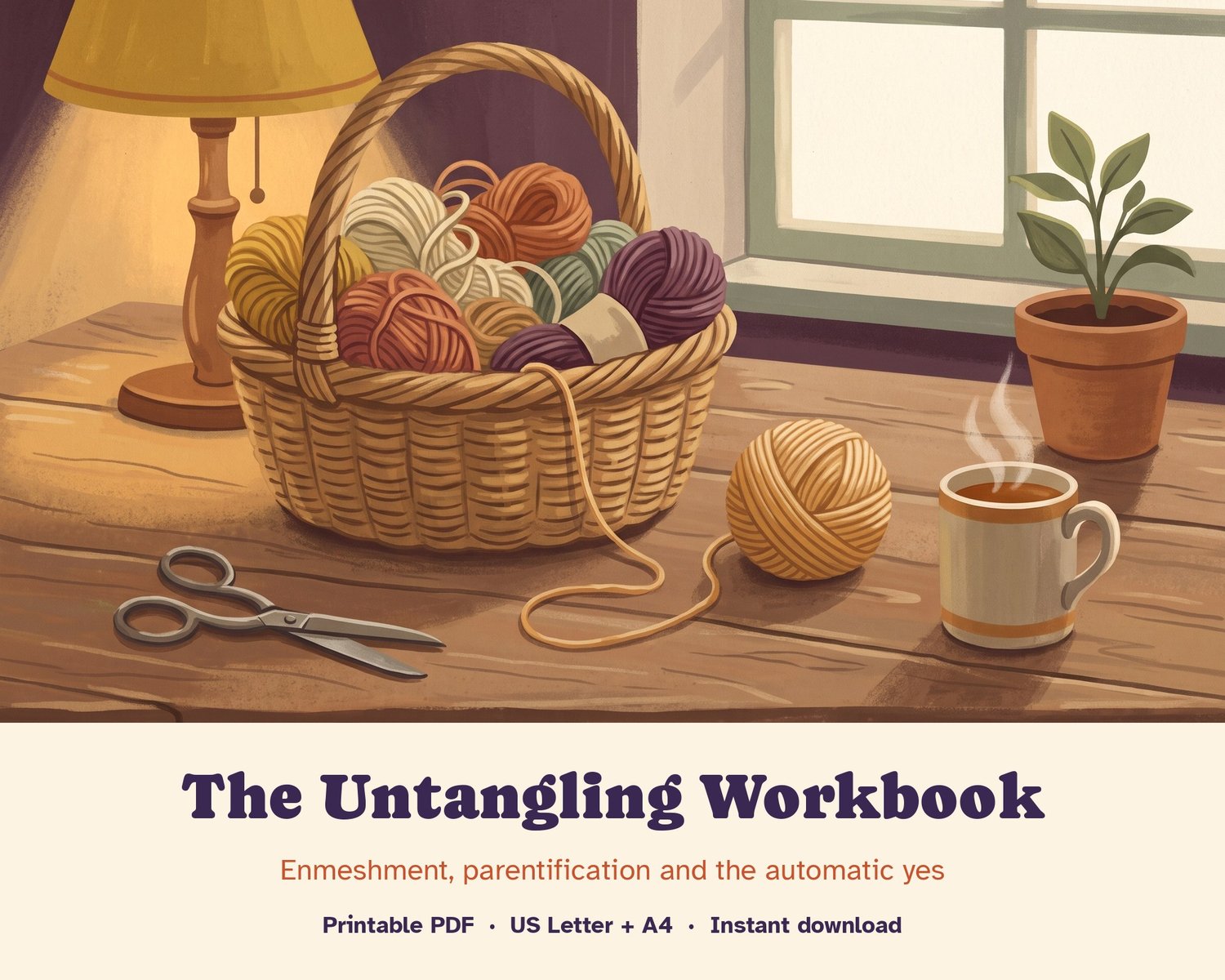

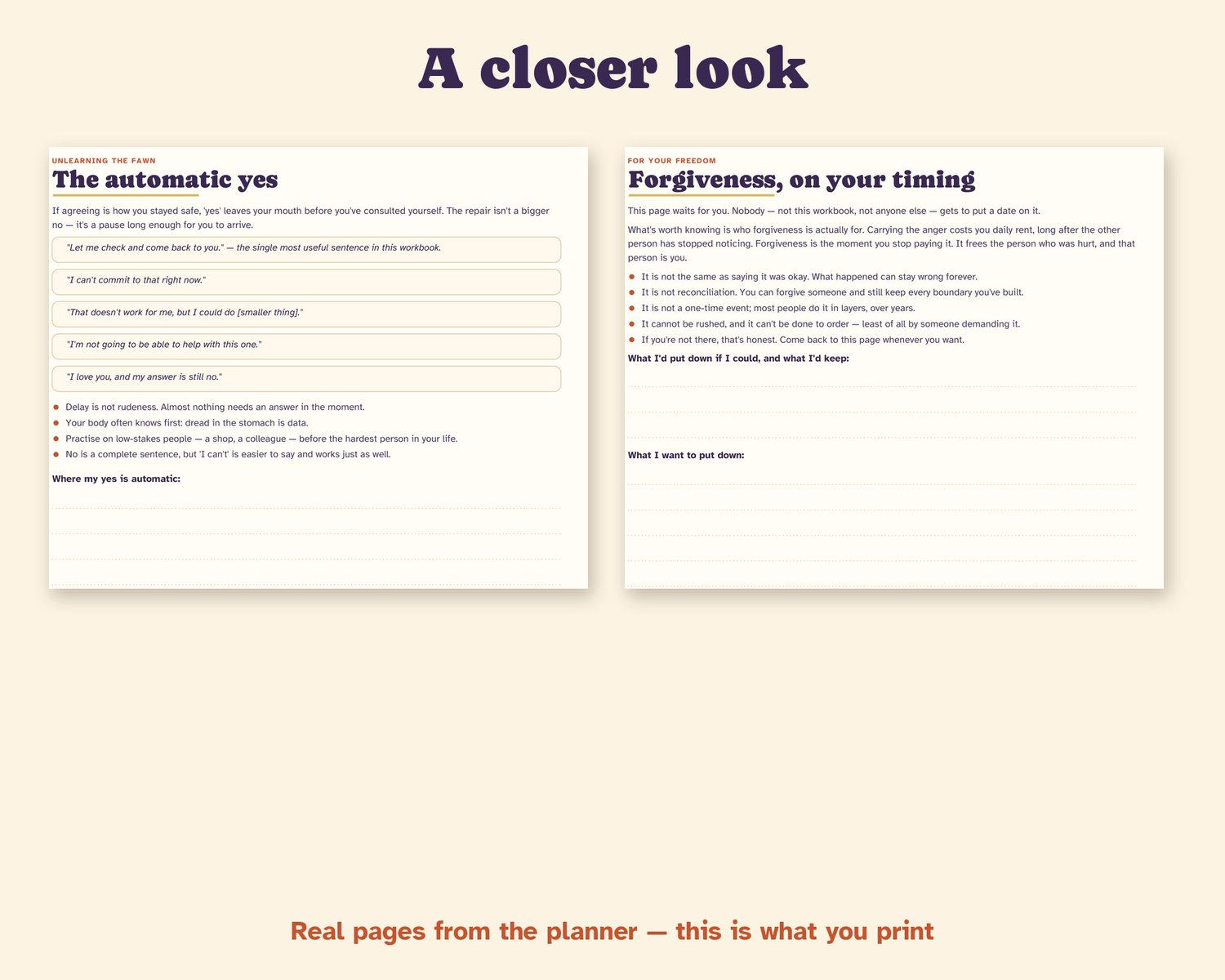



The Untangling Workbook: Printable Enmeshment, Parentification and People-Pleasing Workbook for Autistic and ADHD Adults
Where you end and they begin.
Some families are close. Some are tangled — where one person's mood sets everyone's weather, where privacy reads as betrayal, where you learned to track other people's feelings so closely that you lost the thread of your own. If you're neurodivergent you may have been handed an extra share of that: the child who was told they were too much and learned to manage everyone, or the one who was so capable at nine that the adults quietly handed over the wheel. This printable workbook helps you find the line — gently, and at your own pace.
What's inside (17 pages)
- What tangled actually looks like, in plain language
- Why neurodivergent adults more often: fawning as safety, late diagnosis, alexithymia
- Were you the adult? A page on parentification that names it without turning anyone into a villain
- Where I end: sorting what's yours to carry, theirs, and genuinely shared
- The guilt spiral — why doing the healthy thing feels terrible at first
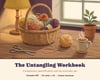
- The automatic yes: five scripts for unlearning the fawn reflex
- Information is yours, and what to say when privacy is treated as a secret
- Money, tangled — the hardest thread, handled practically
- Visits and holidays: the logistics that solve half of it before you arrive
- Two honest paths — staying with new terms, or stepping back — presented without a right answer
- When it gets worse first: the push-back, and how to hold steady and warm
- Forgiveness, on your own timing, for your own freedom
- Who am I, untangled? Plus a looking-back page and 8 cut-out pocket cards
US Letter and A4 included. Print it or write in it on a tablet.
Choose your licence
- Personal: you and your household.
- Clinician / Coach / Educator: one named professional, with your own clients, students or groups.
- Practice / Team: up to 5 named professionals at one site.
Good to know
A reflective workbook, not therapy, medical advice or a diagnosis — and not a verdict on anyone in your family. A therapist who understands both neurodivergence and family systems is the right partner for this work. If there is fear, control or violence in your family, please talk to a professional or a local service. In a crisis, call or text 988 (US) or your local emergency number.