
The Revolt of the Angels
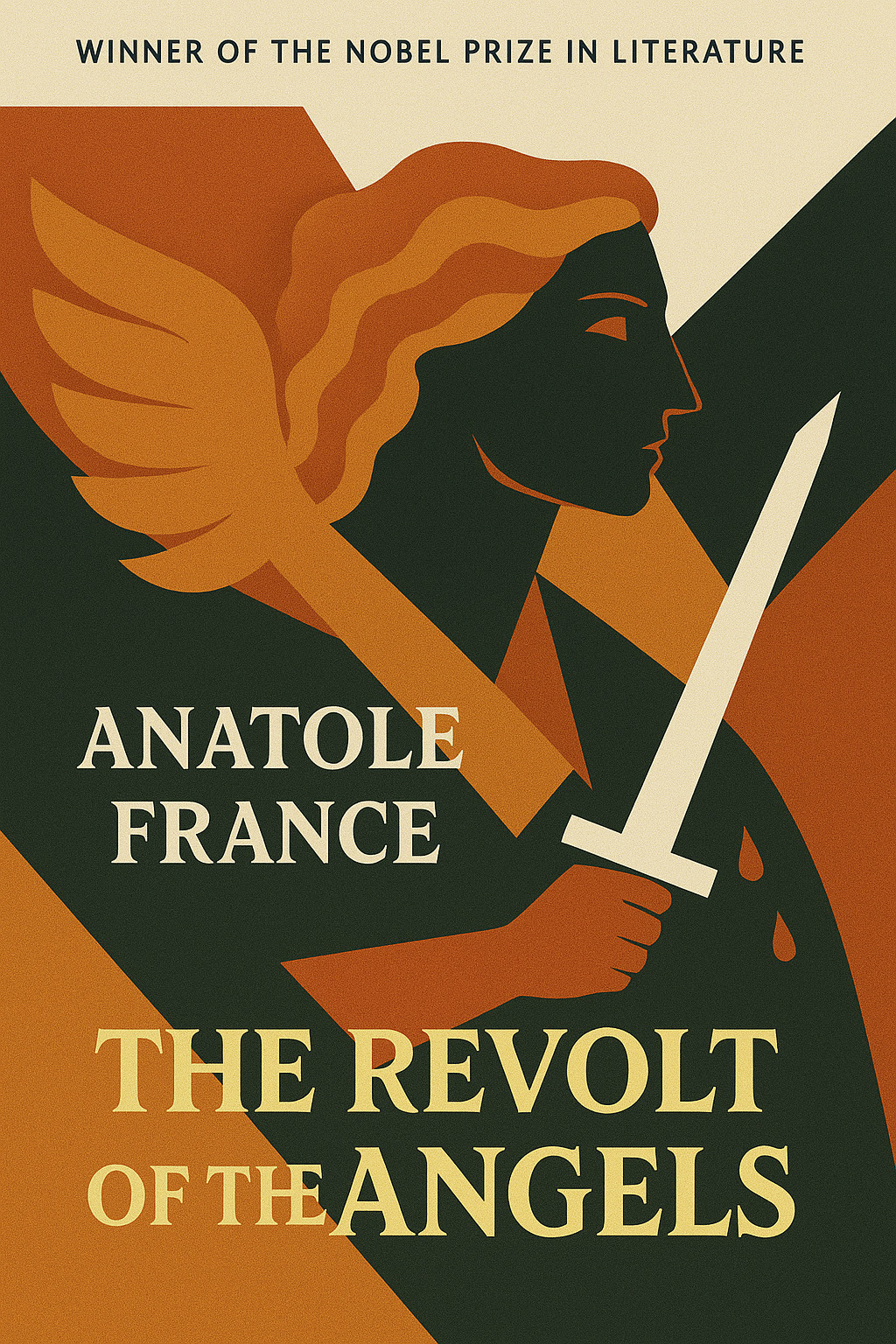
Anatole France’s The Revolt of the Angels (1914) is a dazzling blend of satire, fantasy, and philosophical inquiry that challenges the boundaries of morality, authority, and the human condition. The novel tells the story of Arcade, a guardian angel who, after centuries of faithful service, begins to question the divine order. When he stumbles upon a library of forbidden human knowledge, Arcade becomes disillusioned with God’s rule and joins a rebellion of fallen angels seeking to overthrow the celestial regime. Set against the backdrop of early 20th-century Paris, the novel weaves together themes of free will, rebellion, and the search for meaning in a universe governed by seemingly arbitrary laws.
France’s signature wit and irony shine throughout the narrative, as he uses the celestial rebellion to critique the follies of human society, including religion, politics, and the nature of power. The novel’s characters—ranging from the idealistic Arcade to the cunning Satan—are richly drawn, embodying the contradictions and complexities of both divine and mortal beings. Through their struggles, France explores timeless questions about the nature of good and evil, the limits of authority, and the possibility of creating a better world. The novel’s playful yet profound tone invites readers to reflect on their own beliefs and the systems that govern their lives.
The Revolt of the Angels is both a thought-provoking allegory and a richly entertaining tale. France’s imaginative storytelling and sharp social commentary make this work a timeless classic, offering readers a unique perspective on the eternal struggle between tradition and progress, obedience and rebellion, and faith and reason. With its blend of humor, wisdom, and daring imagination, the novel remains a testament to France’s literary genius and his ability to illuminate the human condition through the lens of the fantastical.
About the author
Anatole France (1844–1924) was a Nobel Prize-winning French author known for his wit, irony, and humanist outlook. A master of elegant prose and philosophical satire, he explored themes of religion, politics, and the human condition in works that continue to resonate. A member of the Académie Française, France was both a literary icon and a vocal advocate for justice, famously defending Dreyfus during the scandal that shook France.