

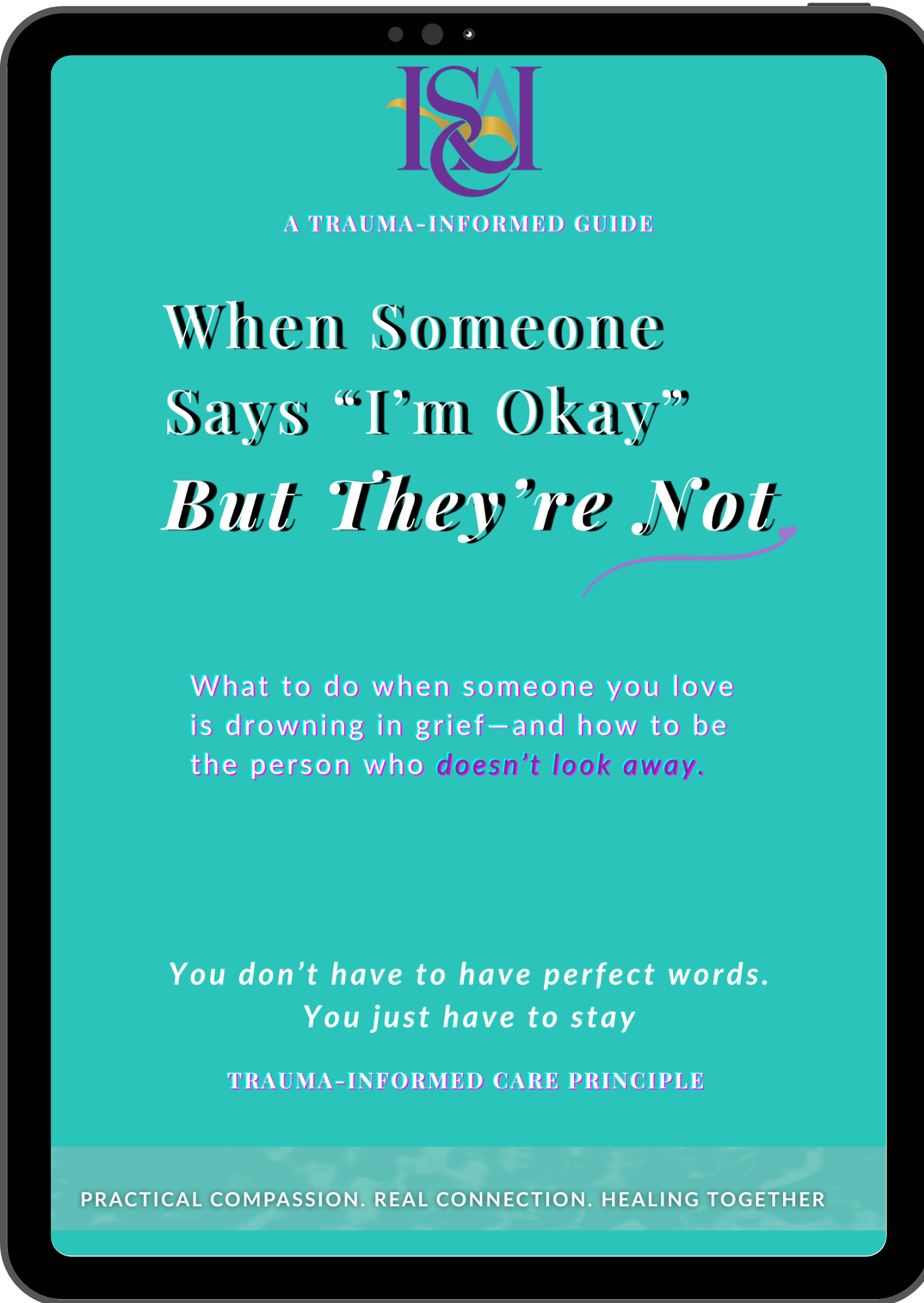
When Someone Says "I'm Okay" But They're Not — A Trauma-Informed Guide for Those Who Show Up
Someone you love is struggling. You can feel it. This guide tells you exactly what to do next.
You noticed something was off.
Maybe it was a late-night post. A message that said "I'm fine" but felt anything but. A grief so heavy it was leaking through the screen.
You felt it — and you didn't look away.
This guide is for you.
When Someone Says "I'm Okay" But They're Not is a trauma-informed, step-by-step resource for anyone who finds themselves on the other side of someone else's pain — and wants to show up without making it worse.
Inside, you'll learn:
- How to read the warning signs hiding in everyday language
- The one question that can open a door — and possibly save a life
- What to say (and what to stop saying) when someone is in crisis
- How to ask directly about suicide without fear of "planting the idea"
- What to do if they say yes — and how to stay present without panicking
- How to take care of yourself after holding space for someone else's pain
This guide is for:
- Friends and family members who sense something is wrong
- Community leaders, faith leaders, and educators
- Coaches, advocates, and peer supporters
- Anyone who has ever typed "I'm here for you" and wondered if it was enough
You don't need a clinical degree to save someone's life. You need presence, the right words, and the courage to stay.
This guide helps you with all three.
Created by Marie McKenzie, BSN, RN — ER Nurse, Sexual Assault Nurse Examiner, trauma-informed educator, and founder of ISACI. Marie has spent decades sitting with survivors in their hardest moments. This guide carries that same care.
Crisis resources included. Immediate. Actionable. Trauma-informed.