
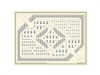

Garden Room Plan Design VI Polygon with Central Void Framed Emptiness
This is a scaled adaptable architectural garden framework for experienced gardeners and designers who prefer structured spatial planning over template-based layouts.
What’s Included
- One complete high-resolution Garden Room PDF with 3 room variations.
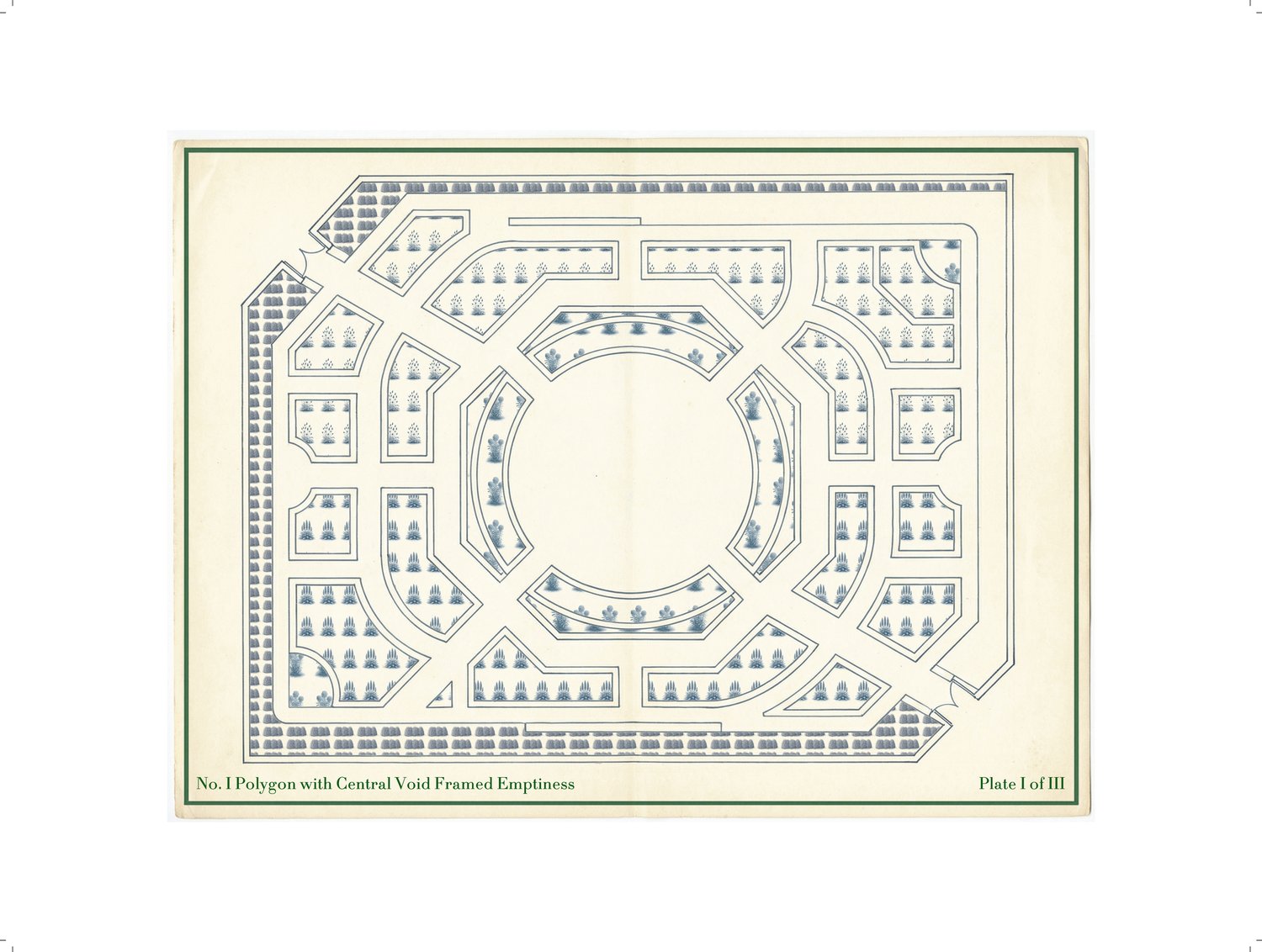
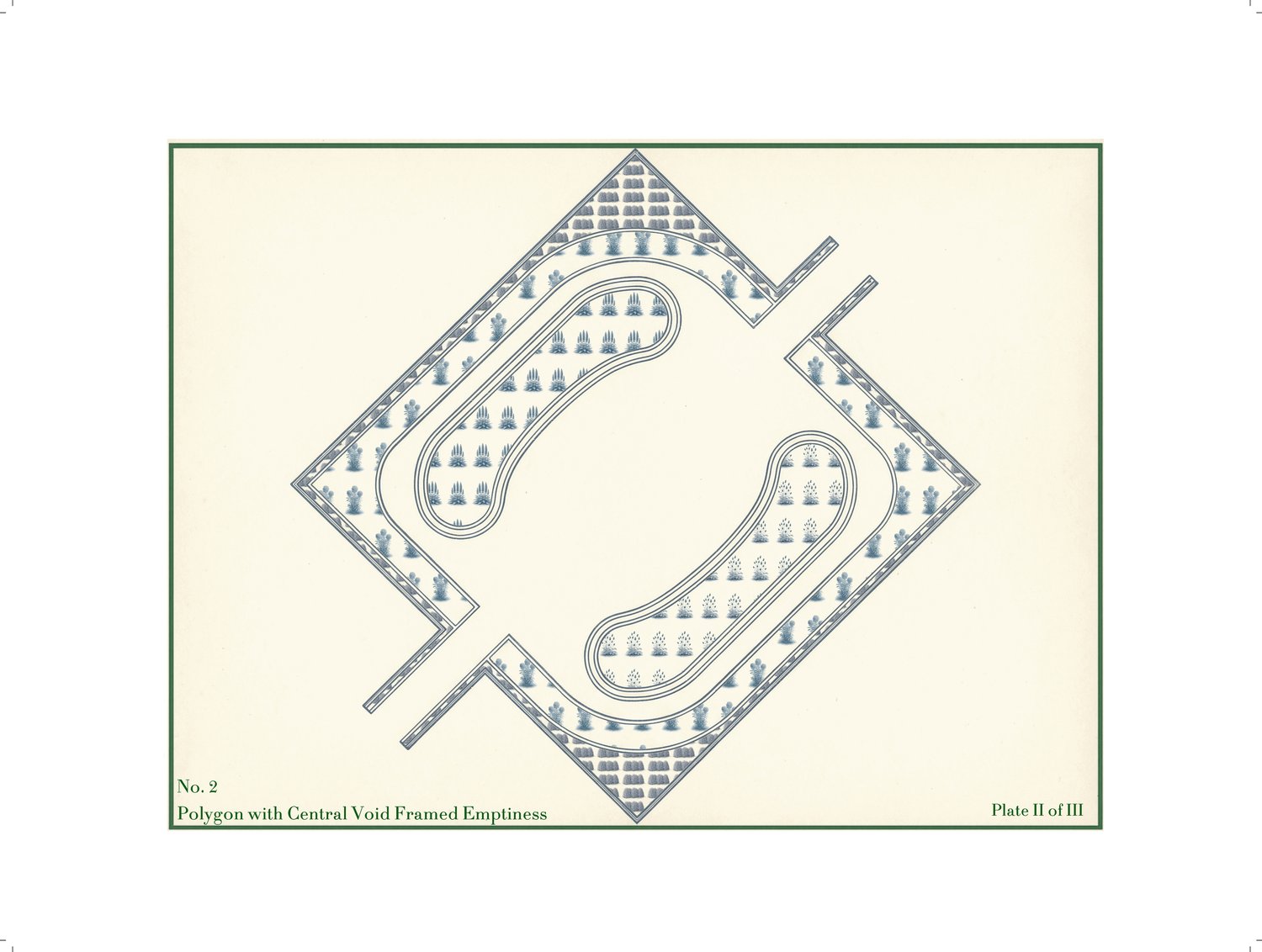
- Three finished design plates exploring variation within a single rectilinear enclosure organized through orthogonal circulation and compartmental massing.
- A title and cover plate.
- Grid system for practical planting use for 3 room variations.
- Plant mass reference glyphs and a plant legend offering general plant suggestions.
- Interpretive design notes and visual reference material.
Concept
The Garden Room series is conceived as a set of spatial studies rather than rigid specifications. Each room is treated as a composed enclosure defined by proportion, direction, repetition, and edge, where planting is understood as mass and spatial relationship rather than inventory. The work draws from historical garden and architectural traditions associated with the late Renaissance through the early Enlightenment period, when gardens were communicated through plates and variation rather than instruction manuals.
The intent is to offer a way of organizing gardens as legible rooms capable of holding complexity without rigidity. The plates are meant to be read slowly and interpreted, functioning as reference objects and planning tools for gardeners, designers, and homeowners who prefer judgment and adaptation over fixed templates.
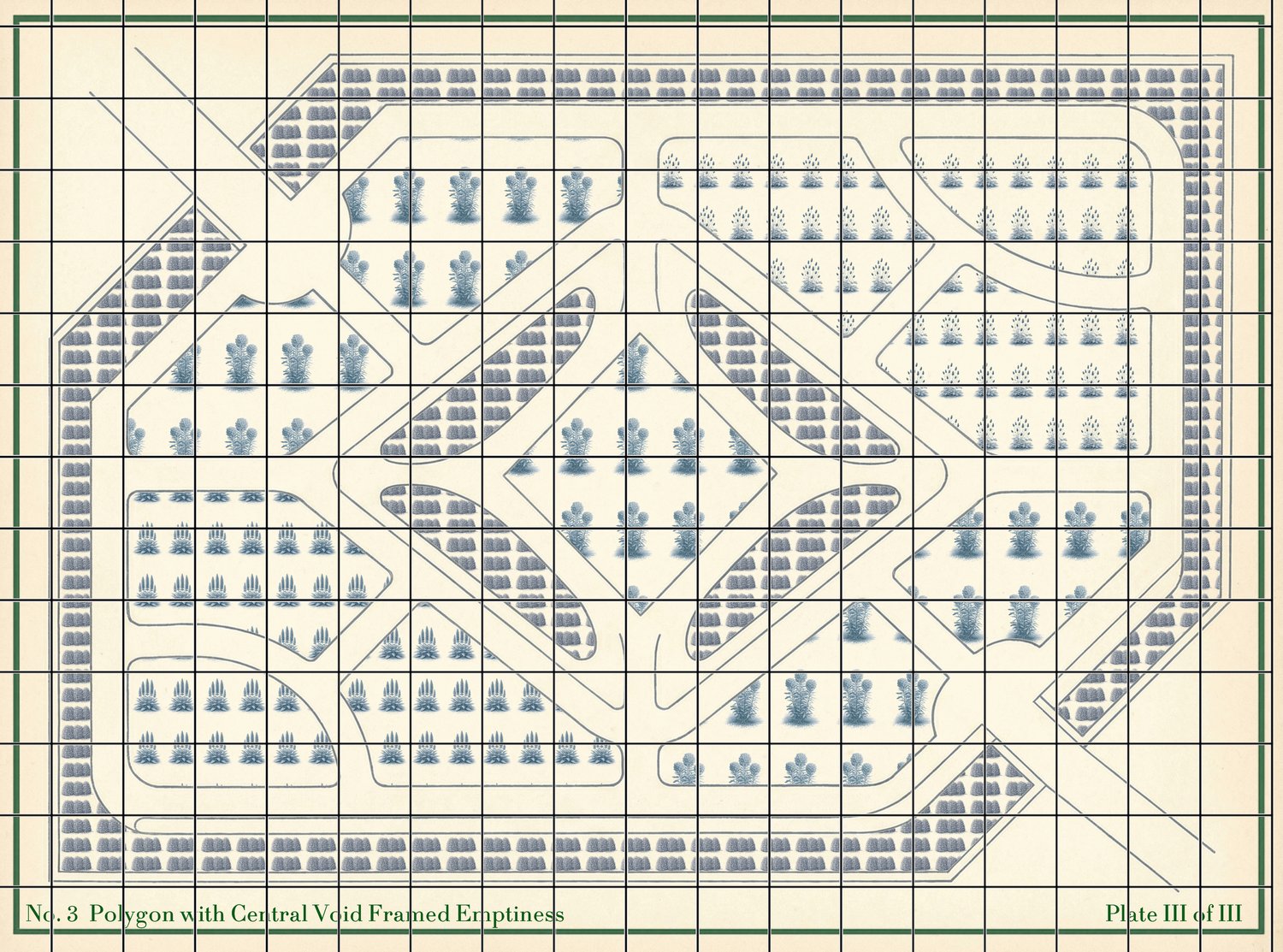
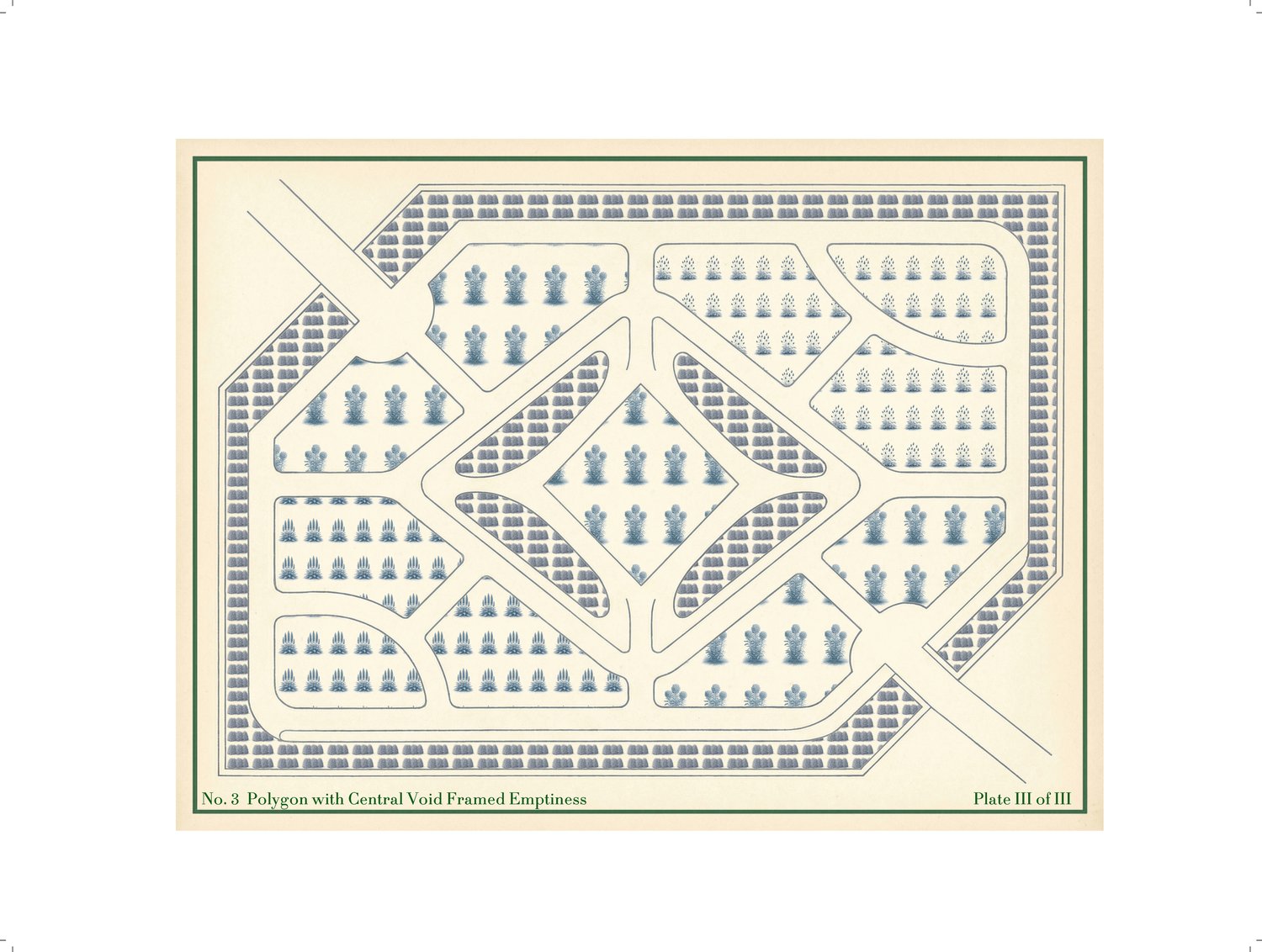
Polygon with Central Diamond Diagonal Axis
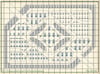
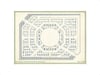
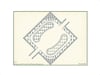
This Garden Room explores a diagonally organized enclosure anchored by a rotated central diamond. The dominant geometric move establishes a strong directional axis, around which sharply defined planting compartments are organized.
Internal divisions shift between compression and release while preserving the diagonal thrust. Circulation moves decisively across the garden along angular paths, intersecting at crisp junctions that reinforce direction rather than dissolve into curvature.
The composition reads as structured and intentional, with tension generated through adjacency, contrast, and controlled repetition rather than symmetry.
Planting Strategy
The planting palette is deliberately restrained, chosen for clarity of form, seasonal intensity, and the way each plant holds space rather than competes for attention.
Euphorbia characias subsp. wulfenii forms the primary structural mass within the central rotated diamond. Its blue-green foliage and vivid chartreuse bracts create a luminous architectural core that reads as a unified plane rather than scattered specimens.
Sanguisorba officinalis ‘Tanna’ establishes airy vertical rhythm within selected compartments. Its slender stems and deep burgundy drumhead flowers create directional fields with visible space between them, reinforcing movement without softening the geometry.
Stachys monieri ‘Hummelo’ provides dense mid-height flowering blocks. Its saturated magenta-purple spikes form cohesive planes that anchor the composition and give weight to opposing sectors.
The outer boundary is defined by Anglo-Japanese Yew (Taxus × media), clipped into a continuous enclosing band that holds the perimeter with firmness and repetition while remaining secondary to the interior geometry.
Planting reads as disciplined mass and adjacency, with clarity between compartments and a firm structural edge.
Variation Across the Plates
Across the three plates, the same geometric logic and planting roles are recomposed to explore subtle shifts in proximity, compression, and internal balance within the diagonally organized enclosure. The rotated diamond remains the organizing force, and circulation continues to reinforce directional movement.
Planting masses remain pure within each compartment and are repeated to build coherence. The enclosing hedge holds the perimeter as a continuous architectural frame.
Rather than presenting alternatives, the plates describe different tensions within the same spatial idea. Together they invite the viewer to experience the garden as a contained interior landscape shaped by direction, contrast, disciplined massing, and deliberate restraint.
How to Use the Grid
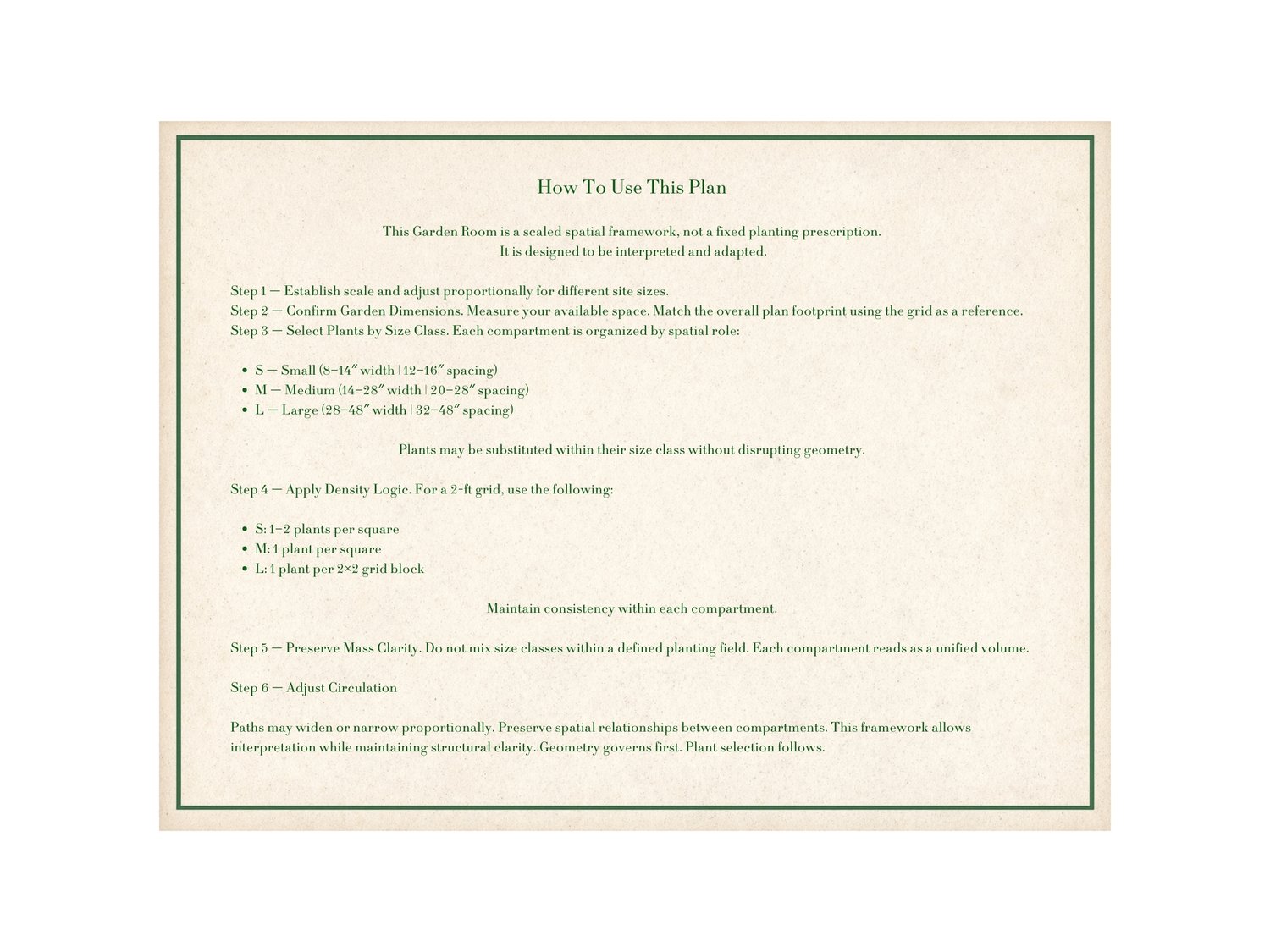
The grid functions as a proportional scaling tool. Each square corresponds to the scale indicated on the specific plate (1 ft, 1.5 ft, or 2 ft). Use the grid to translate planting mass into appropriate on-center spacing. Small plants occupy tighter intervals, medium plants align approximately one per square at their spacing, and large plants extend across multiple squares according to mature width. Maintain a single size class within each compartment to preserve spatial clarity. Plants may be substituted within the same size range without altering the underlying geometry.
The plant glyphs shown on the plates represent planting types listed in the legend and are decorative indicators of mass, not literal quantities per grid square.