
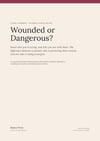
Wounded or Dangerous? Avoidant, fearful-avoidant or narcissistic: know who you're loving, and who you are with them
It's 2am. They're asleep. You're not.
You're typing the same question into your phone again: is my partner avoidant, or a narcissist? Half the internet tells you to be patient, because it's their childhood. The other half tells you to run. Neither of them knows your relationship.
The problem
You ask for the conversation and it never comes. You explain how you feel calmly, then tearfully, then in a long message at midnight. Nothing lands. They go quiet, and you can't tell whether they need space or whether you're being punished. So you repair first, again, and wonder if the problem is you.
The understanding
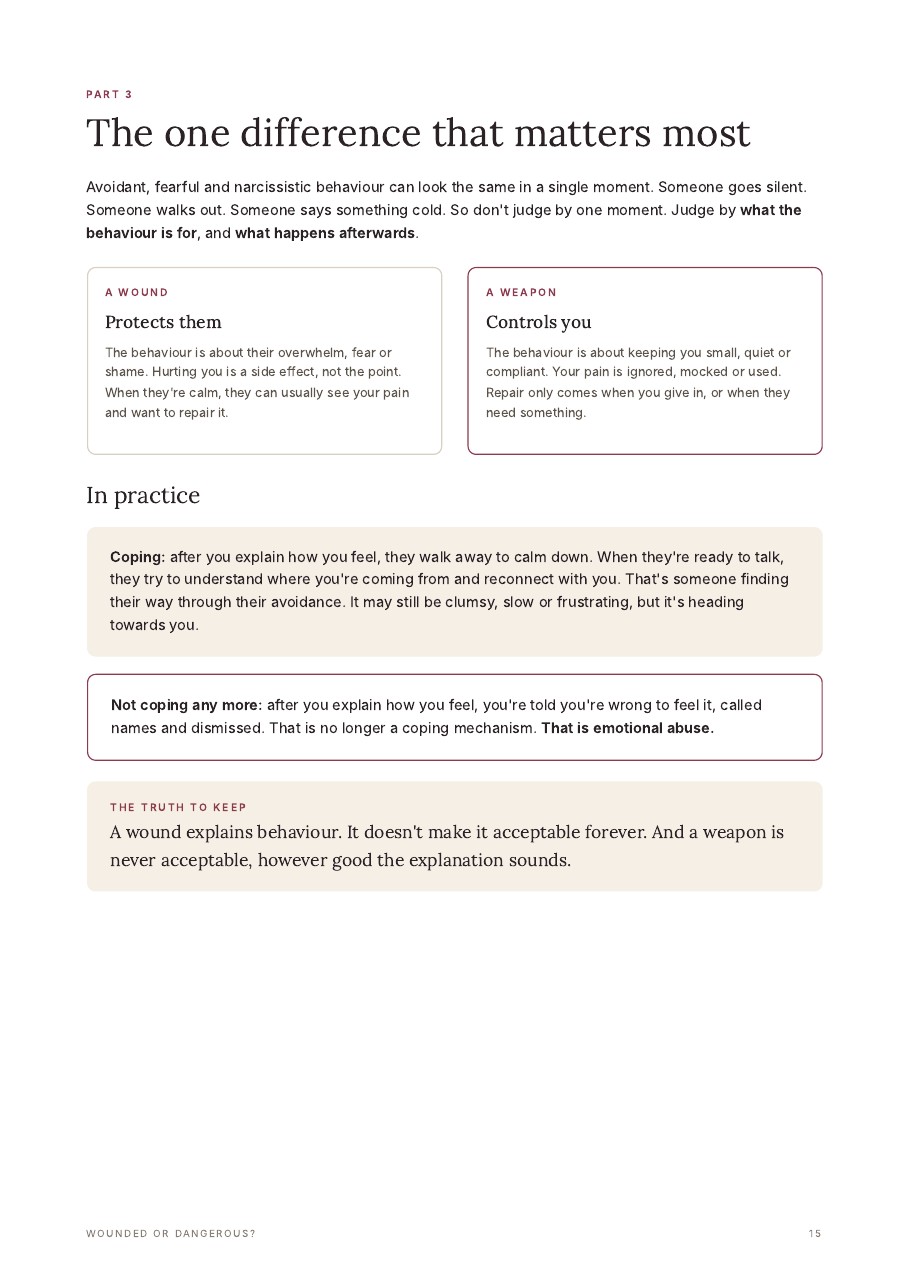
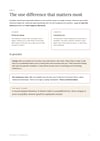
There's a real difference between a partner who pulls away to protect a wound, and one who uses a weapon to keep you small. Both can hurt. Only one is trying to.
When someone walks away to calm down, then comes back and tries to understand you, that's someone finding their way through their avoidance. When you're told you're wrong to feel what you feel, called names and dismissed, that is no longer a coping mechanism. That's emotional abuse.
The solution
Wounded or Dangerous? is a 33-page guide and workbook that helps you see clearly what you're dealing with, and who you are in it, before you decide anything.
- The four attachment patterns (anxious, avoidant, fearful-avoidant and secure) plus narcissistic patterns: what each looks like, what it's protecting and its unhealthy ways of coping
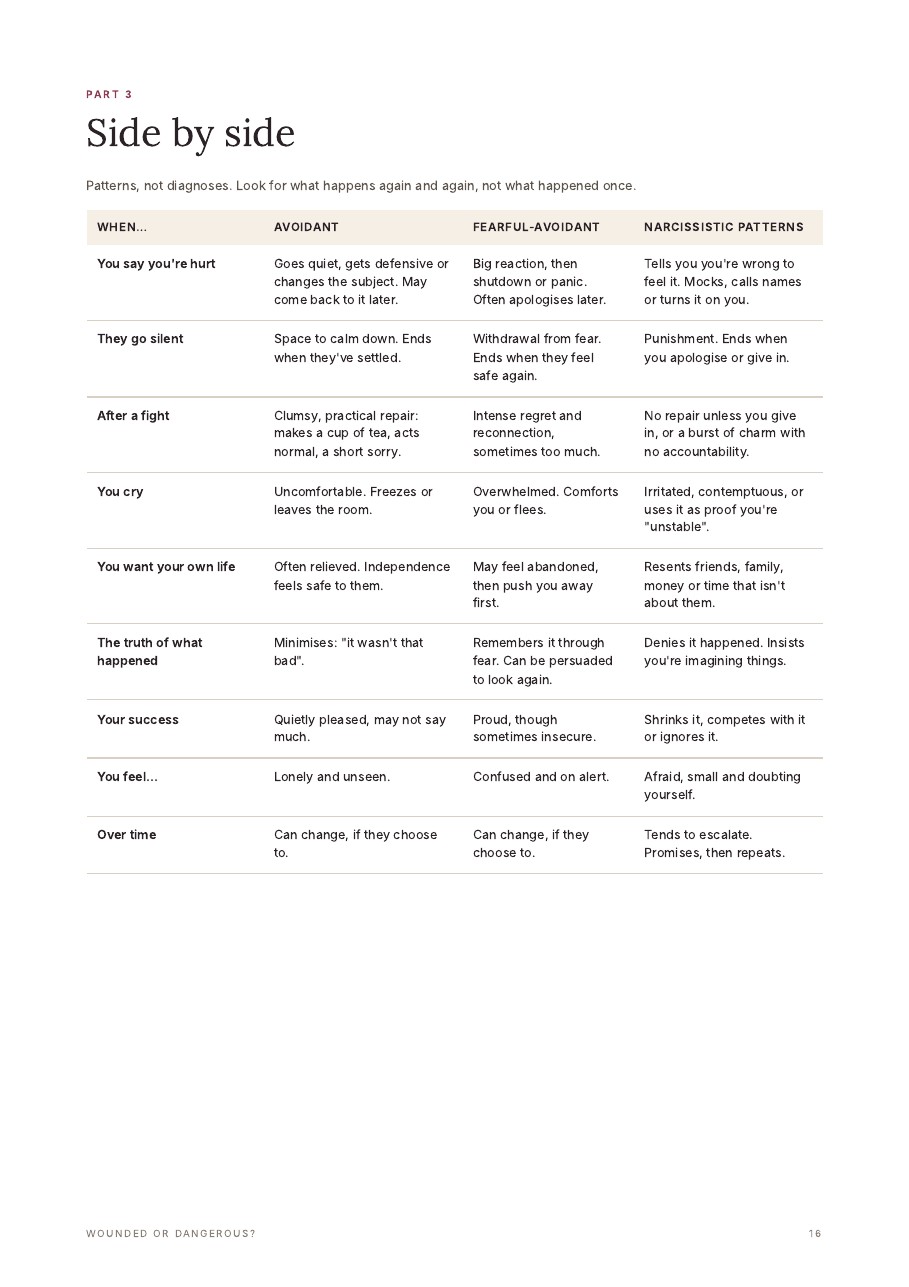
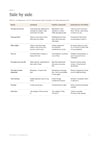
- Wound or weapon: a side-by-side comparison of what each one does when you're hurt, when they go silent and after a fight
- Silence decoded: how to tell space from silent treatment
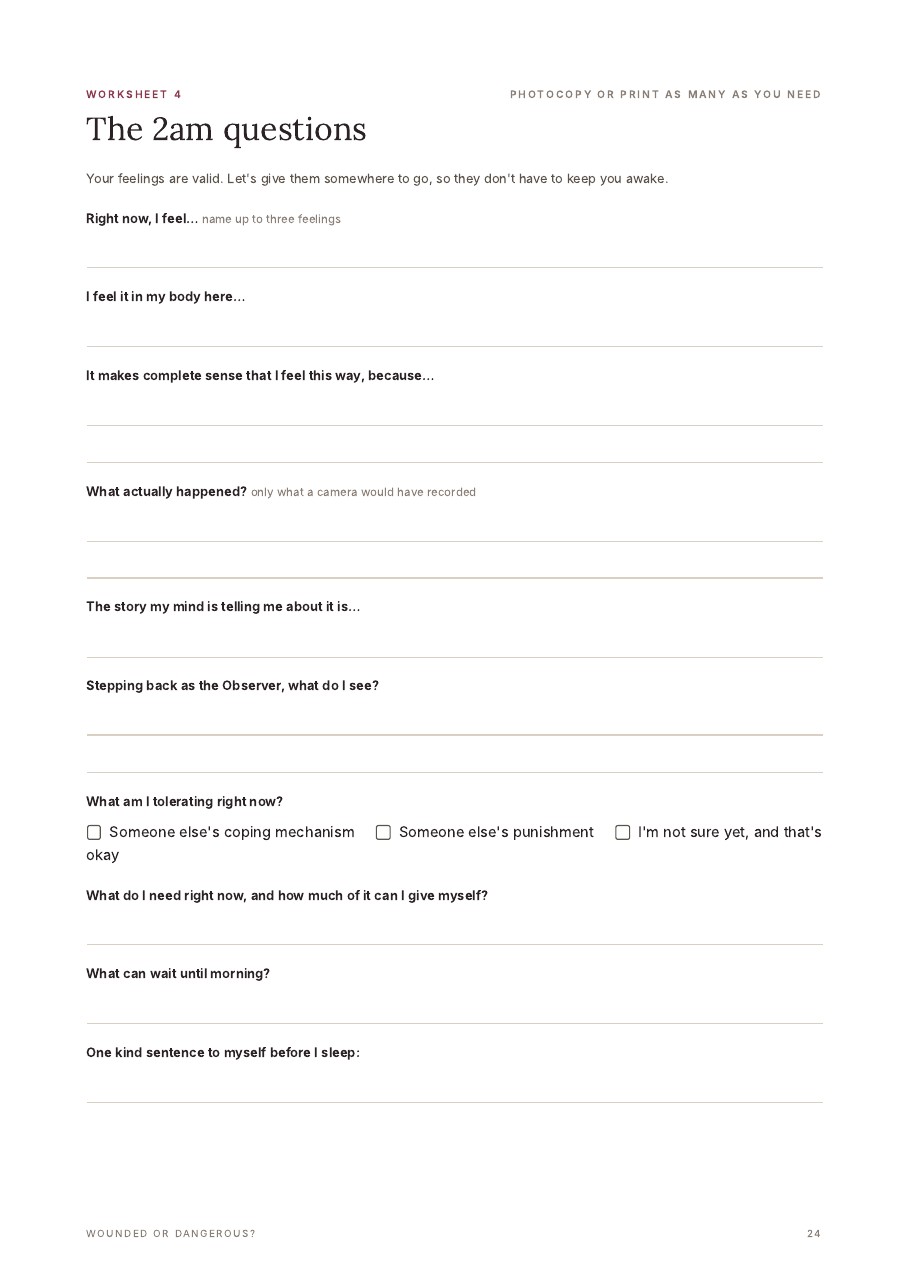
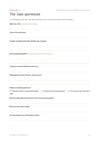
- The 2am pages: a short reset to calm your body, and a question sheet to sit with your feelings as valid emotions, not facts
- 7 worksheets: Ten Honest Questions, the Pattern Log, Coping or Punishment?, the 2am Questions, Feeling or Fact?, Why You Repair First, and the Effort Check
- Change is possible, but chosen: what real effort looks like on both sides
- A safety page with UK support lines, for when it isn't a wound
No diagnosing, no blaming, and no telling you to stay or go. Just clarity, so whatever you choose, you choose it from clarity, not fear.
Instant PDF download. Print it, or write on it in a PDF app. Written for every kind of relationship.
This guide is for education and self-reflection. It is not therapy, medical advice or a diagnostic tool.