
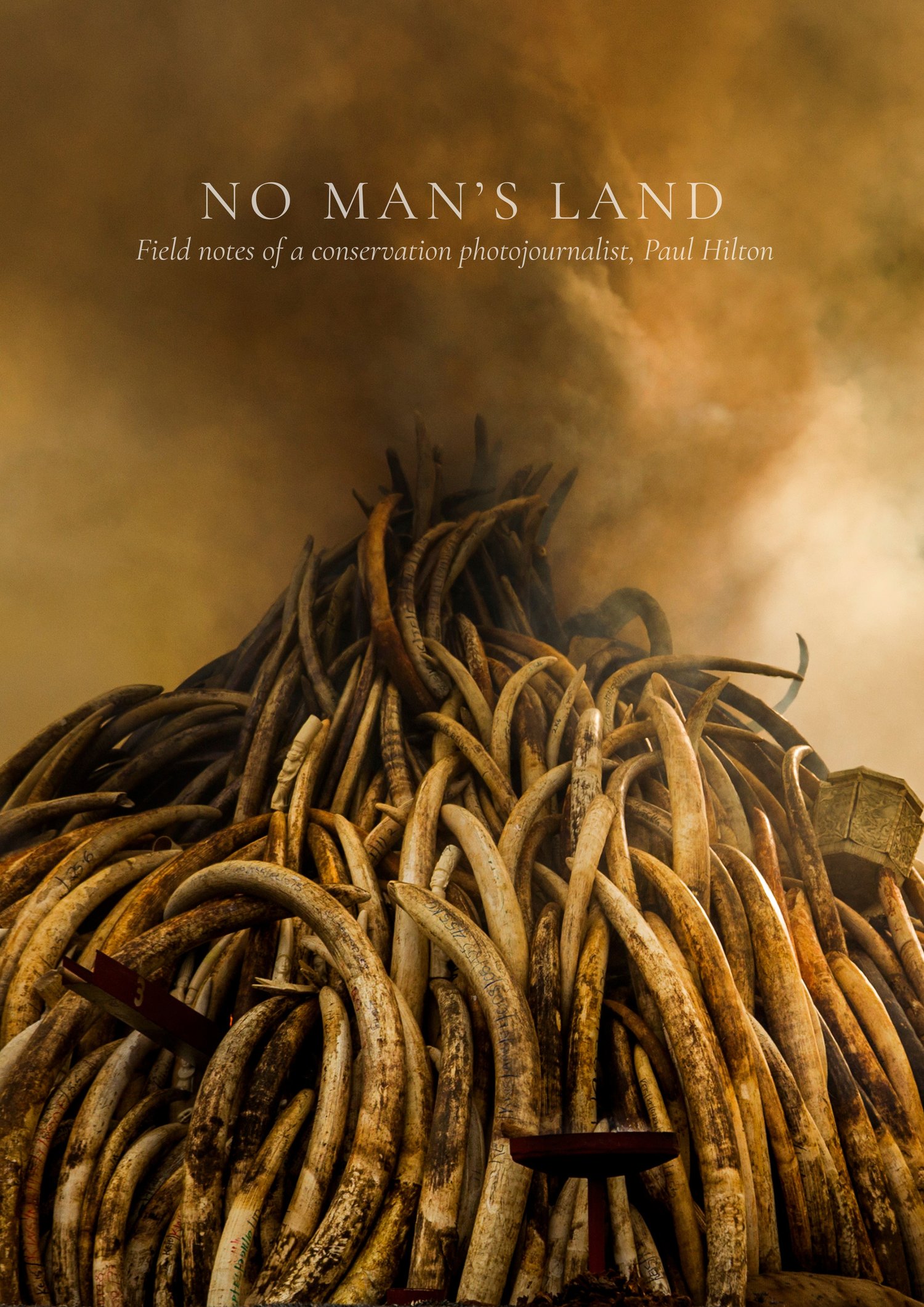
No Man's Land
Field notes of a Conservation Photojournalist, Paul Hilton.
For the past decade I have journeyed into the wildest and most remote corners of the planet, documenting stories that have often been overlooked. As a conservation photojournalist, my mission has been to shed light on the fragile beauty of our natural world – and the relentless threats it faces. This book is the first in a collection of field notes from my time in the jungles of Sumatra, the markets of Hong Kong, the depths of the Atlantic, and beyond. It is a testament to the creatures that walk, fly, and swim among us, and to the people who fight the good fight for our only home, planet Earth.
The pursuit of these stories has taken me face-to-face with the harsh realities of wildlife crime. I have stood in the forests of the incredible Leuser Ecosystem, Sumatra, Indonesia, following the footprints of elephants that are losing their home to deforestation and palm oil expansion. I have tracked and followed the trade routes of the pangolin, a small, scaly mammal that has the unfortunate title of being the most trafficked animal on Earth. I have spent time with the poachers, trying to understand the desperation that drives them. I have traced the journey of shark fins, from the bloodied decks of fishing boats to the bustling markets of Hong Kong, where they are turned into a local delicacy. Each story represents a small part of a much larger crisis – one that threatens not just individual species, but entire ecosystems.
This book is not just about loss and destruction; it is also about hope. I have met conservationists who dedicate their lives to saving the orangutans of Sumatra, the rhinos of Nepal, and the manta rays of the Pacific. I have seen communities come together to protect their forests, to rescue injured wildlife, and to push back against the forces of greed and exploitation. These are the stories that drive me forward, that remind me why this work is worth doing, even when the odds seem insurmountable. Through these pages, I invite you to step into the world as I have seen it – not just through the lens of my camera, but through the moments of connection, heartbreak, and resilience that define this work. This is a journey into the field, into the heart of conservation, and into the fight for our planet’s most vulnerable inhabitants.