
The 2026 Automotive Worker Pivot Guide: From Layoff to Hired in Six Months
266 workers in Evansville, Indiana are losing their jobs this year because a product design meeting shifted from chrome to painted finishes. 1,600 Ford battery workers found out their plant is being converted to power AI servers. Bosch, ZF, and Continental are cutting a combined 46,000 positions across Germany. These are not failing companies. These are profitable companies making strategic decisions.
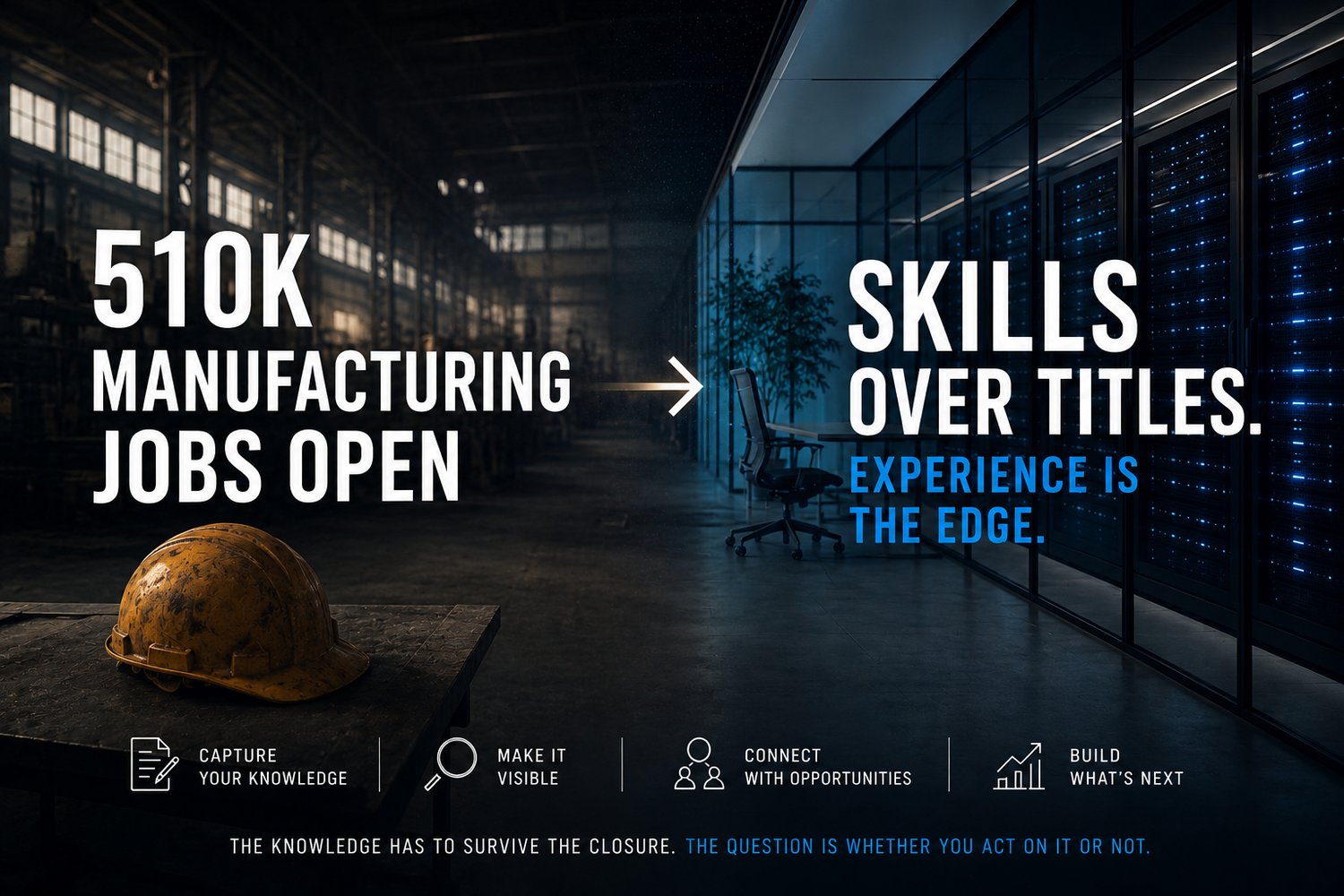
At the same time, Toyota just filed a $2 billion expansion in San Antonio creating 2,000 jobs at $88,000 average salary. There are 510,000 open manufacturing positions in the United States right now that nobody is filling. The Bureau of Labor Statistics estimates logistician roles growing 17% through 2034.
The jobs are not disappearing. They are moving. And most displaced workers are sitting on exactly the knowledge the new plants will spend three years rediscovering through warranty claims and field failures.
This guide tells you where the jobs are, what they pay, which certifications move hiring managers, and what to do in each of the next six months to be positioned before the Toyota and Battery Belt hiring wave hits in 2028.
What is inside:
Side-by-side breakdown of every major plant closing versus every major facility opening in 2026, with hiring timelines and salary ranges.
A role pivot map for six worker backgrounds including process technicians, ICE powertrain engineers, supply chain coordinators, and ERP specialists, matched to the specific roles being hired right now and what they pay.
A certification table covering APICS CPIM, CSCP, SAP S4 HANA, Lean Six Sigma, and ISM CPSM with exact costs, time to complete, and documented salary premiums of 10 to 20% above uncertified peers.
A six-month action plan from June through November 2026 with specific actions and measurable outputs for each month.
Direct application links to Toyota, Cummins, Lucid Motors, Sortera Technologies, General Motors, and Ford with the specific role categories each company is hiring into.
The closing argument on why twenty years of process knowledge is not obsolete. It is scarce. And what to do with it starting this week.
Two dollars. Six pages. The difference between waiting for the work to come back and positioning for where it is going.