
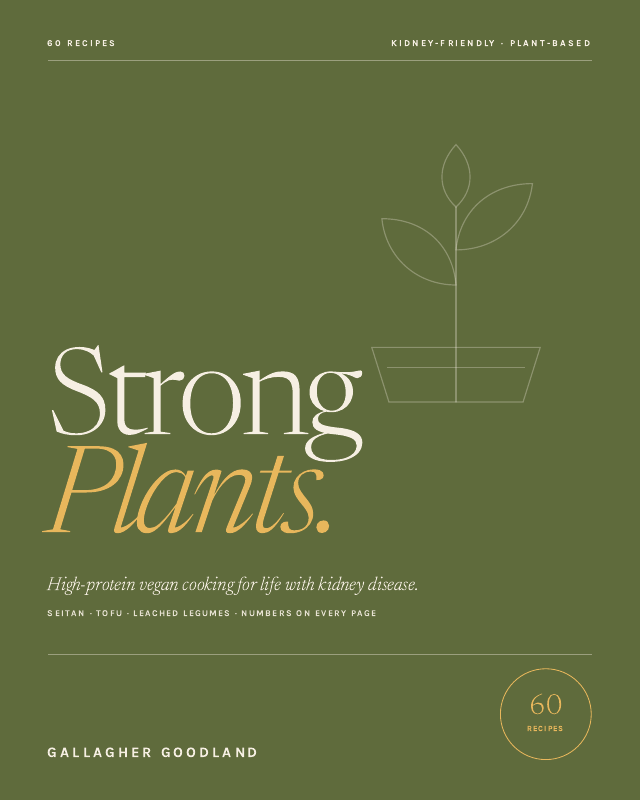
Strong Plants - High Protein Vegan CKD Cookbook (PDF)
Every vegan protein list starts with beans, nuts and quinoa. Every one of those is a potassium problem.
If you're plant-based and living with kidney disease, you already know the bind. The whole internet is telling you to eat more lentils, more almonds, more hemp hearts, more quinoa. Your dietitian looks at the same list and winces. The healthiest diet in the wellness world happens to be built on exactly the foods your labs are watching.
So what do you actually eat?
This is the answer. 60 recipes. Real protein. Numbers you can see.
I'm Gallagher Goodland, and I should say up front that I'm not vegan — I'm a dialysis patient. I wrote a kidney cookbook because the food we get handed is miserable, and then the letters started arriving from vegans with CKD asking the question nobody was answering. So I went and did the work.
This book is built on the plant proteins that are kind to kidneys and mostly ignored by everyone else. Seitan — around 25 grams of protein per 100 grams with roughly a tenth of the potassium you'd take on from the same protein in lentils. Tofu, ten ways, starting with the crust technique that makes people stop apologizing for it. And legumes that are leached, rinsed and portioned instead of banned.
What you'll cook:
- Smash burgers with lacy, dark edges — 26 g protein
- Seitan birria tacos you dip in the consommé
- Peanut noodles with crispy tofu, and the measured sauce that makes them work
- Tofu katsu, dan dan noodles, bibimbap bowls, mapo tofu
- A pho broth built from charred onion and toasted spice, no bouillon cube
- Tofu jerky that lives in your bag for the 3 p.m. crash
- Silken chocolate mousse nobody will guess is tofu
And about a third of the book is the stuff nobody tells you:
- A straight answer on how much protein you actually need at your stage — including the part where, before dialysis, more protein is usually the wrong goal
- The Protein Ladder: every plant protein ranked by milligrams of potassium per gram of protein
- Six leaching and rinsing techniques that pull potassium out of food you thought you'd given up
- What "fortified," "low sodium" and "phos" really mean on a plant-based label
- A plant-milk decoder, an honest page on protein powder, a pantry list and a week of menus
Every number on every page was calculated, not guessed. Each ingredient was entered by weight and run against standard food-composition values. Calories, protein, sodium, potassium and phosphorus are printed on all 60 recipes, and the back of the book shows exactly how the math was done so you can hand it to your dietitian and let them check my work.
Median sodium across the book: 65 mg a serving.
Plants that actually feed you. Numbers you can defend. Food you'd want even if your kidneys were fine.
This book is educational and is not medical advice. Nutritional needs in kidney disease vary by stage, dialysis type, lab values and other conditions. Protein needs in particular differ between people on dialysis and people who are not, and the high-protein recipes here are not right for everyone. Nutrition figures are calculated estimates. Review any dietary change with your nephrologist and a registered renal dietitian. Contains wheat gluten — the seitan chapter is not suitable for celiac disease.